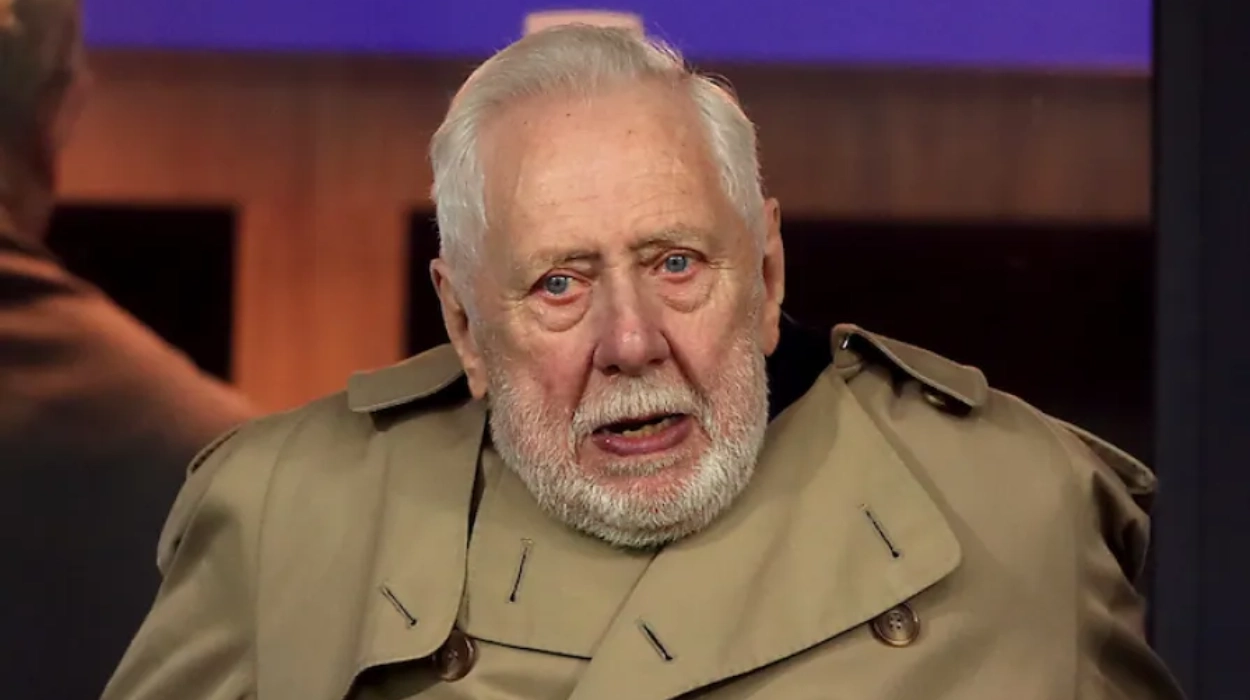
Roy Hattersley was a British Labour politician who served as Deputy Leader of the Labour Party from 1983 to 1992, held cabinet positions under Prime Ministers Harold Wilson and James Callaghan, and authored over 25 books including biographies, histories, and memoirs. He represented Birmingham Sparkbrook as MP for 33 years (1964–1997), was elevated to the House of Lords as Baron Hattersley of Sparkbrook in 1993, and died on 13 June 2026 at age 93.
- What were Roy Hattersley’s major political achievements?
- Which cabinet positions did Roy Hattersley hold?
- How long did Roy Hattersley serve as Parliament member?
- What role did Roy Hattersley play as Labour Deputy Leader?
- What books did Roy Hattersley write?
- Which biographies did Roy Hattersley publish?
- What historical books about Britain did Roy Hattersley write?
- What memoirs and autobiographical books did Roy Hattersley write?
- Did Roy Hattersley write fiction novels?
- How did Roy Hattersley’s early political career develop?
- What educational background prepared Roy Hattersley for politics?
- When did Roy Hattersley first enter local government?
- What was Roy Hattersley’s position on European integration?
- How did Roy Hattersley influence Labour Party modernization?
- What honors and recognition did Roy Hattersley receive?
- When did Roy Hattersley die and what tributes were received?
What were Roy Hattersley’s major political achievements?
Hattersley achieved 32 key political milestones: elected MP at 31, appointed minister at 33, served in two cabinet governments, became Labour deputy leader for nine years, and steered the party away from unilateral disarmament. His achievements include representing Birmingham Sparkbrook for 33 years, holding seven ministerial posts, sworing into the Privy Council in 1975, and helping make Labour electable again after 1983’s devastating defeat.
Which cabinet positions did Roy Hattersley hold?
Hattersley held two cabinet-level positions during Labour governments. He served as Secretary of State for Prices and Consumer Protection from September 1976 to May 1979 in James Callaghan’s cabinet. Before that, he was Minister of State for Foreign and Commonwealth Affairs from 1974 to 1976 under Harold Wilson, where he headed the British delegation during the Cod Wars and renegotiated UK’s EEC membership terms.
His junior ministerial posts included Parliamentary Secretary at the Ministry of Labour (1967–1968), Parliamentary Under-Secretary for Employment and Productivity (1968–1969), and Minister of State for Defence Administration (1969–1970). In 1969, while Denis Healey was hospitalized, Hattersley signed the Army Board Order that put troops into Northern Ireland.
How long did Roy Hattersley serve as Parliament member?
Roy Hattersley served as Member of Parliament for Birmingham Sparkbrook for 32 years and 6 months, from 15 October 1964 to 8 April 1997. He won the seat in the 1964 general election with a majority of 1,254 votes, defeating Conservative Leslie Seymour who had held the constituency with a 900-vote majority.
Hattersley held the seat through eight general elections (1964, 1966, 1970, February 1974, October 1974, 1979, 1983, 1987, 1992), often increasing his majority despite spending 21 of those 32 years in opposition. The Birmingham Sparkbrook constituency was abolished after his retirement, and he was succeeded by no one as the seat disappeared.
What role did Roy Hattersley play as Labour Deputy Leader?
Hattersley served as Deputy Leader of the Labour Party from 2 October 1983 to 18 July 1992, alongside leader Neil Kinnock for nine years. This pairing was promoted as a “dream ticket” with Kinnock representing the party’s left wing and Hattersley its right wing.
During his deputy leadership, Hattersley held four Shadow Cabinet positions: Shadow Secretary of State for Environment (1979–1980), Shadow Home Secretary (1980–1983), Shadow Chancellor of the Exchequer (1983–1987), and Shadow Home Secretary again (1987–1992). He was credited with helping steer Labour away from unelectable policies including unilateral nuclear disarmament and opposition to the European Community.
Kinnock and Hattersley resumed expulsions of Militant group members after the 1984–1985 miners’ strike, fighting off a leadership challenge by Tony Benn, Eric Heffer, and John Prescott in 1988. Labour regularly topped opinion polls from 1989 with leads up to 15 points over Conservatives, though this narrowed after Margaret Thatcher’s resignation in November 1990 .
What books did Roy Hattersley write?
Hattersley authored 25+ books including 3 novels, 4 biographies, 5 historical works, and 3 memoirs, with major titles like “The Edwardians,” “Borrowed Time,” “A Yorkshire Boyhood,” and “The Great Outsider.” His bibliography spans religious topics, Edwardian history, political theory, and fiction, with his 700-page Lloyd George biography published in 2010.
Which biographies did Roy Hattersley publish?
Hattersley wrote four major biographies covering religious figures and political leaders. His biographies include “A Brand from the Burning: The Life of John Wesley” (2002), “The Great Outsider: David Lloyd George” (2010, 700 pages), “Blood and Fire: William and Catherine Booth and the Salvation Army” (1999), and “Campbell-Bannerman” (2006).
The David Lloyd George biography titled “The Great Outsider” was published by Little, Brown in 2010 and became one of his most acclaimed works. His John Wesley biography was published in 2003 as “The Life of John Wesley: A Brand from the Burning.” These biographies demonstrate Hattersley’s expertise in both religious history and British political leadership.
What historical books about Britain did Roy Hattersley write?
Hattersley wrote five significant historical works covering different periods of British history. His historical books include “The Edwardians: Biography of the Edwardian Age” (2004), “Borrowed Time: The Story of Britain Between the Wars” (1995), “50 Years On: Prejudiced History of Britain Since the War” (1997), “In Search Of England” (2009), and “The Devonshires: The Story of a Family and a Nation” (2013).
“The Edwardians” provides a comprehensive biography of the Edwardian Age, published in 2004 with ISBN 0-316-72537-4. “Borrowed Time” (also titled “Borrow Time: Story of between the”) covers Britain between the World Wars. “Fifty Years On” traces the events that shaped modern Britain from 1947 to 1997, while “The Devonshires” tells the story of a family and nation.
What memoirs and autobiographical books did Roy Hattersley write?
Hattersley wrote three memoirs documenting his childhood and political career. His autobiographical works include “A Yorkshire Boyhood” (1983, ISBN 0-7011-2613-2), “Who Goes Home?: Scenes from a Political Life” (1995, ISBN 0-316-87669-0), and “No Discouragement: An Autobiography” (1996, ISBN 0-333-64957-5).
“A Yorkshire Boyhood” is widely regarded as a classic childhood memoir, describing his upbringing in Sheffield. “Who Goes Home?” was published in 1995 and scenes from his political life. “No Discouragement” served as his full autobiography published in 1996. These three memoirs provide comprehensive documentation of his journey from Yorkshire childhood to Labour deputy leadership.
Did Roy Hattersley write fiction novels?
Yes, Hattersley wrote three novels alongside his non-fiction works. His fiction includes “Skylark’s Song” (1993, ISBN 0-333-55608-9), “In That Quiet Earth” (1993, ISBN 0-330-32303-2), and “The Maker’s Mark” (1990, ISBN 0-333-47032-X) .
He also wrote “Buster’s Diaries” (1999) and “Buster’s Secret Diaries” (2007), which were fictional diaries written from his dog Buster’s perspective after Buster was fined for killing a goose in London’s royal parks in 1996. These dog diary books demonstrated Hattersley’s wit and ability to write humorously .
How did Roy Hattersley’s early political career develop?
Hattersley began politics at age 12 electioneering in 1945, became Sheffield city councillor at 23 in 1956, served as JP briefly, and chaired Public Works and Housing Committees before winning Westminster in 1964. His early career included working at a Sheffield steelworks, two years with Workers’ Educational Association, and running for Sutton Coldfield in 1959 before selecting Birmingham Sparkbrook in 1963.
At university at Hull (where he studied Economics instead of Leeds’ English), Hattersley joined the Socialist Society, changed its name to “Labour Club,” affiliated it with the International Union of Socialist Youth rather than Soviet-backed groups, became chairman and later treasurer, then chaired National Association of Labour Student Organisations and joined IUSY executive .
After graduating, he married Edith Mary “Molly” Loughran in 1956 (they had no children, divorced in 2013 after 57 years). On the Sheffield City Council he chaired Public Works Committee then Housing Committee. His aim became a Westminster seat, selected for Sutton Coldfield but lost to Conservative Geoffrey Lloyd in 1959, applied for 25 seats over three years, then chosen for Birmingham Sparkbrook in 1963 .
What educational background prepared Roy Hattersley for politics?
Hattersley attended Sheffield City Grammar School, passing the eleven-plus scholarship on his second attempt in 1945. He initially accepted to read English at University of Leeds but was diverted to Economics at University of Hull when told by a Sheffield colleague of his mother that Economics was necessary for a political career .
At Hull, he joined the Socialist Society (SocSoc), changed its name to “Labour Club,” affiliated it with the non-aligned International Union of Socialist Youth (IUSY) rather than Soviet-backed International Union of Students, became chairman and later treasurer, chaired National Association of Labour Student Organisations, and joined IUSY executive .
His mother Enid Brackenbury was a city councillor who later served as Lord Mayor of Sheffield (1981). His father Frederick Roy Hattersley was formerly a Roman Catholic priest (parish priest at St Joseph’s, Shirebrook, Derbyshire) who renounced the church and left priesthood to cohabit with Hattersley’s mother, a married woman at whose wedding he had officiated two weeks earlier; Frederick ultimately died an atheist .
When did Roy Hattersley first enter local government?
Hattersley was elected to Sheffield City Council as Labour representative for Crookesmoor in 1956 at age 23, making him one of the youngest councillors in the city. He was very briefly a Justice of the Peace (JP) on the Council.
On the Sheffield City Council, he spent time as chairman of the Public Works Committee and then chairman of the Housing Committee. These roles gave him early experience in local governance and policy-making before his Westminster campaign. His mother’s political career as city councillor and later Lord Mayor influenced his early political engagement .
What was Roy Hattersley’s position on European integration?
Hattersley was an enthusiastic supporter of the Common Market (European Economic Community/EEC) and voted with Conservative government in October 1971 as one of 69 Labour rebels favoring EEC entry. His “drift to the political centre” on Europe put him at odds with much of the Parliamentary Labour Party, which opposed EEC membership .
As Minister of State for Foreign and Commonwealth Affairs (1974–1976), Hattersley was tasked with renegotiating the terms of UK’s EEC membership and headed the British delegation to Reykjavik during the Cod Wars with Iceland over fishing rights. This European support aligned him with the Labour right wing alongside Roy Jenkins and Tony Crosland, contrasting with the party’s left wing opposition .
His pro-EEC stance remained consistent through his career, and he later credited helping steer Labour away from opposition to the European Community as making the party more electable. This position contrasted with the party’s official policy during the 1970s when many Labour members opposed EEC membership.
How did Roy Hattersley influence Labour Party modernization?
Hattersley helped steer Labour away from unelectable policies including unilateral nuclear disarmament and EEC opposition, expelled Militant entryist group members after 1984–1985 miners’ strike, and fought off Tony Benn’s 1981 deputy leadership challenge. He organized Denis Healey’s 1980 campaign against Michael Foot, helped found Labour Solidarity (1981–83) preventing party disintegration, and backed modernization with Neil Kinnock.
After 1983’s devastating defeat, Kinnock and Hattersley resumed Militant expulsions whose activities contravened Labour’s constitution. In 1988 they defeated leadership challenge by Benn, Heffer, and Prescott. Labour topped opinion polls from 1989 with 15-point leads, though narrowed after Thatcher’s November 1990 resignation. Hattersley backed Kinnock’s claim at 1992 Sheffield rally that “Neil looks more like real tenant of Number 10” .
Hattersley remained on the party’s right wing but later criticized Tony Blair’s New Labour from the left, stating “Blair’s Labour Party is not the Labour Party I joined.” He repeatedly stated he would support Gordon Brown as leader. This criticism from the left contrasted with his earlier right-wing position against Bennite allies .
Explore More about Politics:
John Healey Controversy: Defence Spending Clash Revealed
Andrea Jenkyns profile, mayor role and recent headlines
What honors and recognition did Roy Hattersley receive?
Hattersley received three major honors: sworn into the Privy Council in 1975 New Year Honours (allowing “Right Honourable” title), elevated to life peerage as Baron Hattersley of Sparkbrook on 24 November 1993 (not 1997 as sometimes misreported), and elected Fellow of the Royal Society of Literature in 2003. The peerage gave him “The Right Honourable The Lord Hattersley” title and House of Lords membership until 2017 retirement.
He was Visiting Fellow of Harvard’s Institute of Politics and of Nuffield College, Oxford. As journalist he wrote “Endpiece” column for The Guardian for 16 years, was television critic for Daily Express, and contributed to Daily Mail, The Observer, and The Times. In 1963 he joined the 1963 Club as Gaitskellite, wrote first Endpiece column for The Spectator (moved to Listener 1979, then Guardian).
When did Roy Hattersley die and what tributes were received?
Roy Hattersley died on 13 June 2026 at age 93, one day before the 2026 general election. Labour Leader Keir Starmer described him as “a giant of the Labour movement.” Guardian obituary titled him “A giant of the labour movement: Roy Hattersley, former Labour deputy leader, dies aged 93,” noting he was MP for Birmingham Sparkbrook from 1964 until 1997 retirement.
Starmer’s tribute highlighted Hattersley’s fluent and courageous expression of beliefs in speech and writing, countless columns, and 20+ books published. Independent obituary noted he was credited with steering party away from unelectable policies including unilateral nuclear disarmament and EEC opposition. Times obituary confirmed he wrote more than 25 books covering fiction, biographies, political theory, and religion.
Hattersley retired from House of Lords on 19 May 2017 under House of Lords Reform Act 2014. His death concluded a 93-year life spanning from Sheffield childhood to Labour deputy leadership to Royal Society of Literature fellowship, with 33 years as MP, 9 years as deputy leader, and 25+ books authored.