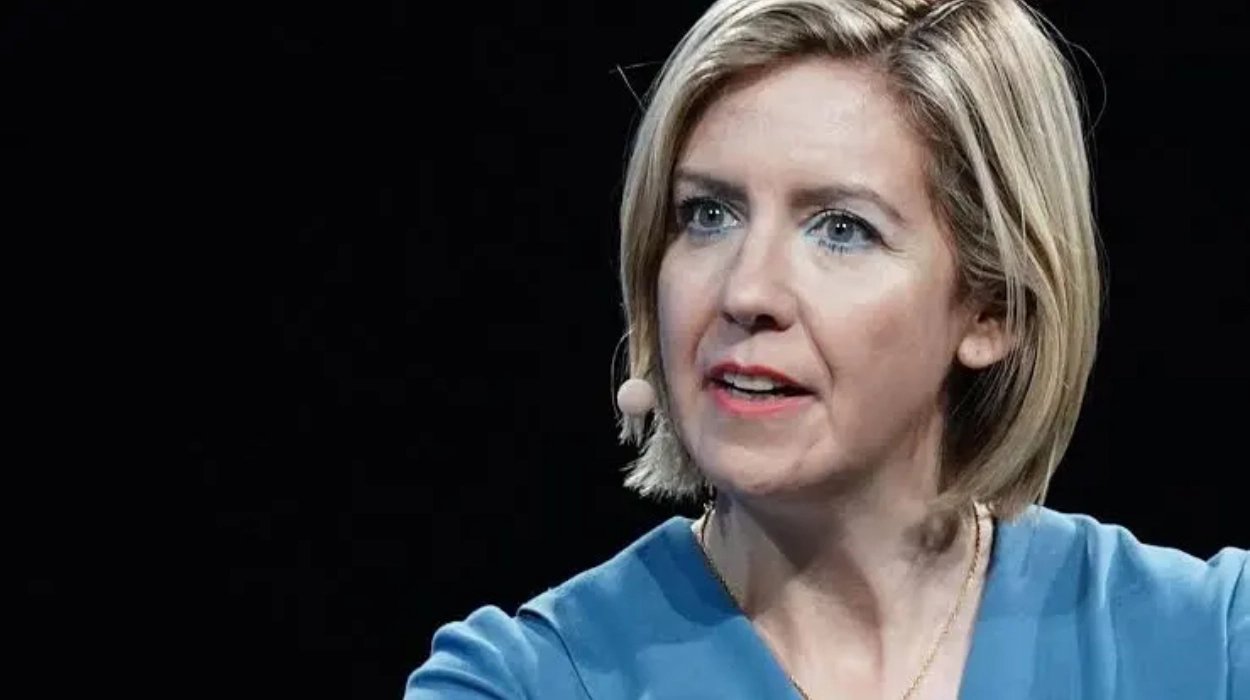
Andrea Jenkyns is the first Mayor of Greater Lincolnshire and a former Conservative MP who became one of Reform UK’s highest-profile elected figures in 2025. Her public profile combines national politics, local devolution powers, and recurring media attention around interviews, party shifts, and regional leadership.
Who is Andrea Jenkyns?
Andrea Jenkyns is a British politician, former MP, and the directly elected Mayor of Greater Lincolnshire, a role she won on 1 May 2025. She entered Parliament as a Conservative MP for Morley and Outwood in 2015, later served as a minister for skills at the Department for Education, and then moved to Reform UK before winning the mayoralty.
Jenkyns was elected as the Conservative MP for Morley and Outwood on 7 May 2015. Her government record includes service as Parliamentary Under Secretary of State for Skills in 2022. Those positions established her as a national political figure before her move into regional leadership.
Before politics, she worked in retail management and at Greggs, and she also studied at Lincoln University and the Open University. Her background is often presented as unusually varied for a senior politician, especially in coverage of her return to frontline office after leaving Westminster.
What is her mayor role?
As Mayor of Greater Lincolnshire, Andrea Jenkyns leads the Greater Lincolnshire Combined County Authority and oversees strategic priorities such as transport, skills, employment, business growth, planning, and infrastructure. The role is designed to give Lincolnshire a stronger voice with central government and to direct devolved funding into local priorities.
The Greater Lincolnshire mayoralty is a four-year elected post created through devolution. The mayor acts as a direct liaison with Westminster and is expected to champion the region nationally while coordinating with local councils, businesses, and government departments.
The authority’s remit is practical and economic rather than ceremonial. Its focus includes investment decisions, transport improvements, skills provision, and long-term regional growth. That makes the office important for residents, employers, and public service planning across Lincolnshire.
Why is the mayoralty important?
The mayoralty matters because it concentrates devolved powers and funding in one elected regional leader. In Greater Lincolnshire, that includes responsibility for shaping transport links, workforce development, and economic regeneration across Lincolnshire, North Lincolnshire, and North East Lincolnshire.
The structure is part of England’s devolution model, which shifts selected powers away from Whitehall and toward local combined authorities. In this case, the mayoral model is intended to improve decision-making on local infrastructure and economic development.
The office also gives the region a clearer negotiating position with the UK government. Official descriptions say the mayor should secure funding, drive growth, and ensure local communities see tangible benefits from devolution.
How did she become mayor?
Andrea Jenkyns became mayor after winning the first Greater Lincolnshire mayoral election on 1 May 2025 with a margin of more than 40,000 votes. Her victory was a major result for Reform UK and marked a return to elected office after she lost her parliamentary seat in 2024.
Her campaign came after a period of political realignment. She left the Conservatives, joined Reform UK, and stood in a new regional contest created by the devolution deal. That path made her one of the most visible examples of Reform’s rise in local and regional politics.
The election result gave Reform UK its most significant executive office at that point. It also gave Jenkyns control over a newly established mayoral platform with a multi-year policy agenda and annual public funding.
What are her recent headlines?
Recent headlines have focused on both her political authority and her combative media style. Coverage in 2025 highlighted her election win, her first public remarks as mayor, and criticism after she left a Sky News interview when questioned on contentious issues.
BBC and other outlets reported that her victory speech framed the result as a “new era” in British politics. The same coverage also noted that she would oversee an annual budget of £24 million and a policy brief covering transport, skills, and economic growth.
In June 2026, national reporting again placed her in the news after she walked out of a meeting with ministers and other mayors during discussion of community tensions linked to the Henry Nowak case. That episode reinforced her reputation as a high-profile and often controversial political operator.
What powers does she control?
The mayor controls strategic regional powers tied to economic development, not every local public service. The main areas include transport, skills, employment, business growth, planning, and infrastructure, alongside oversight of the combined county authority’s budget and investment priorities.
That means the role is influential but limited. The mayor does not replace local councils, but coordinates work across them and uses devolved funding to push larger regional projects. In practice, the office depends on negotiation, partnership, and delivery.
Public-sector reporting in 2026 said the first mayoral budget backed transport hubs, road upgrades, adult skills programmes, and new economic initiatives. It also reported larger funding settlements, including transport money and growth funding secured through direct negotiations.
What is her background?
Jenkyns’ background combines retail work, education, music, and politics. Sources describe her as having worked in retail management for many years before entering politics, and as later completing higher education qualifications in her thirties.
Her career path also includes local government and parliamentary office. She first entered elected politics through Lincolnshire County Council in 2009, then became an MP in 2015 after defeating Ed Balls in Morley and Outwood.
That history matters because it explains how she built a public identity outside the usual Westminster pipeline. Her biography is often used in profile coverage to show a move from retail and local politics into ministerial office and then to a regional mayoralty.
Why does she attract attention?
Jenkyns attracts attention because she combines electoral success, blunt messaging, and frequent confrontation with journalists and opponents. That combination has made her a recurring figure in political coverage since she entered national politics.
Her supporters often present her as a plain-speaking representative of voters who feel ignored by mainstream parties. Her critics point to the same style as evidence of confrontation and volatility. Both perceptions have helped keep her in the headlines.
The media interest also reflects the novelty of her office. As the first Mayor of Greater Lincolnshire, she is tied to a new institutional setup, so her words and actions carry outsized interest beyond the region.
Explore More about Politics:
Carol Vorderman Biography, Career Journey and Latest News
Rachel Reeves Biography, Career, Net Worth and Updates Today
What does her election mean?
Her election gives Reform UK a concrete governing role and turns Lincolnshire into a test case for devolved regional politics. The mayoralty provides a chance to show whether the party can translate protest politics into administration, budgeting, and delivery.
For Greater Lincolnshire, the office creates a single elected figure responsible for promoting the region, negotiating for investment, and linking transport and skills policy to economic growth. That can shape how businesses, councils, and residents experience devolution over time.
For British politics, the result showed that regional mayoralties can become nationally significant. A win like this can influence party strategy, local campaigning, and perceptions of how power shifts outside Westminster.
How is the role likely to develop?
The role will develop through delivery, funding decisions, and public scrutiny. Early priorities reported for 2026 include transport hubs, road upgrades, skills programmes, and long-term economic projects across the county.
The success of the office depends on measurable outcomes. Voters and local institutions will judge the mayor by improvements in transport, training, jobs, and investment rather than by speeches alone.
Because the post is new, her term also helps define what the Greater Lincolnshire mayoralty becomes in practice. That makes her one of the most important regional political figures in England’s current devolution landscape.