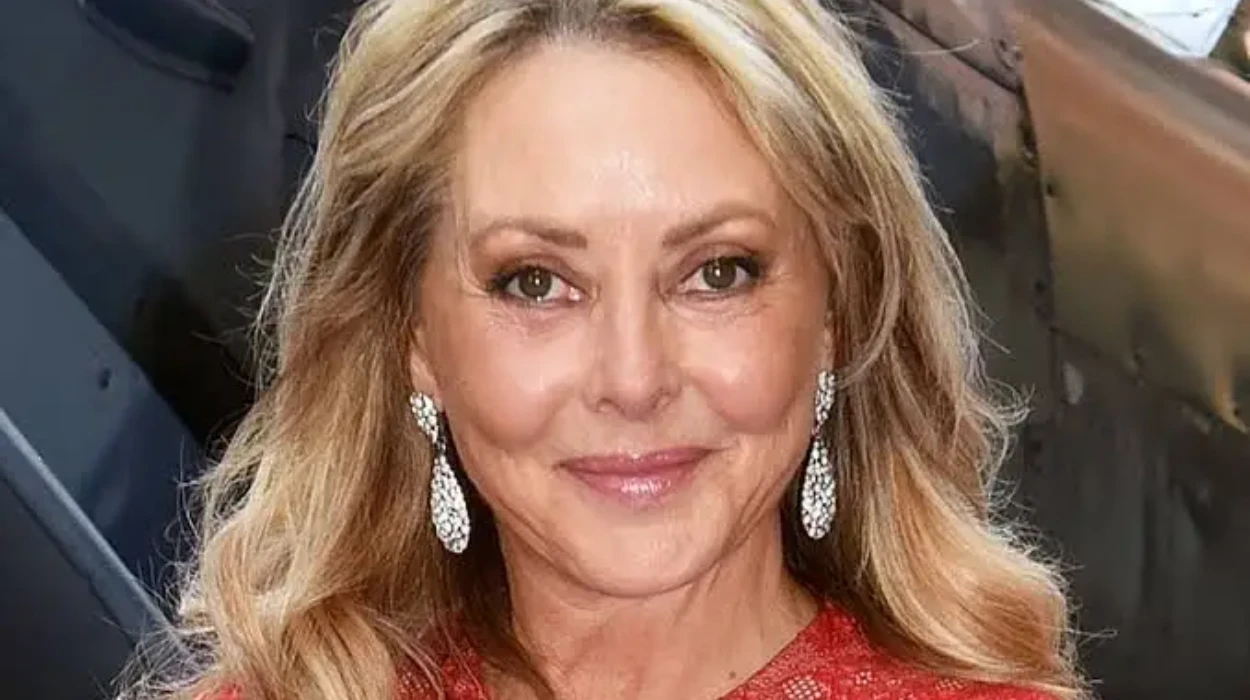
Carol Vorderman is a British broadcaster, author, and maths campaigner whose career spans television, education, and public advocacy. She became a household name through Countdown, built a wider media career, and remains active in STEM education and public life.
- Who is Carol Vorderman?
- What was Carol Vorderman’s early life like?
- How did Carol Vorderman become famous?
- What other TV work has she done?
- Why is Carol Vorderman associated with maths?
- What awards and honours has she received?
- What is Carol Vorderman’s latest news?
- Why does Carol Vorderman matter today?
- How did her career evolve over time?
- What is the main legacy of Carol Vorderman?
Who is Carol Vorderman?
Carol Vorderman is a Welsh-born broadcaster and writer, best known for Countdown, her mathematics expertise, and her long public profile in British media. She was born in 1960, studied engineering at Cambridge, and later became one of the UK’s most recognisable television personalities.
Carol Vorderman was born on 24 December 1960 and grew up in north Wales in a single-parent family. Her early life is often described in the context of academic achievement, because she won a place at the University of Cambridge at the age of 17 to study engineering. That background shaped her public identity as both a media figure and a numeracy advocate.
Her name is closely linked with mathematics and broadcasting. She became famous for presenting the letters and numbers segments on Countdown, a role that turned her into a familiar face in UK homes. Over time, she expanded beyond quiz television into writing, presenting, campaigning, and educational projects.
What was Carol Vorderman’s early life like?
Carol Vorderman’s early life combined family hardship, strong schooling, and early academic ambition. She grew up in north Wales, excelled in mathematics, and entered Cambridge as a teenager, which established the foundation for both her engineering training and later broadcasting career.
Sources describe her childhood as shaped by financial difficulty and family change. She was raised in a single-parent household, and that experience is frequently linked to her determination and focus on education. Her early academic success mattered because it led directly to higher education at one of the UK’s most selective universities.
At Cambridge, she studied engineering. That detail matters because it explains why she later became associated with technical competence and numerical fluency on television. Her career did not begin in broadcasting; it began in engineering and professional training, including work at Dinorwig Power Station and later in Leeds.
Her transition from engineering to media shows a common pattern in long-running public careers. A strong specialist background created credibility, and that credibility helped her later television work stand out. For readers searching for her biography, this early period is essential because it explains both her public persona and her long-standing educational interests.
How did Carol Vorderman become famous?
Carol Vorderman became famous in 1982 when she joined Countdown as a co-host. Her mathematical skills, clear presentation style, and long tenure on the show turned her into a nationally known broadcaster and established her as a major television personality.
Her television break came from a newspaper advertisement seeking a woman with strong mathematical ability for a new Channel 4 quiz show. She won the role and became part of Countdown from its launch in 1982. This gave her immediate recognition, because the show became one of British television’s longest-running quiz formats.
She remained associated with Countdown for many years, leaving in 2008. That long run gave her unusual stability in a media environment where presenting jobs often change frequently. It also made her one of the most familiar women on UK daytime television.
The show mattered beyond celebrity value. It positioned mathematics as entertaining and accessible to a wide audience. In practical terms, her role helped normalise numeracy in mainstream entertainment, which later supported her educational work.
What other TV work has she done?
Carol Vorderman built a broad television career after Countdown. She presented and appeared on entertainment, lifestyle, and discussion programmes, including ITV shows, panel programmes, and reality television, which expanded her profile beyond quiz broadcasting.
After Countdown, she continued working across British television. Reports list appearances on shows such as How 2, Better Homes, The Pride of Britain Awards, Have I Got News for You, The Sunday Night Project, Loose Women, and Lorraine. This range shows a move from specialist quiz presenting into mainstream entertainment and talk formats.
She also took part in reality and competition programmes. These included Strictly Come Dancing in 2004, I’m a Celebrity… Get Me Out of Here! in 2016, and The Great Celebrity Bake Off in 2020, which she won. Such appearances kept her visible to new audiences and reinforced her status as a long-standing public figure.
Her media work includes radio as well. That matters because it shows her career is not limited to television nostalgia; she has remained active across multiple formats. For broad audience search intent, this part of her biography demonstrates career continuity rather than a single defining role.
Why is Carol Vorderman associated with maths?
Carol Vorderman is associated with maths because her television fame began with numeracy, and her later work focused heavily on education. She chaired a government taskforce on maths education, created a learning platform, and supported primary pupils during the Covid period.
Her public identity is strongly linked to numeracy because of Countdown. That association became more substantial when she moved into education advocacy. She chaired a government taskforce to improve maths education for children from 2009 to 2011. This gave her work a policy dimension, not just a media dimension.
She also founded themathsfactor.com, which supported around half a million primary pupils during the Covid pandemic. That statistic is important because it shows scale and practical impact. It also places her work in a real educational context, where families and children needed accessible home-learning support.
Her contribution to STEM education has been publicly recognised. Swansea University awarded her an Honorary Doctor of Science degree in 2025 for services to broadcasting and STEM education. Recognition like this confirms that her influence extends beyond entertainment into education and public service.
What awards and honours has she received?
Carol Vorderman has received major public recognition, including an MBE in 2000 and an honorary doctorate in 2025. These honours reflect her contributions to broadcasting, mathematics education, and public engagement with STEM.
She was appointed MBE in the Queen’s Birthday Honours in 2000. The MBE is a British honour awarded for service and achievement. In her case, the honour reflects the visibility and staying power of her broadcasting work, as well as her wider public role.
In December 2025, Swansea University awarded her an Honorary Doctor of Science degree. The university described the award as recognition for broadcasting and STEM education. This is significant because honorary degrees are given to people whose public work has had clear educational or social value.
Her honours also connect to her Welsh background. Swansea University’s recognition followed earlier links with the institution, including a 2021 lecture and the creation of a maths bursary associated with her name. That shows her public image includes both celebrity and institutional academic respect.
What is Carol Vorderman’s latest news?
Carol Vorderman’s latest notable news is her 2025 honorary doctorate from Swansea University, which recognised her broadcasting career and support for STEM education. Recent coverage also describes her continued media presence in 2026 and her ongoing role as a public broadcaster.
The strongest recent verified update is the Swansea honour in December 2025. The award highlighted both her television career and her contribution to maths education.
By March 2026, press coverage still described her as active in television promotion and daytime appearances. That indicates she remains a current media figure rather than a retired nostalgia act. Her visibility continues to be driven by a mix of presenting work, public appearances, and her long-established reputation.
Why does Carol Vorderman matter today?
Carol Vorderman matters today because she represents a rare combination of television longevity, STEM advocacy, and public trust. Her career shows how a broadcaster can move from entertainment into education and remain relevant across decades.
Her importance lies in reach and consistency. Few UK presenters stay visible for as long while also building a second public identity in education. She did not remain only a quiz-show figure; she used her profile to support numeracy, children’s learning, and STEM engagement.
She also matters in the context of women in mathematics and broadcasting. Her public career challenged the idea that technical expertise and mainstream TV success belong to separate worlds. That makes her a useful figure in discussions about representation, education, and popular media.
For readers and search engines, her biography has a clear structure. Early academic achievement led to engineering training, engineering led to a television audition, television fame enabled broader influence, and that influence expanded into education and honours. This creates a complete, searchable story with strong entity connections across biography, career, and current relevance.
Explore More about Politics:
Rachel Reeves Biography, Career, Net Worth and Updates Today
James Roscoe Biography: Age, Career, Life Story & Updates
How did her career evolve over time?
Carol Vorderman’s career evolved from engineering to television, then into writing, public presenting, and maths advocacy. The pattern is clear: specialist knowledge created media opportunity, and media visibility created long-term educational influence.
The first phase was academic and technical. She studied engineering at Cambridge and worked in technical roles before entering television. This is important because it differentiates her from presenters who begin solely in performance or entertainment.
The second phase was broadcast fame. Countdown gave her stable national visibility and a signature public image. During this stage she became a familiar face in entertainment television and expanded into other hosting opportunities.
The third phase was public service and advocacy. She used her profile to support maths education, join government work on numeracy, and build learning resources. The latest phase is continued recognition and media presence, including the Swansea honorary doctorate and ongoing television coverage in 2026.
What is the main legacy of Carol Vorderman?
Carol Vorderman’s main legacy is that she made mathematics familiar to mass audiences while building a durable British media career. Her legacy combines broadcasting success, educational advocacy, and public recognition for STEM support.
Her television legacy is rooted in Countdown. She helped define the programme’s identity for more than two decades, which gave the show a stable public face. That kind of continuity is a major reason she remains culturally recognisable.
Her educational legacy is equally strong. The government taskforce role, the maths learning platform, and the half-million pupils supported during the pandemic all show measurable impact. These details matter because they show results rather than just media presence.
Her broader legacy is a model of reinvention. She moved from engineering into broadcasting and then into educational influence, which gives her biography long-term relevance for readers, students, and general audiences.