Key Points
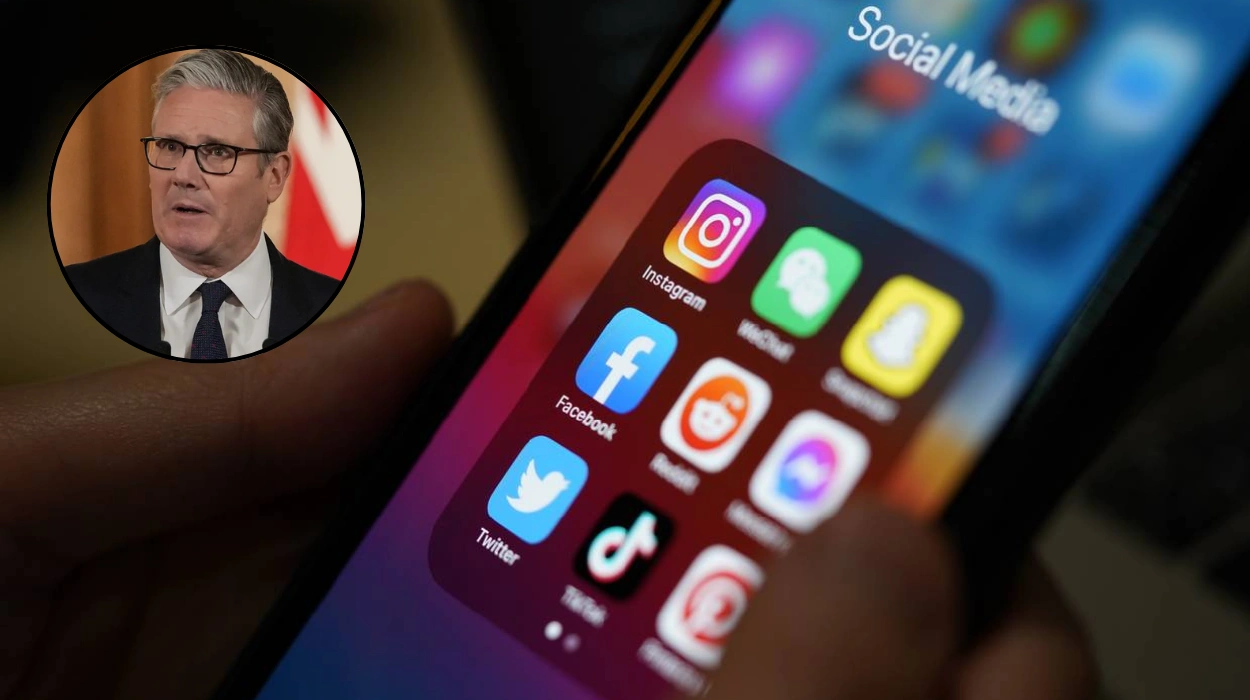
- Britain will ban children under 16 from using major social media platforms — Snapchat, TikTok, YouTube, Instagram, Facebook and X — from early next year, Prime Minister Keir Starmer announced.
- Messaging services such as WhatsApp and Signal will be exempt from the ban.
- The government plans additional limits on contact between children and unknown adults on gaming and livestreaming platforms.
- The policy follows a public consultation with more than 116,000 responses, over 90% supporting restrictions for under-16s.
- The government says it will confront technology companies that resist the rules and defend the change as necessary to protect children’s safety and wellbeing.
- Officials describe the package as a comprehensive approach that targets how children experience harm online, not only the platforms where harm occurs.
- The move places the UK among several countries considering or adopting age-based social media restrictions for minors.
- Legal and technical questions remain around enforcement and age verification, and critics warn of potential unintended consequences for education, free expression and adolescent wellbeing.
- The announcement includes specific platform exemptions and wider proposals for safety settings, but implementation details and timelines will be crucial.
United Kingdom (Britain Today News) June 15, 2026 – Prime Minister Keir Starmer told reporters that children under 16 will be barred from accessing major social media platforms from early next year, a policy he described as “a big moment for our country” intended to protect youngsters from harmful content and to curb online risks to their mental health and safety. As reported by Keir Starmer’s office, the ban will apply to Snapchat, TikTok, YouTube, Instagram, Facebook and X, while messaging services such as WhatsApp and Signal will not be included. Starmer added that the government would press ahead even if platforms push back, saying he was
- Key Points
- Why is the government proposing a ban on social media for under-16s?
- What platforms will be affected and which services are exempt?
- What did Mr Starmer say about confronting tech companies that resist the rules?
- What additional safeguards are being proposed beyond a platform ban?
- What legal and constitutional issues could arise in the UK and abroad?
- What do critics and experts warn about unintended effects?
- Were specific harms or incidents cited by ministers to justify the measures?
- Who will police compliance and what penalties could platforms face?
- What technical options exist for age verification and what are their trade-offs?
- Which stakeholders did the government consult before the announcement?
- What measures protect vulnerable children and those who rely on platforms for support?
- What are the next steps for journalists and citizens tracking this story?
- What comparisons exist with other countries’ approaches?
- What accountability will ministers accept if harms persist?
“not prepared to compromise on the safety and happiness of our children.”
Why is the government proposing a ban on social media for under-16s?
As described at the press conference, the government’s proposal responds to concerns about the effects of social media on children’s mental health, exposure to harmful content, and the ease with which unknown adults can contact minors. The measures follow a public consultation that attracted more than 116,000 responses, with over 90% of respondents supporting restrictions for children under 16, according to official figures released by the Prime Minister’s Office.
What platforms will be affected and which services are exempt?
The announced ban will apply to mainstream social platforms including Snapchat, TikTok, YouTube, Instagram, Facebook and X. Messaging apps such as WhatsApp and Signal are explicitly excluded from the ban, the Prime Minister’s Office said. The government also signalled plans to limit contact between children and unknown adults on gaming and livestreaming platforms, expanding the scope beyond just social networks.
How will the government enforce age limits and verify users’ ages?
Officials acknowledged enforcement and age verification will be among the most complex aspects of the policy. The government intends to require platforms to demonstrate effective age checks and to adopt safer default settings for younger users. At the briefing, ministers suggested a combination of technological age-verification measures and stronger account controls. They said they would set regulatory requirements and have powers to act against companies that do not comply. However, experts warn robust age verification risks privacy concerns and could be circumvented by determined users.
What did Mr Starmer say about confronting tech companies that resist the rules?
Prime Minister Keir Starmer said the government was prepared to confront technology companies that resist the new rules, asserting the state’s obligation to defend children. He said the measures were necessary to “protect children from harmful content” and stressed the government would not compromise on children’s “safety and happiness.” The statement positions the administration for possible legal and political clashes with the technology industry over the scope and speed of implementation.
How did the public consultation shape the policy?
The government cited the results of a substantial public consultation process — more than 116,000 responses — as evidence of public support. Officials emphasised that over 90% of respondents backed restrictions for children under 16, a statistic used to justify the decision and to demonstrate democratic backing. The consultation also informed plans to tackle contact between children and strangers on gaming and livestreaming services.
What additional safeguards are being proposed beyond a platform ban?
Ministers described the package as more than a “blanket ban” on social media access; it will include measures tailored to how children experience harm online. That includes controls on contact with unknown adults on gaming and livestreaming services, safer default settings for younger users, and regulatory obligations for platforms to monitor and reduce systemic risks to minors. The approach aims to address features and behaviours that create harm, not just presence on particular services.
How does this move fit with international trends?
The UK’s decision follows other countries exploring or adopting age-based restrictions. Australia was an early adopter of a broad social media ban for children, which spurred discussion elsewhere. Other nations, including Canada, Brazil and Indonesia, have introduced legislation or limits for minors. Several countries such as Denmark, Thailand and South Korea are considering similar steps. Ministers framed the UK plan as part of a broader global shift toward stronger regulation of online spaces for children.
What legal and constitutional issues could arise in the UK and abroad?
Although the United Kingdom does not face the same First Amendment constraints as the United States, the policy raises legal questions about proportionate regulation, data protection and the rights of young people. Legal experts have pointed to the difficulties of crafting age-verification laws that are effective while respecting privacy and free expression. The government maintains it will design legally robust measures and be ready to litigate where necessary to uphold children’s safety.
What do critics and experts warn about unintended effects?
Child safety campaigners and some technologists support stronger protections but warn a blanket age ban could have unintended consequences. Critics argue it may drive younger users to unregulated services or lead to unsafe workarounds, like sharing older relatives’ accounts. There are also concerns about restricting access to educational content and digital literacy resources commonly hosted on mainstream platforms. Privacy advocates caution that some age-verification technologies may require collecting sensitive data and could expose children to new risks.
How will schools and educators be affected?
Educators use mainstream platforms for teaching, parental engagement and student projects. The government stated it would issue guidance to educational institutions to ensure legitimate educational uses — for example, supervised classroom account access — can continue. Ministers pledged to consult schools and sector bodies so that protective measures do not undermine teaching resources or pastoral support delivered via digital platforms.
Were specific harms or incidents cited by ministers to justify the measures?
At the announcement, ministers cited research and case examples about exposure to harmful content, cyberbullying and the role social media can play in exacerbating mental health issues among adolescents. The public consultation responses, the government said, provided abundant evidence from parents and professionals who described hurtful experiences and genuine fears about children’s online experiences.
How quickly will the ban take effect and what is the implementation timetable?
The Prime Minister said the ban will begin in early 2027. The government will publish detailed regulatory guidance and secondary legislation to set out compliance requirements for platforms. Officials indicated there will be a phased process, during which companies must demonstrate their systems and checks meet statutory standards or face enforcement action.
Who will police compliance and what penalties could platforms face?
Regulatory oversight will be assigned to existing digital safety authorities, which will be given powers to inspect platforms, demand compliance and impose penalties for breaches. The government signalled fines and sanctions are possible where companies fail to implement required protections, although ministers did not provide a full penalty schedule at the press briefing.
What technical options exist for age verification and what are their trade-offs?
Potential age-verification methods include document checks, facial biometrics, credit-card or phone-number checks and third-party verification services. Each has trade-offs: document or biometric checks raise privacy concerns; credit-card or phone checks can exclude some children and be bypassed; third-party services concentrate sensitive data. The government will need to balance effectiveness with privacy and accessibility.
Which stakeholders did the government consult before the announcement?
The government referenced parents, teachers, children’s charities and digital safety experts as contributors to the public consultation. Ministers said they also considered international precedents and technical advice from relevant regulatory bodies in crafting the policy.
How are platform companies likely to respond?
While some companies have previously supported stronger child protections, others may challenge the legal basis for age-based restrictions or argue the technical requirements are unworkable. Platform responses will likely mix public statements promising cooperation with private lobbying and possible legal challenges, especially where enforcement obligations are onerous.
What measures protect vulnerable children and those who rely on platforms for support?
Ministers emphasised that exemptions and safeguards will be considered for vulnerable children who rely on online communities and services for support. The government pledged to work with child welfare organisations to ensure protective measures do not cut off essential support networks.
What are the next steps for journalists and citizens tracking this story?
Journalists should monitor secondary legislation, industry consultations, and regulatory guidance to track how the policy becomes law. Citizens and organisations with concerns can participate in ongoing consultations and seek briefings from government departments and digital safety regulators.
Explore More about UK:
Morning Traffic Crash at Highway 9 and 23 Intersection Leaves Injuries
Far-Right vs Anti-Racism Protests Erupt Across UK Cities Following Belfast Riots
What comparisons exist with other countries’ approaches?
Australia introduced a broad social media ban that influenced debate in other jurisdictions. Several countries have pursued age-targeted restrictions or feature-specific regulations. Legal scholars have recommended that regulating harmful features, rather than issuing absolute bans, can offer a legally durable path for countries with strong free-speech protections.
Are there independent studies on whether age-based bans reduce harm?
Evidence is mixed. Some studies suggest reducing unsupervised exposure can lower certain harms, such as cyberbullying and exposure to extreme content; others show restrictive measures can push children to less-moderated corners of the internet. Experts generally recommend combining age limits with education, parental engagement and platform design changes to reduce risk.
What accountability will ministers accept if harms persist?
Ministers have said they will review the policy’s impact and adjust rules as evidence emerges, though they insisted the broad approach is necessary now. The government will publish monitoring results and update the public on compliance and outcomes as part of planned transparency measures.
As reported by the Prime Minister’s Office at the press conference, Keir Starmer said:
“We are not prepared to compromise on the safety and happiness of our children.”
That line summed up the administration’s public rationale for the measures.