Key Points
- Greater Manchester mayor Andy Burnham warns UK is heading towards “poisonous” US-style politics under current Labour leadership
- Burnham says discourse is becoming more polarised and “communities don’t work together any more” during campaign speech
- The Mayor hopes to return to Westminster in next week’s Makerfield by-election and has made no secret of Labour leadership ambitions
- Burnham has been critical of Sir Keir Starmer’s direction as Labour leader
- He told audience: “path we are on, if not careful, is a path towards the politics of the United States of America, a polarised, poisonous politics”
- Burnham said he would not be “squeamish” about reducing welfare bill to fund defence spending
- Defence secretary John Healey and armed forces minister Al Carns resigned over long-delayed defence investment plan (Dip)
- Burnham stated “the world has changed” and Government must adjust assumptions about defence spending
- Sir Keir Starmer spoke to Nato secretary general Mark Rutte about the Dip on Saturday morning
- Downing Street spokesperson said Nato secretary general welcomed UK’s increased defence investment
- Burnham said he would guarantee 45-day work placement for all 16-18-year-olds
- He promised “massive expansion of apprenticeships” in his speech
- Makerfield by-election takes place Thursday June 18, 2026
- Expected race between Burnham and Reform UK candidate Robert Kenyon
Greater Manchester (Britain Today News) June 13, 2026 – The United Kingdom is on a dangerous path towards replicating the “poisonous” political divisiveness seen in the United States under the current Labour leadership, according to Andy Burnham, the Greater Manchester mayor who has openly declared his ambitions to become Labour’s next leader.
- Key Points
- What Did Andy Burnham Say About UK Politics?
- Who Is Andy Burnham and What Are His Political Ambitions?
- Why Is Burnham Criticising Sir Keir Starmer’s Leadership Direction?
- What Did Burnham Say About Defence Spending and Welfare Reductions?
- How Did the Defence Secretary Resignations Impact Burnham’s Position?
- What Did Downing Street Say About NATO and Defence Investment?
- What Youth Employment Policies Did Burnham Propose?
- When and Where Is the Makerfield By-Election?
- Who Is Burnham’s Main Competitor in the By-Election?
- What Does Burnham’s Warning Mean for Labour Party Future?
- How Does Burnham’s Position Compare to Other Labour Voices?
- What Are the Broader Implications for UK Politics?
- What Next for Andy Burnham’s Political Career?
What Did Andy Burnham Say About UK Politics?
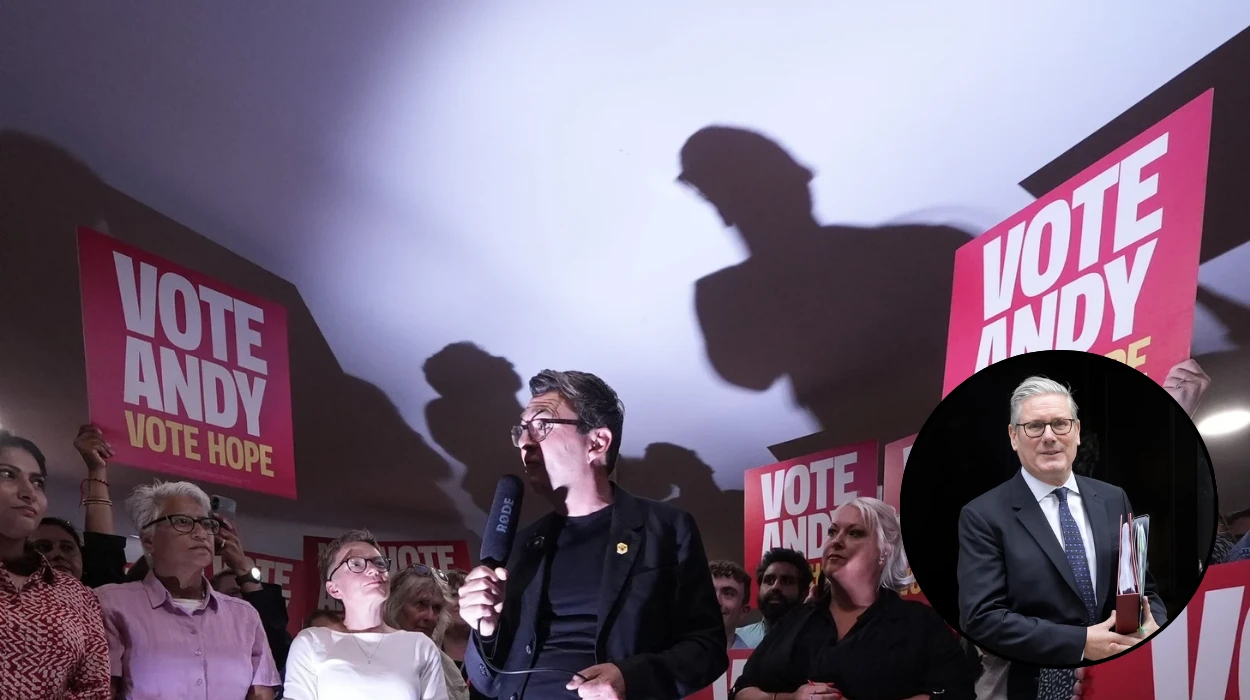
As reported by the campaign speech coverage, Greater Manchester mayor Andy Burnham delivered stark warnings about the country’s political trajectory during a recent campaign event.
“Does anyone here feel that we can just stay on the path that we’re on as a country?”
Burnham asked the audience, setting up his critical assessment of the current political direction.
He continued his rhetorical questioning with increasing intensity:
“It doesn’t feel doable, does it? It doesn’t feel that we’re heading in the right direction. It doesn’t feel like we’re heading to better lives for people. Things are getting harder, and politics is getting more polarised, and the path we’re on, if we are not careful, is a path towards the politics of the United States of America, a polarised, poisonous politics where people in communities don’t work together any more”.
Burnham’s criticism extends beyond general observations about polarisation. He specifically highlighted the breakdown in community cohesion, stating that “communities don’t work together any more” during his campaign speech. This observation about social fragmentation forms the core of his argument that the UK is adopting harmful American political characteristics.
Who Is Andy Burnham and What Are His Political Ambitions?
The Greater Manchester mayor, who hopes to return to Westminster in next week’s Makerfield by-election, has made no secret of his Labour leadership ambitions. Burnham’s political positioning is significant because he occupies a dual role as both a regional mayor and an aspiring national leader, giving his comments particular weight within Labour Party circles.
Burnham’s critical stance toward Sir Keir Starmer’s direction as Labour leader has been consistent and public. His willingness to challenge the current leadership from within demonstrates his readiness to compete for the party’s top position. The Makerfield by-election represents his immediate political goal, but his broader ambition clearly extends to the Labour leadership itself.
Why Is Burnham Criticising Sir Keir Starmer’s Leadership Direction?
Burnham’s criticism of Sir Keir Starmer centers on what he perceives as a fundamental misdirection of the Labour Party and the country. As reported during the campaign speech coverage, Burnham has been critical of Sir Keir Starmer’s direction without specifying every policy detail, focusing instead on the overall trajectory and its consequences for ordinary people.
The mayor’s argument suggests that Starmer’s leadership is failing to address the growing polarisation in British society. Burnham appears to believe that the current approach is exacerbating divisions rather than healing them, potentially importing the worst aspects of American political culture into the UK context.
What Did Burnham Say About Defence Spending and Welfare Reductions?
In a significant policy statement, Burnham said he would not be “squeamish” about reducing the welfare bill to fund defence spending. This position represents a clear break from traditional Labour orthodoxy on welfare protection and demonstrates his willingness to make controversial fiscal choices.
The context for this statement emerged after the resignation of defence secretary John Healey and armed forces minister Al Carns over the long-delayed defence investment plan (Dip). These resignations created a political crisis around defence policy that Burnham is now addressing with his hardline stance.
After these resignations, Mr Burnham said “the world has changed” and it was “obvious” the Government would have to adjust its assumptions about defence spending in response. This framing suggests that global geopolitical shifts necessitate a fundamental rethinking of Britain’s defence priorities, even if it means cutting welfare spending.
How Did the Defence Secretary Resignations Impact Burnham’s Position?
The resignation of defence secretary John Healey and armed forces minister Al Carns over the long-delayed defence investment plan created significant political turmoil within the Labour government. These high-profile resignations demonstrated internal disagreement about defence policy priorities and left Burnham as a vocal advocate for increased defence spending.
Burnham’s response to these resignations was to frame them as evidence of an outdated governmental approach. “The world has changed,” he stated, arguing that
“it was obvious the Government would have to adjust its assumptions about defence spending in response”.
This positioning allows him to present himself as someone who understands contemporary geopolitical realities better than the resigned ministers.
What Did Downing Street Say About NATO and Defence Investment?
Sir Keir Starmer spoke to Nato secretary general Mark Rutte about the Dip on Saturday morning, demonstrating the government’s engagement with international allies regarding the defence investment plan. This high-level diplomatic contact suggests the government is attempting to maintain confidence in Britain’s defence commitments despite internal turmoil.
A Downing Street spokesperson said:
“The Nato secretary general welcomed the UK’s increased investment in defence as an important contribution to the Alliance and to meeting the threats we face”.
This official statement frames the UK’s defence positioning positively from an international alliance perspective, potentially countering Burnham’s criticism that the government is not adequately addressing defence needs.
The NATO secretary general’s welcome of increased British defence investment represents international validation of the UK’s defence direction, even as internal Labour Party disagreements continue.
What Youth Employment Policies Did Burnham Propose?
Beyond his criticism and defence spending proposals, Burnham outlined specific youth employment initiatives in his speech. Elsewhere in his speech, Mr Burnham said he would guarantee a 45-day work placement for all 16 to 18-year-olds, as well as a “massive expansion of apprenticeships”.
These youth employment proposals represent Burnham’s attempt to balance his controversial defence spending stance with traditional Labour concerns about young people’s opportunities. The 45-day work placement guarantee provides concrete support for teenagers entering the workforce, while the apprenticeship expansion promises longer-term vocational training opportunities.
The combination of defence spending prioritisation and youth employment investment suggests Burnham’s attempt to present a comprehensive economic vision that addresses both national security and social opportunity.
When and Where Is the Makerfield By-Election?
The Makerfield by-election takes place on Thursday June 18, 2026, representing Burnham’s immediate political objective. This by-election provides Burnham with the opportunity to return to Westminster as a Member of Parliament, a necessary step before he can seriously compete for the Labour leadership.
The timing is significant because it occurs just five days from Burnham’s campaign speech, creating immediate pressure for his political plans to materialise. The by-election represents a crucial testing ground for his political appeal and his ability to win votes with his controversial policy positions.
Who Is Burnham’s Main Competitor in the By-Election?
The Makerfield by-election is expected to be a race between Mr Burnham and the Reform UK candidate Robert Kenyon. This opposition from Reform UK, the party led by Nigel Farage that has gained significant support through its right-wing populist platform, adds another layer of complexity to Burnham’s political positioning.
The presence of a Reform UK candidate in the same election creates interesting political dynamics, as Burnham’s own positions on defence spending and welfare reduction overlap somewhat with Reform UK’s populist right-wing approach, even though he remains within the Labour Party. This competition test whether Burnham’s crossover positions can attract voters who might otherwise support Reform UK.
Explore More about Politics:
Al Carns Signals Possible Bid for Labour Leadership
Defence Spending May Lead to Tax Hikes, Keir Starmer Suggests
What Does Burnham’s Warning Mean for Labour Party Future?
Burnham’s warning about the UK heading towards “poisonous” American-style politics carries significant implications for the Labour Party’s future direction. As a potential leadership contender with mayor credentials, his criticism represents internal dissent that could challenge Starmer’s authority if it gains broader support within the party.
The mayor’s argument that “politics is getting more polarised” and that communities no longer work together suggests he believes Labour’s current approach is failing to address fundamental social cohesion problems. His alternative vision appears to combine increased defence spending with youth employment investment, representing a attempt to balance national security concerns with traditional Labour social priorities.
How Does Burnham’s Position Compare to Other Labour Voices?
Burnham’s willingness to reduce welfare spending for defence represents a significant departure from traditional Labour positions on welfare protection. His statement that he would not be “squeamish” about such cuts demonstrates his readiness to challenge party orthodoxy on key economic issues.
The resignations of John Healey and Al Carns over defence investment suggest that Burnham’s position represents one side of an internal Labour debate rather than unanimous party agreement. His contrasting stance with the resigned ministers indicates ongoing disagreement about how to balance defence priorities against other spending commitments.
What Are the Broader Implications for UK Politics?
Burnham’s warning about American-style “poisonous politics” reflects broader concerns about political polarisation in Western democracies. His observation that “communities don’t work together any more” suggests he sees social fragmentation as a fundamental challenge that requires new political approaches.
The comparison to US politics serves as a cautionary tale about what could happen if Britain continues on its current path. Burnham appears to believe that preventing this outcome requires significant policy changes, including increased defence spending and potentially controversial welfare adjustments.
What Next for Andy Burnham’s Political Career?
Andy Burnham’s campaign speech represents both a critique of current Labour leadership and a preview of his own political vision. His combination of defence spending prioritisation, welfare reduction willingness, and youth employment investment presents a distinctive policy platform that challenges traditional Labour orthodoxy while maintaining some core party commitments.
The upcoming Makerfield by-election on June 18 will provide the first test of whether Burnham’s approach can win votes in a competitive election against Reform UK. His success or failure in this by-election will likely influence his ability to mounting a serious challenge for the Labour leadership in the future.
Burnham’s warnings about political polarisation and community fragmentation reflect genuine concerns about the direction of British politics, even as his specific policy solutions remain controversial within his own party. The coming weeks will reveal whether his approach can gain broader support or whether it remains a minority position within Labour.