Key Points
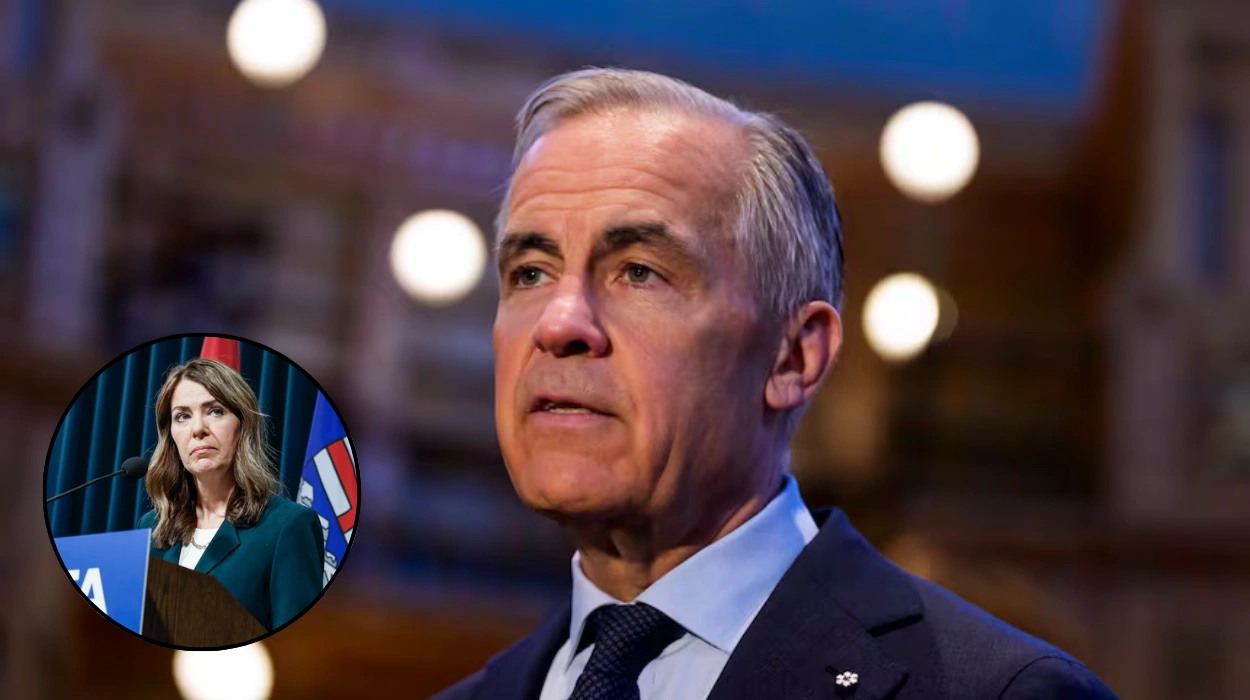
- Prime Minister Mark Carney has described Alberta Premier Danielle Smith’s referendum question on whether to hold a future referendum on separation as “not helpful” and a “dangerous bluff.”
- Speaking at an affordable‑housing announcement in suburban Ottawa, Carney compared the kind of divisive vote to the UK’s Brexit referendum, which he said had serious unintended consequences.
- Carney told reporters that such referendums can backfire when used as bargaining chips in intergovernmental negotiations and said the question as drafted does not align with what Albertans voted for in the last provincial election.
- He confirmed that the federal government is assessing whether Smith’s language on separation triggers the Clarity Act, under which the House of Commons must determine whether a provincial referendum question is clear enough to be posed to voters.
- Carney stated that a question on holding a future separation referendum was not part of the United Conservative Party’s official platform or mandate in the previous campaign, and he implied that Smith had not taken his advice to avoid such a vote.
- Alberta’s referendum is scheduled for 19 October 2026 and will include several other questions on immigration and constitutional reform in addition to the separation‑style query.
- Smith has framed the question as allowing Albertans to decide whether to stay in Canada or authorise the province to begin the constitutional process toward a binding vote on separation, stressing that a “yes” would not mean immediate secession.
Ottawa (Britain Today News) May 25, 2026 – Prime Minister Mark Carney has branded Alberta Premier Danielle Smith’s referendum question on whether to hold a future vote on separation as “not helpful” and warned that such referendums are a “dangerous bluff” that could backfire, much like the UK’s Brexit referendum.
- Key Points
- Why does Carney call this a ‘dangerous bluff’?
- Does the federal government think this triggers the Clarity Act?
- What exactly is Alberta voting on in October?
- How has Smith responded to federal criticism?
- Could this backfire in Canada the way Brexit did in the UK?
- What happens next in the Alberta–Ottawa standoff?
Addressing reporters at an affordable‑housing event in suburban Ottawa, Carney was asked whether he had counselled Smith against holding such a divisive vote. As reported by national political correspondents, Carney replied,
“The premier doesn’t always take my advice,”
before adding that posing these kinds of fundamental questions is not helpful.
Carney went on to say that the kind of referendum Smith has proposed is “not helpful” and that using such votes as leverage in negotiations with the federal government is a “dangerous bluff.” He cited the United Kingdom’s Brexit vote as an example of how a similar plebiscite ended up producing outcomes that were more far‑reaching than many voters and politicians initially expected.
Why does Carney call this a ‘dangerous bluff’?
Carney told reporters that Smith’s referendum question on whether Alberta should move toward a future separation referendum is not what Albertans voted for in the last provincial campaign. He stressed that the issue was not part of the United Conservative Party’s election platform and that there was no mention of it during the previous provincial election race.
According to coverage by national‑wire outlets, Carney argued that using a referendum question on separation as a political bargaining tool is risky because voters may ultimately endorse a path that politicians cannot easily walk back. He warned that once a “yes” or “no” is cast on a question touching the constitutional makeup of Canada, the political, legal, and economic fallout can be much harder to contain than in regular policy negotiations.
Carney also pointed out that the question is not framed in the way Albertans should expect from a party whose mandate they entrusted with governing the province. Reporters noted that he repeated several times that the referendum question was “not on the ballot” and
“not in the mandate or the platforms of the governing party or the official opposition,”
underscoring his view that the province is exceeding the democratic instructions it received.
Does the federal government think this triggers the Clarity Act?
The prime minister’s office has confirmed that federal officials are reviewing Smith’s proposed referendum language to determine whether it activates the Clarity Act. Under that law, the House of Commons must decide whether a provincial referendum question on secession is sufficiently clear before it can be presented to voters.
As explained by constitutional‑affairs analysts quoted in national‑news reports, the Clarity Act sets a high bar for any question that could lead to a break in the Canadian federation, requiring that the question itself be unambiguous and that a “clear majority” be reached in favour of separation. Carney has said the federal government is watching the wording used by Alberta “with interest” and will act if the question is deemed to fall under the Clarity Act framework.
Carney also stated that he would actively campaign against any attempt to separate Alberta from Canada, arguing that the nation is “stronger together.” He reiterated that the federal government would defend the unity of the country while respecting the legal and democratic processes set out in the Constitution.
What exactly is Alberta voting on in October?
Albertans are scheduled to vote on 19 October 2026 in a province‑wide referendum that will include nine other questions on immigration, constitutional reform, and provincial‑federal relations. The 10th question—the one that has drawn national attention—would ask voters whether Alberta should remain a province of Canada or whether the government should begin the legal process required under the Canadian Constitution to hold a binding provincial referendum on separation.
As reported by Alberta‑based journalists, Premier Danielle Smith framed the question as giving citizens a choice between staying in Canada or starting the constitutional steps toward a future referendum on independence. She has repeatedly stated that a “yes” vote in favour of pursuing a second, binding referendum would not trigger immediate separation but would authorise the province to begin the legal groundwork for such a vote.
Court decisions and legal challenges have already shaped the debate: an Alberta Court of King’s Bench ruling earlier this year struck down a separate petition‑driven proposal for a separation referendum, holding that the province had failed to properly consult Indigenous groups whose rights could be affected by secession. That decision has complicated the path to an independence vote and forced Smith’s government to re‑draft its approach using the upcoming referendum machinery.
Explore More about Politics:
Nigel Farage’s Russian Hack Claim Leaves Cyber Chiefs Rolling Their Eyes
Andy Burnham opens door for £35billion land tax if he becomes Prime Minister 2026
How has Smith responded to federal criticism?
Premier Danielle Smith has pushed back against the notion that the referendum is a stunt or a “dangerous bluff,” arguing instead that it reflects long‑standing discontent among many Albertans about their place within Confederation. She has pointed to petitions from both pro‑separatist and pro‑Canada groups, each claiming tens of thousands of signatures, as evidence that Albertans want a formal say on the matter.
In televised statements, Smith has said that the question is designed to give voters a clear option: either to stay in Canada or to allow the province to begin the constitutional process toward a future, potentially binding referendum. She has also stated that she intends to vote for Alberta remaining a province of Canada, adding that this is the position of her government and party.
However, Smith has insisted that ignoring the sentiment behind the petitions would be undemocratic, and that even if the question is ultimately deemed inadmissible under the Clarity Act, Albertans still deserve a transparent conversation about the province’s constitutional future. Some commentators have characterised her move as a political tightrope, balancing nationalist pressure with the reality that polls suggest most Albertans currently oppose separation.
Could this backfire in Canada the way Brexit did in the UK?
Carney’s invocation of Brexit is not merely rhetorical; it reflects a broader concern that putting separation‑style questions to voters can unleash political and economic forces that are hard to control. During the UK’s 2016 referendum, many voters and politicians believed the result could be reversed or softened, but the “leave” outcome ultimately led to a complex and fractious exit from the European Union, with lasting consequences for trade, immigration, and domestic politics.
According to political analysts cited in national‑wire reports, Carney’s warning that this kind of referendum is a “dangerous bluff” hinges on the idea that once a province or region is given a binary choice on leaving the federation, it becomes nearly impossible to treat the question as a negotiating tactic without risking real secession. They note that referendums tend to harden positions, polarise public debate, and make compromise more difficult, especially in federal systems like Canada’s.
Carney has also pointed out that the UK’s Brexit experience showed how a referendum can quickly evolve from a domestic political manoeuvre into a major constitutional and economic shock, with ripple effects across markets and international relations. He has urged all levels of government in Canada to avoid using votes on the country’s territorial integrity as bargaining chips, arguing that such tactics risk fracturing national unity and undermining investor confidence.
What happens next in the Alberta–Ottawa standoff?
With the October 19 referendum date approaching, the relationship between Alberta and the federal government is entering a highly sensitive phase. Federal officials have signalled that they will not simply ignore the wording of Smith’s question, particularly if it appears to skirt the requirements of the Clarity Act.
Legal experts quoted in national‑news coverage say Ottawa could either seek to intervene in the courts, challenge the clarity of the referendum question, or use the Clarity Act to assert that any future separation referendum must meet strict definitional and procedural tests. At the same time, provincial officials in Alberta are expected to defend their right to consult voters on big constitutional questions, even as they navigate the legal and political constraints imposed by the federal framework.
Carney has made clear that his government will campaign against any push for separation, but he has also insisted that the federal response will be grounded in law, precedent, and respect for democratic process. As the referendum campaign unfolds later this year, the federal‑provincial debate over whether Alberta’s question is a legitimate democratic exercise or a risky political gambit will likely dominate national headlines well beyond the October vote.