Key Points
- Andy Burnham has signalled his intention to introduce a land value tax if he becomes Prime Minister, arguing that land in the UK is under‑tax seperate.
- He launched this element of his campaign during the Makerfield by‑election, telling The Telegraph that “land is under‑taxed”.
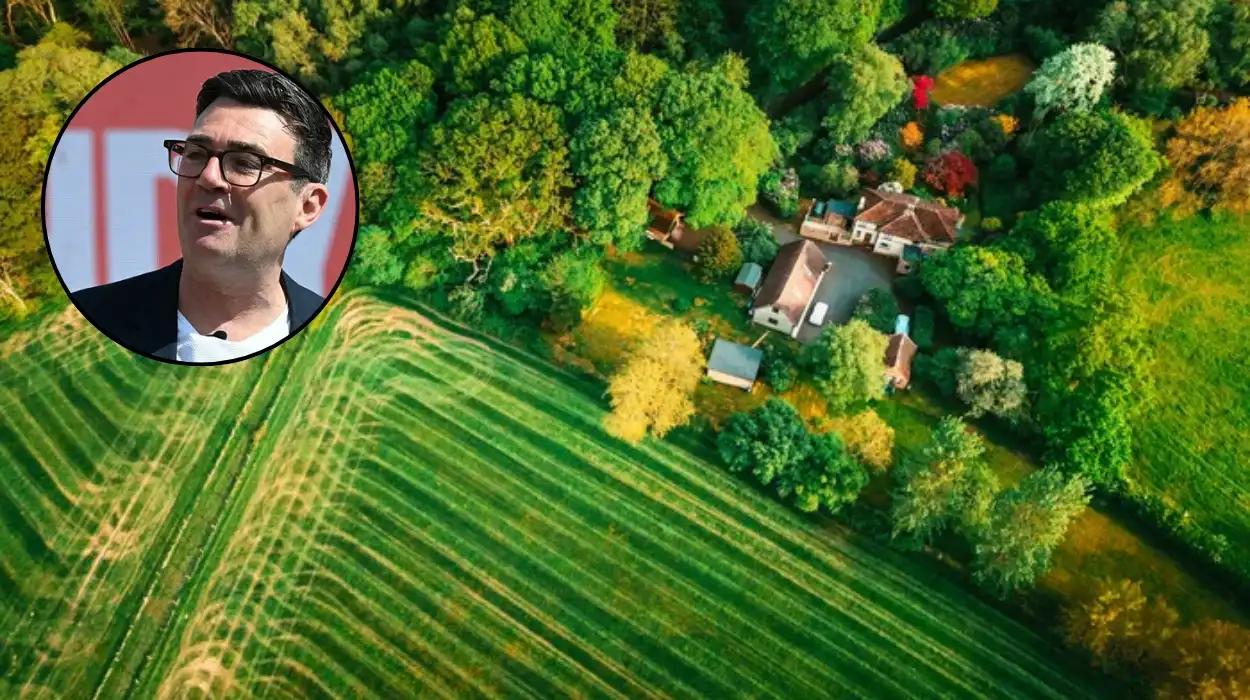
- Burnham highlighted large tracts of unused land across Greater Manchester where there is no significant charge on plots left idle.
- Office for National Statistics figures show UK land was valued at £7.1trillion in 2024.
- A 0.5 per cent levy on that total could raise about £35.5billion a year, while a 1 per cent charge could yield roughly £71billion.
- Burnham has previously supported a land value tax, including during his 2010 Labour leadership bid, when he proposed it as a way to abolish stamp duty, which he described as a “tax on the aspirations of young people”.
- A land value tax is charged on the unimproved value of land, not on buildings or improvements constructed on it.
- Burnham has not yet clarified whether any new land levy would replace existing property taxes or sit alongside them.
- Tax expert Dan Neidle has warned that the policy would largely affect “normal people” rather than just wealthy landowners, noting the UK already taxes land more than other OECD countries.
- Neidle suggested any land value tax would only work effectively if it were used to offset other taxes, such as eliminating or reducing stamp duty and potentially council tax and business rates.
- The intervention comes amid wider Labour‑party tax‑policy debate, with fellow Labour figure Wes Streeting proposing aligning capital gains tax and income tax rates, which he says could raise around £12billion a year.
- Streeting has also floated replacing or reforming inheritance tax with a care‑related levy to give people “peace of mind while they’re alive”, echoing proposals he made as health secretary under Gordon Brown between 2009 and 2010.
- Those earlier proposals included a flat 10 per cent estate tax to fund universal free social care; the Conservatives later branded such a plan a “death tax” during the 2010 General Election with campaign material featuring a tombstone marked “RIP off”.
- Burnham has also backed reforms to council tax, which he described as “highly regressive”, and has called for cuts to business rates for hospitality venues, to be funded through expanded tourist levies.
England (Britain Today News) May 23, 2026 – Greater Manchester Mayor Andy Burnham has opened the door to a major overhaul of the UK’s tax system by floating the possibility of a nationwide land value tax worth around £35billion a year if he were to become Prime Minister. Burnham argued that British land is currently under‑taxed, positioning the idea at the heart of a broader vision for a “fairer” tax regime.
Burnham unveiled his thinking during campaigning in the Makerfield by‑election, using the northern industrial seat as a political springboard to set out a platform that could appeal beyond the devolved powers of his mayoral role. As reported by The Telegraph, he told reporters:
“I think land is under‑taxed,”
and went on to cite vast areas of unused land across Greater Manchester where there is in practice no meaningful charge on plots left idle.
The comments come against a backdrop of official data showing that UK land was valued at £7.1trillion in 2024, according to the Office for National Statistics (ONS).
“If you start from the premise that land is under‑taxed, there is a very large amount of money sitting on the table,”
one party source told The Telegraph, adding that even a modest levy could generate tens of billions of pounds annually.
What would a land value tax look like?
A land value tax differs from most traditional property taxes because it is charged on the unimproved value of the land itself, rather than on buildings or other improvements constructed on it. In practice, this would mean that owners of undeveloped or under‑developed plots could face higher annual charges, while those who build or intensively use land might see relatively lower effective rates.
Burnham has previously backed such a levy, including during his unsuccessful 2010 Labour leadership bid, when he proposed using it as a tool to abolish stamp duty. As he put it at the time, stamp duty was a “tax on the aspirations of young people,” and he argued that shifting the burden onto land values would make it easier for first‑time buyers to move into the housing market.
Yet in his latest intervention, Burnham did not specify whether any new land‑based levy would replace existing property taxes or simply operate alongside them. When asked by The Telegraph whether a new land tax would fully supplant council tax or business rates, he declined to give a definitive answer, instead suggesting that the policy framework was still being “worked through” within his team and with wider Labour figures.
Explore More about Politics:
EU Could Fast-Track Britain’s Membership If UK Reversed Brexit in 2026
Cost of Living Measures ‘Missed Opportunity’, Says Welsh First Minister 2026
How much revenue could a land tax raise?
Using ONS figures for the total value of UK land in 2024, tax‑policy analysts have sketched out the potential scale of a land‑based tax. A levy of 0.5 per cent on the £7.1trillion total could raise approximately £35.5billion a year for the Treasury, while a 1 per cent charge could yield roughly £71billion.
Those sums are almost on a par with the annual budgets of several major government departments, which has prompted both enthusiasm and caution among experts. As one tax‑policy observer noted in commentary published alongside Burnham’s remarks,
“a 0.5 per cent levy might seem tiny, but when applied to the whole national land base it becomes a very substantial source of revenue.”
At the same time, Burnham has been careful not to present the idea as a finished policy package. In his Makerfield speech to supporters, he emphasised that the land‑value‑tax concept was “a principle” rather than a “ready‑to‑roll” bill, saying that any detailed design would require further consultation with local authorities, business groups, and the Treasury.
Who would actually pay the land tax?
Tax expert Dan Neidle has sounded a note of caution about how such a policy would fall on different groups. As he told The Telegraph,
“The vast majority of people you are going to tax are normal people,”
arguing that much of the UK land‑value base is made up of residential property owners, not just large corporate landowners.
Neidle also pointed out that the UK already taxes land more heavily than most other OECD countries, including through existing council tax, business rates, and stamp duty arrangements.
“In that context, simply layering on a new land charge without taking anything away could be highly regressive,”
he said.
For the policy to be politically and economically sustainable, he suggested that any land value tax would need to be used to offset other taxes. Specifically, he outlined a scenario in which revenue from the land tax could be recycled into abolishing stamp duty and potentially reducing or redesigning council tax and business rates.
“If it’s a revenue‑neutral swap, then the debate is about fairness and efficiency; if it’s a straight‑up tax rise, the political barriers are much higher,”
How does this fit with Labour’s broader tax debate?
Burnham’s intervention comes amid a wider debate within the Labour Party about how to raise additional revenue while sticking to its pledge not to raise the main rates of income tax, national insurance, or VAT. One of his senior colleagues, Wes Streeting, has signalled that he would seek to align capital gains tax rates with income tax rates, a move he says could raise around £12billion a year.
Streeting has also reignited his earlier proposal to reform or replace inheritance tax with a care‑related levy. As he told The Telegraph,
“I know there’s a great resentment about inheritance tax, so actually just, you know, take that away, perhaps, and look at a care levy,”
arguing that such a shift could give people “peace of mind while they’re alive.”
Those ideas closely mirror proposals Streeting made as health secretary under Gordon Brown between 2009 and 2010, when he advocated a flat 10 per cent estate tax to fund universal free social care. In the 2010 General Election, the Conservatives branded the plan a “death tax,” circulating campaign material featuring a tombstone marked “RIP off,” a line that resonated strongly with older voters.
Burnham’s comments therefore sit within a broader Labour effort to reframe tax policy around “fairness” and automaticity, rather than headline‑grabbing rises on mainstream income‑tax bands.
Council tax, business rates and the hospitality sector
In the same round of remarks, Burnham also criticised the current council tax system as “highly regressive.” He argued that the existing banding structure, which largely dates back decades, fails to reflect contemporary property values and penalises some households more than others.
As an alternative, he has floated reforms that would see the burden redistributed more progressively across properties, potentially using a land‑value‑linked model as part of a wider package. At the same time, he has called for cuts to business rates for hospitality venues, such as pubs, restaurants, and hotels, which he said have been hit hard by recent economic pressures.
Those cuts, Burnham suggested, could be funded by expanding tourist‑related levies, including overnight visitor charges in heavily visited areas. In his remarks to The Telegraph, he defended the idea by saying that
“people who come from outside the city to enjoy our venues and attractions should contribute more to the services that support them.”
Together, the suite of proposals paints a picture of a fiscal platform that is still in development but already beginning to take shape. Whether Burnham can convince Labour colleagues, the public, and the markets that such a land‑based tax would be both fair and administratively manageable will likely be a central question as the party’s next leadership contest and the next general election draw closer.