Key Points
- At least three children were killed when Israeli warplanes targeted the village of Ansar, in southern Lebanon, on Saturday, as well as the village of Deir al-Zahrani, also in the south.
- The Health Ministry and the state-run National News Agency (NNA) in Lebanon blamed the Ansar strike for the deaths of seven people, among them three children and two women, and two others were injured.
- According to the Health Ministry, four were killed and 17 others injured, including a child and 11 women, in a second strike on Deir al-Zahrani.
- Israeli forces also hit the Ali al-Taher ridge that overlooks the town of Nabatieh in the south, a strategic hill.
- The army’s response to an “action” against its forces within an agreed security zone, said the military, was the strikes aimed at “Hezbollah terror infrastructure.
- Lebanese Prime Minister Nawaf Salam called the strikes “extremely dangerous” and said their victims were “not military targets”.
- Ansar was inhabited by an “entire family” who were all killed, Lebanon’s President Joseph Aoun said, and the strikes were a “clear message” to continue negotiations.
- The attacks will be “met with an appropriate response,” Hezbollah said, and suggested that Israeli Prime Minister Benjamin Netanyahu was seeking to shore up political support at home.
- Saturday’s casualties became the worst on a single day since the Israel-Hezbollah truce started 20 June 2026.
- The escalation follows the eighth round of talks in Rome early next month that are being sponsored by the United States between Israel and Lebanon.
- Lebanese authorities say over 4,300 people have been killed in the country since the wider conflict started in March by Israeli strikes.
Lebanon (Britain Today News) August 15, 2026 – Israeli airstrikes on two villages in southern Lebanon killed at least 11 people, including three children, on Saturday morning, in what Lebanese officials have called the deadliest single episode of violence since a fragile truce between Israel and Hezbollah took hold in June. One strike flattened a home on the edge of the village of Ansar, while a second hit the town of Deir al-Zahrani, according to Lebanon’s Health Ministry and the state-run National News Agency (NNA). The Israeli military said the strikes were a response to an attack on its soldiers and vowed to continue operating against threats in the area, while Lebanon’s leadership condemned the assault and Hezbollah promised retaliation, deepening fears over the durability of the ceasefire.
- Key Points
- What Happened in the Israeli Airstrikes on Ansar and Deir al-Zahrani?
- How Many People Were Killed and Injured in Saturday’s Strikes?
- Why Did Israel Carry Out the Airstrikes in Southern Lebanon?
- What Did Lebanese Prime Minister Nawaf Salam Say About the Attacks?
- What Did Lebanese President Joseph Aoun Say About the Strikes?
- How Has Hezbollah Responded to the Israeli Strikes?
- What Is the Israel-Lebanon Framework Agreement and Ceasefire?
- What Do Eyewitnesses in Ansar Say About the Attack?
- How Does This Attack Affect Upcoming Israel-Lebanon Negotiations?
- What Has Been the Wider Death Toll Since the War Began?
- What Happens Next in the Israel-Lebanon Conflict?
What Happened in the Israeli Airstrikes on Ansar and Deir al-Zahrani?
According to Lebanon’s Health Ministry and the NNA, Israeli forces carried out a series of strikes across southern Lebanon in the early hours of Saturday. The first hit a residential home on the edge of Ansar, a village roughly 20 kilometres from the Israeli border, killing seven people and wounding two others. The second strike hit Deir al-Zahrani, also around 20 kilometres from the border, killing four people and wounding 17.
The NNA reported that Israel “escalated its attacks on the south” early on Saturday, describing strikes on the home in Ansar alongside a series of hits on the Ali al-Taher ridge, a strategically important hill overlooking the Nabatieh area. The agency said the strike near Ansar was
“The first at this geographical depth since the ceasefire two months ago.”
underscoring the scale of the escalation compared with previous exchanges.
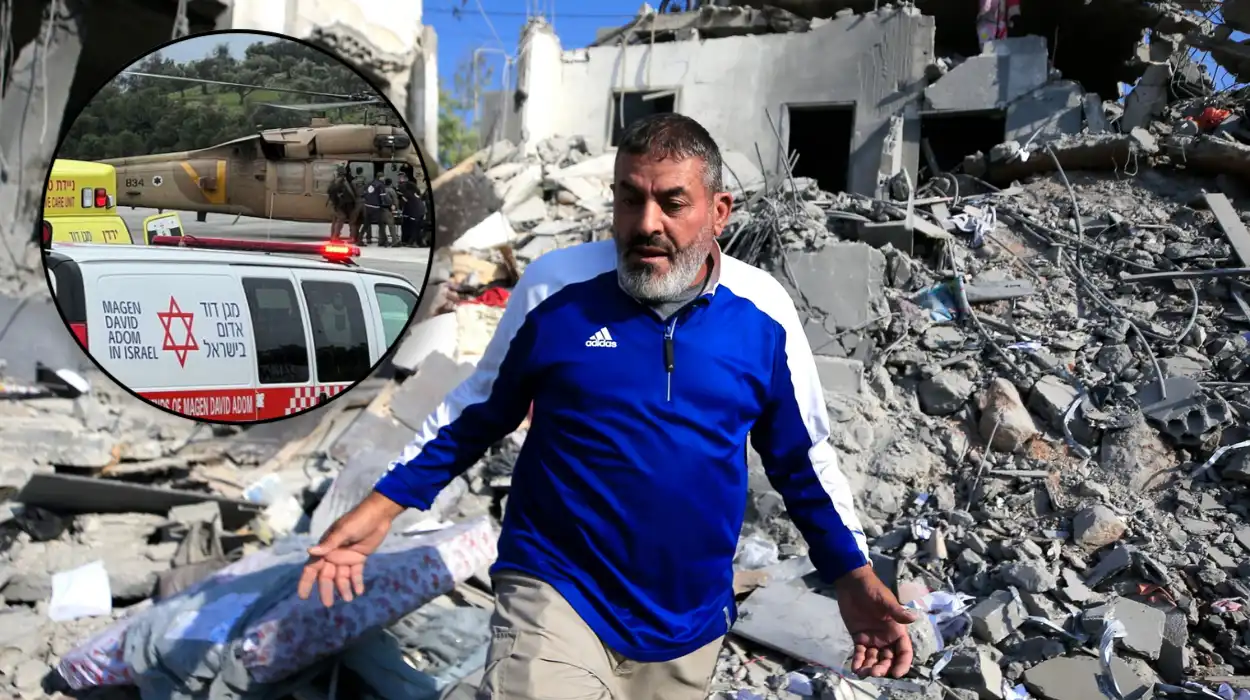
As reported by Agence France-Presse (AFP), whose correspondent visited the scene in Ansar, a residential building had been reduced to rubble, with rescue workers combing through the debris and a nearby swimming pool clouded grey with dust and wreckage. In Deir al-Zahrani, an AFP correspondent described extensive damage to property, with residents seen driving north towards Sidon with belongings packed into their cars.
Shafaq News additionally reported Lebanese media accounts of Israeli artillery fire near the towns of Aitaroun and Mays al-Jabal, machine-gun fire across several southern districts, explosive devices dropped near the village of Kafra, homes set ablaze near the border, and two explosions reported between the towns of Al-Taybeh and Deir Siryan, pointing to a broader pattern of activity across the south on Saturday.
How Many People Were Killed and Injured in Saturday’s Strikes?
The Health Ministry’s figures, relayed through the NNA, put Saturday’s overall toll at 11 dead and at least 19 wounded. Seven people were killed in Ansar, including three children and two women, with two others wounded. In Deir al-Zahrani, the ministry said four people were killed and 17 wounded, among them a child and 11 women. Shafaq News noted that the Deir al-Zahrani toll had risen from an initial report of two dead to four as rescue operations continued, while the Ansar toll of seven remained the single largest loss of life in one location.
President Joseph Aoun said that “an entire family” had been wiped out in the Ansar strike, according to Daily Sabah’s report citing AFP, reflecting the concentrated nature of the casualties in that single attack on a residential home.
Why Did Israel Carry Out the Airstrikes in Southern Lebanon?
As reported by Agence France-Presse (AFP), the Israeli military said in a statement that it had struck “Hezbollah terror infrastructure in the areas of Nabatieh and Ansar” in response to an “action” carried out by Hezbollah against Israeli soldiers stationed on the Ali al-Taher ridge. The army later said Hezbollah had “attacked our forces inside the agreed security zone,” referring to a roughly 10-kilometre-deep strip of Lebanese territory where Israeli troops continue to operate, and described the incident as “a serious violation of the agreement.”
Israel said the strikes were launched after an action targeting its soldiers in the area, adding that it “will continue to operate to remove threats.” The AP also reported that a Hezbollah official did not immediately respond when asked for comment on whether the group had carried out any attack on Israeli forces in southern Lebanon, leaving the precise trigger for the strikes unconfirmed from the Lebanese side at the time of reporting.
What Did Lebanese Prime Minister Nawaf Salam Say About the Attacks?
Lebanese Prime Minister Nawaf Salam said in comments posted on social media platform X.
“the seven martyrs of the Israeli airstrike on the town of Ansar are not military infrastructure, and the children and women killed were not military targets.”
He added that dealing with any military infrastructure in the country was the responsibility of the Lebanese state alone, and said:
“Israel must halt this escalation.”
According to Daily Sabah’s report from AFP, Salam separately warned that the strikes intimidate “residents in their homes” and labelled the escalation “extremely dangerous,” saying it undermined efforts to stabilise southern Lebanon. He stressed that the security of the Lebanese people and their right to life on their own land “are not subject to negotiation or bargaining.”
What Did Lebanese President Joseph Aoun Say About the Strikes?
President Joseph Aoun said Saturday’s attacks were “a clear message” regarding the ongoing negotiations and US efforts to implement the Israel-Lebanon framework agreement. Aoun also said that “an entire family” had been killed in the Ansar strike, highlighting the human cost of the attack as he linked the timing of the escalation to the diplomatic process under way between Beirut, Washington and Israel.
How Has Hezbollah Responded to the Israeli Strikes?
According to Daily Sabah, Hezbollah said the Israeli strikes “will be met with an appropriate response” and called on Lebanese authorities to abandon what it described as the “humiliating path of direct negotiations” with Israel. The group accused Israeli Prime Minister Benjamin Netanyahu of seeking “to escalate the war to strengthen his domestic political position.”
As reported by OrissaPost, Hezbollah urged the Lebanese state to find ways to halt “this aggression” rather than pursue US-sponsored direct talks with Israel, warning that such talks amounted to giving “gifts for the enemy despite the crimes and aggression it is carrying out.” The group added in its statement that “the American side is a partner of the Israeli enemy in its crimes and massacres.”
Parliament Speaker Nabih Berri, an ally of Hezbollah, said the attacks amounted to a call.
“to the sponsors of the negotiations and the ceasefire agreements to bear their responsibility … before it’s too late,”
What Is the Israel-Lebanon Framework Agreement and Ceasefire?
Israel and the Lebanese government announced a framework agreement on 26 June, setting out a plan under which Israeli troops would withdraw from southern Lebanon in exchange for the disarmament of Hezbollah, the Iran-backed militant group. The agreement also laid out steps towards an eventual peace deal between the two countries, which, according to the Associated Press, technically remain in a state of war nearly 80 years after Israel’s founding.
Hezbollah has refused to take part in direct talks with Israel and was not a party to the deal. The Israel-Hezbollah truce itself took effect on 20 June, following a broader war that Hezbollah triggered in March 2026 with rocket fire into Israel in support of its ally Iran. Israel responded with sustained airstrikes and a ground invasion that Lebanese authorities say have killed more than 4,300 people.
Since the ceasefire and framework deal took hold, violence has generally eased, but Lebanon has continued to report intermittent Israeli strikes and the demolition of civilian buildings in southern towns and villages, according to Daily Sabah’s reporting.
What Do Eyewitnesses in Ansar Say About the Attack?
Ansar resident Abbas Khalil, 60, said he had been praying when the strike hit his area.
“We were shocked … There’s no justification for this,”
He told AFP.
Another resident, Mohammed Saab, spoke to AFP while standing beside a swimming pool clouded with debris near the site of the strike. He said he waited every year to rent out his property during the summer season, adding:
“What do I have here for this to happen?”
How Does This Attack Affect Upcoming Israel-Lebanon Negotiations?
The escalation came just as Israel and Lebanon were preparing for an eighth round of US-sponsored direct negotiations, expected to take place in Rome early next month. The two sides had already agreed to the framework deal during talks held in Washington in June.
On the day before the strikes, Hezbollah chief Naim Qassem accused Lebanese authorities of subjecting the country’s armed forces to undue pressure in implementing the agreement, according to Daily Sabah. Earlier in the week, Israeli Defence Minister Israel Katz visited southern Lebanon and vowed to keep troops in what Israel calls the “security zone.” However, a US State Department official was quoted by Daily Sabah as saying that
“a permanent military presence in southern Lebanon is not consistent with the commitments made in the framework.”
pointing to friction between Washington and Israel over the terms of any continued deployment.
The most recent round of talks between Lebanon and Israel took place in Rome earlier this month, according to the original account of events relayed by Lebanese officials, with Hezbollah previously criticising the Lebanese government for what it called too many concessions without proper assurances of an Israeli withdrawal.
Explore More about World:
Colombia Searches for 3,000 Missing After Earthquake Kills 111
Infineon Technologies Shuts Mesa Chip Plant, Cuts 98 Jobs
What Has Been the Wider Death Toll Since the War Began?
Lebanese authorities say that more than 4,300 people have been killed by Israeli strikes in Lebanon since the broader war began in March 2026, according to figures cited by AFP via Daily Sabah. On the Israeli side, earlier reporting has put losses at around 40 soldiers and three civilians. Two Israeli soldiers were killed in an explosion in southern Lebanon earlier this month, marking the first Israeli fatalities since the truce began, underlining how, despite the ceasefire framework, both sides have continued to record casualties in the months since June.
What Happens Next in the Israel-Lebanon Conflict?
With Hezbollah vowing a response and Lebanese officials publicly demanding that international sponsors of the ceasefire “bear their responsibility,” attention now turns to whether Saturday’s strikes derail preparations for the eighth round of negotiations expected in Rome. The Israeli military has signalled it intends to keep operating in what it calls the security zone, while a US State Department official has indicated Washington does not view a permanent Israeli military presence in southern Lebanon as consistent with the framework agreement.
For residents of villages such as Ansar and Deir al-Zahrani, the immediate concern remains the physical toll of the attacks: destroyed homes, disrupted communities and, as President Aoun noted, the loss of “an entire family” in a single strike. Whether Saturday’s escalation proves an isolated episode or the start of a renewed cycle of violence is likely to depend on the coming days of diplomacy between Beirut, Washington, Tel Aviv and Hezbollah’s leadership in Beirut’s southern suburbs.