


Key Points
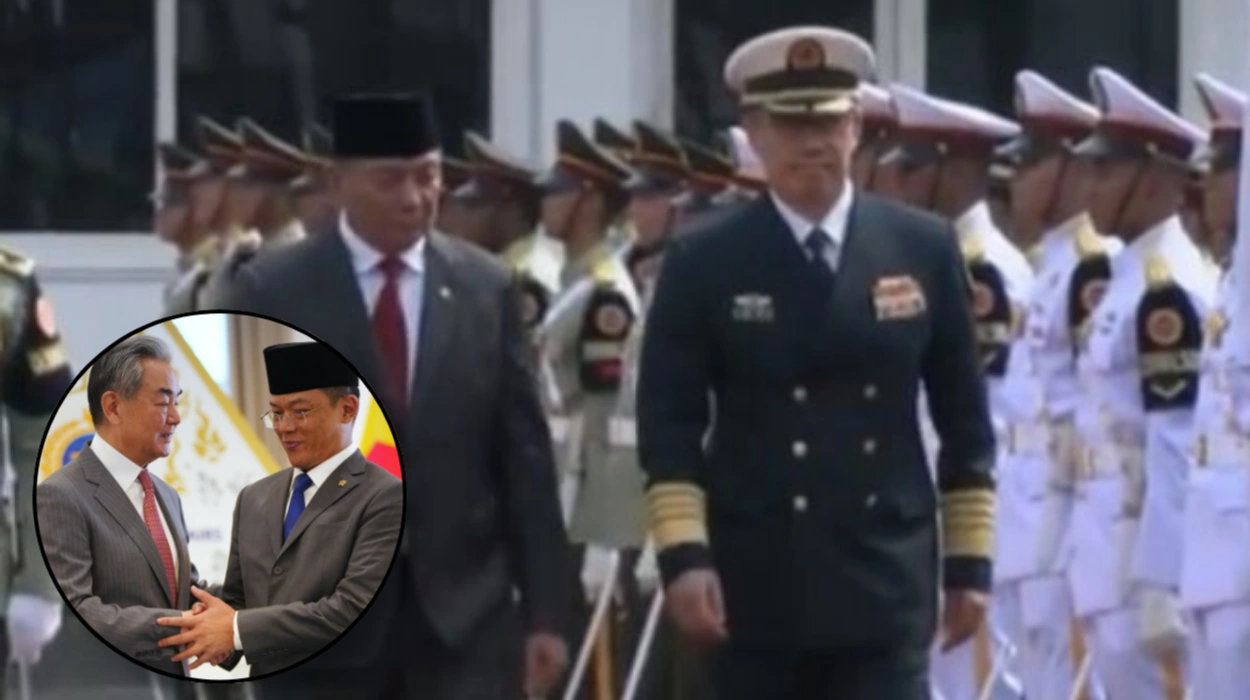
- On Friday, high-level discussions between senior Indonesian and Chinese ministers were held in Jakarta to further strengthen cooperation between the two countries.
- Topics covered included defence, energy, food security, minerals and advanced technology.
- Chinese Foreign Minister Wang Yi said that the two countries would “shed a clear light on our mutual solidarity” through “more profound dialogues.
- According to AP News, the talks were held on food security, energy and mineral security, and advanced technologies such as artificial intelligence, communications satellites and more.
- The Defence Minister of Indonesia, Sjafrie Sjamsoeddin and his Chinese counterpart, Dong Jun, held a meeting to discuss the growth of military cooperation.
- Sjamsoeddin invited the Chinese troops to participate in the Heping Garuda joint exercise.
- The discussions come after the world has again focused on strategic waterways, as the United States and Iran have been engaged in a standoff over the Strait of Hormuz.
- Indonesia maintains a policy of non-alignment, friendly to Washington, but also friendly to Beijing.
- Sensitive bilateral and domestic issues remain to be addressed, such as West Papua and Tibet.
- Better China-Indonesia relations could help create a more multipolar Southeast Asian region, analysts say.
Jakarta (Britain Today News) August 22, 2026 — Senior ministers from Indonesia and China gathered in Jakarta on Friday for a fresh round of talks focused on strengthening defence, energy, food, mineral and advanced-technology cooperation, in a meeting that carries wider significance for the balance of power across the Indo-Pacific. The discussions brought together foreign affairs and defence officials from both countries at a moment when global attention on strategic maritime chokepoints has sharpened considerably.
- Key Points
- What Happened in Jakarta on Friday?
- Why Are Indonesia and China Strengthening Ties Now?
- What Did Wang Yi Say About the Talks?
- What Did Sugiono Reveal About Economic and Technology Cooperation?
- How Are Indonesia and China Expanding Defence Cooperation?
- What Is the Heping Garuda Exercise, and Why Does It Matter?
- Why Does the Timing of These Talks Matter Geopolitically?
- What Differences Remain Between Jakarta and Beijing?
- How Does Indonesia Balance Relations With China and the United States?
- What Could Stronger China-Indonesia Ties Mean for Southeast Asia?
What Happened in Jakarta on Friday?
Officials from Indonesia and China convened for wide-ranging discussions covering several sectors of bilateral cooperation. The agenda spanned defence coordination, energy security, food and mineral resilience, and emerging technologies such as artificial intelligence and satellite communications. The meeting brought together Indonesia’s foreign and defence ministries with their Chinese counterparts, reflecting the breadth of the relationship the two governments are seeking to build.
The talks were not confined to a single ministry or portfolio. Rather, they represented a coordinated push across multiple areas of state policy, suggesting both governments view the relationship as a long-term strategic priority rather than a one-off diplomatic exchange.
Why Are Indonesia and China Strengthening Ties Now?
Indonesia has, for decades, pursued a policy of non-alignment, maintaining close relations with the United States while simultaneously building increasingly significant economic and strategic ties with China. This latest round of engagement fits within that established pattern, with Jakarta continuing to diversify its partnerships rather than aligning firmly with any single power.
For Beijing, Indonesia represents a pivotal regional actor whose geography and influence stretch across the South China Sea, the Strait of Malacca and the wider Association of Southeast Asian Nations (ASEAN) framework. Deepening ties with Jakarta offers China a route to greater regional engagement without confrontation with rival powers.
What Did Wang Yi Say About the Talks?
Chinese Foreign Minister Wang Yi framed the dialogue in terms of solidarity between the two nations. According to the account of the meeting, Wang Yi said stronger dialogue would
“send a clear signal to the world of solidarity and cooperation between our two major emerging-market countries.”
The remarks position the talks within a broader narrative that Beijing has cultivated in recent years, one that emphasises partnership among developing and emerging economies as a counterweight to Western-led institutions and alliances.
What Did Sugiono Reveal About Economic and Technology Cooperation?
Indonesian Foreign Minister Sugiono set out the scope of the discussions in more granular terms. Sugiono said the talks included strengthening food, energy and mineral security through industries that support national resilience, alongside cooperation on artificial intelligence, communications satellites and other advanced technologies.
This framing indicates that Jakarta is seeking to use the relationship with Beijing not merely for immediate economic gain, but to build longer-term domestic resilience in sectors it regards as strategically vital, from food supply chains to next-generation technology infrastructure.
How Are Indonesia and China Expanding Defence Cooperation?
Defence cooperation formed a significant strand of Friday’s discussions. Indonesian Defence Minister Sjafrie Sjamsoeddin met with Chinese Defence Minister Dong Jun to discuss increasing military ties between the two countries. Sjamsoeddin extended an invitation for Chinese forces to participate in joint exercises, including the Heping Garuda exercise.
Such cooperation gives Beijing an additional channel for military diplomacy in Southeast Asia, a region where China has sought to expand its influence through both economic and security engagement. For Jakarta, the arrangement allows it to diversify its strategic partnerships without abandoning its existing defence relationships with other powers, including the United States.
What Is the Heping Garuda Exercise, and Why Does It Matter?
The Heping Garuda exercise, to which Sjamsoeddin invited Chinese participation, represents a concrete example of how defence ties between the two countries could move from dialogue into practical, on-the-ground cooperation. Joint exercises of this kind allow militaries to build familiarity with one another’s equipment, doctrine and command structures.
For China, involvement in such exercises provides visibility and access in a region where its military presence has historically been more limited than its economic footprint. For Indonesia, hosting or including Chinese forces in its exercises signals a willingness to broaden its security partnerships beyond its traditional alignments.
Why Does the Timing of These Talks Matter Geopolitically?
The timing of the Jakarta talks is notable. With tensions between the United States and Iran placing renewed international attention on the Strait of Hormuz, the strategic importance of comparable chokepoints — namely the Strait of Malacca and the South China Sea — has grown correspondingly. These waterways carry a substantial share of global trade and energy shipments, making their stability a matter of significant concern for governments and markets alike.
Against that backdrop, any strengthening of cooperation between Jakarta and Beijing over waterways central to regional and global trade is likely to draw attention well beyond Southeast Asia, given the potential implications for shipping routes, energy security and broader Indo-Pacific stability.
What Differences Remain Between Jakarta and Beijing?
Despite the warmth of Friday’s talks, Indonesia and China continue to hold differing positions on sensitive domestic and regional issues. Indonesia faces ongoing tensions relating to West Papua, while China maintains its own long-standing position on Tibet. Neither issue featured as a headline item in the reported discussions, yet both remain part of the wider context in which the relationship operates.
Geopolitical partnerships of this kind rarely require complete agreement between the parties involved. More often, they rest on sufficient common ground to advance each side’s national interests, even as underlying disagreements persist unresolved.
Explore More about the World:
Norwegian, British and US Forces Conduct Arctic Training on Jan Mayen
Spain’s Hotel Prices Jump 5.9% in July as Valencia Leads Surge
How Does Indonesia Balance Relations With China and the United States?
Indonesia’s diplomatic posture has long rested on maintaining strategic autonomy, engaging both Beijing and Washington without binding itself exclusively to either. Friday’s talks are consistent with that approach, allowing Jakarta to deepen practical cooperation with China across energy, food security, technology and defence, while continuing to preserve its existing ties elsewhere.
This balancing act reflects a broader trend among Southeast Asian states, many of which have sought to avoid being drawn too closely into the orbit of any single major power, instead cultivating relationships with multiple partners to preserve room for independent decision-making.
What Could Stronger China-Indonesia Ties Mean for Southeast Asia?
Observers of regional affairs suggest that deeper economic, energy, technological and defence engagement between China and Indonesia could, over time, contribute to a more multipolar order across Southeast Asia, particularly if such engagement continues to be conducted through diplomacy and economic partnership rather than pressure or coercion.
The broader logic, according to analysts, is that the more regional states hold substantive relationships with multiple major powers, the greater their capacity to resist undue pressure from any single external actor, whether that be Washington, Beijing or Tokyo. Friday’s talks in Jakarta, on that reading, represent one further step in a longer process of regional states diversifying their strategic partnerships amid a shifting global order.
Neither Jakarta nor Beijing indicated a timeline for finalising specific agreements arising from Friday’s discussions, and both sides are expected to continue consultations at the ministerial level in the coming months.