Key Points
- Roadside safety advocates in the US say Flock Safety’s automated licence plate reader (ALPR) cameras may not meet federal and state highway safety standards.
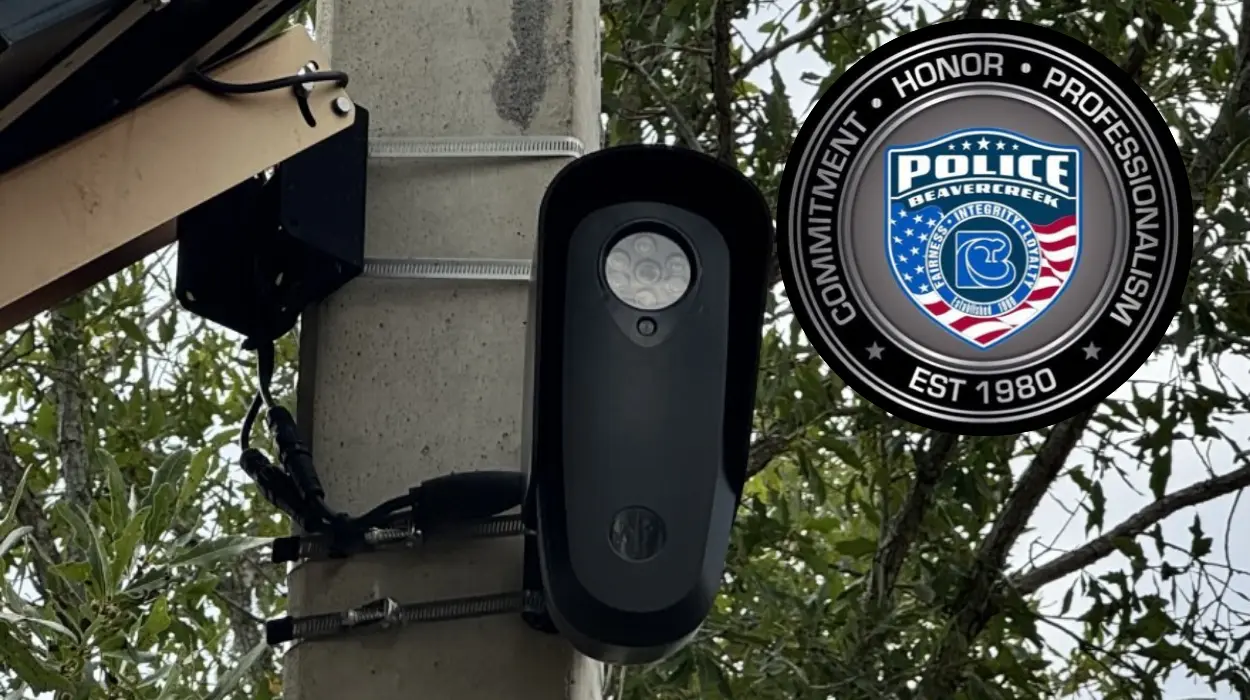
- A camera pole inspected in Greene County, Ohio, was found roughly two feet from the road’s edge, without a breakaway base and painted black with no reflective markings.
- Ohio’s own transportation guidance requires such devices to sit at least eight feet from the nearest travel lane on uncurbed roads.
- Tennessee road-safety campaigner Steve Eimers, known online as the “Guardrail Guy,” says he has found only one Flock pole nationwide fitted with a breakaway plate — and even that was installed too high off the ground.
- Fixed-object collisions accounted for 26% of vehicle deaths in the US in 2024, according to the National Safety Council.
- The Federal Highway Administration requires roadside sign supports within a road’s “clear zone” to be breakaway, yielding, or shielded by a barrier.
- Flock Safety says it follows all local and state siting requirements and has begun a review of its pole installations nationwide.
- Beavercreek police in Ohio say Flock is responsible for the physical installation of its own equipment and that its local cameras were properly approved.
- Ohio’s Department of Transportation says permits are required for ALPR installations within its right-of-way, but it plays no role in reviewing installations within city or village limits.
- Campaigners say other ALPR providers, including Motorola Solutions and Redflex Traffic Systems, face similar criticism over roadside placement.
Ohio (Britain Today News) July 30, 2026 — Roadside safety campaigners in the United States say cameras used by Flock Safety, the company behind one of the country’s largest networks of automated licence plate readers, may be installed in positions that fail to meet basic highway safety requirements, raising fresh questions about a surveillance system already facing scrutiny over privacy and immigration enforcement concerns.
- Key Points
- What Is Happening With Flock Safety Cameras In The US?
- What Did Investigators Find At The Greene County Site?
- Why Does The Absence Of A Breakaway Base Matter So Much?
- What Do Federal Standards Say About Roadside Structures?
- Who Is Steve Eimers And Why Has He Focused On This Issue?
- How Common Are Fatal Collisions With Fixed Roadside Objects?
- What Has Local Law Enforcement Said About The Installations?
- What Has Ohio’s Department Of Transportation Said?
- How Has Flock Safety Responded To The Criticism?
- What Oversight Gaps Remain Around ALPR Pole Safety?
- What Happens Next For Flock Safety And Regulators?
What Is Happening With Flock Safety Cameras In The US?
Flock Safety has built out an estimated 80,000 to 100,000 automated licence plate reader cameras across more than 6,000 communities in the United States. The devices photograph passing vehicles, capturing licence plate numbers alongside details such as make, model and colour, and are marketed to police departments as a crime-fighting and missing-persons tool. Flock has declined to disclose the precise number or location of its devices.
While the system has already drawn criticism from civil liberties groups over its surveillance capabilities, a newer line of concern has emerged: the physical placement of the poles themselves, and whether they represent an unnecessary roadside hazard to passing motorists.
Why Are Safety Advocates Concerned About These Camera Poles?
The core objection is straightforward. Any fixed object placed close to a roadway is a potential hazard if a vehicle leaves its lane, and highway engineering standards exist specifically to reduce that risk — through set-back distances, breakaway designs, and visibility markings. Campaigners argue Flock’s poles, in many cases, meet none of these criteria.
Fixed-object crashes are not a marginal problem. According to the National Safety Council, a non-profit safety organisation, collisions between vehicles and fixed barriers accounted for 26% of all vehicle deaths in the US in 2024.
What Did Investigators Find At The Greene County Site?
At the foot of a tree-lined hill on a narrow, two-lane rural road in Greene County, Ohio, stands a black metal rod topped with a camera and solar panel — a typical Flock Safety installation. The pole is painted black, making it difficult for drivers to spot, particularly after dark, as it carries no reflective surfaces or hazard markings.
It also lacks a breakaway plate, the safety fitting positioned near ground level that allows a pole to snap away on impact, reducing the force transferred to a vehicle and its occupants in a collision.
The pole sits approximately two feet from the edge of the asphalt. The Ohio Department of Transportation’s own guidance states that on roads without kerbs, licence plate readers should be positioned “at least 8 [feet] from the nearest edge of a travel lane” — meaning this installation falls well short of the recommended distance.
Why Does The Absence Of A Breakaway Base Matter So Much?
A breakaway base is designed to fail predictably on impact, allowing a pole to give way rather than acting as a rigid obstruction. Without one, campaigners warn, a solid metal rod can behave far more dangerously in a collision.
Steve Eimers, the Tennessee-based safety campaigner who has spent years documenting roadside hazards after losing his 17-year-old daughter in a crash involving a roadside structure on Interstate 75 a decade ago, has become one of the most vocal critics of Flock’s installation practices. As The Guardian reports, Eimers said:
“Nobody’s been looking at the bottom, and the crashworthy elements.”
He has also drawn a contrast with how other roadside infrastructure is vetted before installation. According to The Guardian’s reporting, Eimers explained that guardrails “had to go through a heavy vetting process,” including crash testing with results submitted for review by state engineers — a level of scrutiny he says has not been applied to ALPR poles.
What Do Federal Standards Say About Roadside Structures?
The Federal Highway Administration has long recognised that sign poles and similar rigid structures can become fatal hazards for motorists who leave the carriageway. This recognition underpins a national standard requiring that all roadside sign supports located within a road’s “clear zone” be either breakaway, designed to yield on impact, or shielded by a barrier or crash cushion.
Roadside safety hardware more broadly — including crash cushions, breakaway supports and transition structures — exists specifically to give errant vehicles a better chance of avoiding serious injury or death. Campaigners argue that ALPR poles, despite functioning as fixed roadside structures in practical terms, are frequently installed without being brought under this same regulatory umbrella.
Who Is Steve Eimers And Why Has He Focused On This Issue?
Eimers, a registered nurse who now dedicates much of his time to roadside safety research, has toured the United States highlighting instances where authorities have failed to meet their own legal requirements for road infrastructure. His video documentation, shared widely across social media, has reportedly attracted millions of views.
He told The Guardian that, of all the Flock installations he has examined nationwide, he has found only one — in Erie County, Ohio — fitted with the required breakaway plate. Even that example, he said, had the plate positioned higher off the ground than federal guidance permits, meaning a vehicle’s underside could still strike the pole and, in the case of a battery-electric or petrol vehicle, potentially trigger a fire.
Summing up his findings, Eimers told The Guardian:
“Flock is not a sophisticated user of roadside safety hardware.”
He also warned of the physical danger posed by a rigid, unyielding pole in a collision, telling The Guardian that without proper breakaway design, “that metal pipe can act like a spear.”
How Common Are Fatal Collisions With Fixed Roadside Objects?
The scale of the underlying risk is significant. As noted above, fixed-object crashes made up more than a quarter of all vehicle deaths recorded in the US in 2024, according to National Safety Council data. Road safety engineering standards exist precisely because removing, relocating or redesigning roadside obstacles has a measurable effect on survival rates when vehicles leave the carriageway. Eimers frames his campaign around this principle directly, telling The Guardian:
“We know that a lot of people leave the road, so we want a forgiving roadside.”
What Has Local Law Enforcement Said About The Installations?
The Beavercreek Police Department, which uses Flock cameras within its jurisdiction in Ohio, has said installation responsibility lies with the company rather than local police. The department maintains that all cameras operating in its area “received the appropriate approval.”
What Has Ohio’s Department Of Transportation Said?
David Rose, a representative of the Ohio Department of Transportation, confirmed that permits are required for work carried out within the state’s right-of-way, including the installation of licence plate reader cameras. However, he noted that state transportation authorities are not directly involved in reviewing ALPR installations, even when the equipment sits on state-controlled land.
Rose added that responsibility shifts to local government where a road falls within municipal boundaries, stating that “all work performed within corporation limits must be approved through the appropriate city or village, as ODOT does not have jurisdiction within corporation limits.” This division of oversight — between state authority on open roads and municipal authority within town and city limits — appears to leave gaps in who is actually checking that individual installations meet safety guidance.
How Has Flock Safety Responded To The Criticism?
Flock and the police departments that use its technology maintain that the cameras remain an effective and valuable crime-reduction tool, citing their role in recovering stolen vehicles and locating missing persons across the country.
The company disputes the suggestion that its installations routinely breach safety rules. A Flock Safety spokesperson, Paris Lewbel, told The Guardian:
“We do not agree with the premise that Flock regularly installs poles in violation of federal, state, or local safety requirements.”
Lewbel added that the appropriate pole type and installation specification depends on factors including the road type, traffic speed, location and the requirements set by the relevant transportation or permitting authority, and confirmed that Flock intended to carry out a review of camera pole installations across its network. Lewbel also said that camera site selection is typically driven by the customer, stating that
“customers generally determine camera locations based on their public safety priorities,”
after which Flock works with that customer on deployment.
Are Other ALPR Companies Facing Similar Criticism?
Flock is not alone in facing this scrutiny. Other companies operating automated licence plate reader systems, including Motorola Solutions and Redflex Traffic Systems, have reportedly also failed in various instances to meet roadside structure requirements — in some cases mounting monitoring equipment on other existing structures in ways that do not comply with state rules.
Campaigners note a pattern in where the risk is concentrated. In urban settings, Flock cameras are frequently mounted on traffic signals or other large existing structures, which reduces the likelihood of a stand-alone collision hazard. In suburban and rural areas, however — where traffic speeds tend to be higher — cameras are more often erected on dedicated, free-standing poles, adding another obstacle for drivers who leave the carriageway at greater speed.
Explore More about World:
Iran Launches Missiles as 20 Fighters Killed in US-Saudi Strikes on Iraq
Mahama urges fast passage of public officers bill
What Oversight Gaps Remain Around ALPR Pole Safety?
A recurring theme in the findings is that ALPR structures, unlike municipal road signs and other authorised roadside infrastructure, are largely escaping routine inspection for compliance with safety requirements. Compounding this, many poles are painted black with no reflective elements, making them harder for drivers to identify at night — a further factor campaigners say increases collision risk rather than mitigating it.
What Happens Next For Flock Safety And Regulators?
Flock Safety has indicated it will undertake a review of pole installations across its network, though no firm timeline has been set out publicly. Responsibility for verifying compliance appears, for now, to remain split between state transportation departments, local municipalities, and the company itself — with campaigners such as Eimers continuing to argue that none of these bodies is currently applying the level of scrutiny given to other roadside safety hardware, such as guardrails and signage. Whether that oversight gap prompts formal regulatory action from state or federal transportation authorities remains to be seen.