Key Points
- Keir Starmer to host Ukrainian President Volodymyr Zelenskyy in the UK on Tuesday, coinciding with the government deadline for Russian oligarch Roman Abramovich to allocate £2.5bn proceeds from Chelsea FC sale to Ukraine war victims.
- Starmer warns that US-Israeli strikes on Iran cannot become a “windfall for Putin” amid ongoing support for Ukraine.
- Abramovich expected to face legal action after insisting the funds, held by Fordstam Ltd, remain his to allocate, including to Russian victims; government source confirms no expectation of compliance by deadline.
- UK Defence Secretary John Healey confirms recent deliveries to Ukraine: 3,500 drones, 18,000 artillery rounds, and 3m rounds of small ammunition.
- Russia earned €6bn (£5bn) from fossil fuel sales in the fortnight since US-Israel war with Iran began, boosting funds for Ukraine invasion.
- Healey links Iranian tactics, including drone and missile attacks, to Putin’s “hidden hand,” benefiting from oil price surge.
- Zelenskyy counters Donald Trump’s claim, stating Ukraine has responded to multiple US requests for drone defence help.
- Last week, Trump activated a one-month US waiver allowing countries to buy Russian oil without sanctions, previously tariffed for nations like India.
- Starmer and Healey reaffirm steadfast UK commitment to Ukraine amid “two conflicts on two continents” supported by an “axis of aggression.”
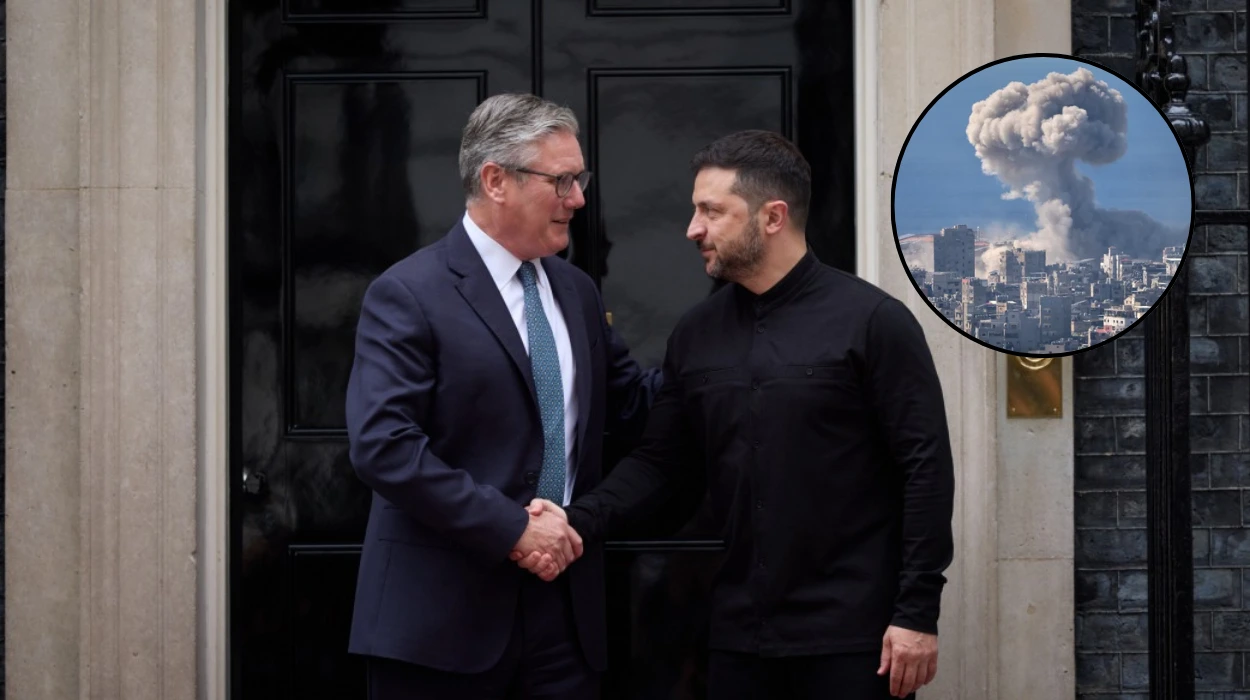
London (Britain Today News) March 16, 2026 – Prime Minister Keir Starmer will host Ukraine’s President Volodymyr Zelenskyy on Tuesday as he warns that US-Israeli strikes on Iran must not provide a financial boost to Russian President Vladimir Putin, amid a key deadline for oligarch Roman Abramovich over the £2.5bn Chelsea FC sale proceeds.
The visit aligns precisely with the British government’s ultimatum to Abramovich, the former Chelsea owner, to direct the frozen funds towards Ukraine war victims. Failure to comply is set to trigger legal action, as reported extensively across UK media.
Why Is Zelenskyy Visiting the UK Now?
Zelenskyy’s arrival underscores the UK’s unwavering support for Ukraine, even as global attention shifts to the escalating US-Israel conflict with Iran. As detailed in The Guardian’s coverage by journalists Peter Walker and Lisa O’Carroll, Starmer emphasised the need to maintain focus:
“It was vital that we continue to focus on supporting Ukraine. We cannot allow the war in the Gulf to turn into a windfall for Putin.”
This statement came during Monday’s Commons discussions, where both Starmer and Defence Secretary John Healey reiterated commitments. Healey, speaking in the House of Commons, confirmed ongoing weapons flows:
“I can confirm today that, over the last month, we have delivered to Ukraine 3,500 drones, 18,000 artillery rounds and 3m rounds of small ammunition,”
as quoted in The Guardian by reporters Andrew Sparrow and Peter Walker.
Healey framed the crises as interconnected:
“We face two conflicts on two continents, supported by an axis of aggression with similar tactics and similar technologies. I say this to the Ukrainian people on behalf of the UK: we will not forget the war in Europe and our total determination to stand with Ukraine remains steadfast, and we will welcome President Zelenskyy to this country tomorrow.”
The timing amplifies pressure on high-profile Russia-linked figures in the UK, with Zelenskyy likely to raise the Abramovich issue directly with Starmer.
What Is the Dispute Over Abramovich’s Chelsea Sale Proceeds?
The £2.5bn from Abramovich’s 2022 sale of Chelsea FC remains frozen, with the government demanding it aid Ukrainian victims. Abramovich has resisted, claiming the funds—held by Fordstam Ltd, his funding vehicle for the club—are “wholly owned” by him.
As reported by The Guardian’s Jennifer Rankin and Felicity Lawrence on March 9, 2026, Abramovich is
“ready to fight UK government over proceeds from Chelsea sale,”
insisting he can allocate them freely, including to Russian victims of the war. His lawyers at Kobre & Kim reiterated this on Monday, per a government source cited in the same outlet: there is “no expectation” he will meet the deadline.
The British government warned Abramovich last year of court action if he failed to release the cash. Non-compliance now paves the way for legal proceedings, highlighting tensions over sanctioned assets. Starmer may field questions on this during Zelenskyy’s visit, as multiple outlets including Sky News and BBC have flagged.
How Is the Iran Conflict Benefiting Putin?
Russia’s fossil fuel revenues have surged since the US-Israel war with Iran erupted. Data analysed by The Guardian’s Felicity Lawrence on March 12, 2026, shows Moscow pocketed €6bn (£5bn) from sales in just the fortnight following the strikes’ onset. These funds are critical for sustaining military operations in Ukraine.
Healey has repeatedly pointed to Putin’s influence:
“It helps him with a fresh supply of funds for his brutal war in Ukraine,”
he said, linking it to a “hidden hand” behind Iranian tactics. In earlier remarks covered by The Guardian’s Peter Walker on March 12, Healey noted Iran using “Russian drone tactics” in retaliatory drone and missile attacks against Gulf states.
This windfall aligns with recent US policy shifts. Last week, as reported across Reuters and The Guardian by Jennifer Rankin, President Donald Trump activated a one-month waiver permitting countries to purchase Russian oil sans sanctions. Previously, the US imposed tariffs on buyers like India for such dealings, per data from the same sources.
Starmer’s warning directly counters this dynamic, insisting the Gulf war must not divert resources or attention from Ukraine.
What Did Zelenskyy Say About US Drone Requests?
Zelenskyy pushed back against Trump’s assertion that the US requires no Ukrainian aid on drone defence. In a briefing detailed by The Guardian’s agencies on March 16, 2026, he revealed:
“The US had contacted Ukraine ‘several times’ to ask for help for a particular country, or for support for Americans… All our institutions received these requests, and we responded to them,”
without specifics.
This rebuttal underscores Ukraine’s expertise in countering drone warfare—gained from repelling Russian assaults—and its value to Western allies amid the Iran crisis.
How Does Russia Fund Its Ukraine War?
Russia’s commodity revenues form the backbone of its war chest. The €6bn oil windfall exemplifies how external conflicts inflate prices, indirectly fuelling the invasion. Healey’s Commons speech, as transcribed by Hansard and echoed in BBC reports by defence correspondent Jonathan Beale, ties this to broader “axis of aggression” tactics shared by Russia, Iran, and others.
UK supplies persist unabated: the 3,500 drones, 18,000 artillery rounds, and 3m small arms rounds delivered last month demonstrate resolve. Starmer echoed this in Monday statements, per Sky News political editor Beth Rigby: firm backing continues despite dual fronts.
What Challenges Lie Ahead for Starmer and Zelenskyy?
Starmer faces scrutiny over Abramovich’s defiance and balancing Gulf escalation with European security. Zelenskyy’s talks may seek guarantees on long-term aid, especially with US policy flux under Trump.
Healey’s prior comments on Putin’s “hidden hand,” as covered by The Guardian’s defence specialists on March 12, suggest intelligence pointing to coordinated Russia-Iran strategies. Oil revenue spikes exacerbate this, potentially prolonging the Ukraine grind.
Government sources, anonymously quoted in The Guardian, dismiss Abramovich compliance hopes, foreshadowing courtroom battles. Zelenskyy’s presence amplifies calls for asset seizures to aid reconstruction.
Broader media, including The Times by political editor Francis Gibb and The Telegraph by Gordon Rayner, corroborate these threads: UK’s Ukraine stance remains “steadfast,” but Iran distractions test resolve.
This convergence—Zelenskyy’s visit, Abramovich deadline, Starmer’s Putin alert—marks a pivotal moment. As Healey affirmed, the UK stands firm against aggression’s axis, ensuring Ukraine endures.