Key Points
- Green Party MP for North Herefordshire, Ellie Chowns, says constituents are increasingly worried about the temperatures they are forced to work in
- Chowns says parents have “really expressed concern” about their children being taught in schools during heatwaves
- Dozens of schools across Herefordshire have had to close this summer because of extreme temperatures, according to Chowns
- Fellow Green Party MP Hannah Spencer has proposed legislation to introduce maximum safe workplace temperatures, which could differ from sector to sector
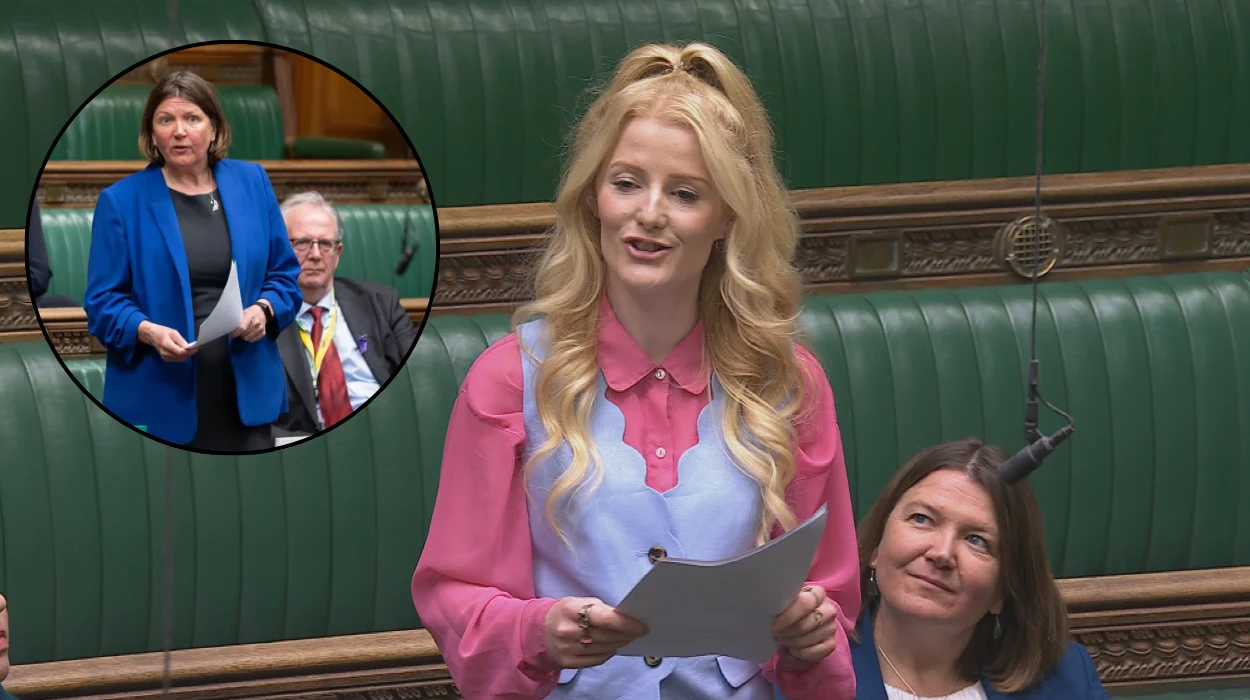
- Chowns backed the bill in the House of Commons on Tuesday, warning that a “climate crisis” was becoming “a health crisis”
- She says several other countries already have maximum legal working temperatures in place, unlike the UK
- Spain has a maximum legal indoor working temperature of 27C for sedentary work and 25C for light physical work
- Health minister Sharon Hodgson says the issue is being looked at, though she admits it has not previously been widely discussed
- Chowns has suggested shading devices and additional tree planting, citing Barcelona as an example of adaptation
- The UK has experienced three heatwaves in less than three months, which Chowns says shows the need to adapt to a changing climate
Herefordshire (Britain Today News) July 15, 2026 – A Herefordshire MP has said her constituents are becoming increasingly anxious about the temperatures they are being asked to work in, following the record-breaking heatwave that has swept across the UK this summer. Ellie Chowns, the Green Party MP for North Herefordshire, said the issue was no longer a fringe concern but one that was being raised with her repeatedly, by workers, parents and community members alike, as extreme heat becomes a more frequent feature of British summers.
- Key Points
- What Did Ellie Chowns Say About Workplace Heat?
- Why Are Parents and Schools Worried About the Heat?
- How Many Schools in Herefordshire Have Closed Due to Heat?
- What Is Hannah Spencer’s Proposed Legislation?
- What Did Ellie Chowns Tell the House of Commons?
- How Does the UK Compare With Other Countries on Workplace Heat Rules?
- What Has the Government Said About Maximum Working Temperatures?
- What Solutions Has Chowns Suggested for Overheating Buildings?
- How Is the UK’s Changing Climate Affecting Working Conditions?
- What Happens Next for the Workplace Heat Bill?
What Did Ellie Chowns Say About Workplace Heat?
Chowns said the level of concern among her constituents had grown noticeably as the summer’s heatwaves intensified. She said the discomfort and risk experienced by people working in unsuitable conditions was no longer an occasional inconvenience but a recurring problem that was affecting people’s daily lives and wellbeing. Her comments come amid growing scrutiny of how prepared British workplaces, schools and public buildings are for sustained periods of extreme heat, a challenge that the country has historically been ill-equipped to deal with.
Chowns argued that the infrastructure many people work in simply was not built with high temperatures in mind.
“We don’t have the infrastructure, the buildings that are adapted to this,”
she said, pointing to a wider structural problem rather than a one-off inconvenience caused by an unusually hot summer.
Why Are Parents and Schools Worried About the Heat?
Alongside concerns from workers, Chowns said parents had also come to her directly with worries about their children’s welfare during hot weather, particularly regarding the conditions in which pupils are expected to learn. She said parents had “really expressed concern” to her about their children working, and by extension studying, during heatwaves, suggesting that anxiety over extreme heat is not confined to the workplace but extends into the education system as well.
The concern reflects a broader unease among families about whether schools are adequately prepared for the kind of temperatures now being recorded across parts of the UK, particularly in older buildings that were not designed with heatwaves of this frequency or intensity in mind.
How Many Schools in Herefordshire Have Closed Due to Heat?
According to Chowns, the practical impact of this summer’s heat has already been significant in her constituency.
“We’ve had dozens of schools just in Herefordshire that have had to close because of the extreme temperatures,”
she said. The scale of the closures, in her telling, illustrates how ill-suited existing school buildings are to cope with sustained hot weather, forcing headteachers to shut their doors rather than risk the health and safety of pupils and staff.
Chowns tied these closures directly back to the absence of adequate infrastructure, repeating her view that the buildings themselves were not designed to cope with the kind of heat now being experienced on a recurring basis.
What Is Hannah Spencer’s Proposed Legislation?
The renewed political focus on the issue follows a proposal from another Green Party MP, Hannah Spencer, who has put forward legislation aimed at introducing a maximum safe workplace temperature. Under the proposal, the specific threshold could vary depending on the type of work involved, recognising that a desk-based office role and physically demanding manual labour carry very different risks when temperatures rise.
The bill represents an attempt to close what campaigners see as a significant gap in UK employment law, which currently focuses on minimum, rather than maximum, workplace temperatures.
What Did Ellie Chowns Tell the House of Commons?
Chowns lent her support to Spencer’s proposed legislation during a debate in the House of Commons on Tuesday. Addressing MPs, she warned that the escalating effects of climate change were beginning to translate directly into public health risks. She told the Commons that a “climate crisis” was becoming “a health crisis”, framing the debate over workplace temperatures as part of a much wider challenge posed by a warming climate.
Her intervention placed workplace heat squarely within the broader political debate on climate change, arguing that the practical, day-to-day consequences of rising temperatures were now being felt directly by workers and schoolchildren across the country.
How Does the UK Compare With Other Countries on Workplace Heat Rules?
Chowns pointed to the approach taken in a number of other countries as evidence that the UK was lagging behind on the issue. She said a number of other countries had maximum working temperatures already set out in law, providing a legal safeguard that does not currently exist in Britain.
“They’ve got these systems in place to ensure people are kept healthy at work,”
she said.
By contrast, she noted, UK guidance has historically focused on the opposite end of the temperature scale.
“In the UK, we have guidance on a minimum workplace temperature because in the past we did have to worry about that,”
she said, suggesting that existing regulations were designed for a climate that no longer reflects current conditions.
Spain was cited as one example of a country with clearly defined thresholds already in force. Spanish law sets a maximum legal indoor working temperature of 27C for sedentary work and 25C for light physical work, figures that stand in contrast to the absence of any comparable upper limit in UK workplace regulations.
What Has the Government Said About Maximum Working Temperatures?
Responding to the growing debate, health minister Sharon Hodgson acknowledged that the issue had not previously received significant attention at a governmental level.
“I can’t recall in my time that we’ve had such discussion around this issue so obviously, going forward we will be looking at it in more detail,”
she said.
Her comments suggest that, while no firm commitments have yet been made, the government recognises that the frequency and severity of this summer’s heatwaves have pushed the question of maximum workplace temperatures further up the politics agenda than it has been in the past.
What Solutions Has Chowns Suggested for Overheating Buildings?
Beyond legislative change, Chowns has also pointed to practical adaptations that could help buildings and urban areas cope better with high temperatures. She suggested fitting buildings with shading devices as one option, alongside planting more trees in urban environments to help reduce heat in built-up areas.
She cited Barcelona as an example of a city that has taken steps in this direction, suggesting that UK towns and cities could look to similar approaches as they consider how to adapt their own infrastructure. Her comments reflect a wider argument that tackling the effects of extreme heat requires both immediate mitigation measures, such as shading and greenery, and longer-term structural change to how buildings are designed and maintained.
Explore More about Politics:
Nigel Farage’s Manor of Northstead Appointment Sparks Yorkshire Reaction
JCHR Chair Welcomes Forced Labour Supply Chain Safeguards in Immigration Bill
How Is the UK’s Changing Climate Affecting Working Conditions?
Chowns was clear that addressing the immediate discomfort caused by hot weather could not be separated from the wider need to tackle climate change itself.
“We’ve got to change, we’ve got to adapt to [climate change],”
she said.
“We’ve got to keep doing everything we can to stop climate change, to put the brakes on and reduce our emissions.”
At the same time, she argued that adaptation had to run alongside mitigation efforts, given that some level of warming was now unavoidable.
“At the same time, we have to adapt so we are more resilient to these extremes,”
she said.
She pointed to the frequency of extreme weather this year as evidence that the UK could no longer treat heatwaves as rare, isolated events. With three heatwaves recorded in less than three months, Chowns argued the country needed to face up to the practical realities of a warming climate rather than treating each hot spell as an anomaly.
What Happens Next for the Workplace Heat Bill?
With Hannah Spencer’s proposed legislation now before Parliament and having received public backing from Chowns during Tuesday’s Commons debate, attention will turn to how the government responds in the coming months. Health minister Sharon Hodgson’s acknowledgement that the issue will be examined “in more detail” suggests further discussion is likely, though no timeline or firm policy commitments have yet been set out.
For now, Chowns has been unequivocal about the scale of the challenge ahead, framing the current heatwave as a preview of what is to come rather than an exceptional event.
“We’re currently experiencing the coolest climate we’re going to experience for the rest of our lives,”
she said.
“It’s only going one direction, and that is hotter and wetter. Those extremes are going to be more frequent and severe.”
Her remarks leave open the question of how quickly Westminster will move to introduce formal protections for workers and schoolchildren, at a time when councils, employers and school leaders across Herefordshire and beyond are already grappling with the practical consequences of repeated extreme heat.