Key Points
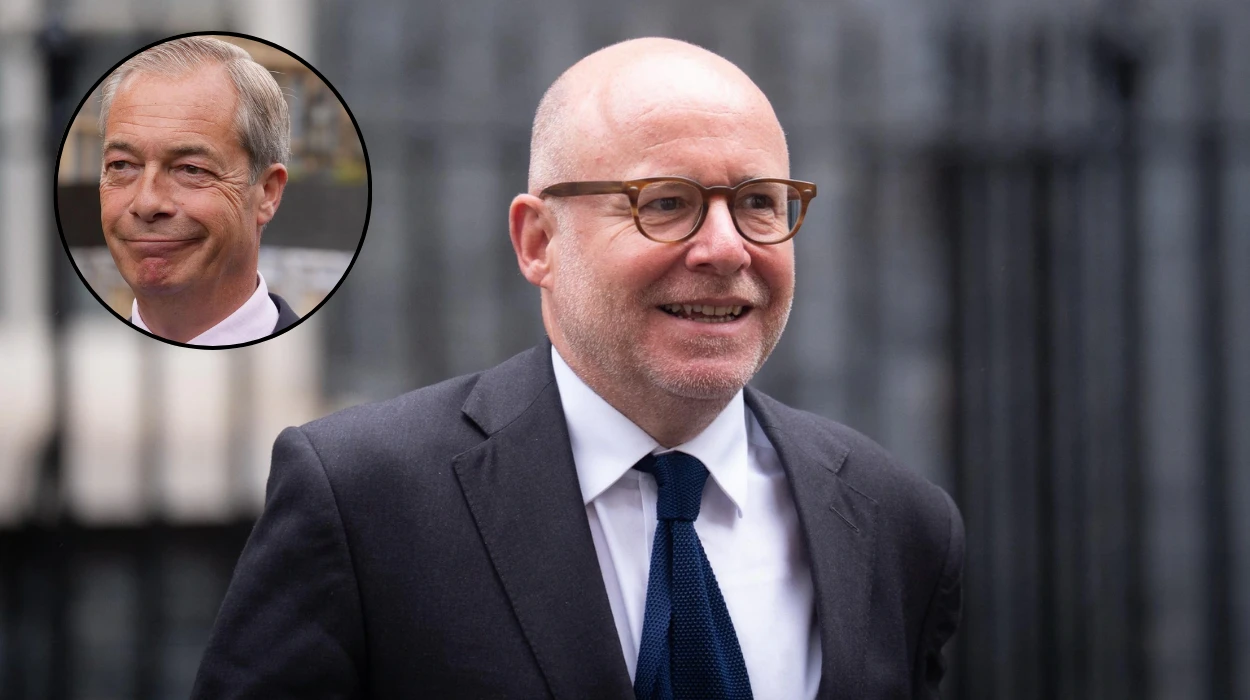
- Attorney General Lord Hermer accused Reform UK and the Conservatives of being willing to let migrants “drown” in the Channel through their hardline immigration plans.
- He said the only way to end the small boats crisis was through international co-operation against people smugglers, not by quitting the European Convention on Human Rights.
- Hermer argued that Britain’s current progress on small boats depends on staying within the ECHR and the Council of Europe framework.
- He said Labour was “starting to be pretty effective in dealing with the boats” because of that co-operation.
- The remarks came amid renewed political argument over Reform UK’s migration policy and Nigel Farage’s pledge to stop small boat arrivals through tougher measures.
London (Britain Today News) June 5, 2026 – Attorney General Lord Hermer has launched a sharp attack on Reform UK and the Conservatives over their plans to leave the European Convention on Human Rights, arguing that such a move would undermine efforts to stop dangerous Channel crossings and could leave migrants at greater risk at sea. The Attorney General said the Government’s approach to the small boats crisis depended on co-operation with European partners and continued compliance with the ECHR.
- Key Points
- What did Lord Hermer say?
- Why is the ECHR central?
- How did he link this to small boats?
- What is Reform UK proposing?
- Why is the row politically sensitive?
- What did he say about Labour?
- What does the criticism mean for the debate?
- How does this fit the wider crisis?
- Why mention migrants at sea?
- What happens next?
What did Lord Hermer say?
Hermer’s warning went to the heart of one of the most contentious issues in British politics: how to reduce illegal Channel crossings without weakening legal protections. He said the Tories and Reform UK would “let migrants drown” if they followed through on proposals to quit human rights laws and deport everyone who arrives illegally.
He argued that the Government could not simply break away from the legal framework that underpins cross-border co-operation and expect the problem to disappear. Instead, he said the answer lay in working with European allies to confront the criminal gangs arranging the crossings. That message placed Hermer squarely in the centre of the long-running dispute over whether the ECHR is a barrier to migration control or a necessary tool for international coordination.
Why is the ECHR central?
The European Convention on Human Rights has become a political fault line in Britain’s immigration debate because critics say it limits the Government’s power to deport illegal arrivals, while supporters argue it protects fundamental rights and helps preserve international agreements. Hermer’s position, as reported, was that Britain would lose practical leverage in stopping small boat crossings if it quit the ECHR and the wider Council of Europe framework.
He said deals with European partners had “real, practical impact” and implied those agreements would not have been possible if Britain were outside the convention system. That claim goes to a broader strategic question: whether migration policy is best handled through unilateral legal change or through joint enforcement, intelligence-sharing, and diplomacy.
How did he link this to small boats?
Hermer’s core argument was that small boat crossings cannot be solved simply by tougher rhetoric or by announcing mass deportations. He said the Government was making progress because it was working with “friends and partners” in Europe, and he maintained that this kind of co-operation only functions if Britain remains bound by shared legal standards.
That point was presented as a direct rebuttal to the line taken by Reform UK and some Conservatives, who have argued that leaving the ECHR would restore control over borders. Hermer’s view was that doing so would remove the legal basis for the sort of agreements needed to tackle smugglers effectively.
What is Reform UK proposing?
Reform UK has repeatedly promised a harder line on illegal migration, with Nigel Farage and senior figures arguing that the party would stop the boats quickly if it were in power. Reports in recent months have shown Farage backing a plan to remove people who arrive by small boat, including a proposal to deport large numbers of migrants over several years and to block asylum claims from those entering illegally.
The party has also floated leaving the ECHR and replacing the Human Rights Act with a British bill of rights. Critics say such plans would take time, face legal and diplomatic hurdles, and potentially make cross-border enforcement harder rather than easier. Farage has also said the party would use stronger detention and deportation powers to achieve rapid results.
Why is the row politically sensitive?
Immigration has become one of the defining issues in British politics because of public concern about Channel crossings, border control, and the pressure on the asylum system. That makes every statement from a senior government law officer politically charged, especially when it directly attacks the main opposition to Labour on this issue.
Hermer’s remarks are especially pointed because they appear to accuse opponents not merely of being wrong, but of being willing to tolerate lethal consequences. That kind of language intensifies the debate, but it also risks hardening the divide between those who want legal reform and those who want to preserve international protections as the foundation for migration control.
What did he say about Labour?
Hermer also defended Labour’s handling of the issue, saying the party was
“starting to be pretty effective in dealing with the boats”
because of international co-operation. That statement suggests the Government wants to present its strategy as practical and incremental rather than performative, with an emphasis on partnerships rather than constitutional rupture.
By framing Labour’s approach as one that is already delivering results, Hermer positioned the party as the responsible option in contrast with Reform UK’s more dramatic proposals. His remarks also implied that the Government sees migration enforcement and human rights compliance not as competing goals, but as interdependent parts of the same policy framework.
What does the criticism mean for the debate?
Hermer’s attack is likely to sharpen the argument over whether Britain can control migration flows while remaining tied to international legal commitments. Supporters of leaving the ECHR say the Government needs more freedom to act decisively, while opponents say such a move would damage Britain’s credibility and weaken agreements with key allies.
The comments also highlight the gap between political promises and legal realities. Reform UK has promised rapid action and dramatic reductions in crossings, but the practical question remains how any government would implement deportations, removals, or interceptions without triggering legal disputes or diplomatic resistance.
Explore More about politics:
Russia Targets Ex-UK Defence Secretary Ben Wallace with Terrorism Incitement Charges
Ipswich MP Calls for Drainage Inspection After Flooding
How does this fit the wider crisis?
The small boats issue has become a test of political competence, legal authority, and public confidence. Every new pledge to “stop the boats” raises expectations of quick action, but the channel crossings are shaped by smugglers, international law, maritime obligations, and the need for co-operation with France and other European states.
That is why Hermer’s remarks matter beyond the immediate party clash. They suggest the Government believes the route to fewer crossings runs through sustained joint enforcement rather than abandoning the legal structures that govern asylum and human rights across Europe.
Why mention migrants at sea?
Hermer’s use of stark language underlines the danger inherent in Channel crossings, where overcrowded and unseaworthy boats can leave people at serious risk. His argument was that discarding legal obligations in the name of toughness could make that danger worse, not better, because the current system depends on coordinated action to stop traffickers before tragedies happen.
This framing turns the debate from pure border politics into a question of life and death. It also reflects a wider principle in news reporting: when public policy touches on safety, the burden on government is not only to enforce the law, but to do so without increasing the risk to human life.
What happens next?
The political argument is unlikely to fade soon, because migration remains one of the most powerful issues in Westminster and in the public debate. Reform UK is expected to keep pressing its line on leaving the ECHR and using tougher deportation powers, while Labour will likely continue defending international co-operation as the more workable approach.
Hermer’s intervention suggests the Government is preparing to frame the debate as a choice between legal realism and political slogans. That makes the ECHR question central not only to migration policy, but to the wider direction of Britain’s relationship with Europe, the rule of law, and the handling of one of the country’s most persistent crises.