Key Points
- Former UK Border Force Director General Tony Smith demands British “boots on the ground” in France to tackle the small boats migrant crisis.
- Smith praises Shabana Mahmood’s “one-in, one-out” deal as a landmark allowing some returns, despite criticism.
- Home Secretary Shabana Mahmood seeks tighter deals with France, including performance-based clauses tying UK funding to boat interceptions.
- Current UK-France agreement sees Britain funding nearly two-thirds of the £160million annual migrant patrols in northern France.
- Smith advocates “payment-by-reduction” model with full transparency on French interventions.
- He describes operational UK-France relationship as “very good” but limited by French red lines on joint activities.
- Smith doubts French efforts, calling some actions “publicity stunts” with no verifiable impact.
- Latest figures: Only 68 migrants prevented from crossing in week of March 9, 2026, vs 357 successful crossings (19% interception rate) – worst week this year.
- French interceptions fell from 50% peak post-2023 £478m deal to 35% last year; Q1 2026 shows further decline.
- Downing Street emphasises “long-term value for money” in future deals.
- Rishi Sunak’s government previously considered “boots on the ground” as most effective short-term measure.
- Home Office delegation in Paris pursues new deal with interception targets for payments.
- French officers generally motivated to stop smuggling and drownings, per Smith, but effectiveness varies.
Paris (Britain Today News) March 24, 2026 – Former UK Border Force Director General Tony Smith has demanded British “boots on the ground” in France to combat the escalating small boats crisis crossing the English Channel, as interception rates by French authorities plummet to record lows this year.
- Key Points
- What is Tony Smith Proposing to Fix the Small Boats Crisis?
- Why Does Smith Want a ‘Payment-by-Reduction’ Model?
- How is Shabana Mahmood Responding to the Crisis?
- What are the Latest Interception Figures?
- What Was Rishi Sunak’s Stance on Boots on the Ground?
- Why is the UK Pushing for Tighter Deals with France?
- What Challenges Persist in Verifying French Efforts?
Smith, a migration expert with deep insider knowledge of border operations, made the call during an appearance on the People’s Channel. He argued for enhanced joint activities on land and sea, despite French resistance to deeper cooperation.
What is Tony Smith Proposing to Fix the Small Boats Crisis?
As reported by GB News journalists covering Smith’s interview, the ex-Border Force chief stated:
“I would very much like to see Border Force boots on the ground over there. I would like to see more joint activities, both on the maritime and on the land.”
Smith acknowledged French “boundaries and red lines,” noting:
“They’re not prepared to go that far.”
He praised the operational rapport, saying:
“They don’t like smugglers and they want to stop illegals. The problem is that, operationally, you can only do what is laid down in the operational order, an agreement in terms than what’s permitted.”
Drawing from his experience, Smith highlighted a lack of transparency in current arrangements.
“There is no way to tell whether the French are upholding their side of the deal or not, as it stands,”
he claimed.
“We’ve seen a couple of what seem to be publicity stunts that the French are doing something, but I don’t think they really are, to be honest.”
Why Does Smith Want a ‘Payment-by-Reduction’ Model?
Smith advocated shifting from the existing funding structure to a “payment-by-reduction” framework.
“They’re right to continue talking to the French, but I suspect what they’re looking for – what I would be looking for, if I were them – would be some kind of a performance framework or measurement framework upon which the money is contingent,”
he explained on the People’s Channel.
Currently, the UK funds almost two-thirds of the £160million annual cost for migrant patrols in northern France. Smith criticised this as:
“As far as I know, we’re simply calculating the number of police officers that will be required to patrol the beaches and planning for that.”
He pushed for
“total communication and transparency over interventions,”
arguing it would ensure accountability.
How is Shabana Mahmood Responding to the Crisis?
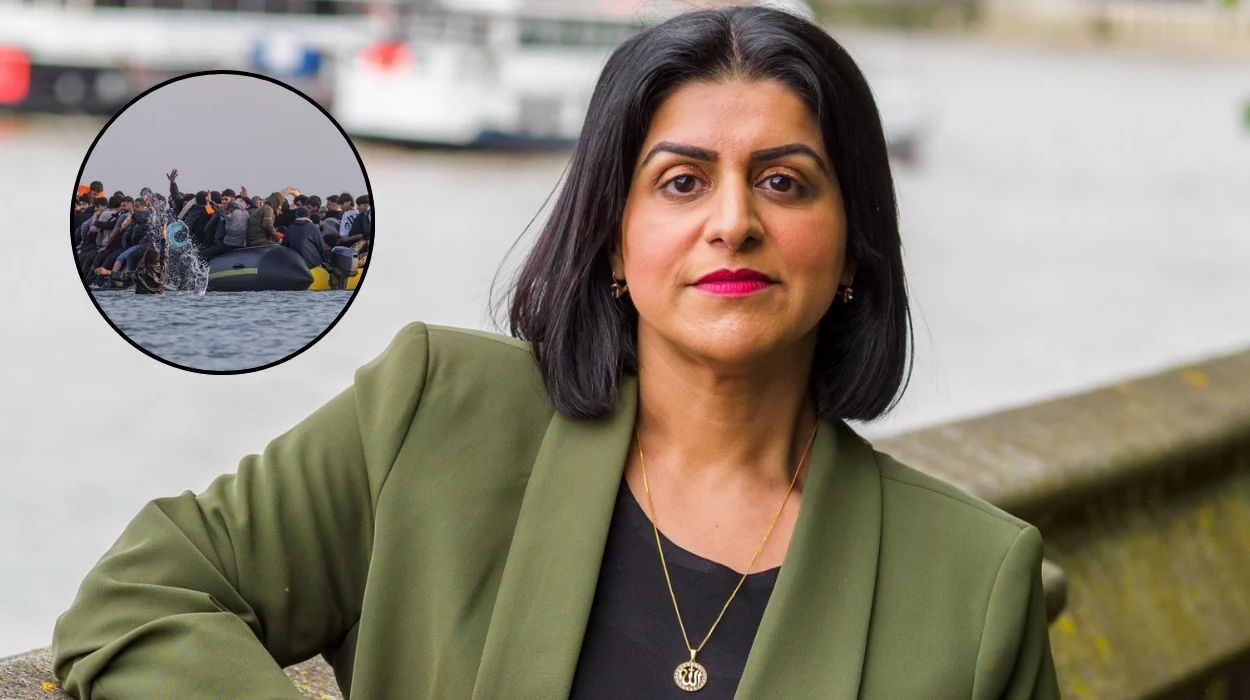
Home Secretary Shabana Mahmood is pursuing a tougher stance. A Home Office delegation is in Paris negotiating a new deal with performance-based clauses, linking UK payments to the proportion of boats intercepted by French authorities.
As reported by The Times, Ms Mahmood demands payments only after French authorities meet specific interception targets. Downing Street has echoed this, stressing “long-term value for money” in any future agreement.
Smith welcomed Mahmood’s “one-in, one-out” deal as a
“landmark deal between the two nations where we are able to send at least some people back,”
despite widespread criticism of the arrangement.
What are the Latest Interception Figures?
Official data reveals a sharp downturn in French effectiveness. In the week of March 9, 2026, authorities prevented just 68 migrants from crossing, while 357 succeeded – a mere 19 per cent interception rate, the worst-performing week this year.
The first quarter of 2026 shows a decline from last year’s figures. Interceptions peaked at over 50 per cent in weeks following Rishi Sunak’s £478million deal in 2023, but dropped to 35 per cent last year.
Are French Officers Motivated to Stop the Boats?
Smith, speaking to GB News, addressed potential motivational issues.
“They’ll want to do the job they’re tasked to do, and they will want to work with us to stop human smuggling and to stop people drowning,”
he said.
“I think for that, that would be the view of the officers on the ground. But that varies.”
He maintained a positive view of the
“very good relationship at operational level, at least.”
What Was Rishi Sunak’s Stance on Boots on the Ground?
The idea of British deployment last surfaced under former Prime Minister Rishi Sunak, who deemed it the
“most effective short-term way to combat the migrant crisis.”
French efforts have since “taken a nosedive,” per recent trends.
Smith’s intervention revives this debate amid mounting pressure on the Labour government to deliver results.
Why is the UK Pushing for Tighter Deals with France?
The Home Office’s Paris talks underscore frustrations with the status quo. Performance clauses would tie funding directly to outcomes, a shift Smith endorses.
Downing Street’s focus on value for money aligns with taxpayer concerns over the £160million outlay, where Britain shoulders the lion’s share.
How Has the Operational Relationship Evolved?
Smith, leveraging his past insight, noted operational strengths but political hurdles. French red lines limit joint ops, confining efforts to agreed parameters.
He called for expanded maritime and land activities, echoing calls ignored since Sunak’s tenure.
What Challenges Persist in Verifying French Efforts?
Smith questioned efficacy:
“We’ve seen a couple of what seem to be publicity stunts.”
Without metrics beyond officer numbers, accountability falters.
A “payment-by-reduction” model, he argued, would enforce real progress.
Broader Context: From Sunak Deal to 2026 Decline
Sunak’s 2023 £478million package briefly boosted interceptions to over 50 per cent. By last year, it halved to 35 per cent; 2026’s Q1 marks further erosion.
This trajectory fuels demands for radical steps like boots on the ground.
French Perspective on Joint Operations?
Smith recognised French antipathy to smugglers but highlighted constraints. Officers aim to prevent drownings and smuggling, yet “that varies.”
Political boundaries block deeper UK involvement.
Implications for UK Migration Policy?
Mahmood’s negotiations could redefine the partnership. Success hinges on French concessions amid dire stats: 357 crossings in one week alone.
Smith’s voice, as ex-Director General, carries weight in shaping policy.
The crisis persists, with 2026 figures underscoring urgency. As talks unfold in Paris, stakeholders watch for breakthroughs. Tony Smith’s blueprint – boots, performance pay, transparency – offers a roadmap, but French red lines loom large.