Key Points
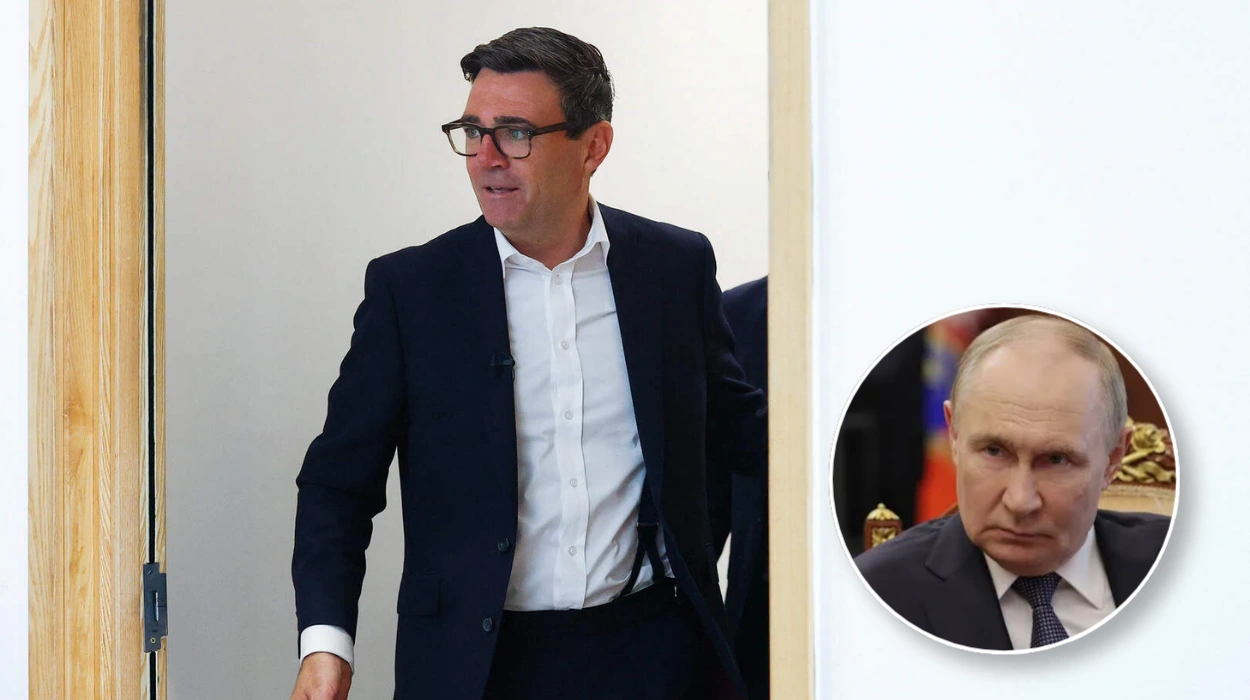
- In a response to Moscow’s warning about the use of British-made drones within its territory, Prime Minister Andy Burnham has declared the UK will “continue supporting Ukraine 100%”.
- The Russian embassy in London has accused Britain of “deliberately choosing an escalation” of the war, and issued an unspecified “consequence warning”.
- The threat comes after the Sunday Times reported that Ukraine has employed drones made by two British firms in its “deep-strike” efforts against Russian airspace.
- The statement was made by Mr Burnham when visiting Wolverhampton bus station on Tuesday, and he was asked directly what his message to Russian President Vladimir Putin was.
- The UK Ministry of Defence has responded by stating that Britain “stands shoulder to shoulder with Ukraine.
- In 2026, Kyiv has ramped up long-range drone and missile attacks against Russian military, energy, and logistics infrastructure.
- The unions are reportedly striking at oil refineries and warehouses owned by Russia’s biggest online retailer Wildberries, damaging billions of pounds.
- Under successive prime ministers, there would be no change in the UK’s support for Kyiv, Mr Burnham said, insisting his would be the British position throughout this conflict.
- The row is one of the closest that Britain and Russia have had so far since British arms were first known to reach deep into Russian soil.
London (Britain Today News) August 18, 2026 — Prime Minister Andy Burnham has said Britain is continuing to “support Ukraine 100%” after Moscow threatened unspecified consequences over the reported use of British-made drones for strikes deep inside Russian territory. Speaking during a visit to Wolverhampton bus station on Tuesday, Mr Burnham was pressed on what message he had for Russian President Vladimir Putin, and used the opportunity to restate the UK’s long-standing military backing for Kyiv, more than four years into Russia’s full-scale invasion of its neighbour.
- Key Points
- What Did Prime Minister Andy Burnham Say About Supporting Ukraine?
- Why Did Russia Threaten the UK Over Drone Strikes?
- Which British Companies Made the Drones Used by Ukraine?
- What Targets Have Been Hit Inside Russia?
- How Much Damage Has Ukraine’s Drone Campaign Caused Inside Russia?
- How Has Ukraine’s Drone Campaign Expanded in 2026?
- What Is Britain’s Ministry of Defence Saying in Response?
- What Has the UK Committed to Ukraine’s Defence So Far?
- How Has Downing Street Responded to Previous Russian Threats?
- What Happens Next in the UK-Russia Standoff?
- Why Does This Row Matter for UK-Russia Relations?
What Did Prime Minister Andy Burnham Say About Supporting Ukraine?
Asked directly about his message to the Kremlin during Tuesday’s visit to the West Midlands, Mr Burnham set out the government’s position in unambiguous terms. As reported by the Press Association, Mr Burnham said:
“This is the UK doing what it has long said it would do, which is to support Ukraine 100% against this illegal war led by Vladimir Putin.”
He went on to frame the UK’s assistance as consistent with the approach taken by his predecessors in Downing Street, stating that Britain’s backing for Kyiv’s self-defence had “been the British position all the way through this conflict by previous prime ministers” and that “it remains the case” under his own government. According to the Press Association, Mr Burnham added:
“We are not fair-weather friends. We will be there in Ukraine’s hour of need.”
The comments represent Mr Burnham’s most direct public response yet to the escalating diplomatic exchange with Moscow, and come at a delicate moment for his premiership, which began in July 2026 following Sir Keir Starmer’s resignation as Labour leader and prime minister.
Why Did Russia Threaten the UK Over Drone Strikes?
Russia’s embassy in London issued its warning on Monday, shortly after reports emerged that British-manufactured drones had been used by Ukrainian forces to strike targets on Russian soil. In a statement, the embassy said the reports “confirm that London is deliberately opting for an escalation of the Ukraine crisis” and accused Britain of “seeking to contain Russia and inflict maximum damage on it by proxy”.
The embassy went further, warning that Britain’s continued support for Kyiv would carry a cost. As carried by the Press Association, the statement said:
“London’s actions will inevitably carry consequences for which it will have to answer.”
It added that
“the deeper its involvement in the conflict and the greater its support for Kyiv’s terrorist machinery, the higher the price it will pay”
— language that mirrors previous Kremlin warnings to Western governments supplying Ukraine with military hardware.
The Russian embassy also accused London of “hypocritically professing a desire for peace” while continuing to arm Kyiv, deepening the rhetorical confrontation between the two capitals.
Which British Companies Made the Drones Used by Ukraine?
The origin of the story lies in reporting first published by the Sunday Times, which said Ukraine had used drones made by two UK companies as part of what it described as a “deep strike” campaign targeting Russian territory. Neither the newspaper’s report nor subsequent government statements have publicly named the manufacturers involved, and the Ministry of Defence has not confirmed operational details of any specific strikes.
The development was described as the first confirmed instance of British-built unmanned aircraft being used in cross-border strikes since Russia’s invasion began in February 2022, with long-range devices said to have been used against strategic targets including oil refineries.
What Targets Have Been Hit Inside Russia?
Kyiv’s drone campaign has increasingly reached beyond the front line and into Russia’s rear infrastructure over the course of 2026. Long-range missiles and swarms of drones have been directed at military industries and energy facilities, according to the original Press Association report of Mr Burnham’s remarks.
Oil Refineries and Logistics Hubs
Separately, IBTimes UK reported that long-range devices produced by British defence firms had struck oil refineries in the Russian cities of Volgograd and Yaroslavl, as well as commercial warehouses.
Retail and Distribution Targets
Ukrainian strikes have also targeted vast depots belonging to Wildberries, Russia’s largest online retailer, burning what the Press Association described as billions of pounds of merchandise and bringing the economic reality of the war home to the Russian public.
How Much Damage Has Ukraine’s Drone Campaign Caused Inside Russia?
Estimates of the financial toll of the deep-strike campaign vary between outlets but consistently point to a substantial economic impact on Russia. IBTimes UK put the cumulative damage from the cross-border aerial campaign at more than £35 billion, while a separate figure reported by UPI placed the toll at more than $47.3 billion, alongside reports of resulting regional fuel shortages and power blackouts in parts of Russia.
How Has Ukraine’s Drone Campaign Expanded in 2026?
Kyiv has significantly stepped up its long-range strike operations this year as the conflict enters its fifth year, moving from largely front-line engagements towards a sustained campaign against Russia’s military-industrial base and civilian-facing economic infrastructure. The Press Association’s original report noted the shift towards targeting military industries and energy facilities specifically, reflecting Ukraine’s growing domestic drone manufacturing capacity and its use of Western-supplied long-range systems.
What Is Britain’s Ministry of Defence Saying in Response?
The Ministry of Defence moved quickly to respond to Russia’s warning. As reported by UPI, a ministry spokesperson said Britain “stands shoulder to shoulder with Ukraine” and delivered a pointed message to Moscow, stating:
“Russia should be in no doubt about the resolve of this government to stand against Russian aggression, in Ukraine and against the UK and our allies.”
The ministry has not confirmed whether British-made drones were directly involved in specific strikes referenced in the Sunday Times report, maintaining the long-standing practice of not commenting in detail on individual weapons transfers or their operational use by Ukrainian forces.
What Has the UK Committed to Ukraine’s Defence So Far?
Britain has positioned itself among Ukraine’s most consistent Western backers since the invasion began in February 2022. According to figures reported by UPI and drawn from a UK government factsheet, London has committed more than $33 billion in total support to Ukraine, including upwards of $21.6 billion in military assistance. Drones have formed a central pillar of that assistance, with the UK focusing in recent years on supplying Kyiv with unmanned systems that have proven effective in its defensive operations.
How Has Downing Street Responded to Previous Russian Threats?
Monday’s warning is the latest in a pattern of diplomatic confrontations between London and Moscow stretching back through the war. Russia has previously warned of consequences over British military support, including threats made after the UK considered supplying combat aircraft to Ukraine, and diplomatic tit-for-tat measures including the expulsion and revocation of accreditation of diplomats on both sides. Successive UK governments — under Boris Johnson, Rishi Sunak and Sir Keir Starmer — maintained a consistent line of continued military backing for Kyiv despite such warnings, a position Mr Burnham has now explicitly pledged to continue.
Explore More about Politics:
Burnham to Report to Parliament on Early Release Scheme Row
Labour Urges Gambling Commission to Probe Reform-Linked Firms
What Happens Next in the UK-Russia Standoff?
No further UK government action has yet been announced in direct response to the embassy’s statement, and Downing Street has not indicated that its military assistance programme to Ukraine will be scaled back. However, the exchange underscores the continuing risk of diplomatic escalation between London and Moscow as Ukraine’s deep-strike campaign extends further into Russian territory. Mr Burnham’s comments in Wolverhampton suggest his government intends to hold the same course as its predecessors, even as the rhetoric from Moscow sharpens.
Why Does This Row Matter for UK-Russia Relations?
The dispute illustrates how the war in Ukraine continues to shape Britain’s relationship with Moscow more than four years after the invasion began, and how quickly a single newspaper report — in this case the Sunday Times’ account of British-made drones being used for strikes inside Russia — can trigger a formal diplomatic warning. It also offers an early indication of how Mr Burnham, in his first weeks as Prime Minister, intends to handle direct provocations from the Kremlin, opting for continuity with the approach of his predecessors rather than a shift in policy.