Key Points
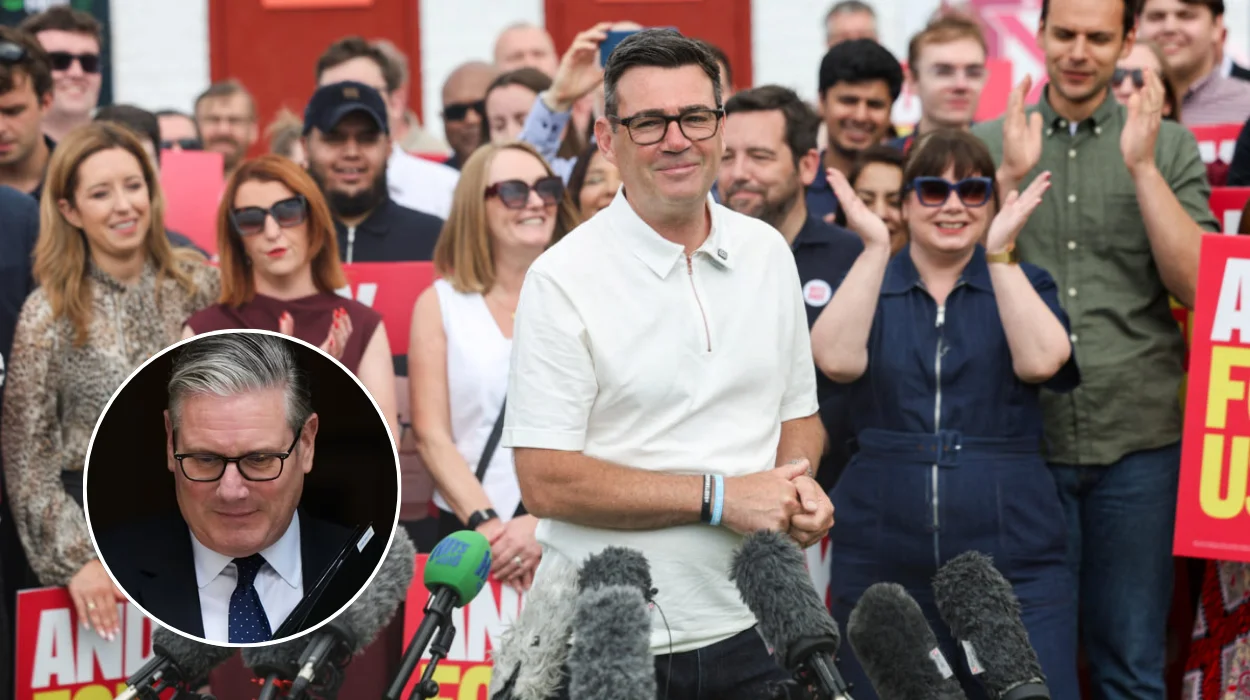
- Keir Starmer announced his resignation as UK Prime Minister and Labour leader on 22 June 2026, ending nearly two years in Downing Street.
- Andy Burnham, the former Mayor of Greater Manchester, returned to the House of Commons the same day after winning the Makerfield by-election, and is the only declared candidate to succeed Starmer.
- Burnham could become Prime Minister as early as 17 July 2026 if no rival MP secures the 81 nominations needed to force a contest.
- Wes Streeting, previously seen as Burnham’s most likely challenger, has already thrown his support behind him.
- Burnham has promised to maintain Labour’s existing spending and borrowing rules while pursuing his “Manchesterism” approach of devolving power away from Westminster.
- Analysts warn that financial markets, still wary after the 2022 mini-budget crisis under Liz Truss, will scrutinise any departure from fiscal discipline.
- Burnham faces early questions over defence spending after the resignation of Defence Secretary John Healey amid disagreements over military budgets.
- Foreign Secretary Yvette Cooper has said Burnham remains firmly committed to supporting Ukraine and to NATO.
- Burnham’s limited experience in foreign affairs could complicate ties with US President Donald Trump, who has already criticised him as “extremely liberal.”
- Commentators expect Burnham to govern cautiously at first, building public trust before attempting more ambitious constitutional reforms later in his tenure.
London (Britain Today News) June 27, 2026 — Britain is preparing for a change of leadership at the top of government, with Andy Burnham widely expected to take over from Keir Starmer as Prime Minister within weeks. Burnham, who built his political reputation as the plain-speaking Mayor of Greater Manchester, now finds himself the overwhelming favourite to lead the country — but he will do so while bound by economic and foreign policy commitments largely shaped by the man he is replacing.
- Key Points
- Who Is Andy Burnham and Why Is He the Favourite to Become Prime Minister?
- Why Did Keir Starmer Decide to Resign as Prime Minister?
- When Will Britain Have a New Prime Minister?
- What Has Andy Burnham Said Since Returning to Parliament?
- How Is Andy Burnham Positioning Himself on the Economy?
- Why Did the Defence Secretary Resign Before Starmer Did?
- Will Andy Burnham Change the UK’s Approach to Foreign Policy?
- How Has President Trump Reacted to Andy Burnham’s Rise?
- What Constitutional and Political Reforms Has Burnham Proposed?
- How Are Political Analysts Assessing Burnham’s Early Strategy?
- What Happens Next in Britain’s Path to a New Government?
Starmer confirmed on Monday 22 June 2026 that he intended to step down as Labour leader and Prime Minister, following months of falling approval ratings, sluggish economic growth and mounting unease within his own party. His departure brings to an end a premiership that began with a landslide general election victory in July 2024 but steadily lost momentum amid criticism over the cost of living, public services and immigration policy.
Burnham was sworn in as the Member of Parliament for Makerfield only hours after Starmer’s announcement, having won a by-election the previous week. That victory made him eligible to enter the contest to lead the Labour Party — and, by extension, the country. As things stand, he is the only candidate who has formally declared an intention to run.
Who Is Andy Burnham and Why Is He the Favourite to Become Prime Minister?
Burnham spent almost a decade as Mayor of Greater Manchester, a role in which he earned a reputation as a champion of “the North” and a vocal critic of what he describes as Westminster’s London-centric outlook. Before that, he served as MP for Leigh from 2001 to 2017 and held several cabinet posts, including Secretary of State for Health under Gordon Brown between 2009 and 2010.
His tenure in Manchester coincided with a period of economic regeneration in the city, and he became known for an approach often labelled “Manchesterism” — a model that blends private investment in major infrastructure projects with a push to hand more control over housing, transport, utilities and education to regional and local authorities rather than central government.
Burnham resigned as mayor on 19 June 2026, since MPs are barred from simultaneously holding the office of a mayor with police and crime commissioner powers. A by-election to choose his successor as mayor has been scheduled for 30 July 2026.
He has cultivated an image as an approachable, plain-spoken figure — favouring T-shirts over suits, playing football for fun, and occasionally appearing behind the decks at DJ events spinning 1990s music. That informal style has been credited with helping him build some of the highest personal approval ratings of any senior Labour figure.
Why Did Keir Starmer Decide to Resign as Prime Minister?
Starmer’s resignation followed a sustained period of declining public support. His government had struggled to deliver the level of economic growth it promised voters, while the cost of living remained a persistent source of public frustration. Labour also suffered heavy losses in the May 2026 local elections, losing control of more than half the councils it was defending, and endured a historic defeat in the Senedd election in Wales, ending a century of Labour dominance there.
Pressure within the parliamentary party intensified rapidly once Burnham won his by-election. Reports suggested that well over 100 Labour MPs were ready to call publicly for Starmer’s resignation, with some allies estimating that Burnham could count on the support of roughly 300 of Labour’s 403 MPs. Starmer ultimately chose to step aside rather than face a prolonged internal challenge.
In his resignation remarks, Starmer cautioned his party against returning to the “chaos and instability” he associated with the final years of Conservative government, a reference to the turbulent departures of Boris Johnson and Liz Truss. He insisted that the British people simply expected the government to continue the work of change.
When Will Britain Have a New Prime Minister?
The Labour Party’s National Executive Committee has set out a formal timetable for the leadership contest. Nominations from Labour MPs are scheduled to run from 9 to 16 July 2026, with backing required from at least 81 MPs — representing 20 per cent of the parliamentary party — for any candidate to make the ballot.
If Burnham remains the only candidate to clear that threshold, he could be confirmed as leader, and therefore Prime Minister, as early as 17 July, the day after nominations close, with a special conference convened to confirm the result. Should a rival secure enough backing to force a full contest, party rules allow for a ballot running into August, with a final result expected no later than 29 August 2026, in time for Parliament’s return from its summer recess.
Burnham declared his candidacy on the morning Starmer announced his resignation. Wes Streeting, the former Health Secretary and the figure most frequently mentioned as a possible rival, swiftly endorsed Burnham instead of mounting his own campaign, a move widely interpreted as making an uncontested “coronation” more likely than a drawn-out contest.
What Has Andy Burnham Said Since Returning to Parliament?
Writing on social media shortly after Starmer’s resignation was announced, Burnham pointed to housing, the cost of living and opportunities for young people as priorities, alongside a broader pledge of continuity and competence.
“The country expects stability, seriousness and a continued focus on the issues that matter most and that is what it will get,”
he wrote.
He is expected to set out a fuller economic vision in a speech in the coming days, though he has already indicated that he does not intend to depart from the current government’s spending and borrowing framework, despite sitting to the left of Starmer within the party.
How Is Andy Burnham Positioning Himself on the Economy?
Burnham’s central economic pledge so far has been continuity rather than radical change. He has said he will not raise taxes on working people, extending a commitment Starmer himself had made, and has floated measures aimed at easing the tax burden on businesses, including a possible reversal of a recent rise in the employer-paid levy that funds pensions, public healthcare and welfare.
That note of caution is, in part, a response to lingering market nervousness. Liz Truss’s brief premiership in 2022 ended after just 49 days, undone by a package of unfunded tax cuts that triggered turmoil in the bond markets. According to Mark Goodwin, a politics lecturer at Coventry University, that episode still shapes how investors are likely to view a new Labour leader perceived as standing to the left of his predecessor.
“If you are a Labour prime minister from the soft left of the party, the markets don’t need that much invitation to panic,”
Goodwin said, adding that markets “will start from a position of scepticism,” meaning Burnham “would have to be very, very careful.”
Goodwin further suggested that Burnham’s challenge would be
“to convince people that this is something different, without the markets reading that as ‘This is too different.'”
Jill Rutter, a senior fellow at the Institute for Government think tank, has pointed to a more immediate question hanging over Burnham’s economic plans: how he intends to pay for his priorities. Rutter has asked whether Burnham will scrap existing government commitments to fund new ones, and how he plans to meet calls for higher defence spending, an issue that has already cost Starmer one senior minister.
Why Did the Defence Secretary Resign Before Starmer Did?
Defence Secretary John Healey resigned in June, shortly before Starmer’s own announcement, after reportedly clashing with Starmer over the pace of increases to military spending. Starmer’s government had previously committed to meeting a NATO target of spending 3.5 per cent of GDP on defence by 2035, a pledge that some within government and the military felt was not being pursued with sufficient urgency.
Healey’s resignation was followed by that of Al Carns, then serving as Armed Forces Minister, who stepped down in solidarity over the same disagreement. The departures have left defence policy as one of the more pressing and unresolved issues awaiting Burnham, should he take office, particularly given his comparative lack of a public record on military and security matters.
Will Andy Burnham Change the UK’s Approach to Foreign Policy?
Burnham’s experience has been overwhelmingly domestic, built around regional devolution and city-level governance rather than international diplomacy, and that gap is likely to draw early scrutiny. Jill Rutter has suggested Burnham is unlikely to want to be remembered as “never-here Andy” in succession to what she described as Starmer’s own “never-here Keir” reputation for frequent travel abroad, and noted he may instead choose to delegate more foreign affairs responsibility to an experienced foreign secretary.
Foreign Secretary Yvette Cooper, who currently holds that post, said this week that she had already discussed policy with Burnham directly. She said he was “100% behind our unwavering support for Ukraine” and described him as
“a fundamental believer in NATO and in our shared deterrence and in the multilateral partnerships that we have.”
Starmer’s own handling of foreign affairs drew mixed reactions during his premiership. He was credited by many observers with strengthening European backing for Ukraine, but also faced criticism from some quarters for allowing international matters to distract from domestic governance.
How Has President Trump Reacted to Andy Burnham’s Rise?
Burnham’s prospective elevation has not gone unnoticed in Washington. US President Donald Trump described Burnham this week as a “town” mayor, adding that he understood him to be “extremely liberal” and unlikely to support an expansion of North Sea oil drilling — a policy area Trump has repeatedly raised as a point of friction with Starmer’s government.
The relationship between the two men carries some history. After Trump supporters stormed the US Capitol on 6 January 2021, Burnham posted on social media that
“any politician who gave Trump the time of day should be ashamed right now,”
a comment that may complicate efforts to build rapport should he take office.
Starmer, for his part, had prioritised maintaining cordial relations with the Trump administration despite clear political differences between the two leaders, a strategy that produced a US-UK trade agreement but also drew criticism from parts of Labour’s more liberal support base. Relations between Starmer and Trump were reported to have cooled further after Starmer publicly criticised Trump’s territorial ambitions regarding Greenland and after the UK declined to join US and Israeli military action against Iran.
What Constitutional and Political Reforms Has Burnham Proposed?
Beyond economic policy, Burnham has spoken in the past about reshaping aspects of the UK’s political system. He has previously expressed support for replacing the House of Lords with an elected senate and for introducing proportional representation in general elections, both long-standing positions associated with the more reformist wing of the Labour Party.
He has also said he would personally like to see the United Kingdom rejoin the European Union within his lifetime, although he distanced himself from that position during his recent campaign in Makerfield, a constituency that voted roughly two-to-one in favour of leaving the EU in the 2016 referendum.
Burnham is also reported to be considering relocating part of the Prime Minister’s operational base away from Downing Street and closer to Greater Manchester, roughly 200 miles north of central London, in a move that would symbolically reinforce his long-standing devolution agenda.
Explore More about Politics:
Labour MPs criticise Badenoch over PMQs clash in Commons
Andy Burnham Emerges as Leading Contender for Prime Minister Role
How Are Political Analysts Assessing Burnham’s Early Strategy?
Matthew Flinders, a politics professor at the University of Sheffield, has cautioned that Burnham’s early popularity should not be taken for granted as a lasting asset.
“At the moment, Andy Burnham is being almost hailed and held up as a folk hero that will save British politics,”
Flinders said. He warned, however, that
“the tide is changing and the big issue for Andy Burnham is that when the world suddenly moves against him and he becomes a folk devil, will he sustain the pressure?”
Flinders has also argued that one of Burnham’s most pressing early tasks will be to succeed where Starmer struggled — establishing a clear and easily understood narrative about the direction in which he intends to take the country. He suggested that Burnham’s communication style, built around an accessible, informal public persona, may serve him well in that respect.
According to Flinders, Burnham is likely to move cautiously at first, focusing on building his team, his governing narrative and his internal party relationships, before attempting more ambitious reforms later in his time in office, should he secure a mandate at the next general election. Flinders compared this approach to that taken by Margaret Thatcher in the early 1980s, who built political capital before pursuing more radical change later in her premiership.
What Happens Next in Britain’s Path to a New Government?
For now, all formal procedural steps point toward a smooth and rapid transition. Nominations open on 9 July and close on 16 July, and if Burnham remains unchallenged, Labour’s special conference could confirm him as party leader on 17 July, paving the way for him to be appointed Prime Minister almost immediately afterward.
Should a rival candidate emerge and secure the necessary 81 nominations, the contest would move to a full ballot of party members, with voting expected to run from early August through to 27 August, and a final result due on 29 August 2026 — in good time for Parliament’s return from its summer recess.
Whichever path the contest takes, Burnham will inherit a government still working through unresolved questions on growth, public spending, defence commitments and Britain’s relationships with both the European Union and the United States. There is no requirement for a general election before 2029, meaning Burnham, if confirmed, will have time to establish his own record before facing voters directly. How he uses that time, according to analysts following the contest closely, may determine whether his early popularity translates into a lasting political mandate.