Key Points
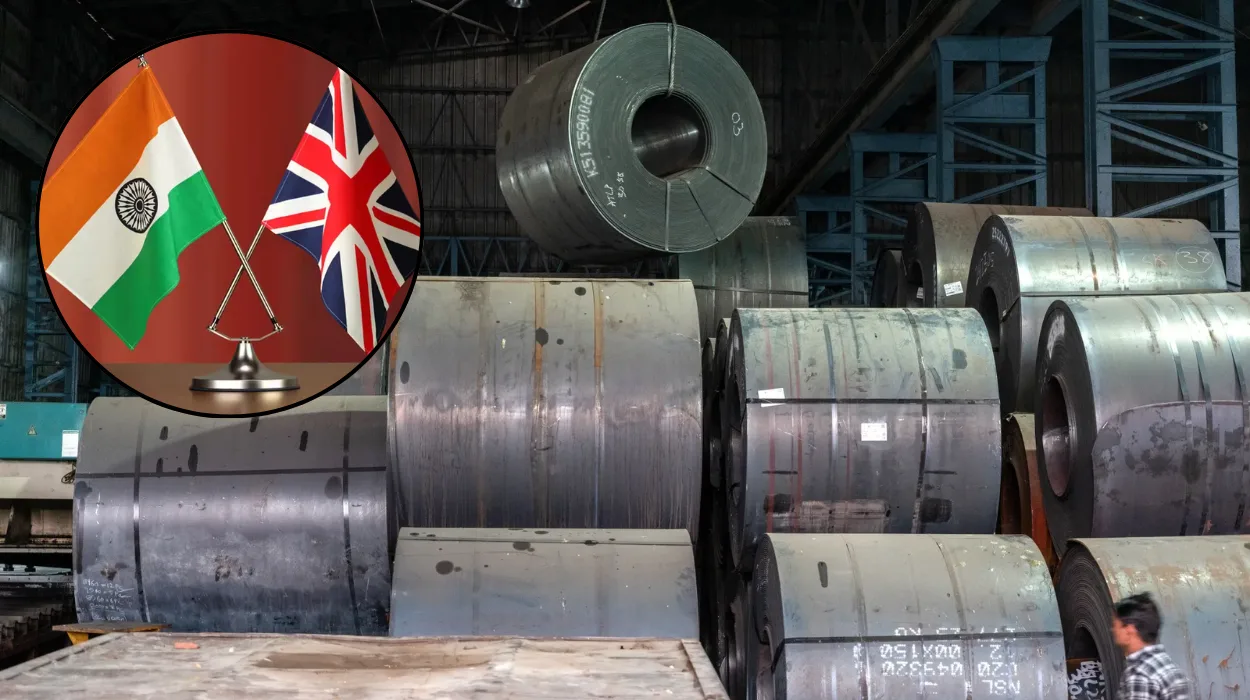
- India has secured a larger duty-free export quota for steel to the United Kingdom under a renegotiation of the two countries’ free trade agreement.
- Commerce Secretary Rajesh Agrawal confirmed the development to reporters in New Delhi on Tuesday.
- The renegotiated pact is set to take effect from Wednesday.
- The changes follow the UK’s decision to impose a safeguard levy on steel imports from July this year.
- The UK has also extended the exemption period for eligible Indian professionals from paying social security contributions, raising it from three years to five years.
- The revised arrangement addresses one of New Delhi’s principal concerns regarding Britain’s trade measures on steel.
- The India-UK Free Trade Agreement is widely regarded as one of Prime Minister Narendra Modi’s significant trade successes.
- India is simultaneously working to conclude a separate trade agreement with the United States.
- New Delhi is also holding talks with London over Britain’s forthcoming carbon tax, which is due to come into force in January next year.
New Delhi (Britain Today News) July 14, 2026 – India has secured a bigger quota for duty-free steel exports to the United Kingdom, after renegotiating parts of the free trade agreement the two countries signed last year, Commerce Secretary Rajesh Agrawal said on Tuesday.
- Key Points
- What Has Changed in the India-UK Free Trade Agreement on Steel?
- What Did Commerce Secretary Rajesh Agrawal Say About the Deal?
- When Will the Revised Trade Agreement Come Into Effect?
- How Has the UK’s Safeguard Levy Affected Indian Steel Exporters?
- What Social Security Benefits Will Indian Professionals Now Receive Under the Deal?
- What Other Trade Negotiations Is India Currently Pursuing?
- What Does This Mean for India’s Steel Industry Going Forward?
The revised agreement, which is scheduled to come into force from Wednesday, follows Britain’s decision to impose a safeguard levy on steel imports from July this year — a move that had raised concerns in New Delhi about the competitiveness of Indian steel exporters in the UK market. Speaking to reporters in New Delhi, Agrawal confirmed that both sides had reworked specific elements of the pact to address these concerns, while also expanding benefits for Indian professionals working in Britain.
The development marks a fresh chapter in the India-UK trade relationship, which has been closely watched since the original Free Trade Agreement was signed last year. With the renegotiated terms, Indian steel exporters are now expected to benefit from a considerably larger volume of duty-free access to the UK market, a change that industry observers say could help cushion the impact of Britain’s protective trade measures.
What Has Changed in the India-UK Free Trade Agreement on Steel?
Under the renegotiated agreement, India has been granted an enlarged duty-free import quota for steel exports into the United Kingdom. According to Agrawal, this expanded quota was specifically designed to offset the effects of the safeguard levy Britain imposed on steel imports from July this year. The Commerce Secretary told reporters in New Delhi that the two sides had worked through the specifics of the arrangement in recent negotiations, resulting in more favourable terms for Indian exporters than were originally agreed upon.
The steel sector has been a persistent point of discussion between the two countries, given the UK’s broader efforts to protect its domestic steel industry from a surge in low-cost imports. By securing a larger duty-free quota, India has effectively managed to preserve much of the market access its steel exporters were promised under the original agreement, despite the introduction of the new levy.
Why Did India Renegotiate the Steel Export Quota?
The renegotiation was prompted directly by the United Kingdom’s imposition of a safeguard levy on steel imports, which took effect in July this year. Safeguard levies are typically introduced by governments to protect domestic industries from a sudden increase in imports that could cause material harm to local producers. However, such measures can significantly disadvantage exporting nations that had previously negotiated preferential access.
Agrawal explained that the levy had created an imbalance in the terms India had originally secured under the Free Trade Agreement, prompting New Delhi to seek a renegotiation of key provisions.
“New Delhi renegotiated some aspects of the agreement, which is set to take effect from Wednesday, following Britain’s imposition of a safeguard levy on steel from July this year,”
Agrawal told reporters in New Delhi on Tuesday.
This statement underscores that the changes were not a routine review of the trade pact but a direct response to a specific policy shift by the UK government, one that New Delhi felt needed to be addressed to protect Indian commercial interests.
What Did Commerce Secretary Rajesh Agrawal Say About the Deal?
Agrawal, addressing reporters in New Delhi on Tuesday, laid out the key elements of the renegotiated agreement in some detail. He confirmed that the new arrangement provides Indian steel exporters with a larger duty-free import quota, describing it as a measure that addresses one of New Delhi’s key concerns over the UK’s trade measures.
He also confirmed that the agreement includes an extension of benefits for Indian professionals.
“As part of the renegotiated agreement, the UK has also extended an exemption for eligible Indian professionals from making social security contributions to five years, from three,”
Agrawal said.
The Commerce Secretary’s remarks provided the clearest official confirmation yet that the India-UK trade relationship continues to evolve even after the original agreement was signed, with both governments willing to revisit specific clauses in response to changing circumstances.
When Will the Revised Trade Agreement Come Into Effect?
According to Agrawal, the renegotiated agreement is set to take effect from Wednesday. This timeline places the implementation of the new terms just a day after his remarks to reporters in New Delhi, suggesting that the two governments had already finalised the technical details of the renegotiation before making the announcement public.
The relatively swift implementation timeline indicates that both New Delhi and London were keen to resolve the steel quota issue without prolonged delay, likely to minimise disruption to trade flows and provide certainty to exporters and importers on both sides.
How Has the UK’s Safeguard Levy Affected Indian Steel Exporters?
Britain’s safeguard levy on steel imports, which came into effect from July this year, had the potential to erode the competitive advantage Indian steel exporters had secured under the original Free Trade Agreement. Safeguard measures of this nature are generally applied uniformly to imports from multiple countries, meaning that even nations with preferential trade arrangements can find themselves affected unless specific carve-outs or adjustments are negotiated.
For Indian steel exporters, the levy risked increasing the cost of exporting to the UK market, potentially offsetting some of the benefits gained through the original trade agreement. The renegotiation of the duty-free quota, as confirmed by Agrawal, appears to have been a direct and targeted response to this risk, aimed at ensuring that Indian steel producers retain meaningful access to the UK market despite the new levy.
What Social Security Benefits Will Indian Professionals Now Receive Under the Deal?
Beyond the steel provisions, the renegotiated agreement also brought changes benefiting Indian professionals working in the United Kingdom. Agrawal confirmed that the UK has extended the exemption period during which eligible Indian professionals are not required to make social security contributions, increasing it from three years to five years.
This provision is significant for Indian workers on short and medium-term postings in the UK, as it reduces the financial burden associated with dual social security contributions — a common concern for professionals working abroad under bilateral trade and mobility arrangements. The extension to five years effectively doubles the period of relief compared with the terms originally agreed, making the UK a more attractive destination for skilled Indian professionals under the trade pact.
Why Is the India-UK Trade Deal Significant for Prime Minister Narendra Modi?
The India-UK Free Trade Agreement has been widely viewed as one of Prime Minister Narendra Modi’s notable achievements in trade diplomacy. Signed last year after years of negotiation, the agreement was seen as a landmark moment in India’s efforts to deepen economic ties with major Western economies.
The latest renegotiation, which strengthens the terms in India’s favour, particularly on steel exports, further reinforces the deal’s standing as a diplomatic success for the Modi government. It also demonstrates New Delhi’s ability to secure amendments to an already-signed agreement when new circumstances, such as the UK’s safeguard levy, threaten to undermine the benefits originally negotiated.
This comes at a time when the Indian government is actively seeking to expand and diversify its trade partnerships to support the country’s economic growth, making the successful renegotiation with the UK a notable point of reference for India’s broader trade strategy.
Explore More about UK:
UK Wildfires Rage as Fire Chiefs Warn of Extreme Pressure
Covid Inquiry Finds Johnson Government Wasted Billions on PPE
What Other Trade Negotiations Is India Currently Pursuing?
Alongside the finalisation of the renegotiated UK agreement, the Indian government is also working to conclude a separate trade agreement with the United States. This effort forms part of a wider push by New Delhi to secure new and strengthened trade partnerships with major global economies, as India looks to bolster its export competitiveness and attract greater investment.
The parallel pursuit of agreements with both the UK and the US reflects India’s broader strategic approach of engaging with multiple large economies simultaneously, rather than relying on any single trade relationship. This approach is seen as a way of hedging against global trade uncertainties while maximising opportunities for Indian exporters across different sectors.
Is India Discussing the UK’s Planned Carbon Tax As Well?
Yes. Agrawal confirmed that India is also in discussions with the United Kingdom regarding Britain’s planned carbon tax, which is due to take effect from January next year. This carbon tax, once implemented, could have implications for a range of Indian exports to the UK, depending on how emissions-related levies are calculated and applied to imported goods.
The fact that these discussions are ongoing alongside the steel quota renegotiation suggests that trade officials from both countries are engaging in a continuous dialogue on multiple fronts, rather than treating the Free Trade Agreement as a static, one-time settlement. This ongoing engagement could prove significant for Indian exporters in sectors beyond steel, particularly those with carbon-intensive production processes.
What Does This Mean for India’s Steel Industry Going Forward?
For India’s steel industry, the renegotiated duty-free quota represents a meaningful safeguard against the potential negative effects of the UK’s new safeguard levy. By securing expanded access to the UK market, Indian steel producers are better positioned to maintain their export volumes and competitiveness, even as Britain moves to protect its domestic steel sector.
The broader implication is that trade agreements, even after being signed and ratified, remain subject to renegotiation when external policy changes — such as safeguard levies or carbon taxes — threaten to alter the balance of benefits between trading partners. India’s success in renegotiating the steel quota terms may also serve as a template for how New Delhi approaches similar challenges in future trade relationships, including its ongoing talks with Washington and its discussions with London over the forthcoming carbon tax.
As the revised agreement comes into effect from Wednesday, attention will now turn to how quickly Indian steel exporters can capitalise on the expanded quota, and whether further adjustments to the India-UK Free Trade Agreement will be required as both countries continue to navigate an evolving global trade landscape.