Key Points
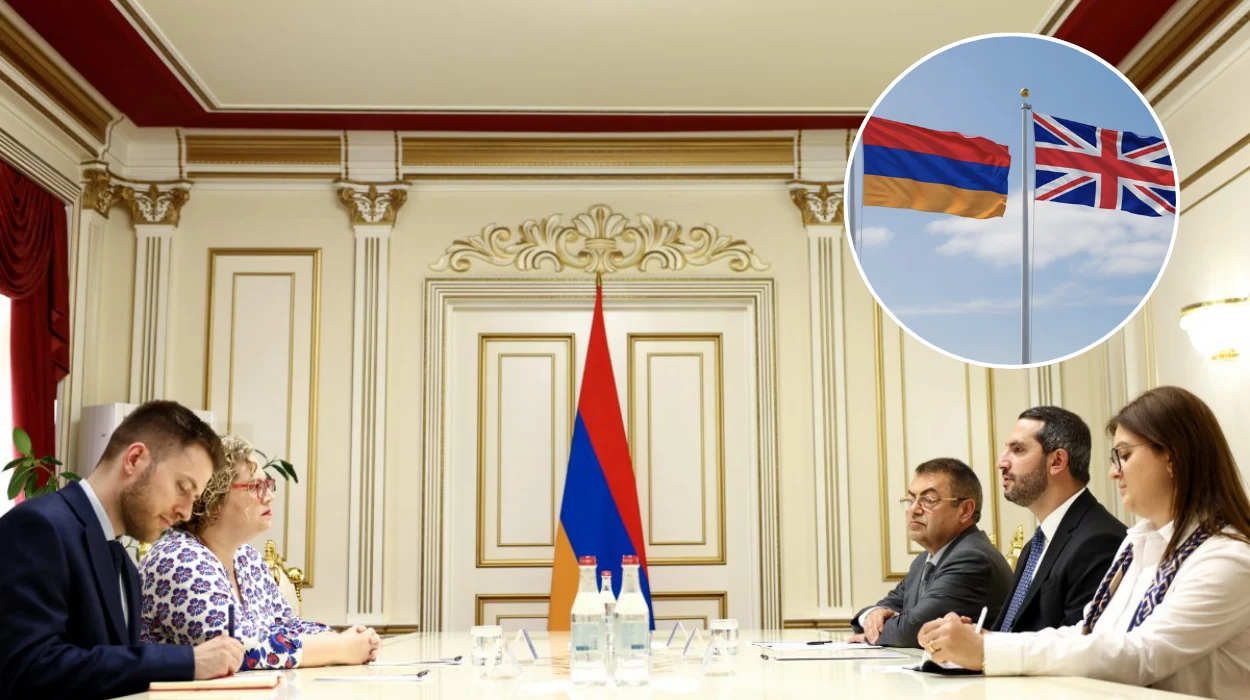
- On August 13, 2026, Armenian Parliament Speaker Ruben Rubinyan held a meeting with UK Ambassador to Armenia Alexandra Cole in Yerevan.
- The meeting was devoted to further strengthening the bilateral relations between Armenia and the UK.
- The main topics covered included parliamentary cooperation and enhanced interparliamentary relations.
- During the party visit, Alexandra Cole congratulated the newly elected Speaker of Armenia’s National Assembly, Ruben Rubinyan.
- The bilateral relations between Armenia and the United Kingdom have considerably developed in recent years, both sides stated.
- Both countries are working towards deepening their partnership under the framework of a strategic partnership.
- During the meeting, the Joint Declaration on the Strategic Partnership between Armenia and the United Kingdom was mentioned.
- The UK’s support for Armenia’s democratic reforms was recognised by both sides.
- The peace process and regional developments were also discussed.
- Armenia and the UK emphasised the need to further strengthen relations in the political, economic and other areas.
- The meeting emphasised the need to further boost cooperation between the Armenian and the British parliaments.
- There is no direct quote from Ruben Rubinyan or Alexandra Cole in the information included in this report.
Yerevan (Britain Today News) August 13, 2026 – Speaker of the Armenian Parliament Ruben Rubinyan received the United Kingdom’s Ambassador to Armenia, Alexandra Cole, for talks focused on the continued development of relations between Armenia and the UK.
- Key Points
- What did Ruben Rubinyan and Alexandra Cole discuss?
- Why was Alexandra Cole’s congratulations significant?
- How have Armenia–UK relations developed?
- What is the role of the strategic partnership declaration?
- How is the UK supporting Armenia’s democratic reforms?
- What did the meeting say about the peace process?
- Which regional developments were discussed?
- Why is parliamentary cooperation important?
- Which areas of cooperation could expand?
- What does the meeting mean for Armenia–UK ties?
- What happens next in the strategic partnership?
- Did either official issue a direct quote?
- Why does the Yerevan meeting matter?
The meeting centred on the further strengthening of the two countries’ strategic partnership and the expansion of cooperation between their parliaments. The discussion also addressed Armenia’s democratic reforms, the peace process and developments in the region.
According to the information provided for this report, both sides noted that Armenia–UK relations had made significant progress in recent years. They also stressed that bilateral ties continued to develop within the framework of a strategic partnership.
What did Ruben Rubinyan and Alexandra Cole discuss?
Ruben Rubinyan and Alexandra Cole discussed the “further development of bilateral relations and parliamentary cooperation” during their meeting in Yerevan.
The talks brought together the head of Armenia’s National Assembly and the UK’s diplomatic representative in Armenia at a time when both countries are seeking to build on recent progress in their relationship.
The meeting covered a broad range of issues rather than focusing on a single area of cooperation. Political relations, economic cooperation, democratic reforms, the peace process and regional developments were all included in the discussions.
The two officials also considered the importance of maintaining regular dialogue between the Armenian and British parliaments. Stronger contacts between legislators can provide an additional channel for bilateral engagement alongside government-to-government and diplomatic relations.
The information available does not provide a detailed account of specific agreements reached during the meeting. However, it makes clear that both sides expressed support for continued cooperation and for the further expansion of Armenia–UK ties.
Why was Alexandra Cole’s congratulations significant?
During the meeting, Alexandra Cole congratulated Ruben Rubinyan on his election as Speaker of the National Assembly of Armenia.
The gesture marked the beginning of the ambassador’s discussion with the newly elected parliamentary speaker and underlined the diplomatic importance attached to Armenia’s legislature.
As Speaker, Rubinyan leads the work of Armenia’s National Assembly and represents the institution in contacts with foreign parliamentary delegations and international partners. His meeting with the UK ambassador therefore provided an opportunity to discuss both bilateral relations and the role of parliamentary diplomacy.
The congratulations also formed an important part of the diplomatic exchange. The meeting was not only focused on policy matters but also acknowledged the change in Armenia’s parliamentary leadership.
The information provided does not include a direct statement from Rubinyan in response to the congratulations. It also does not specify when his election took place or provide details about the parliamentary vote.
How have Armenia–UK relations developed?
The two sides noted that Armenia–UK relations had made “significant progress in recent years”.
That assessment was central to the meeting. It indicated that the relationship has expanded beyond traditional diplomatic contact and is now being managed through a broader strategic framework.
The talks suggested that Armenia and the UK view their bilateral relationship as continuing to develop across several fields. These include political engagement, economic cooperation, support for democratic reforms, peace-related efforts and parliamentary relations.
The use of the phrase “strategic partnership” reflects the importance both sides attach to their relationship. It also places the latest meeting within a wider bilateral framework rather than treating it as an isolated diplomatic encounter.
The information provided does not list individual projects, trade figures, agreements or new initiatives announced during the meeting. It does, however, state that Armenia and the UK agreed on the need to continue strengthening their cooperation.
What is the role of the strategic partnership declaration?
The Joint Declaration on the Strategic Partnership between Armenia and the United Kingdom was highlighted during the meeting.
Both sides recognised the importance of the declaration as a framework for developing bilateral ties. The document was discussed alongside the UK’s support for Armenia’s democratic reforms, the peace process and wider bilateral cooperation.
A strategic partnership declaration generally serves as a political basis for closer engagement between two countries. In this case, the meeting showed that the declaration remains relevant to discussions between Armenian and British officials.
The declaration also provides a reference point for cooperation in multiple areas. Rather than limiting the relationship to diplomatic or economic matters, it links the partnership to political development, regional peace and parliamentary engagement.
The supplied information does not reproduce the full text of the declaration or identify individual commitments contained within it. It only confirms that the document was considered important by both sides during the Yerevan meeting.
How is the UK supporting Armenia’s democratic reforms?
The UK’s support and role in Armenia’s democratic reforms were specifically recognised during the talks.
The discussion placed democratic development among the major areas of Armenia–UK cooperation. The two sides also connected the UK’s support for reforms with the broader development of bilateral ties.
The reference to democratic reforms indicates that political cooperation between Armenia and the UK extends beyond diplomatic relations. It includes engagement with Armenia’s institutional and political development.
The Armenian Parliament was particularly relevant to this part of the discussion because the National Assembly is a central institution in the country’s legislative and democratic processes. The presence of the parliamentary speaker gave the meeting a direct connection to Armenia’s legislative branch.
The available information does not describe particular reform programmes, funding arrangements or technical assistance. It also does not provide a direct quotation from the ambassador or the speaker on the issue. Therefore, no additional claim about specific British initiatives can be made from the information supplied.
What did the meeting say about the peace process?
The peace process was among the issues discussed by Ruben Rubinyan and Alexandra Cole.
The meeting’s reference to the peace process shows that Armenia–UK relations also include regional security and diplomatic matters. The two countries considered the subject as part of their wider strategic partnership.
The peace process is closely linked to regional stability, diplomatic engagement and Armenia’s relations with its neighbours. By including it in the talks, the meeting reflected the wider regional context in which Armenia’s foreign relations are developing.
The information provided does not set out the positions expressed by either side. It does not identify specific proposals, negotiations, agreements or next steps related to the peace process.
Accordingly, the significance of the discussion is that the issue was included in bilateral consultations, rather than that a new peace initiative was announced. The meeting confirmed the subject’s place on the Armenia–UK diplomatic agenda.
Which regional developments were discussed?
Regional developments were also discussed during the meeting in Yerevan.
The report does not specify which developments were raised or provide details of the views expressed by the Armenian parliamentary speaker and the British ambassador. It therefore remains unclear whether the discussion covered particular diplomatic events, security issues or developments involving neighbouring states.
Nevertheless, the inclusion of regional developments underlined the broader character of the meeting. The discussions were not limited to parliamentary procedure or bilateral exchanges but also considered the regional environment affecting Armenia.
For Armenia, regional developments can have an impact on foreign policy, security, economic links and the peace process. For the UK, engagement with such issues forms part of its diplomatic relationship with Armenia and its wider interest in regional stability.
No direct statement was provided by either official on this part of the meeting. The information only confirms that regional developments formed part of the agenda.
Why is parliamentary cooperation important?
Parliamentary cooperation was one of the main themes of the meeting.
Both sides stressed the importance of further developing interparliamentary relations between Armenia and the UK. Such relations can include exchanges between parliamentary officials, contacts between committees, legislative dialogue and visits by parliamentary delegations.
The meeting between Rubinyan and Cole demonstrated the importance of maintaining direct communication between Armenia’s National Assembly and the UK’s diplomatic mission. Parliamentary diplomacy can complement formal government relations by creating opportunities for dialogue among elected representatives and legislative institutions.
The focus on parliamentary cooperation was also consistent with the UK’s support for Armenia’s democratic reforms. Stronger links between legislatures can help promote the exchange of experience on parliamentary procedures, accountability and institutional development.
However, the information provided does not announce a new parliamentary delegation, working group, committee-level agreement or timetable for future exchanges. It only confirms that both sides agreed on the importance of continuing to strengthen interparliamentary relations.
Which areas of cooperation could expand?
The two sides stressed the importance of expanding cooperation in political, economic and other areas.
Political cooperation remains a central element of the strategic partnership. Continued diplomatic engagement can support dialogue on Armenia’s democratic reforms, the peace process and regional issues.
Economic cooperation was also identified as an area for further development. The report does not provide trade figures, investment commitments or details of business agreements, but it confirms that both sides recognised the need to broaden engagement beyond political relations.
The reference to “other areas” suggests that the partnership is not confined to politics and economics. It may include institutional, parliamentary and diplomatic cooperation, although the information provided does not identify additional sectors.
The wording of the report indicates a shared intention to continue expanding the relationship. It does not, however, confirm that any new economic or political agreement was signed during the meeting.
What does the meeting mean for Armenia–UK ties?
The meeting reinforced the message that Armenia and the UK intend to maintain momentum in their bilateral relationship.
Both sides described the relationship as having made significant progress in recent years and continuing to develop through a strategic partnership. The meeting therefore served as a reaffirmation of existing cooperation and a statement of intent to deepen it further.
For Armenia, engagement with the UK includes support for democratic reforms, cooperation on the peace process and the strengthening of parliamentary links. For the UK, the relationship provides a channel for diplomatic engagement with Armenia on bilateral and regional matters.
The talks also demonstrated that parliamentary relations remain an important part of the partnership. The meeting between the National Assembly speaker and the UK ambassador linked diplomatic cooperation with Armenia’s legislative institution.
There was no announcement of a new treaty, financial package or specific joint programme in the information provided. The main outcome was the shared emphasis on further cooperation and stronger bilateral relations.
What happens next in the strategic partnership?
The next stage of the Armenia–UK strategic partnership is expected to focus on continuing political dialogue, expanding economic cooperation and strengthening links between the two parliaments.
The meeting established several broad priorities. These included implementing the significance of the Joint Declaration on the Strategic Partnership, supporting Armenia’s democratic reforms, maintaining attention on the peace process and discussing regional developments.
Further engagement could involve continued diplomatic consultations and contacts between Armenian and British parliamentary institutions. However, the information supplied does not include details of scheduled meetings, planned visits or specific follow-up measures.
The clearest message from the talks was that both sides want to build on progress achieved in recent years. Their stated objective is to further expand cooperation in political, economic and other areas while continuing to strengthen interparliamentary relations.
The meeting between Ruben Rubinyan and Alexandra Cole therefore represented another step in the ongoing development of Armenia–UK relations. It brought together parliamentary and diplomatic priorities under the framework of a strategic partnership and reaffirmed the importance of continued cooperation.
Explore More about the UK:
British Firework Championships ‘Pretty Safe’ Despite Drought
Huge Queue Forms in London for Solar Eclipse Glasses
Did either official issue a direct quote?
The information provided for this article does not contain a direct quotation from Ruben Rubinyan or Alexandra Cole.
To avoid attributing words that were not supplied, this report does not present invented remarks as direct statements by either official. The phrases “further development of bilateral relations and parliamentary cooperation”, “significant progress in recent years” and “strategic partnership” are used as wording contained in the provided news information, not as newly created quotations.
The meeting’s documented substance is clear: Armenia and the UK discussed the further development of their bilateral relationship, highlighted the strategic partnership declaration, recognised the UK’s support for democratic reforms and the peace process, addressed regional developments and called for stronger political, economic and interparliamentary cooperation.
Why does the Yerevan meeting matter?
The Yerevan meeting matters because it brought together the leadership of Armenia’s National Assembly and the UK’s diplomatic representation to discuss a relationship both sides describe as strategic.
It also connected several major areas of cooperation. These included democratic reforms, peace-related discussions, regional developments, economic relations and parliamentary engagement.
The talks did not result in a publicly announced new agreement, according to the information provided. Instead, they reaffirmed the direction of Armenia–UK relations and the intention to deepen cooperation under the existing strategic partnership framework.
The meeting also highlighted the role of parliamentary diplomacy in Armenia’s international relations. By focusing on interparliamentary cooperation, the discussions gave legislative ties a prominent place alongside wider political and economic engagement.
With both sides expressing support for continued cooperation, the meeting confirmed that Armenia–UK relations remain focused on long-term engagement. The emphasis now is on building upon recent progress and translating the strategic partnership into further political, economic and parliamentary cooperation.