Key Points
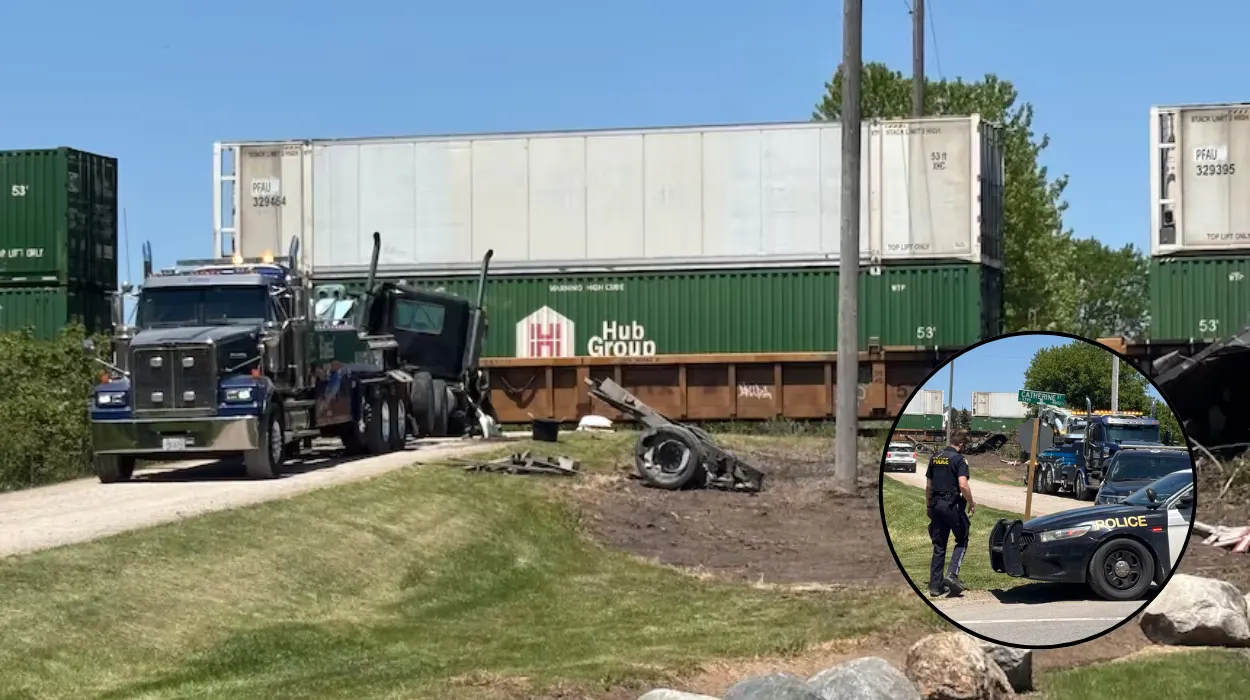
- One person suffered serious but non-life-threatening injuries after a tri-axle truck was struck by a freight train in Dorchester, Ont., just east of London on Monday
- The collision occurred just after 9 a.m. at the CN Rail crossing along Sheils Lane, just north of Catherine Street, according to Ontario Provincial Police
- The crossing does not have gates or lights, contributing to the accident risk at this location
- The truck driver was transported from the scene to hospital by paramedics, said OPP Sgt. Ed Sanchuk in a video posted to social media
- The train conductor suffered no injuries and their quick thinking actions ultimately saved the life of the tri-axle operator, according to Sgt. Sanchuk
- The tri-axle truck was transporting roughly 400 litres of herbicide in holding tanks which spilled when struck by the eastbound train
- Officials from Ontario’s Ministry of the Environment, Conservation and Parks were notified and attended the scene along with CN Rail’s police force
- The incident impacted VIA Rail service through the area, including Route 73 scheduled to arrive in London just after 1:30 p.m.
- Train 72 travelling from Windsor to Toronto also experienced a minor delay as a result of the incident, a VIA Rail spokesperson said
- The situation has since been resolved with no further impacts to VIA Rail service expected, according to the VIA Rail spokesperson
- CN Rail spokesperson directed any questions about the incident to the Ontario Provincial Police as they are the lead investigative agency
- A request for comment to the Transportation Safety Board of Canada was also not returned
Ontario (Britain Today News) June 1, 2026 – A truck driver sustained serious but non-life-threatening injuries Monday morning after their tri-axle truck was struck by an eastbound freight train at an unguarded rail crossing in Dorchester, Ontario, just east of London, triggering an environmental response after approximately 400 litres of herbicide spilled from the vehicle’s holding tanks.
- Key Points
- What Exactly Happened During the Train-Truck Collision?
- Why Did the Herbicide Spill Occur and What Environmental Measures Were Taken?
- How Did the Collision Impact VIA Rail Service and Regional Train Traffic?
- Who Is Leading the Investigation and What Questions Remain Unanswered?
- What Does This Incident Reveal About Rail Crossing Safety in Ontario?
- Where Will the Investigation Focus and What Are the Next Steps?
What Exactly Happened During the Train-Truck Collision?
As reported by Ontario Provincial Police Sgt. Ed Sanchuk in a video posted from the scene to social media, the collision happened just after 9 a.m. at the CN Rail crossing along Sheils Lane, just north of Catherine Street. The crossing does not have gates or lights, which means drivers must rely on their own judgment when crossing the tracks. This infrastructure detail proves significant when investigating how the accident occurred.
The driver of the truck was taken from the scene to hospital by paramedics, according to Sgt. Sanchuk’s on-scene statement. Medical personnel treated the injured party at the scene before transporting them to a nearby hospital for further treatment. The Ontario Provincial Police confirmed that the person suffered serious injuries but emphasized these injuries were not life-threatening, offering some relief to concerned family members and community residents.
“The train conductor did not suffer any injuries, and as a result of their quick thinking actions, that train conductor ultimately saved the life of this tri-axle operator,”
Sanchuk said in his statement from the scene. This critical detail highlights the split-second decision-making that occurred during the collision and underscores how the train conductor’s responsive actions prevented what could have been a fatal outcome for the truck driver.
Why Did the Herbicide Spill Occur and What Environmental Measures Were Taken?
The tri-axle truck was transporting roughly 400 litres of herbicide in holding tanks which spilled when it was struck by the eastbound train, police reported. This chemical spill prompted immediate environmental response protocols as officials worked to contain the hazardous material and prevent further contamination of the surrounding area.
Officials from Ontario’s Ministry of the Environment, Conservation and Parks were notified and attended the scene along with members of CN Rail’s police force, according to the Ontario Provincial Police statement. The presence of environmental ministry officials demonstrates the seriousness with which authorities treated the chemical spill, given that herbicides can pose significant risks to soil, water, and local ecosystems if not properly contained and cleaned up.
The ministry was not returned before publication, leaving some questions unanswered about the specific containment procedures and cleanup timeline. This lack of immediate response from the ministry means that detailed information about the environmental impact assessment and remediation efforts remains unavailable to the public at this time.
How Did the Collision Impact VIA Rail Service and Regional Train Traffic?
The incident impacted VIA Rail service through the area, including Route 73, which had been scheduled to arrive in London just after 1:30 p.m., according to railway service reports. Passenger travel plans were disrupted as trains faced delays while emergency responders worked at the collision scene and railway crews assessed track damage.
A real-time map operated by VIA showed the train stopped just east of Ingersoll as of 1:50 p.m., providing passengers and observers with live updates on the service disruption. The map displayed the stationary train’s location, allowing travelers to understand the extent of the delay and plan accordingly.
“This train accumulated a delay due to rail traffic on route,”
the page read on VIA’s real-time tracking system. The automated message explained the reason for the delay without going into specific details about the collision that caused the rail traffic congestion.
The train was seen moving a short time later, indicating that emergency crews had cleared enough of the scene to allow limited train movement to resume. Train 72, travelling from Windsor to Toronto, also experienced a “minor delay” as a result of the incident, a VIA Rail spokesperson said in an email. This secondary delay affected a different route but demonstrated how the single collision created ripple effects throughout the regional rail network.
“The situation has since been resolved, and no further impacts to VIA Rail service are expected,”
a VIA Rail spokesperson said in an email to media outlets. This update brought relief to passengers and railway operators alike, confirming that normal service had resumed and future trains would not face additional delays related to Monday’s collision.
Explore More about Crime:
Tragedy at popular Canary Islands beach as tourist dies despite rescue efforts by emergency crews
London paedophile who groomed children as young as 12 online given 10‑year jail sentence 2026
Who Is Leading the Investigation and What Questions Remain Unanswered?
“Any questions about this incident should be directed to the Ontario Provincial Police as they are the lead investigative agency,”
a CN Rail spokesperson said in an email to reporters. This statement clearly establishes the OPP as the primary authority responsible for determining what caused the collision and whether any violations of railway safety regulations occurred.
The Ontario Provincial Police will likely examine multiple factors during their investigation, including the truck driver’s actions leading up to the collision, the condition of the rail crossing, the train’s speed, and whether proper warning systems were functioning. The absence of gates or lights at the Sheils Lane crossing will undoubtedly be a key focus of the investigation, as infrastructure deficiencies often contribute to rail-road collisions.
A request for comment to the Transportation Safety Board of Canada was also not returned, leaving another important investigative body’s potential involvement unclear. The Transportation Safety Board typically investigates serious railway accidents to determine causes and make safety recommendations, so their participation could prove significant depending on the severity assessment of this incident.
The lack of responses from both the Ministry of the Environment and the Transportation Safety Board means that several critical questions remain unanswered at this time. These include the full extent of environmental contamination, the cleanup timeline, whether the Transportation Safety Board will open a formal investigation, and what safety recommendations might emerge from their review if they do participate.
What Does This Incident Reveal About Rail Crossing Safety in Ontario?
The fact that the crossing does not have gates or lights raises important questions about rail crossing safety standards in rural Ontario communities, according to safety experts who study railway accidents. Unprotected crossings rely entirely on driver vigilance and posted warning signs, which some safety advocates argue provides insufficient protection against collisions.
This collision in Dorchester adds to a broader conversation about railway safety infrastructure across Canada, particularly in rural areas where traffic volumes may be lower but the consequences of accidents can be severe. The presence of hazardous materials being transported—specifically 400 litres of herbicide—adds another layer of complexity to the safety discussion, as rail-road collisions involving dangerous goods pose amplified risks to public safety and the environment.
The train conductor’s quick thinking actions that saved the truck driver’s life demonstrate the importance of human alertness and rapid response in preventing catastrophic outcomes, even when infrastructure limitations exist. Training railway employees to recognize potential hazards and respond appropriately remains a critical component of railway safety alongside physical infrastructure improvements.
Where Will the Investigation Focus and What Are the Next Steps?
The Ontario Provincial Police will conduct the lead investigation into this collision, examining all circumstances surrounding the incident to determine what factors contributed to the crash. Investigators will likely interview the train conductor, review any available surveillance footage or witness statements, examine the physical evidence at the collision scene, and assess whether any traffic or railway safety laws were violated.
Environmental assessment and cleanup efforts will continue under the supervision of Ontario’s Ministry of the Environment, Conservation and Parks, though specific details about the scope and timeline of these efforts remain unavailable pending further communication from the ministry. The cleanup of spilled herbicide requires specialized procedures to ensure hazardous materials do not contaminate groundwater, soil, or nearby waterways.
Railway crews from CN Rail will need to assess any damage to the tracks and rolling stock before normal service can fully resume, although VIA Rail indicated that service has returned to normal with no further delays expected. The physical inspection of railway infrastructure following a collision is standard procedure to ensure safe operations continue.
Family members, friends, and employer of the injured truck driver will be waiting for updates on the person’s medical condition and recovery timeline, as the hospital has not released detailed information about the injured party’s status beyond the initial assessment of serious but non-life-threatening injuries. The community of Dorchester and surrounding areas will be watching closely as the investigation unfolds, particularly given the environmental implications of the herbicide spill.
The complete resolution of this incident will depend on multiple factors: the truck driver’s medical recovery, the completion of environmental cleanup, the findings of the OPP investigation, and any safety recommendations that emerge from official reviews. All of these elements will shape the broader understanding of what happened and what measures might prevent similar incidents in the future.
This collision serves as a stark reminder of the dangers inherent at rail-road crossings, particularly those without protective gates or lights, and underscores the importance of driver vigilance, railway safety infrastructure, and coordinated emergency response when accidents do occur.