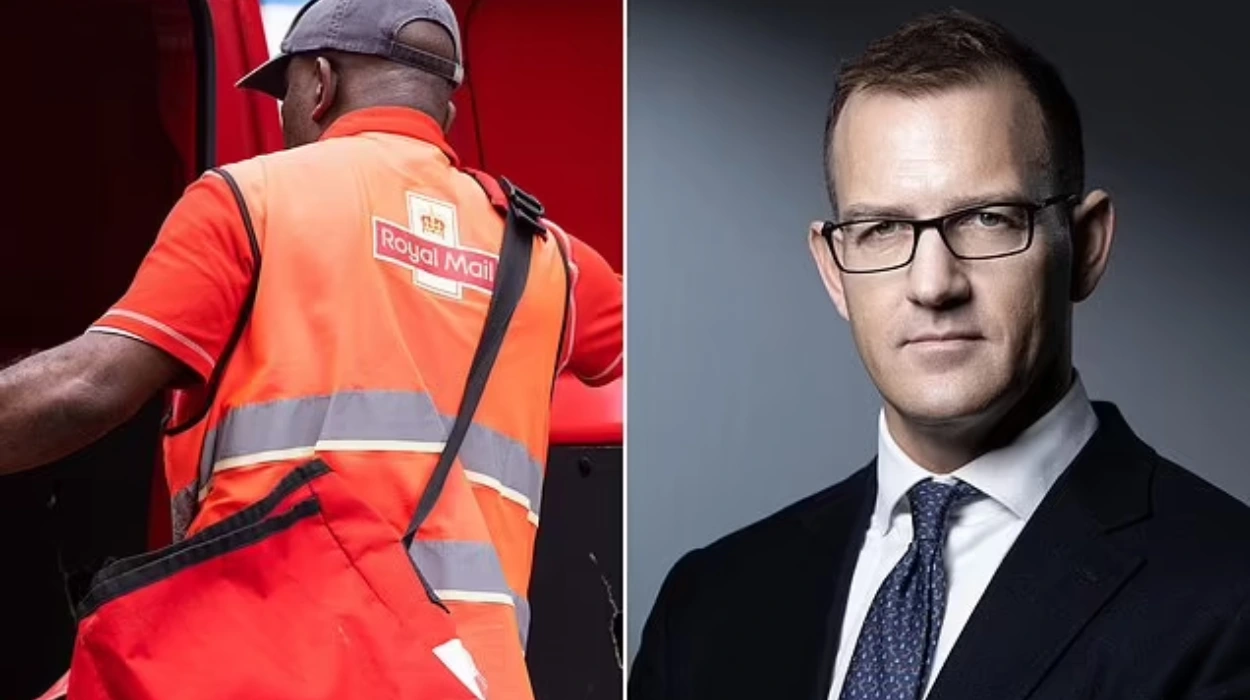
How did Daniel Kretinsky become a central figure in the Royal Mail payout debate?
Daniel Kretinsky became central to the Royal Mail payout debate after agreeing a multibillion‑pound takeover of International Distribution Services, Royal Mail’s parent company, which put his influence over executive pay, investment decisions, and long‑term service obligations under intense political and public scrutiny.
- How did Daniel Kretinsky become a central figure in the Royal Mail payout debate?
- What is Royal Mail and why does Daniel Kretinsky’s ownership matter for Britain?
- What exactly is the Royal Mail payout that sparked controversy under Daniel Kretinsky’s ownership?
- Why does Daniel Kretinsky’s business record intensify concern about Royal Mail payouts and governance?
- How does the Royal Mail payout under Daniel Kretinsky compare to past executive pay controversies?
- What political and regulatory debates has Daniel Kretinsky’s Royal Mail payout triggered in Britain?
- What are the economic and operational implications of Daniel Kretinsky’s Royal Mail strategy and payouts?
Daniel Kretinsky is a Czech billionaire investor who built his fortune through energy group EPH and diversified holdings in European media, retail, and logistics. He accumulated a large stake in International Distribution Services (IDS), the listed parent of Royal Mail, starting in the late 2010s and early 2020s, positioning himself as a strategic shareholder. In 2024, IDS’s board indicated it would accept a takeover proposal valued at about £3.5–3.6 billion, giving Kretinsky effective control over Royal Mail and Parcelforce operations. This transaction triggered concern among unions, regulators, and politicians because Royal Mail performs the United Kingdom’s universal postal service under statutory obligations. As control shifted, attention focused on how the new owner would handle executive payouts, cost‑cutting measures, and the balance between shareholder returns and public service responsibilities.
The Royal Mail payout debate intensified when group chief executive Martin Seidenberg received a total pay package of £6.9 million for the year to 29 March 2026, at a time when profits at the UK postal service fell. Seidenberg leads IDS and therefore reports to Kretinsky as controlling shareholder, linking his remuneration directly to the new ownership structure. Critics framed this payout as emblematic of a broader shift in corporate priorities under Kretinsky, arguing that high remuneration and investor returns conflicted with staff concerns, service reliability, and affordability for consumers. As media coverage connected Kretinsky’s history in other sectors with the Royal Mail decision, the debate broadened from a single payout to a long‑term question about governance, accountability, and foreign ownership of a historically British institution.
What is Royal Mail and why does Daniel Kretinsky’s ownership matter for Britain?
Royal Mail is the United Kingdom’s designated universal postal service provider, legally obliged to deliver letters six days a week at uniform prices nationwide, so Daniel Kretinsky’s ownership matters because it affects a critical national infrastructure and long‑term public service obligations.
Royal Mail traces its history back more than 500 years to the Tudor period, evolving from a state‑run postal system into a modern parcel and letters business. It was fully privatized in 2013, when the government sold shares via an initial public offering, creating International Distribution Services as the listed parent. Under UK postal regulations, Royal Mail holds the universal service obligation: it must collect and deliver letters across the country at affordable, uniform prices, typically six days a week, including rural and remote areas. This obligation makes Royal Mail not just another logistics company but part of national infrastructure supporting citizens, government agencies, and businesses of all sizes.
When a foreign investor takes control of such an institution, parliamentary committees, regulators, and trade unions examine whether universal service commitments remain secure. Daniel Kretinsky’s bid raised questions about long‑term investment, staffing levels, and delivery standards because his record in other sectors shows aggressive cost management and restructuring. Commentators highlight three main risks: pressure to reduce weekday deliveries, higher prices for letters and parcels, and potential fragmentation of services, for example prioritizing profitable parcels over traditional letters. Examples include concerns about closing local delivery offices, reducing postmen headcount, and consolidating sorting centers to cut costs. These issues explain why Kretinsky’s ownership connects directly to the broader debate on payouts, corporate governance, and public interest.
What exactly is the Royal Mail payout that sparked controversy under Daniel Kretinsky’s ownership?
The Royal Mail payout at the center of controversy is the £6.9 million total compensation awarded to IDS chief executive Martin Seidenberg for the financial year to 29 March 2026, including salary, bonus, and long‑term incentives, despite declining profits at the UK postal division.
Martin Seidenberg serves as group chief executive of International Distribution Services, the parent company of Royal Mail and Parcelforce. Under remuneration policies overseen by the IDS board and its major shareholder Daniel Kretinsky, Seidenberg’s package for the year to March 2026 rose to £6.9 million in total. This figure combines base salary, annual bonus, benefits, and share‑based long‑term incentive awards linked to multi‑year performance targets. The payout stands out because IDS reported a slide in profits at its UK postal operations over the same period, reflecting weaker letter volumes, operational challenges, and regulatory pressure on prices and quality.
Public debate focuses on three components of the package and examples illustrate the tension. Annual bonuses reward short‑term financial or operational metrics, such as cost reductions or parcel volume growth, even if headline profits decline. Long‑term incentive plans grant shares that vest when multi‑year return or cash‑flow targets are met, potentially delivering large gains if Kretinsky’s restructuring and strategy improve results. In practice, this means Seidenberg and other executives can benefit from transformation measures including job cuts, office closures, or altered delivery practices, which unions argue harm staff and service quality. The controversy arises because workers and customers experiencing strained services see the £6.9 million payout as misaligned with their reality, linking executive rewards to decisions under Kretinsky’s ownership.
Why does Daniel Kretinsky’s business record intensify concern about Royal Mail payouts and governance?
Daniel Kretinsky’s business record intensifies concern because his investments in energy, retail, and media involve aggressive restructuring, cost control, and complex links with international partners, prompting questions about how similar strategies affect Royal Mail’s governance, executive payouts, and public service commitments.
Kretinsky built his reputation through EPH, a major central‑European energy group that acquired coal, gas, and power assets across several countries. His deals often targeted undervalued or politically sensitive businesses, using restructuring and financial engineering to restore profitability. Over time, he expanded into retail by taking stakes in companies such as German wholesaler Metro and UK supermarket chains, and into media through ownership interests in European newspapers and broadcasters. Examples include acquisitions or stakes in French media and various European energy assets, which illustrate his willingness to operate in regulated and politically exposed sectors.
British commentators and politicians worry that this track record may translate into aggressive strategies at Royal Mail. Articles in UK newspapers describe him as the “Czech Sphinx,” highlighting his low public profile and reluctance to answer detailed questions about long‑term plans for the UK postal service. The business secretary was urged to scrutinize his wider business links, including historical dealings in Russia and other jurisdictions, before approving the IDS takeover. From a governance perspective, critics argue that concentrated ownership in the hands of a single billionaire reduces checks and balances on issues such as executive payouts and major operational changes. They point to past shareholder revolts over Royal Mail bosses’ pay, including protests in 2018, as evidence that strong, independent oversight is necessary to align remuneration with performance and public expectations. Under Kretinsky’s control, observers fear that board independence weakens, making it easier to approve large payouts like Seidenberg’s package even when profits fall.
How does the Royal Mail payout under Daniel Kretinsky compare to past executive pay controversies?
The Royal Mail payout under Daniel Kretinsky echoes past controversies such as the 2018 shareholder revolt over CEO pay, but it is larger in absolute terms and occurs under foreign ownership at a time of falling profits, making perceived misalignment between pay and performance more acute.
Royal Mail has faced criticism over bosses’ pay for years. In 2018, shareholders staged a revolt over the compensation of new chief executive Rico Back, who was set to receive a base salary of £640,000, £100,000 more than his predecessor Moya Greene, plus relocation support and potential bonuses. Investors argued that pay growth outpaced company performance and expressed concern that executive rewards were not consistent with challenges facing the business, such as declining letter volumes and regulatory pressure. This earlier episode showed that Royal Mail remuneration has been a sensitive topic even when ownership remained broadly domestic and diversified across institutional investors.
Under Kretinsky’s ownership, the Seidenberg payout controversy falls into a familiar pattern but with added dimensions. The £6.9 million total package is significantly higher than the headline salary figures debated in 2018, highlighting the scale of long‑term incentive awards and performance‑related bonuses now in place. The timing is also different: the payout comes as profits at the UK postal service decline and operational reliability faces criticism, making the optics of high rewards more problematic. Furthermore, because Daniel Kretinsky controls IDS, public attention focuses not just on the remuneration committee but on the influence of a single foreign owner over strategic decisions. Analysts and commentators compare these cases to show how executive pay has evolved from salary disputes to multidimensional packages linked to complex shareholder structures, with examples including performance shares, cash bonuses, and retention awards.
What political and regulatory debates has Daniel Kretinsky’s Royal Mail payout triggered in Britain?
Daniel Kretinsky’s Royal Mail payout has triggered political and regulatory debates over foreign ownership of critical infrastructure, protection of universal postal services, and the need for stricter oversight of executive remuneration and corporate governance in essential national utilities.
Members of Parliament and government ministers are debating whether the United Kingdom has robust enough safeguards when foreign investors acquire strategic assets like Royal Mail. Kretinsky’s takeover pushed postal services into the broader discussion about national security, resilience, and economic sovereignty, which already covers sectors like energy, water, and telecommunications. Lawmakers question whether existing legislation and regulatory frameworks adequately protect the universal service obligation, employee rights, and customer interests when profit‑driven owners prioritize shareholder value. The Seidenberg payout, awarded against a backdrop of falling profits, features in these debates as a visible indicator of how corporate priorities are set and whether they align with public expectations.
Regulators overseeing postal services examine how ownership changes affect operational commitments. Issues include maintaining six‑day‑a‑week letter deliveries, keeping prices affordable and uniform nationwide, and ensuring rural communities are not disadvantaged. The executive payout controversy strengthens arguments for tighter rules around remuneration in companies with public service roles, for example linking bonuses more strictly to service quality metrics or imposing transparency requirements on pay structures. Trade unions representing Royal Mail staff use the payout to highlight perceived inequalities between executive rewards and frontline working conditions, citing examples such as pressure on workloads, changes to delivery routes, or staffing reductions. Together, these political and regulatory debates show how a single remuneration decision under Kretinsky’s ownership becomes part of a wider national conversation about fairness, accountability, and the future of public services in privatized structures.
Explore More about Business:
Santander Introduced New Savings Account with 8% Interest
Accenture Share Price Insights: Growth, Risks & Outlook
What are the economic and operational implications of Daniel Kretinsky’s Royal Mail strategy and payouts?
Daniel Kretinsky’s Royal Mail strategy and payouts carry economic and operational implications including intensified cost restructuring, potential shifts toward parcel‑focused business models, and pressure on workforce, investment, and service standards as executives pursue performance targets linked to high‑value incentive schemes.
Royal Mail operates in a market where traditional letter volumes decline while parcel demand grows due to e‑commerce. Under Kretinsky’s ownership, IDS is expected to accelerate the transition toward parcels and more flexible delivery models that suit commercial clients. Executives like Martin Seidenberg hold incentive packages that reward improved profitability, return on capital, and cash generation, encouraging them to implement restructuring measures. Typical operational examples include optimizing sorting center networks, adjusting delivery rounds, investing in automation, and renegotiating labor agreements to boost efficiency. Such actions can strengthen the company’s financial position but also risk undermining the traditional universal service if not carefully managed.
Economically, large executive payouts reflect the scale of value that owners expect to generate from these transformations. If restructuring succeeds, IDS could increase margins and free cash flow, supporting debt reduction, dividends, or reinvestment in technology. However, critics argue that short‑term focus on financial metrics may lead to under‑investment in less profitable parts of the network, such as rural deliveries and low‑income areas. Workforce implications include possible job cuts, changes to working patterns, and pressure on negotiations over pay and conditions, as management seeks cost savings to meet incentive targets. For customers, the operational impact could manifest in altered delivery times, changes in service options, or price adjustments, especially if regulatory allowances expand to permit fewer delivery days or higher tariffs. The balance between these economic gains and social costs forms a central theme in analysis of Kretinsky’s strategy and the legitimacy of executive payouts tied to it.