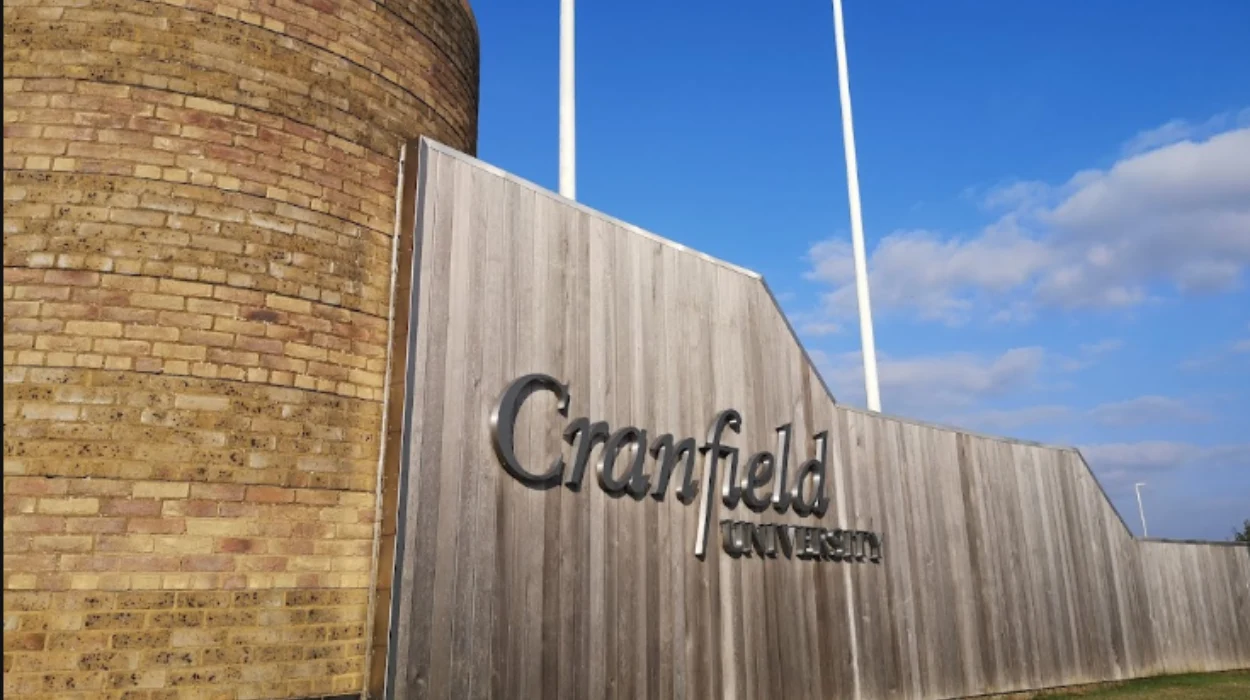
Cranfield University is a specialist postgraduate institution in the United Kingdom focused on science, engineering, defence, security, management, and transport. It operates a campus‑based model from two main sites in Bedfordshire (Cranfield Campus) and Milton Keynes, with a strong reputation for industry‑linked research and professional‑level teaching.
- What is Cranfield University and why is it important?
- What types of courses does Cranfield University offer in 2026?
- Which are the most popular and in‑demand courses at Cranfield?
- How are Cranfield University fees structured in 2026?
- What is the average cost of living for a student at Cranfield?
- What financial support and scholarships are available for Cranfield students?
- How does Cranfield University rank in the UK and globally?
- What are Cranfield’s main campuses and locations?
- How does admission to Cranfield University work in 2026?
- What are the academic entry requirements for Cranfield MSc courses?
- What English‑language requirements does Cranfield set in 2026?
- What are the main intakes and application deadlines for 2026?
- How does the Cranfield admissions decision process work?
- What visa and immigration steps do international students need for Cranfield?
- How strong is Cranfield’s industry and employer network?
- What facilities and learning resources does Cranfield offer?
- How does Cranfield support research students and PhD candidates?
- What are the career outcomes and employability pathways after Cranfield?
- How does Cranfield support international students from application to graduation?
- What makes Cranfield University a good choice in 2026?
This article provides a factual, up‑to‑date overview of Cranfield University in 2026, covering its main courses, fee structures, admission routes, and strategic relevance for UK and international students.
What is Cranfield University and why is it important?
Cranfield University is a UK‑based postgraduate‑only university, founded in 1946 as the College of Aeronautics and re‑designated as a university in 1993. It does not recruit undergraduate students through UCAS for most subjects, instead offering taught master’s degrees (MSc), research‑based master’s (MRes), and doctoral (PhD) programmes.
The university is important because it is a leading provider of defence, aerospace, energy, transport, and management education in the UK public‑sector and private‑sector ecosystem. It is associated with the UK Ministry of Defence, aerospace firms such as Rolls‑Royce and Airbus, and national research bodies including the UK Research and Innovation (UKRI) network.
What types of courses does Cranfield University offer in 2026?
Cranfield’s 2026 portfolio includes over 90 postgraduate courses across several domain clusters: aerospace and aviation, defence and security, energy and power systems, water and environment, manufacturing and materials, transport and automotive, digital and data‑driven technologies, and business and management.
Key course categories include:
- Aerospace and aviation (e.g., Aerospace Computational Engineering, Astronautics and Space Engineering, Airport Planning and Management).
- Defence and security (e.g., Airworthiness, Security and Resilience, Defence Security and Management).
- Energy, water, and environment (e.g., Sustainable Energy Systems, Water and Sanitation for Development, Environmental Engineering).
- Digital and AI‑linked programmes such as Applied Artificial Intelligence MSc and Digital and Technology Solutions MSc.
Programme durations are typically 12 months for full‑time MSc routes, with select awards also offered part‑time over 2–3 years.
Which are the most popular and in‑demand courses at Cranfield?
In 2026, the most searched and heavily enrolled courses at Cranfield are in aerospace, defence, digital technologies, and management. Examples include Aerospace Computational Engineering, Aerospace Propulsion, Automotive Engineering, Applied Artificial Intelligence MSc, and MSc in Management and Information Systems.
These courses are in‑demand because they align with UK infrastructure modernisation plans, net‑zero targets, and defence industrial strategies. The UK government and industry report labour shortages in these areas, which drives interest among UK and international students seeking Tier‑4 or Student Route‑eligible qualifications.
Explore More about Business:
Annabel Yates Lloyds Cheque Deposit Explained Step-by-Step
Top Cadbury Chocolate Bars Ranked for Sweet Lovers 2026 UK
How are Cranfield University fees structured in 2026?
Cranfield uses a banded fee structure by programme level and status (Home vs Overseas). For most 2026‑starting taught master’s, full‑time international fees cluster around GBP 25,000–GBP 30,000 per year, with some specialist awards (for example advanced aerospace, security, or digital programmes) slightly higher.
Home‑fee students (UK or Irish nationals ordinarily resident in the UK or Republic of Ireland) pay lower rates, typically in the range GBP 11,000–GBP 15,000 per year for most MSc programmes, depending on the School and course complexity.
Additional typical costs include:
- A non‑refundable application or deposit (often several hundred to a few thousand pounds, depending on programme and sponsorship status).
- Indirect “bench fees” or direct operational costs for certain research degrees, which are disclosed in advance.
What is the average cost of living for a student at Cranfield?
Cranfield’s guidance for 2026‑2027 estimates living costs for a single student between approximately GBP 1,200 and GBP 2,300 per month, depending on lifestyle and accommodation choices.
This range includes:
- Accommodation: GBP 570–GBP 1,400 per month for on‑campus or private housing.
- Food: GBP 300–GBP 400 per month.
- General expenses (leisure, phone, laundry, clothing): GBP 300–GBP 400 per month.
- Travel: GBP 39–GBP 85 per month for local transport.
These figures are illustrative; actual out‑of‑pocket costs depend on whether the student chooses university‑managed housing, shared flats, or private lets.
What financial support and scholarships are available for Cranfield students?
Cranfield offers several funding routes for UK and international students in 2026. The university participates in the UK Government’s Postgraduate Master’s Loan scheme via Student Finance England, which can provide up to GBP 12,858 for eligible master’s students and up to GBP 30,301 for doctoral students to cover part of fees and living costs.
In addition, the university and its partner foundations administer:
- Merit‑based scholarships for high‑achieving international applicants.
- Sector‑linked awards tied to aerospace, defence, energy, and transport employers.
- Campus‑specific bursaries for students from certain regions or demographics.
These awards are competitive and require separate application forms; deadlines are usually 3–6 months before the main intake.
How does Cranfield University rank in the UK and globally?
Cranfield is not always ranked in global composite lists because it is a small, specialist postgraduate institution. However, in subject‑specific and professional rankings it performs strongly.
In the Complete University Guide 2025‑26, Cranfield scores highly for research quality, graduate prospects, and specialist provision in aerospace, mechanical engineering, and management.
Employment‑based metrics show that Cranfield MSc and PhD graduates have high employment rates within six months of graduation, particularly in engineering, defence, and consultancy roles.
What are Cranfield’s main campuses and locations?
Cranfield’s primary campus is in Cranfield, Bedfordshire, about 50 miles north of central London. This 360‑acre site hosts the School of Aerospace, Transport and Manufacturing (SATM), the School of Water, Energy and Environment, and parts of the School of Security, Defence and Resilience.
A second major campus is at Cranfield Defence and Security (CDS) in Shrivenham, Wiltshire, which focuses on defence education, security studies, and specialist short courses for armed forces personnel.
The university also runs programmes from the Milton Keynes campus, which supports digital and management‑focused courses.
How does admission to Cranfield University work in 2026?
Admission to Cranfield is handled directly through the university’s online application portal, not via UCAS for most postgraduate awards. Each course page has a “How to apply” button that links to an application form and a programme‑specific guide.
The standard process is:
- Select a course and intake month (typically September or selected mid‑year starts such as March).
- Complete the online application with personal details, academic history, and English‑language proof.
- Upload transcripts, references, and a personal statement or CV, where required.
- Pay any application or deposit fee and await decision.
What are the academic entry requirements for Cranfield MSc courses?
Cranfield’s typical MSc requirement is a UK first‑ or second‑class honours degree (or equivalent) in a relevant subject. For international students, this is usually a bachelor’s degree with a minimum GPA of 2.7–3.0 out of 4.0, varying by country and institution.
For example:
- Aeronautical or mechanical engineering MSc programmes often require a strong background in engineering or physical sciences.
- Management or information‑systems MSc awards may accept degrees in business, economics, or related fields.
Some programmes accept applicants with substantial professional experience instead of a strict academic threshold, especially in executive‑style or part‑time routes.
What English‑language requirements does Cranfield set in 2026?
Cranfield requires non‑native English speakers to provide proof of proficiency, normally via IELTS, TOEFL, or equivalent tests. A typical minimum is IELTS 6.5 overall with no band below 6.0 for most MSc programmes.
Specific requirements differ by course:
- Research‑intensive MSc and PhD awards may require IELTS 7.0 or higher.
- Some School‑based routes accept alternatives such as Pearson Academic English Test (PTE) or Cambridge English scores.
Waivers are granted only if the applicant has completed a degree where English was the medium of instruction in a recognised system.
What are the main intakes and application deadlines for 2026?
Cranfield’s largest intake in 2026 is in September, for full‑time MSc and research programmes. The university also runs a limited March start for selected full‑time MSc courses, with applications closing before the year.
For 2026 starters, international applicants are advised to apply at least 4–6 months before the course start date to allow time for visa processing, English‑language tests, and financial decisions.
Research‑degree applicants (MPhil, PhD) can start in January, June, or September, with application windows varying by department.
How does the Cranfield admissions decision process work?
After submitting an online application, Cranfield’s admissions team and the relevant academic School review the candidate’s academic record, references, and personal statement. For research degrees, a supervisor or supervisory team also assesses the proposed project.
The university typically issues offers within 4–6 weeks for taught programmes, though competitive routes and research degrees may take longer.
Conditional offers are common and may require:
What visa and immigration steps do international students need for Cranfield?
International students joining Cranfield in 2026 normally apply for the UK Student Route (replacing the old Tier 4) visa. They must show:
- A valid Confirmation of Acceptance for Studies (CAS) issued by Cranfield.
- Proof of funds covering tuition and living costs for at least 9 months.
- A valid English‑language qualification if required.
The UK Home Office also requires tuberculous (TB) screening for applicants from certain countries and a valid passport.
Cranfield’s international office provides guidance on visa documentation and pre‑arrival check‑lists.
How strong is Cranfield’s industry and employer network?
Cranfield maintains formal partnerships with over 1,000 companies, including Rolls‑Royce, Airbus, BAE Systems, Network Rail, and major water and energy utilities.
These links feed into:
- Industry‑sponsored MSc projects and group design projects.
- Placement and internship opportunities during or after study.
- Employer‑funded research and scholarships.
Graduate outcomes data show that Cranfield MSc and PhD graduates frequently secure roles in engineering consultancy, defence, aviation, and infrastructure management within months of finishing their programmes.
What facilities and learning resources does Cranfield offer?
Cranfield’s Bedfordshire campus includes engineering laboratories, wind tunnels, structural‑testing rigs, environmental pilot‑scale facilities, and high‑performance computing resources.
The university also provides:
- Specialised libraries and digital‑resource portals for postgraduate research.
- Simulation and software suites for aerospace, defence, and data‑science programmes.
- Innovation centres and incubators for entrepreneurial projects, especially in energy and manufacturing.
These facilities support project‑based learning and industry‑linked research, which are central to most Cranfield programmes.
How does Cranfield support research students and PhD candidates?
Cranfield offers MPhil and PhD programmes across science, engineering, defence, and management, usually with 3–4 years of full‑time study. The university uses a supervisory‑team model, with at least one lead supervisor and a second supervisor from the same or a related discipline.
Research students receive:
- Training in research methods, ethics, and dissemination.
- Access to laboratories, field sites, and industry‑linked data.
- Funding opportunities via UK Research Councils, industry partners, and internal scholarships.
Annual progress reviews and thesis‑submission milestones ensure structured progression towards the final viva voce examination.
What are the career outcomes and employability pathways after Cranfield?
Cranfield graduates typically enter roles in engineering design, project management, defence and security operations, energy‑systems consulting, transport planning, and data‑driven management services.
The UK’s Higher Education Statistics Agency (HESA)‑linked data show that Cranfield postgraduates have employment or further study rates above 90% within six months of graduation.
Employers value Cranfield’s project‑centred curriculum and industry‑project experience, which align closely with UK occupational standards in STEM and management occupations.
How does Cranfield support international students from application to graduation?
Cranfield runs a dedicated international‑student support service that covers pre‑arrival advice, visa guidance, arrival‑day orientation, and ongoing academic and pastoral support.
Services include:
- English‑language workshops and academic‑writing support.
- Careers and employer‑engagement events tailored to international graduates.
- Housing assistance and community‑building activities.
The university also provides guidance on post‑study work routes under the UK Graduate Route, where eligible students can stay for up to 2 years after completing a degree.
What makes Cranfield University a good choice in 2026?
Cranfield remains a strong choice in 2026 for students who want intensive, research‑rich, industry‑linked postgraduate education in STEM, defence, and management. Its niche, professional‑oriented model differentiates it from broader‑based universities and aligns with UK strategic priorities in net‑zero energy, aerospace innovation, and national security.
For international students, Cranfield offers structured pathways from application and visa support to employment‑oriented project work, with clear fee and funding information for the 2026 academic year.
For prospective UK and EU‑background students, the combination of strong research ratings, sector‑relevant courses, and relatively compact campus environments makes Cranfield a viable option for focused, one‑year master’s study.