Key Points
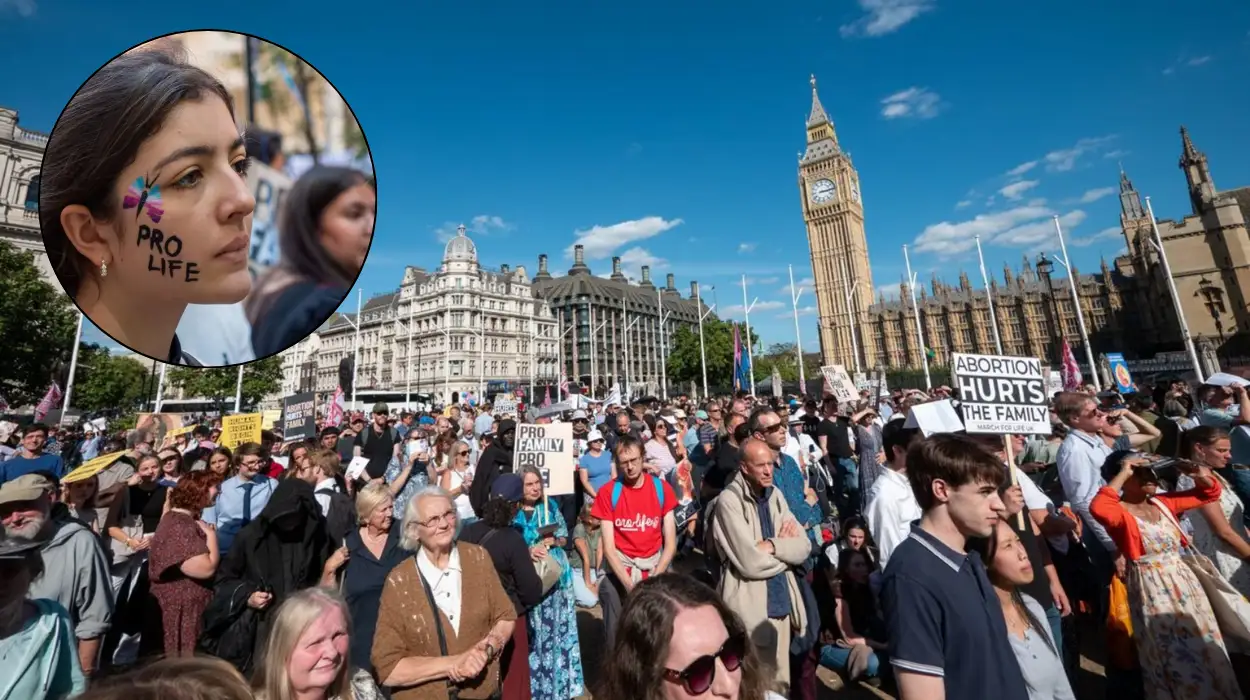
- On Saturday, thousands of pro-life activists marched from the Emmanuel Centre in Westminster to Parliament Square as part of this annual March For Life UK.
- The rally coincided with a debate on abortion law in England, Scotland and Wales.
- Protestors demanded more stringent laws against abortions and expressed their objections to legislation creating buffer zones around abortion clinics and hospitals.
- Abortion is the killing of “a life made in the image and likeness of God”, wrote March For Life UK organiser Ben Thatcher.
- Existing law permits abortions to be performed until 24 weeks of pregnancy, with specific legal conditions.
- Buffer zones limit activities that are designed to affect, block or disturb those seeking reproductive health care.
- Fifteen Catholic bishops attended the march, having earlier celebrated Mass at Westminster Cathedral.
- The marchers sang Christian hymns including ‘He’s Got the Whole World in His Hands’ and the Salve Regina and carried banners with slogans including ‘Abortion Hurts the Family’ and ‘Abortion Bans Save Lives’.
- Some 1000s of pro-choice counter-protestors were gathered nearby, and they were chanting slogans like “not the church, not the state, we decide our own fate” and “abortion is a human right.
- Pro-life activist Ruth Price said she was met with anger from counter-protesters when she tried to hand out leaflets outside the Emmanuel Centre.
- The march, which took place last year, attracted some 10,000 participants, organisers said and were expecting figures this year to be confirmed.
London (Britain Today News) September 05, 2026 — Thousands of pro-life campaigners took to the streets of central London on Saturday, marching from the Emmanuel Centre to Parliament Square in the annual March For Life UK demonstration, as the debate over abortion law in England, Scotland and Wales continues to intensify. The demonstration, organised by the pro-life group March For Life UK, drew activists calling for greater restrictions on abortion and opposition to proposed buffer zones around clinics and hospitals, while a separate group of pro-choice counter-protesters gathered to challenge their message.
- Key Points
- What Happened At The March For Life UK Rally In London?
- Why Did Thousands Gather For The Annual Pro-Life March?
- What Did March For Life Organiser Ben Thatcher Say About Abortion?
- What Is The Current Abortion Law In England, Scotland And Wales?
- What Are Buffer Zones And Why Are They Controversial?
- Which Catholic Bishops Joined The March For Life Procession?
- What Did Southwark Bishops Say About Supporting Life?
- How Did Marchers Express Their Message Through Songs And Banners?
- What Happened At The Pro-Choice Counter-Protest In London?
- What Did Pro-Life Activist Ruth Price Experience Outside The Emmanuel Centre?
- How Does This Year’s Turnout Compare To Previous Marches?
- What Does This Mean For The Wider Abortion Debate In The UK?
What Happened At The March For Life UK Rally In London?
The march began at the Emmanuel Centre in Westminster before proceeding through the streets of central London to Parliament Square, the traditional route for the annual event. Activists carried banners and sang hymns as they walked, watched by police, bystanders and a vocal group of counter-protesters along parts of the route. The demonstration formed part of a broader campaign by pro-life groups to influence the ongoing legislative debate over abortion access in the United Kingdom.
Why Did Thousands Gather For The Annual Pro-Life March?
The march comes amid an ongoing debate over abortion law in England, Scotland and Wales, with pro-life campaigners calling for greater restrictions on abortion and opposing legislation establishing buffer zones around abortion clinics and hospitals. For many attendees, the event represented an opportunity to publicly voice opposition to current abortion provisions and to advocate for what they describe as the protection of human life from conception onward.
What Did March For Life Organiser Ben Thatcher Say About Abortion?
March For Life organiser Ben Thatcher explained the motivation behind the demonstration. He said:
“Every single human life is made in the image and likeness of God. Abortion ends that life, and when abortion does end that life, we are looking at a great, great tragedy — something that affects not just that person, but that family and the society and culture we live in.”
Thatcher also criticised the framing of abortion within public discourse. He said:
“I feel there’s an absolute travesty that a human life that’s made in the image of God can be ended and can be dressed up in this slogan of ‘abortion is healthcare’.”
What Is The Current Abortion Law In England, Scotland And Wales?
Under current law, abortions can generally be carried out up to 24 weeks’ gestation, subject to certain legal conditions. The framework governing abortion access has remained a point of contention between pro-life and pro-choice campaigners, with each side seeking to influence how the law is applied and, in some cases, whether it should be reformed.
What Are Buffer Zones And Why Are They Controversial?
Buffer zones around abortion clinics and hospitals restrict certain activities intended to influence, obstruct or harass people accessing abortion services. Pro-life campaigners at Saturday’s march voiced opposition to such zones, arguing that they limit their ability to communicate directly with women outside clinics. Pro-choice advocates, by contrast, argue that buffer zones are necessary to protect patients and staff from intimidation and harassment.
Which Catholic Bishops Joined The March For Life Procession?
The march was attended by 15 Catholic bishops, who also celebrated Mass at Westminster Cathedral in the morning before joining the main group as it proceeded towards Parliament Square. Their presence underscored the strong involvement of the Catholic Church in organising and supporting the demonstration.
What Did Southwark Bishops Say About Supporting Life?
Southwark Auxiliary Bishop Paul Hendricks told:
“I support life in all its stages. We have to stand up for our values. We have our principles, and we follow Jesus.”
Southwark Archbishop John Wilson also addressed the crowd’s motivations:
“I’m here because I believe in the beauty and the dignity of human life. … We’re united together in a beautiful, peaceful, joyful spirit, to say that human life matters, that every life matters, from conception to natural death.”
He added:
“And in a challenging culture, when so many people, in a sense, see life as something more disposable, you just want to stand up and be a voice for the voiceless.”
Military Bishop Paul Mason echoed similar sentiments:
“I’ve come here today to support life from conception to natural death, within a culture where that seems not to be valued now… I think it’s important to stand up and say that the human dignity of every person is that they’re made in the image of God, no matter how small.”
Father Paul Grogan, also speaking, described abortion as
“the most fundamental human rights issue of our time.”
adding:
“And I think it’s an important part of living out our Catholic faith that we should witness to our belief in the beauty of human life, from the moment of conception to the moments of its natural ending.”
How Did Marchers Express Their Message Through Songs And Banners?
Attendees sang Christian hymns including
“He’s Got the Whole World in His Hands”
and the Salve Regina while marching through the sunny streets of London. Many carried banners bearing slogans such as “Abortion Hurts the Family,” “Abortion Bans Save Lives”, and “I’ve Joined the Fightback,” visually reinforcing the pro-life message as the procession moved towards Parliament Square.
What Happened At The Pro-Choice Counter-Protest In London?
Hundreds also attended a pro-choice counter-protest, chanting slogans including “abortion is a human right,” “not the church, not the state, we decide our own fate,” “Christian fascists go away,” and “keep your rosaries off our ovaries.” The counter-demonstration ran alongside parts of the march route, with both groups making their positions heard publicly.
Tilly Middlehurst, a pro-choice activist and Cambridge student who became widely known online following a confrontation with the late conservative activist Charlie Kirk, said that she had “come to safeguard our rights as women.” She added:
“I want to bring as many people here as possible to demonstrate that [pro-life activists] are a minority, and they don’t belong here.”
Referring to the thousands of activists marching in the streets.
Explore More about London:
PIA Boosts Weekly London Flights From Four To Seven
Robotaxis Begin to Serve London’s Congested Roads While Europe Considers More Self-Driving Cars
What Did Pro-Life Activist Ruth Price Experience Outside The Emmanuel Centre?
Before the march, pro-life activist Ruth Price was met with anger from counter-protesters outside the Emmanuel Centre after trying to hand out pro-life leaflets to pro-choice advocates. Price said:
“I wanted to speak to people who are murdering young children. … I certainly meant no harm to them. I work with adults with very profound learning difficulties, and they have lives that are worthwhile. They are precious in the sight of God, and I want people to know that we respect the life of the mother.”
How Does This Year’s Turnout Compare To Previous Marches?
Last year, the London March For Life was attended by approximately 10,000 people, according to organisers, who on Friday evening were waiting to confirm expected numbers for this year’s demonstration. The scale of both the march and the counter-protest reflects the continued polarisation surrounding abortion policy in the United Kingdom, with neither side showing signs of softening its position ahead of any future legislative changes.
What Does This Mean For The Wider Abortion Debate In The UK?
Saturday’s events in Westminster illustrate the depth of division that continues to characterise the abortion debate in England, Scotland and Wales. With pro-life campaigners pressing for tighter restrictions and opposition to buffer zones, and pro-choice activists defending existing access and protections, the issue remains a live and contested area of public policy. As both movements continue to organise annual demonstrations and public actions, the debate over abortion law appears set to remain a prominent feature of political and social discourse in the UK for the foreseeable future.