Key Points
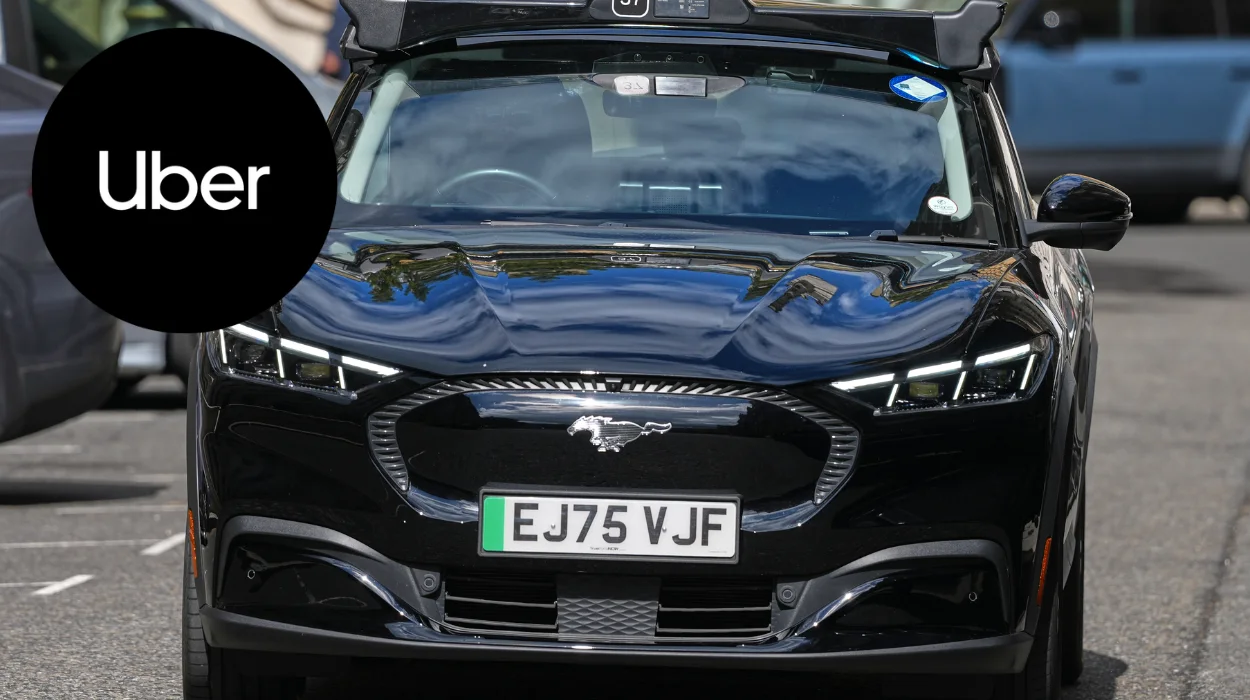
- Uber and a British tech firm Wayve unveiled London’s first self-driving taxi service on Thursday, 3 September 2026.
- The rollout will start with fewer than 20 Ford Mustang Mach-E electric vehicles equipped with Wayve’s autonomous driving technology.
- The UK’s pilot programme will see each robotaxi equipped with a licensed human safety driver who can intervene when required.
- Whereas passengers don’t have the ability to pick a specific robotaxi, the Uber app can match them with one, and they may accept or deny the ride.
- There are no tips encouraged at the end of a robotaxi ride, and fares will be the same as they are for Uber rides.
- Uber’s Sarfraz Maredia has said that they are still awaiting to be granted permission to run fully driverless taxis in the UK and that timescales are still unknown.
- Autonomous vehicles face significant obstacles in London, due to its complicated road system, traffic, and the legal prohibition of jaywalking.
- While fully autonomous robotaxis are already making their way around cities in the U.S. and China, Europe has been slower to embrace the technology.
- Other companies, such as Waymo, Baidu, WeRide and Pony.ai, are also developing or scaling up their robotaxi operations worldwide, including in the Middle East region.
- Uber also recently introduced its first commercial robotaxi program in Europe, in Zagreb, Croatia, where safety drivers are also required.
London (Britain Today News) September 03, 2026 — Uber and British technology company Wayve have launched London’s first self-driving taxi service, marking a significant milestone for autonomous mobility in Europe. The service, which began carrying passengers on Thursday, uses a small fleet of Ford Mustang Mach-E electric vehicles equipped with Wayve’s AI-driven autonomous technology, with a licensed human safety driver present in every car to monitor journeys and intervene if necessary.
- Key Points
- How Does London’s Robotaxi Service Work for Uber Passengers?
- Why Are Human Safety Drivers Still Required in London’s Robotaxis?
- What Regulatory Framework Governs Self-driving Taxis in the UK?
- How Do London’s Roads Pose Unique Challenges for Robotaxis?
- How Does Europe’s Approach Compare to the US and China?
- Where Else Has Uber Launched Robotaxi Services in Europe?
- What Did Uber and Wayve Executives Say About the Launch?
- How Many Vehicles Are in the Initial London Robotaxi Fleet?
- What Are the Safety and Employment Concerns Surrounding Robotaxis?
- When Might Fully Driverless Robotaxis Operate in London?
The launch positions London as the latest major city to test supervised robotaxis, following more advanced deployments in the United States and China. Sarfraz Maredia, Uber’s head of autonomous mobility, said the initial fleet would number under 20 vehicles, with plans to expand as regulatory approvals progress.
How Does London’s Robotaxi Service Work for Uber Passengers?
For Uber customers in London, the robotaxi experience is designed to integrate seamlessly with existing ride-hailing options. Passengers cannot specifically request a robotaxi, but when booking UberX, Uber Comfort or Uber Electric in eligible areas, they may be matched with a Wayve-equipped vehicle. Riders are notified of the match and can choose to accept or reject the autonomous vehicle before the trip begins.
Fares for robotaxi journeys are identical to standard Uber rides, and the company has confirmed that passengers will not be prompted to leave a tip at the end of a robotaxi trip. This approach aims to normalise the technology without creating pricing or behavioural barriers for users.
Why Are Human Safety Drivers Still Required in London’s Robotaxis?
Despite the advanced autonomous capabilities of Wayve’s AI Driver, every robotaxi in London must have a licensed private hire vehicle (PHV) driver on board during trips. This requirement stems from the vehicles’ current licensing status: Transport for London (TfL) approved the Ford Mustang Mach-Es as private hire vehicles rather than fully automated vehicles, meaning a human driver remains legally responsible for each journey.
Under the UK government’s pilot framework for self-driving vehicles, operators such as Uber and Wayve must secure separate approval to run services without a safety driver.
“That process is still playing out.”
Maredia told reporters, adding that it remains unclear how long full autonomy approval will take.
What Regulatory Framework Governs Self-driving Taxis in the UK?
The deployment operates under the UK’s Automated Vehicles Act and associated pilot schemes designed to gather real-world evidence on autonomous vehicle performance in everyday conditions. The Department for Transport (DfT) has said the pilots will assess how self-driving cars navigate busy urban streets, interact with other road users and ensure passenger safety.
TfL granted 15 private hire licences to Wayve-equipped Ford Mustang Mach-Es in August 2026, allowing commercial passenger services to begin under supervised conditions. Full driverless operations would require an Automated Passenger Services permit issued by the Driver and Vehicle Standards Agency (DVSA), a separate regulatory step that neither Uber nor Wayve has yet completed.
How Do London’s Roads Pose Unique Challenges for Robotaxis?
London presents a particularly demanding environment for autonomous vehicles. The city’s narrow, convoluted road network is frequently congested with cars, buses, bicycles and electric rental bikes, creating complex scenarios for AI navigation systems.
Pedestrians add another layer of difficulty: unlike in many jurisdictions, jaywalking is not illegal in the UK, meaning autonomous systems must anticipate unpredictable crossings and behaviours. Wayve’s technology relies on cameras, radar and AI models trained to respond to such dynamic conditions, with safety drivers intervening during demonstrations when necessary.
How Does Europe’s Approach Compare to the US and China?
Europe has adopted a more cautious stance on fully driverless robotaxis compared to the United States and China. In the US, Waymo — owned by Google parent Alphabet — operates fully autonomous taxi services in 14 cities, while Amazon’s Zoox and Tesla are advancing their own programmes.
In China, companies including Baidu, WeRide and Pony.ai run robotaxi services across multiple cities and have expanded into the Middle East through partnerships with Uber or local operators in Dubai, Abu Dhabi and Saudi Arabia. By contrast, most European countries remain in the testing phase, with human safety drivers still mandated for commercial services.
Where Else Has Uber Launched Robotaxi Services in Europe?
Uber said last month it launched its first European commercial robotaxi service in Zagreb, Croatia, in partnership with a local operator and China’s Pony.ai. As in London, human safety drivers are required for the Zagreb service, reflecting the continent-wide regulatory caution.
The London launch is seen as a strategic step toward building consumer and governmental confidence in autonomous mobility, with Uber signalling ambitions to expand to Tokyo and up to 10 additional cities globally.
What Did Uber and Wayve Executives Say About the Launch?
Sarfraz Maredia, Uber’s global head of autonomous mobility, described the London launch as a pivotal moment for the company’s autonomous strategy.
“We’re delighted to bring autonomous rides to Uber riders in London for the very first time, powered by Wayve, a homegrown British success story.”
Maredia said, according to London Now and other outlets.
Maredia added that the service would help
“build credibility with consumers as well as with the government”
as Uber pursues broader rollout plans. Wayve, founded in Cambridge, supplies the AI driving software that powers the fleet, marking a significant commercial deployment for the UK-based startup.
How Many Vehicles Are in the Initial London Robotaxi Fleet?
The initial deployment comprises fewer than 20 Wayve-equipped Ford Mustang Mach-E vehicles, with TfL having approved 15 licences for the one-year trial beginning in August 2026. Maredia confirmed the fleet would grow over time, though expansion timelines depend on regulatory progress and operational performance.
Each vehicle is classified as a private hire vehicle under current rules, requiring a TfL-licensed driver to remain in the front seat throughout journeys.
Explore More about Technology:
Dyson R3 Nurovi Spot+Scrub AI Robot Vacuum Launch
Scotland Could House One in Five UK Data Centres
What Are the Safety and Employment Concerns Surrounding Robotaxis?
The introduction of robotaxis has sparked debate over safety and potential impacts on driving jobs. The Evening Standard reported concerns about job displacement and the reality of safety in supervised autonomous operations.
Proponents argue that supervised trials allow rigorous safety monitoring while building public trust, with human drivers able to take control instantly if the AI encounters an unanticipated scenario. Critics, however, warn that widespread automation could eventually reduce demand for human drivers, even as current regulations mandate their presence.
When Might Fully Driverless Robotaxis Operate in London?
Fully driverless operations in London hinge on obtaining an Automated Passenger Services permit from the DVSA, a process that remains ongoing. Maredia declined to specify a timeline, stating only that the approval process was “still playing out”.
The UK government has signalled support for accelerating autonomous vehicle pilots, with Transport Secretary Heidi Alexander confirming in 2025 that commercial pilots would be fast-tracked to spring 2026 to encourage investment in the sector.