Key Points
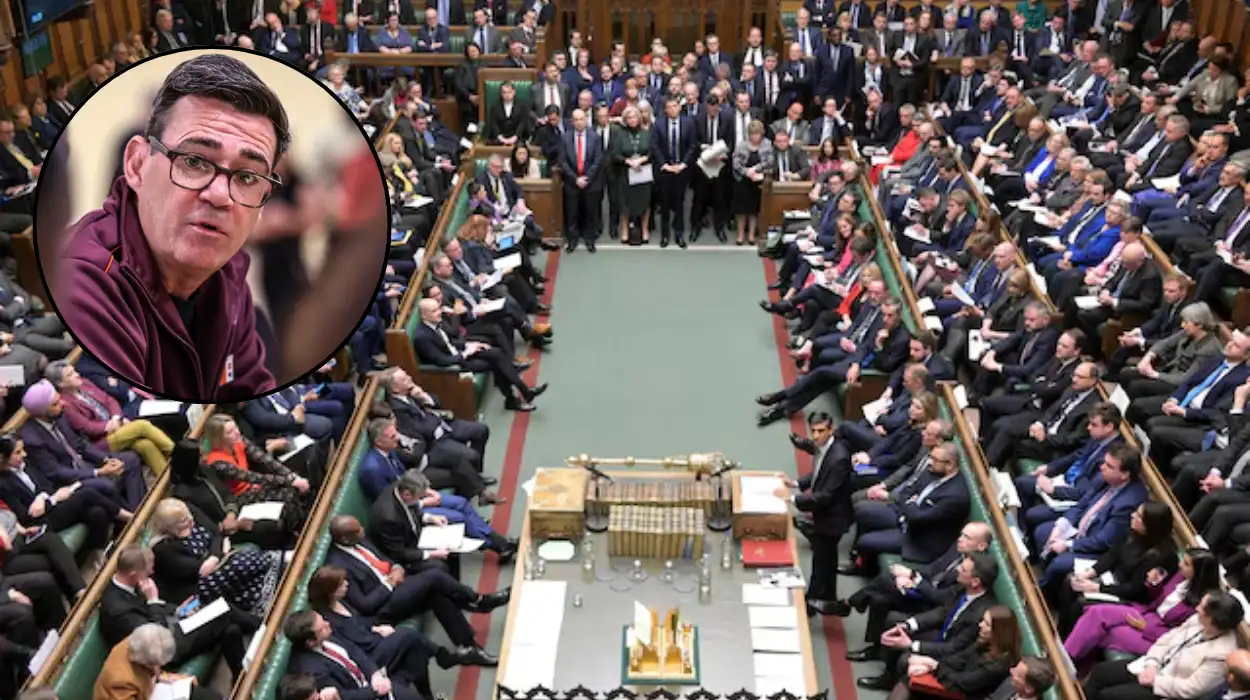
- Andy Burnham went head-to-head with Kemi Badenoch for the first time in his new role as Prime Minister during Prime Minister’s Questions on Wednesday.
- Burnham has said the volatility in markets and high costs of borrowing are due to the record of the previous Conservative administration, and “we are turning that corner.”
- Long-term borrowing rates in the UK reached an all-time high in 28 years as bonds were being sold globally.
- Badenoch quoted the concerns of Lord Jim O’Neill, who is a personal friend of the Prime Minister, that his tone during his first appearance in Parliament on Tuesday would scare off investors.
- Lord O’Neill believes the Budget, scheduled for 28 October, must either slash expenses or increase taxes.
- Former chairman of NatWest Sir Howard Davies said that Britain had “a very dicky time” coming ahead of the budget.
- Mr Burnham refused to be drawn as to whether taxes would go up, and said that it was a decision left to the Chancellor John Healey.
- Ms Badenoch criticised the Prime Minister as someone who could not justify how he would pay for his promises.
- Labour MP Alex Sobel wants an amendment to the Representation of the People Bill demanding the establishment of a national commission for electoral reform.
- The economic situation has become more complicated because of market fears due to increased tension in the Middle East.
Westminster (Britain Today News) September 02, 2026 – Andy Burnham used his first Prime Minister’s Questions to place responsibility for Britain’s rising borrowing costs squarely on the Conservative Party’s economic record, telling the House of Commons “we are turning that corner” as government bond yields climbed to their highest level in nearly three decades.
- Key Points
- What did Andy Burnham say at his first PMQs as Prime Minister?
- Why are UK borrowing costs rising to a 28-year high?
- What did Kemi Badenoch say about Lord Jim O’Neill’s warning?
- How did Andy Burnham respond to the criticism over debt costs?
- What is Lord O’Neill’s view on the October Budget?
- What did Sir Howard Davies say about the fiscal outlook?
- Did Andy Burnham confirm whether taxes will rise?
- What exchange took place between Burnham and Badenoch over tax and spending?
- What is the Representation of the People Bill amendment about?
- What happens next for Andy Burnham and the Budget?
The session, held in Westminster on Wednesday, marked Mr Burnham’s first head-to-head clash with Conservative leader Kemi Badenoch since taking office, and came at a delicate moment for the new administration, with financial markets already jittery ahead of Chancellor John Healey’s first Budget.
What did Andy Burnham say at his first PMQs as Prime Minister?
Taking questions for the first time as Prime Minister, Mr Burnham was pressed repeatedly on the state of the public finances. He argued that the turbulence unsettling investors could be traced back to the economic inheritance left by the previous government.
“When they were in government, we saw 14 years of stagnant growth. We saw 14 years of debt rising as a percentage of GDP,” he told MPs, before adding that the market volatility reflected “that exposure that they left behind.”
He went on to defend his Government’s early record, telling the Commons:
“We are turning that corner, Mr Speaker. In the first half of this year, we’ve had the fastest growth in the G7. Borrowing fell to its lowest level in six years. We’re cutting the deficit faster than any other G7 country.”
Why are UK borrowing costs rising to a 28-year high?
Government long-term borrowing costs rose to their highest levels in 28 years, a development that has been linked to a wider global sell-off in bonds. The move has been partly attributed to signs of escalation in the Middle East conflict and concerns that renewed instability could stoke inflation.
The yield on UK government bonds, known as gilts, rose again on Wednesday, adding further pressure on Mr Healey as he finalises his first Budget, due to be delivered on 28 October.
What did Kemi Badenoch say about Lord Jim O’Neill’s warning?
Kemi Badenoch used her exchanges with the Prime Minister to highlight comments from Lord Jim O’Neill, a former minister, Goldman Sachs economist, and a figure she described as a close friend of Mr Burnham.
“Lord O’Neill, a close friend of the Prime Minister, said yesterday’s statement in the Commons was the last thing investors wanted to hear.”
She told the House.
She continued:
“Lord O’Neill is a serious economist. He knows what he’s talking about and, sure enough, yesterday the cost of Government borrowing rose to its highest in 18 years.”
She then pressed the Prime Minister directly, asking:
“How does he plan to tackle the Government’s rising debt costs?”
How did Andy Burnham respond to the criticism over debt costs?
Responding to Mrs Badenoch, Mr Burnham acknowledged his past working relationship with Lord O’Neill, who previously served as one of his economic advisers, but suggested the pair did not see eye to eye on every issue.
“We do not always agree.”
He said, before pivoting his response to focus on the Conservative Party’s record in office over the preceding 14 years.
The Prime Minister also used his response to stress his Government’s commitment to fiscal discipline, telling MPs:
“We are taking the action needed to get debt down. This will be a Government grounded in fiscal responsibility. It will stick to the fiscal rules, but at the same time, we will help reduce cost-of-living pressure on our constituents, and that’s the approach that we will take.”
What is Lord O’Neill’s view on the October Budget?
Speaking separately to Times Radio, Lord O’Neill said the Budget on 28 October would need to contain either spending cuts or, in his words, “some form of tax increases” if the Government was to restore its fiscal headroom. His comments have added to speculation in Westminster over what measures Mr Healey may be forced to introduce.
What did Sir Howard Davies say about the fiscal outlook?
Sir Howard Davies, the former chairman of NatWest, said the country was heading into “a very dicky period” in the run-up to the Budget. He called on the Government to set out clearer signals about its overall approach to the public finances, arguing this was needed to “calm things down a bit” in the markets.
Did Andy Burnham confirm whether taxes will rise?
Mr Burnham repeatedly declined to be drawn on the contents of the forthcoming Budget when pressed by Mrs Badenoch and other MPs. He told the Commons he was
“not going to do what any prime minister has done and write the Budget here.”
insisting such decisions rested with the Chancellor.
He added:
“I’ve already indicated my first moves were to cut tax, but I’m not going to do what any prime minister has done and write the Budget here. That will be the matter for my Right Honourable friend.”
He said he and Mr Healey had deliberately chosen an early Budget date
“so that we reduce the period for prolonged speculation of the kind that she is wanting us to indulge in today.”
What exchange took place between Burnham and Badenoch over tax and spending?
Mrs Badenoch pressed the Prime Minister on how he intended to pay for his policy commitments, accusing him of being unwilling to set out a clear plan.
“The markets are clearly worried that we now have a spendthrift Prime Minister who wants to say yes to everyone but cannot tell us where the money is coming from.”
She told the Commons.
She added:
“He needs to pay for all his new promises, and he has a choice: higher taxes, more borrowing, or spending cuts.”
Referring to comments Mr Burnham had made a day earlier, she pressed him further:
“Yesterday, he said change begins with honesty. So, will he be honest and tell us? Is he preparing to raise taxes again? Yes or no?”
The Prime Minister did not give a direct yes-or-no answer, instead reiterating that Budget decisions would be set out by the Chancellor in due course.
Explore More about Politics:
First Time Since Election, UK Leader Burnham Appears Before Lawmakers
Why is Andy Burnham abstaining from the assisted dying vote?
What is the Representation of the People Bill amendment about?
Away from the exchanges over the economy, Mr Burnham faces a further test of his authority in the Commons this week over electoral reform. Alex Sobel, the Labour MP for Leeds Central and Headingley, is leading a group of backbenchers pushing for the Government to commit to establishing a national commission on reforming the voting system.
Mr Sobel has tabled an amendment to the Representation of the People Bill, which is scheduled for debate in the Commons on Wednesday, calling on ministers to back the proposal. The move reflects continuing pressure from within Labour’s own ranks for the party to revisit the first-past-the-post electoral system.
What happens next for Andy Burnham and the Budget?
Attention in Westminster is now expected to turn towards the run-up to Chancellor John Healey’s Budget on 28 October, with economists, former officials and opposition politicians all pressing the Government to clarify its approach to spending, borrowing and tax. Mr Burnham’s ambitions for wider reform of how the British state operates are widely expected to be shaped, and potentially constrained, by the economic headwinds linked to the ongoing conflict in the Middle East.
For now, the Prime Minister has resisted calls to set out further detail ahead of the Budget, maintaining that decisions on tax and spending will be a matter for the Chancellor rather than for Prime Minister’s Questions.