Key Points
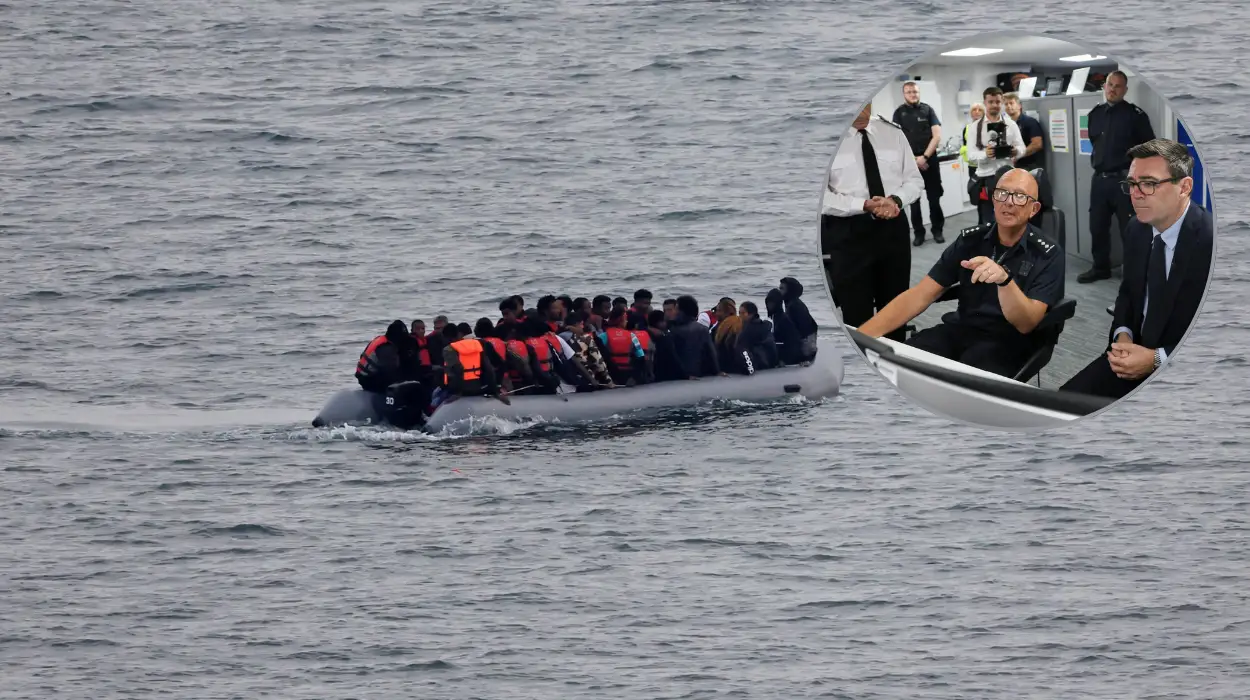
- Twenty-three people, including a record 230 people, arrived in the UK early Monday in a single dinghy.
- The crossing has been the biggest single-vessel entry ever noted in the ongoing small boat crisis.
- People-smuggling gangs could be attempting to deter stronger border security on the French coast by increasing the size of their boats, the incident suggests.
- There were nine “mega-dinghy” crossings before the capsize of a boat with 173 people on board on 4 August, French authorities said.
- This year’s figures for those who crossed the Channel are more than 40% down on last year’s figures, it is reported.
- Although the total number of crossings has declined, so have the volume and size of dinghies used, raising the potential risk to passengers.
- The first ship with 128 passengers landed in the UK on 12 July, while a second with 165 passengers landed on 23 July.
- On 4 August, the dinghy (173 persons) capsized and caught fire due to engine failure; 11 persons were injured, and 3 were rushed to hospital in Boulogne.
- Mega-dinghies emerged in the wake of the UK-France “one in, one out” asylum deal agreed in July 2025.
- Care4Calais had cautioned that the policies of deterrence would force people seeking protection to more risky journeys.
- The organisation’s head of legal access, Hannah Marwood, requested safe access for claiming asylum.
- The Home Office stated that gangs were endangering lives as they packed more and more people onto “unseaworthy” boats.
- The government reported a decrease in crossings this year, and July was the lowest month on record since 2020.
- A payment-by-results deal with France would give them 40% more officers on beaches in the north, according to ministers.
Northern France (Britain Today News) August 10, 2026 — A dinghy carrying a record 230 people arrived in the United Kingdom after crossing the English Channel in the early hours of Monday, highlighting a significant change in the tactics used by people-smuggling gangs operating from northern France.
- Key Points
- Why are smugglers using larger boats?
- What happened during the recent 173-person crossing?
- Have Channel crossings fallen this year?
- How have small-boat journeys changed since 2018?
- What is the “one in, one out” arrangement?
- What has Care4Calais said about the risks?
- What has the Home Office said?
- Will increased French enforcement stop the crossings?
- Why do “green days” matter to Channel crossings?
- What could the record crossing mean for the government?
- What happens next in the Channel?
The arrival is the largest reported number of people to reach the UK in a single dinghy during the current small-boat crisis. It is also the clearest indication so far that smugglers may be adapting their operations in response to stronger enforcement by French police along the northern French coastline.
Rather than relying only on the smaller inflatable boats that have traditionally been used for Channel crossings, criminal gangs appear to be increasingly turning to much larger vessels. These boats, sometimes described as “mega-dinghies”, are capable of carrying more than 100 people at a time.
The latest vessel reached the UK despite growing efforts by French and British authorities to prevent launches, seize boats and disrupt the supply of engines and equipment. The development has raised renewed concerns about the safety of passengers, many of whom are placed on overcrowded and poorly equipped vessels for one of the world’s busiest shipping routes.
The Guardian reported that the crossing could place additional pressure on the UK government, which has made reducing small-boat arrivals a central political commitment.
Why are smugglers using larger boats?
The growing use of mega-dinghies suggests that people-smuggling gangs are changing their methods to respond to enforcement activity on beaches in northern France. According to the report, stronger French policing may have made it more difficult for smugglers to launch and operate traditional smaller boats.
Larger dinghies may allow gangs to transport more people in a single journey. This could reduce the number of launches required to move the same number of passengers across the Channel, while also allowing smugglers to maintain their business despite increased surveillance and patrols.
However, a larger vessel does not necessarily mean a safer crossing. The opposite may be true when a boat is loaded with more than 200 people, particularly if it is not designed to carry such a number. Passengers may have limited space to sit, stand or move, while the vessel may be vulnerable to engine failure, fire, severe weather or flooding.
The latest crossing follows several other large-scale journeys this summer. On 12 July, a mega-dinghy carrying 128 people arrived in the UK. Another vessel carrying 165 people reached Britain on 23 July.
The sequence of arrivals indicates that the use of larger boats is not an isolated development. It appears to be forming part of a wider shift in the way smuggling gangs organise Channel journeys.
What happened during the recent 173-person crossing?
A separate mega-dinghy carrying 173 people capsized on 4 August after its engine caught fire. The incident triggered a rescue operation in the Channel and demonstrated the danger created when a large number of people are placed on a single unseaworthy vessel.
All those on board were believed to have been rescued. However, 11 people suffered minor injuries, and three were taken to hospital in Boulogne.
The incident occurred only days before the record 230-person crossing, adding to concerns about whether larger dinghies are becoming increasingly common despite the serious risks involved.
An engine fire can rapidly turn a crowded boat into a life-threatening emergency. Passengers may have little ability to escape, while panic can cause people to fall into the water or destabilise the vessel. The danger is increased when the boat is travelling far from shore, and assistance cannot reach it immediately.
French authorities told The Guardian that, before the 4 August incident, there had been nine mega-dinghy crossings of the Channel so far this year. The figure indicates that larger vessels have become a recurring feature of the crossing route rather than an exceptional tactic.
Have Channel crossings fallen this year?
Although the record arrival has intensified concern about smuggling tactics, the overall number of people crossing the Channel this year has reportedly fallen by more than 40% compared with the same period last year.
The Home Office also said that July had recorded the lowest number of small-boat crossings for that month since 2020. The figures are being presented by ministers as evidence that government measures and increased enforcement are beginning to have an effect.
However, the rise in mega-dinghies complicates the picture. A reduction in the total number of crossings does not necessarily mean that the journeys taking place are becoming safer. If smugglers transport more passengers on each vessel, fewer boats may be needed while individual crossings become more dangerous.
The record 230-person arrival therefore presents a challenge to the government’s interpretation of progress. While fewer people may have crossed overall, a single incident can still involve a very large number of people and create a major emergency response.
The development also shows how quickly smuggling networks can adjust to enforcement policies. Measures that restrict access to beaches or target traditional dinghies may encourage gangs to find alternative ways to move people.
How have small-boat journeys changed since 2018?
The scale of the latest crossing is sharply different from the pattern seen when small-boat journeys began in 2018. At that time, only a handful of people would typically travel in each dinghy, according to the information reported by The Guardian.
In recent years, smaller boats have generally carried between 50 and 60 passengers on average, according to non-governmental organisations working with people seeking asylum in the UK. Even that number places heavy pressure on an inflatable vessel travelling across a busy and often unpredictable stretch of water.
The latest mega-dinghies have carried more than twice the average number of passengers recorded on smaller boats. The 230-person crossing represents a substantial increase in the number of people transported on a single vessel.
The changing size of the boats may reflect a commercial calculation by smugglers. Larger vessels allow more passengers to be charged for the same journey, while enforcement pressure may make each launch more difficult and more valuable.
For those on board, however, the increased capacity may mean greater overcrowding and reduced safety. Passengers may be unable to obtain adequate life-saving equipment, and emergency services could face greater difficulties if a vessel overturns or catches fire.
What is the “one in, one out” arrangement?
The emergence of mega-dinghies coincided with the announcement of a UK-France “one in, one out” arrangement in July 2025.
Under the agreement, a person arriving in the UK from France by small boat can be returned to France in exchange for another person being brought legally to the UK to claim asylum. The policy was intended to create a controlled mechanism for returning some people while providing a legal route for others.
The report said that some people who had been returned to France under the arrangement were still waiting in northern France and hoped to reach the UK for a second time.
This has become part of the wider debate over whether deterrence policies prevent Channel crossings or simply change the risks faced by people attempting them. Supporters of tougher enforcement argue that stronger measures can reduce illegal journeys and undermine criminal gangs. Critics say people who have no safe legal route may continue attempting the crossing, even when enforcement becomes more severe.
The latest arrival has revived questions about whether policies designed to reduce crossings are encouraging smugglers to use larger and more dangerous boats.
What has Care4Calais said about the risks?
Hannah Marwood, head of legal access at Care4Calais, said the latest developments showed that deterrence policies did not remove the reasons people sought protection in the UK.
Marwood said:
“Deterrence doesn’t stop people seeking safety; it just pushes them towards greater danger and greater exploitation.”
She added that Care4Calais had worked with people who were returned to France and later faced violence, exploitation and unsafe living conditions. According to Marwood, some of those individuals believed they had no option but to attempt another dangerous journey.
“Politicians keep promising that another tough policy will solve this, but the evidence keeps proving them wrong,”
She said.
Marwood argued that the government should create safe routes for people seeking asylum rather than continuing with policies that she described as ineffective.
“When people have a safe way to reach protection, they don’t have to risk their lives to find it,”
She said.
Her comments reflect the position of Care4Calais, an organisation that provides emergency aid to refugees. The organisation believes that people crossing the Channel should have access to protection and legal assistance without being forced to rely on criminal gangs.
What has the Home Office said?
The Home Office described the latest incident as evidence of the reckless methods used by criminal gangs involved in Channel crossings.
A Home Office spokesperson said:
“This latest incident demonstrates the reckless and dangerous tactics employed by the criminal gangs facilitating these crossings, who continue to put lives at risk by cramming ever greater numbers of people on to unseaworthy vessels.”
The statement places responsibility for the danger primarily on the smuggling gangs that organise the journeys. It also underlines the government’s argument that larger boats are not a sign of improved capability but evidence that criminal networks are putting more lives at risk.
The Home Office said the government was making progress because the number of small-boat crossings had fallen this year. It also pointed to July’s figures, saying the month had recorded the lowest number of crossings since 2020.
However, the spokesperson acknowledged that further action was required. “But we must go further,” the statement said.
The government said it had signed a payment-by-results agreement with French authorities. Under the deal, 40% more officers would be deployed on French beaches in an effort to prevent boats from launching.
Will increased French enforcement stop the crossings?
The government’s agreement with France is intended to increase the number of officers patrolling beaches and disrupting launches. It is part of a broader attempt to prevent crossings before boats enter the water.
British and French authorities have also worked to target the equipment used by smuggling gangs. The UK government has signed an agreement with Germany to increase seizures of traditional dinghies and engines “upstream”, according to the report.
Such measures aim to prevent criminal networks from obtaining boats and motors in the first place. They may make it more difficult for smugglers to organise conventional launches, but the rise of mega-dinghies suggests that gangs may be looking for ways around those restrictions.
The effectiveness of increased enforcement may also depend on weather conditions. The report said there had been “green days” this year, when adverse weather made conditions too dangerous for smugglers to launch boats.
Despite these periods, non-governmental organisations said many people continued to wait in northern France for an opportunity to cross. Their continued presence means that enforcement alone may not eliminate demand for the journeys.
Why do “green days” matter to Channel crossings?
“Green days” are periods when the weather is considered too dangerous for smugglers to launch dinghies. Strong winds, rough seas and poor conditions can make a crossing particularly hazardous, even for people travelling on smaller vessels.
Adverse weather prevented some launches this year. However, people who remained in northern France continued to wait for conditions that smugglers considered suitable.
Weather-related delays can leave people exposed for longer periods while they wait for an opportunity to travel. Those waiting may also remain vulnerable to exploitation by criminal gangs or unsafe living conditions.
For smugglers, a favourable weather window can create pressure to launch as many passengers as possible before conditions deteriorate. That may contribute to the use of larger vessels carrying unusually high numbers of people.
The record arrival therefore reflects not only enforcement changes but also the way smuggling operations respond to weather, police patrols and the number of people waiting to travel.
Explore More about the UK:
Councillors Rail Against Cuts to One of London’s Busiest Bus Routes
London Braces for Fifth Heatwave as Yellow Warning Issued
What could the record crossing mean for the government?
The arrival of 230 people is likely to create renewed political pressure on the government, particularly because ministers have promised to reduce small-boat crossings and restore control over the border.
Andy Burnham has vowed to be “relentless” and to “bring back control”, while Home Secretary Shabana Mahmood has said that the government is “bearing down” on small-boat crossings, according to The Guardian’s report.
The record crossing may be used by critics to question whether existing measures are sufficient. Even if total arrivals are lower than last year, a single vessel carrying 230 people can dominate the political debate because of its scale and the potential risk to life.
The government is likely to point to the reported fall in overall crossings, the July figure and the planned increase in French beach patrols. Critics, meanwhile, may argue that the emergence of mega-dinghies shows that enforcement is causing smugglers to adopt more dangerous methods.
The competing interpretations mean that the record arrival is both a migration story and a test of the government’s strategy. The central question is whether tougher enforcement will reduce crossings over time or encourage larger, riskier attempts.
What happens next in the Channel?
The immediate focus will be on identifying the people who arrived, assessing their welfare and determining how the government responds to the record crossing. The incident is also likely to prompt further scrutiny of the vessels being used and the networks arranging the journeys.
French authorities will continue efforts to prevent launches from northern beaches, while British authorities will seek to intercept boats, support rescue operations and process those who reach the UK.
The use of mega-dinghies means that future crossings could involve even larger numbers of people on individual vessels. That would increase the consequences of any engine failure, fire, collision or capsize.
The government’s agreement to deploy 40% more personnel on French beaches will be judged by whether it prevents launches and reduces the number of people attempting the journey. At the same time, humanitarian organisations are expected to continue calling for safe and legal routes to claim asylum.
The record arrival demonstrates that the Channel crisis is changing rather than disappearing. Total crossings may have fallen, but the appearance of larger and more crowded vessels has created a new danger that authorities, charities and policymakers must address.