Key Points
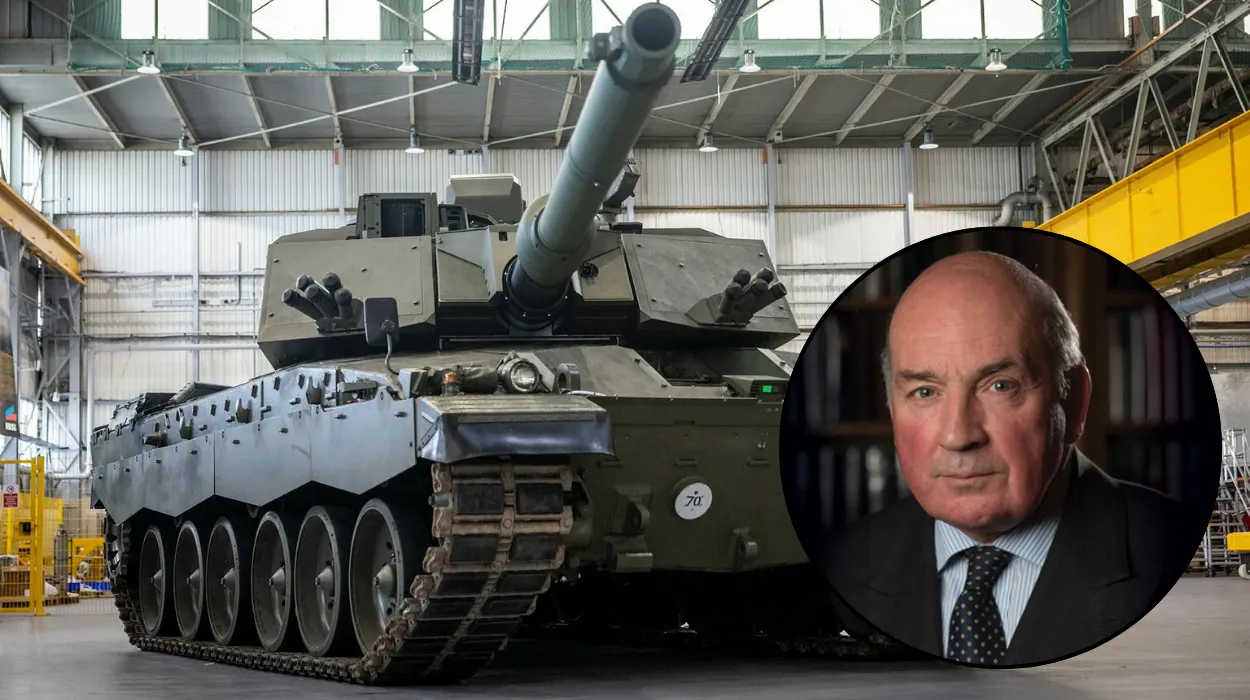
- Lord Richard Dannatt, who led the British Army from 2006 to 2009, has warned of “woeful” equipment shortfalls facing the 3rd (UK) Division, the country’s premier armoured warfighting formation.
- Britain has ordered 148 Challenger 3 tanks at a cost of just under £1bn, but the division is expected to be under strength by 42 tanks once the new fleet arrives.
- The new Challenger 3s are due to enter service next year and will be split across three regiments: the King’s Royal Hussars, the Queen’s Royal Hussars and the Royal Tank Regiment.
- A report from the think tank 878, co-founded by Jacob Rees-Mogg, says only 100 of 623 promised Boxer armoured vehicles have been delivered so far.
- Tory MP and former infantry officer Ben Obese-Jecty says the 3rd (UK) Division is “currently undeployable” for a major warfighting role.
- Britain is withdrawing older Challenger 2 tanks from Estonia next year, replacing them with a drone-based “anti-armour force”, while the Estonia-based squadron will be upgraded to Challenger 3.
- The 878 report raises doubts over the Royal Navy’s new “hybrid” fleet strategy, which pairs manned ships with a larger fleet of unmanned drone vessels.
- The Type 83 destroyer programme has been cancelled; the Navy will instead spend at least £1.3bn over four years on drone ships and six Common Combat Vessels.
- Prime Minister Andy Burnham faces pressure to commit to spending 3 per cent of GDP on defence by 2030, with shadow defence secretary James Cartlidge accusing ministers of failing to set out a timeline.
- The Government’s defence investment plan totals £298bn over four years, though Burnham must still find £5bn left unresolved after Sir Keir Starmer’s resignation.
London (Britain Today News) August 01, 2026 – The British Army is facing “woeful” shortfalls in the number of new tanks and armoured vehicles it will receive over the coming years, a former defence chief has warned, raising fresh questions over the country’s readiness for a major military conflict.
- Key Points
- What Did Lord Dannatt Say About the Army’s Tank Shortage?
- Why Is the 3rd (UK) Division Considered the Army’s ‘Tip of the Spear’?
- How Many Challenger 3 Tanks Has Britain Ordered?
- When Will the New Challenger 3 Tanks Enter Service?
- How Under Strength Will the Division Be Once the New Tanks Arrive?
- What Problems Are Affecting the New Boxer Armoured Vehicle Programme?
- Why Has Ben Obese-Jecty Said the Division Is ‘Currently Undeployable’?
- What Changes Are Being Made to UK Forces Stationed in Estonia?
- Why Are Experts Sceptical About the Royal Navy’s ‘Hybrid’ Fleet Strategy?
- What Is the Outlook for UK Defence Spending Under Andy Burnham?
- What Happens Next for the Army’s Armoured Forces?
Lord Richard Dannatt, who commanded the British Army between 2006 and 2009, expressed concern at the state of the 3rd (UK) Division, the nation’s premier armoured warfighting unit, which he described as the “tip of the spear” for any large-scale military deployment. His remarks were made in a foreword to a new report published by 878, a British-American think tank co-founded by Jacob Rees-Mogg, which sets out a series of “gaps” in the Armed Forces’ current and planned capabilities.
What Did Lord Dannatt Say About the Army’s Tank Shortage?
Writing in the report’s foreword, Lord Dannatt did not mince his words about the scale of the problem facing the division. He said the 3rd (UK) Division’s “equipment shortfalls are woeful,” a stark assessment from a man who once held the Army’s most senior operational post.
He went further, turning his criticism towards the Government’s spending priorities. Lord Dannatt said:
“Andy Burnham may promise us the best social care system in the world, but what is the value of good care if we are not fundamentally secure? Priorities, Prime Minister – that is your job, not wishful thinking.”
The comments place defence spending directly in competition with domestic priorities in the public debate, and come at a time when the Prime Minister is already under pressure from senior military figures and opposition politicians alike over the pace of investment in the Armed Forces.
Why Is the 3rd (UK) Division Considered the Army’s ‘Tip of the Spear’?
The 3rd (UK) Division holds a unique status within the British Army’s order of battle. It is designed to be the country’s primary armoured warfighting formation, the force that would be deployed first and in greatest strength should Britain need to fight a high-intensity land war, whether independently or as part of a NATO coalition.
Its central importance is precisely why Lord Dannatt’s intervention carries such weight. A shortfall in this division is not simply an administrative inconvenience; it strikes at the heart of Britain’s ability to project credible land power at short notice. Any gap between the tanks and vehicles the division is meant to have, and those it will actually receive, has direct consequences for how quickly and how effectively Britain could respond to a major security crisis.
How Many Challenger 3 Tanks Has Britain Ordered?
Britain has ordered a fleet of 148 Challenger 3 tanks, at a cost of just under £1bn. The manufacturers behind the programme say the new tanks will be more heavily armoured and fitted with improved weapons and sensors compared with the older Challenger 2 fleet they are due to replace.
The Challenger 3 programme has been presented by ministers as a modernisation of Britain’s armoured capability, designed to keep pace with potential adversaries who have continued to develop and field more advanced armour. However, the 878 report’s findings suggest that even once fully delivered, the new fleet will not be sufficient to bring the 3rd (UK) Division up to its intended strength.
When Will the New Challenger 3 Tanks Enter Service?
The Challenger 3s are expected to begin entering service next year. Once operational, they will be distributed across three regiments that form part of the 3rd (UK) Division: the King’s Royal Hussars, the Queen’s Royal Hussars and the Royal Tank Regiment.
The timeline for delivery has already faced setbacks. The programme has previously been reported to be delayed by gearbox flaws affecting the vehicles, adding further pressure to a schedule that defence planners had hoped would deliver a fully modernised armoured capability well before the end of the decade.
How Under Strength Will the Division Be Once the New Tanks Arrive?
According to the 878 report, the 3rd (UK) Division will be under strength by 42 tanks once the Challenger 3 fleet arrives. This figure was calculated by comparing the division’s current fleet of 168 front-line vehicles, along with 22 further tanks being maintained at an armoured centre, against what the report describes as the requirement for the division to operate at full strength.
The shortfall means that even after the significant financial investment made in the new tanks, the division will not have the number of vehicles that defence planners originally envisaged for a fully equipped armoured formation. For a unit intended to spearhead any major deployment, that gap raises pointed questions about how the Army would generate additional combat power in the event of a large-scale conflict.
What Problems Are Affecting the New Boxer Armoured Vehicle Programme?
Alongside its concerns over Challenger 3 numbers, the 878 report also highlighted serious delays in the delivery of the Boxer armoured vehicle, which is intended to replace the Army’s ageing fleet of Warrior vehicles and become the backbone of the infantry’s mechanised assault units.
The report states that only 100 of the 623 Boxer platforms ordered have been delivered so far. It warns that this pace of delivery now threatens to
“leave a significant capability gap as Warrior is phased out with no operational replacement.”
The scale of the shortfall in the Boxer programme mirrors, and in some respects exceeds, the concerns raised over Challenger 3 tank numbers. With Warrior vehicles being retired from service, the Army risks a period in which its mechanised infantry units do not have access to a modern armoured vehicle in anything like the numbers required.
Why Has Ben Obese-Jecty Said the Division Is ‘Currently Undeployable’?
Ben Obese-Jecty, a Conservative MP and former infantry officer, offered one of the report’s starkest assessments of the current state of readiness. He said the 3rd (UK) Division was “currently undeployable” and would struggle to fulfil a major warfighting role, should it be called upon.
He added:
“We’re effectively going into a conflict with one hand behind our back. If you do that, the best outcome you can hope for is to get lucky.”
Turning specifically to the Boxer shortfall, Mr Obese-Jecty said:
“We have 100 Boxers. That’s two regiments. That’s not a credible amount of mechanised infantry to roll out of the door… we’re bluffing our way through the fact we don’t have to deploy this stuff yet.”
His comments suggest that, in his assessment, the gap between the Army’s declared capability and its actual, deployable strength has not yet been tested by real-world events, but could be exposed rapidly if Britain were required to respond to a serious military crisis at short notice.
What Changes Are Being Made to UK Forces Stationed in Estonia?
Britain has announced that it will withdraw its older Challenger 2 tanks from Estonia, where they currently form part of the UK’s contribution to NATO’s forward defences in the Baltic region. In their place, the Ministry of Defence plans to introduce a drone-based “anti-armour force” next year.
The Ministry of Defence has said the new drone force would be more agile and harder for an adversary to hit than the existing squadron of tanks. The remaining Challenger 2 tanks in the region are set to be upgraded to the newer Challenger 3 standard as part of the wider modernisation programme.
The move reflects a broader shift in military thinking, with drone and unmanned systems increasingly viewed by planners as offering advantages in survivability compared with traditional armoured vehicles, even as questions remain over whether they can fully replace the deterrent value of a visible, heavily armed tank squadron.
Explore More about UK:
Araghchi Warns UK Over US Military Base Use
Boy George Pulls Out of Jesus Christ Superstar at London Palladium
Why Are Experts Sceptical About the Royal Navy’s ‘Hybrid’ Fleet Strategy?
The 878 report’s authors also raised concerns about the Royal Navy’s new “hybrid” fleet strategy, under which manned warships will be supported by a much larger fleet of unmanned drone vessels. The approach has already led to the cancellation of the Type 83 destroyer programme, which had been intended to replace the six Type 45 destroyers currently in service.
Instead, the Navy will spend at least £1.3bn over the next four years on four separate classes of drone ships, together with six crewed Common Combat Vessels intended to control and coordinate them.
The report’s authors were blunt about the scale of the challenge involved in delivering this new fleet structure on time. It states:
“These all need to be designed, built, tested, delivered, and doctrinally proven by 2035, when the Type 45 is due to leave service. These are tight timeframes, especially for a procurement system known to move at glacial speed.”
Beyond questions of timing, the report also queried whether a fleet built primarily around unmanned vessels could ever offer the same level of deterrent effect as a traditional fleet of manned warships. It warned that Russia would “almost certainly probe” the new drone vessels and “seek to jam” their systems, adding:
“Russian military doctrine would think little to denying, blinding, screening, and in the worst case destroying uncrewed vessels.”
What Is the Outlook for UK Defence Spending Under Andy Burnham?
Prime Minister Andy Burnham is facing mounting pressure to increase defence spending, with senior figures across the political spectrum calling on him to commit to spending at least 3 per cent of gross domestic product on the military by 2030. That date has been identified by Armed Forces chiefs as a point by which the country could be drawn into a major conflict involving a state such as Russia.
The Government has committed to spending £298bn on the military over four years as part of its wider defence investment plan. However, Mr Burnham still needs to identify £5bn of that funding, after Sir Keir Starmer failed to resolve the shortfall before his resignation.
James Cartlidge, the shadow defence secretary, said the gaps in funding were already well understood within Government. He said:
“We all know there are significant shortfalls in the defence investment plan. John Healey himself resigned over it and said we have got to get to 3 per cent of GDP.”
He went on to criticise the current leadership over its handling of the issue, adding:
“But this week both Wes Streeting [the Defence Secretary] and Burnham have completely failed to set out a timeline to reach this.”
His comments point to a wider political dispute over how quickly the Government can, or should, move towards the higher defence spending target, at a time when ministers are also managing pressure to fund domestic priorities such as health and social care.
What Happens Next for the Army’s Armoured Forces?
With Challenger 3 tanks not due to enter service until next year, and Boxer deliveries running well short of the numbers required, the immediate outlook for the 3rd (UK) Division’s equipment position appears unlikely to change quickly. The scale of the shortfalls identified in the 878 report, covering both tanks and armoured vehicles, means that questions over the division’s readiness are likely to remain a point of political and military debate for some time.
For now, the combination of delayed deliveries, funding gaps in the wider defence investment plan, and unresolved questions over the Navy’s future fleet structure leaves ministers facing scrutiny from multiple directions, including from within their own party as well as from the Opposition benches and former military leaders such as Lord Dannatt.