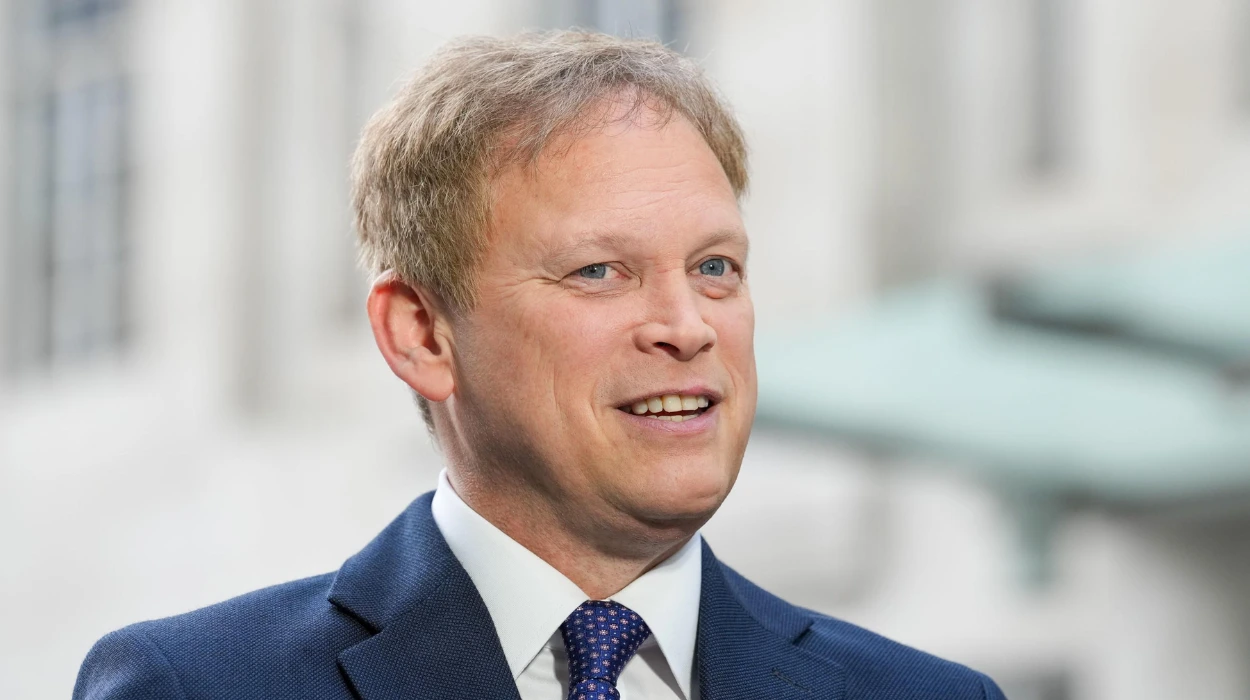
Sir Grant Shapps, a former UK Cabinet minister, was rejected as a Conservative Party parliamentary candidate in July 2026. The decision emerged publicly on 22 July 2026 through The Spectator and triggered immediate scrutiny of Conservative leader Kemi Badenoch’s new candidate selection process.
- Who Is Sir Grant Shapps?
- What Happened With Grant Shapps’s Conservative Candidacy in 2026?
- Why Was Grant Shapps Rejected as a Conservative Candidate?
- What Ministerial Roles Did Grant Shapps Hold?
- How Did Grant Shapps Lose His Seat in the 2024 General Election?
- What Is the Conservative Party’s New Candidate Selection Process?
- How Has Kemi Badenoch Responded to the Shapps Controversy?
- What Is Conservatives Together and Grant Shapps’s Role In It?
- What Does the Shapps Case Reveal About Divisions in the Conservative Party?
- What Are the Wider Implications for Future Conservative Candidates?
- How Does the Shapps Case Compare With Other Rejected Former MPs?
- Why Does This Story Matter for UK Politics in 2026?
Who Is Sir Grant Shapps?
Sir Grant Shapps is a British Conservative politician who represented Welwyn Hatfield in the House of Commons from 2005 to 2024 and held nine ministerial positions across four Conservative prime ministers. He served as Home Secretary, Defence Secretary, Transport Secretary, Business Secretary, and Energy Security and Net Zero Secretary. He also held posts as a Foreign Office Minister, Housing Minister, and International Development Minister.
Shapps entered Parliament in the 2005 general election, representing the Welwyn Hatfield constituency in Hertfordshire. He built a reputation as a party organiser, co-chairing the Conservative Party ahead of its 2010 election victory under David Cameron. Over the following 19 years, he moved through senior government departments under Cameron, Theresa May, Boris Johnson, Liz Truss, and Rishi Sunak. His six-day tenure as Home Secretary in October 2022, during Liz Truss’s premiership, remains one of the shortest in the role’s modern history. Rishi Sunak later appointed him Defence Secretary and then Business Secretary before Shapps lost his seat in 2024.
Shapps received a knighthood in Rishi Sunak’s resignation honours list, awarded for political and public service. After leaving Parliament, he co-founded Conservatives Together, an organisation created in 2024 to support and train prospective Conservative candidates.
What Happened With Grant Shapps’s Conservative Candidacy in 2026?
The Conservative Party rejected Grant Shapps’s application to stand as a parliamentary candidate at the next general election, according to reports first published by The Spectator on 22 July 2026 and confirmed by multiple party sources. Shapps applied through the party’s overhauled selection process, which had received more than 2,000 applications by mid-2026.
The rejection places Shapps among at least ten former Conservative MPs reported to have failed the new assessment process. Shapps did not comment publicly on the decision when it became known. The Conservative Party declined to confirm details of individual applications, with a party spokesperson stating that commenting on specific candidates would not be fair to those involved or to the integrity of the selection process.
The story gained wider attention because of Shapps’s seniority within the party. He had co-chaired the Conservatives ahead of a general election victory and held five full Cabinet posts. His rejection signalled that long service and ministerial experience no longer guaranteed automatic reselection under the party’s current leadership.
Why Was Grant Shapps Rejected as a Conservative Candidate?
The Conservative Party has not published an official reason for rejecting Shapps, and it does not comment on individual candidate assessments as a matter of policy. Party sources describe the process as tougher and more rigorous than previous selection rounds, designed to renew the party’s pool of candidates.
Kemi Badenoch has framed the overhaul as part of a broader effort to reshape the Conservative Party following its 2024 election defeat. She has stated publicly that the party is changing its policies, its people, and its internal processes. One anonymous party source, cited in coverage of the decision, criticised the rejection as reflecting poorly on Badenoch’s leadership style, comparing the pattern of rejections to authoritarian-style purges. Badenoch has rejected any suggestion that the process targets specific individuals or factions within the party.
The absence of an official explanation has fuelled speculation about whether the rejection reflects concerns about electability, ideological alignment with Badenoch’s leadership, or dissatisfaction with Shapps’s record in government. No evidence published as of July 2026 confirms any single explanation.
What Ministerial Roles Did Grant Shapps Hold?
Grant Shapps held nine ministerial positions between 2010 and 2024, including five full Cabinet-level departments: Transport, Business, Energy Security and Net Zero, Defence, and Home Affairs. His Cabinet career spanned the governments of David Cameron, Theresa May, Boris Johnson, Liz Truss, and Rishi Sunak.
His department-level appointments included:
Transport Secretary, a post he held from 2019 to 2022 under Boris Johnson, during which he managed the UK’s transport policy through the Covid-19 pandemic. Home Secretary, a role he held for six days in October 2022 under Liz Truss, following the resignation of Suella Braverman. Business Secretary and Energy Security and Net Zero Secretary, positions he held under Rishi Sunak between 2022 and 2023. Defence Secretary, a Cabinet post he held from August 2023 to July 2024, overseeing UK military policy during ongoing conflicts in Ukraine and the Middle East.
Before reaching Cabinet rank, Shapps served as a Foreign Office Minister, Housing Minister, and International Development Minister, and he co-chaired the Conservative Party in the lead-up to the 2010 general election.
How Did Grant Shapps Lose His Seat in the 2024 General Election?
Grant Shapps lost his Welwyn Hatfield seat to Labour’s Andrew Lewin on 4 July 2024, a defeat by a margin of 3,799 votes that ended his 19-year tenure as the constituency’s MP. The result formed part of a nationwide Conservative collapse in which the party fell from 365 seats to 121 seats.
The official declaration of the poll, published by Welwyn Hatfield Borough Council, recorded the following results.
| Candidate | Party | Votes | Vote Share |
|---|---|---|---|
| Andrew Lewin | Labour | 19,877 | 41.0% |
| Grant Shapps | Conservative | 16,078 | 33.2% |
| Jack Aaron | Reform UK | 6,397 | 13.2% |
| John Munro | Liberal Democrat | 3,117 | 6.4% |
| Sarah Butcher | Green Party | 2,986 | 6.2% |
Turnout in Welwyn Hatfield reached 64.6% of a registered electorate of 75,259. The Conservative vote share in the constituency fell by 19.3 percentage points compared with the 2019 general election, while Reform UK’s vote share rose by 13.2 percentage points, drawing support away from the Conservatives. Shapps had held the seat since 2005, winning it with vote shares of 51.0% in 2017 and 52.6% in 2019.
The scale of the swing against Shapps mirrored a wider national pattern in 2024, in which the Conservative Party lost 251 seats and Labour gained 211, giving Labour a majority government under Keir Starmer.
What Is the Conservative Party’s New Candidate Selection Process?
The Conservative Party introduced an overhauled candidate selection process in 2025 and 2026, described by party officials as tougher and more rigorous than previous vetting rounds, and it has already rejected at least ten former Conservative MPs. More than 2,000 people applied to become prospective parliamentary candidates under the new system.
Kemi Badenoch has positioned the process as central to her strategy for rebuilding the Conservative Party after its 2024 defeat. She has stated that the party needs to change its policies, personnel, and internal procedures to prepare for the 2030s. The party has increased the pace of seat selections in 2026 amid speculation that a change of prime minister could trigger an early general election.
The process assesses applicants through structured evaluations rather than relying solely on local association votes or prior parliamentary service. Former MPs, including cabinet-level ministers, must pass the same assessment as first-time applicants. This represents a departure from previous Conservative practice, under which sitting or former MPs were frequently given priority access to winnable seats.
How Has Kemi Badenoch Responded to the Shapps Controversy?
Kemi Badenoch has declined to confirm or deny the specific reasons for Shapps’s rejection, stating that the Conservative Party does not comment on individual candidate applications, while repeatedly describing the party as fundamentally different from the one removed from government in 2024. She made these comments at a central London press conference on 23 July 2026.
Badenoch told reporters that the Conservative Party treats former MPs and candidates with respect and does not discuss their applications as Westminster gossip. When pressed further by broadcasters, including the BBC, she reiterated that the party is changing its policies, its people, and its process. She confirmed that further candidate announcements would follow shortly, framing the wider selection process as evidence of party renewal rather than internal division.
Badenoch’s public position avoids direct comment on Shapps individually while defending the integrity and toughness of the broader selection system. This approach has left the specific rationale for Shapps’s rejection unconfirmed by the party as of late July 2026.
What Is Conservatives Together and Grant Shapps’s Role In It?
Conservatives Together is an organisation co-founded by Grant Shapps in 2024 to provide training and resources for rebuilding the Conservative Party after its general election defeat. Shapps co-chairs the organisation, which describes its mission as supporting and representing Conservative candidates.
The group formed shortly after the July 2024 general election, during a period in which the Conservative Party lost more than half of its parliamentary seats. Its stated purpose focuses on preparing candidates for future elections through structured training and organisational support, positioning it as a party-adjacent body rather than an official Conservative Party institution.
Shapps’s continued involvement in candidate support work through Conservatives Together, combined with his own rejection as a candidate, has been noted by commentators as an example of the contradictions surfacing within the party’s rebuilding effort in 2026.
What Does the Shapps Case Reveal About Divisions in the Conservative Party?
The rejection of a former Cabinet minister and ex-party co-chairman as a candidate indicates that the Conservative Party’s leadership is willing to exclude senior, long-serving figures from its 2026 selection process, a step that has generated internal criticism of Badenoch’s approach. At least ten former MPs have failed the new assessment process alongside Shapps.
An anonymous party source quoted in coverage of the decision suggested the pattern of rejections reflects negatively on Badenoch’s leadership temperament, drawing a comparison to authoritarian political purges. This criticism illustrates disagreement within Conservative ranks over how aggressively the party should distance itself from figures associated with its pre-2024 government record.
Badenoch’s public defence of the process as necessary for renewal contrasts with concerns from within the party that rejecting experienced figures risks alienating loyal members and depleting institutional knowledge ahead of a general election that could occur earlier than the scheduled 2029 deadline.
What Are the Wider Implications for Future Conservative Candidates?
The Shapps rejection establishes a precedent that ministerial seniority and long parliamentary service do not guarantee reselection under the Conservative Party’s 2026 vetting system, a signal likely to affect how other former MPs approach future candidacy applications. More than 2,000 applicants have already gone through the process.
The outcome affects the composition of the pool of Conservative candidates likely to stand at the next general election, particularly if that election occurs earlier than 2029 due to a change in prime minister. Former ministers seeking to return to Parliament face the same structured assessment as new applicants, without an exemption based on prior Cabinet rank. This shift affects the party’s institutional continuity, since experienced former ministers such as Shapps carry policy expertise and departmental knowledge that new candidates would need time to develop.
The controversy also affects public perception of the Conservative Party’s rebuilding strategy. Continued rejections of prominent former MPs could reinforce Badenoch’s narrative of party renewal among voters seeking change, or it could deepen internal party tension if more senior figures are excluded without public explanation. The outcome of this tension will likely shape Conservative candidate lists and party unity heading into the next general election.
Political analysts tracking the Conservative Party’s rebuilding period since 2024 note three recurring patterns in how the party has responded to its electoral collapse: procedural reform of candidate selection, public messaging built around generational change, and reduced visibility for ministers associated with the pre-2024 governments. The Shapps case touches all three patterns simultaneously, which explains the scale of media coverage it generated within 24 hours of the story breaking.
How Does the Shapps Case Compare With Other Rejected Former MPs?
At least ten former Conservative MPs failed the party’s 2026 candidate assessment process alongside Grant Shapps, according to party sources cited in reporting on the selection round, though the party has not published a full list of rejected applicants. This places Shapps within a broader group rather than as an isolated case.
The party’s refusal to comment on individual applications means the specific grounds for each rejection remain unconfirmed. What is established is the scale of the vetting exercise: more than 2,000 applications assessed, a tightened process introduced under Badenoch’s leadership, and a public commitment from the party to announce successful candidates in stages through 2026. Because Shapps held one of the most senior profiles among the rejected group, his case has become the most widely reported example of the process in national media, even though party officials maintain that his treatment does not differ procedurally from that of other applicants.
Explore More about Politics:
Anas Sarwar Gains Spotlight in Scottish Politics
Louise Haigh Fraud Conviction Raises Major UK Debate
Why Does This Story Matter for UK Politics in 2026?
The Shapps rejection matters because it signals how the Conservative Party intends to rebuild its parliamentary representation after losing 251 seats in 2024, and it raises questions about party unity ahead of a general election that could arrive before the scheduled 2029 deadline. Speculation about an early election has intensified in 2026 amid reports of a potential change in prime minister.
For voters, the episode offers a visible test of whether the Conservative Party’s promised renewal extends to its own senior figures or applies selectively. For Conservative members and activists, it raises practical questions about how the party will replace the institutional experience that departing ministers such as Shapps represent. For Badenoch’s leadership, the outcome of this and similar disputes will factor into assessments of her authority over the party heading into the next general election campaign.