

Key Points
- The Covid-19 inquiry, chaired by Lady Heather Hallett, has concluded that Boris Johnson’s Conservative government wasted public money on a “vast” scale through flawed personal protective equipment (PPE) procurement during the pandemic.
- Of roughly £14.9 billion spent on PPE, nearly £10 billion — almost two-thirds — was wasted, according to the report.
- The inquiry criticised the government’s “VIP lane”, which fast-tracked PPE contracts worth £4.2 billion for companies with political connections to the Conservative Party.
- PPE Medpro, a company linked to former Conservative peer Michelle Mone, was awarded two contracts worth £203 million after Mone approached then Cabinet Office minister Michael Gove in May 2020.
- Findings relating to PPE Medpro have not been published due to an ongoing National Crime Agency investigation into the procurement of those contracts.
- Lady Hallett said the VIP lane “embedded unfairness” in procurement but found no evidence of “cronyism or corruption” by ministers and officials in final contracting decisions.
- Bereaved families’ representatives argued that inadequate PPE contributed to deaths, while some well-connected firms profited heavily.
- Former health secretary Matt Hancock and other ministers defended the VIP lane, saying it helped prioritise credible suppliers.
- Former Cabinet Office minister Theodore Agnew rejected claims the lane was designed to enrich right-wing allies.
- Hallett issued 11 recommendations, including overhauling emergency procurement, boosting British manufacturing capacity, and improving transparency and accountability.
London (Britain Today News) July 14, 2026 — The Covid-19 inquiry has found that Boris Johnson’s government wasted public money on a “vast” scale through poorly managed purchasing of personal protective equipment during the coronavirus pandemic, in a damning report that also condemned the use of a controversial “VIP lane” for awarding contracts to politically connected firms.
- Key Points
- What Did the Covid Inquiry Find About PPE Spending?
- What Was the VIP Lane and Why Is It Controversial?
- Who Was Involved in the PPE Medpro Scandal?
- Did the Inquiry Find Evidence of Cronyism or Corruption?
- What Have Bereaved Families Said About the PPE Failures?
- How Did the PPE Shortage Affect Frontline Workers?
- What Did Matt Hancock and Other Ministers Say in Their Defence?
- What Recommendations Has the Inquiry Made?
- What Happens Next for the Covid Inquiry?
The inquiry’s chair, Lady Heather Hallett, a former Court of Appeal judge, concluded that of the approximately £14.9 billion spent on PPE during the crisis, nearly £10 billion — almost two-thirds — was ultimately wasted. Her report lays bare the scale of financial mismanagement during one of the most chaotic periods of the pandemic response, when the government scrambled to secure protective equipment for health and care workers as infection rates soared.
“The waste of public money was vast and could have been avoided,”
Hallett said in her report.
“Of approximately £14.9bn spent on PPE, nearly two-thirds — almost £10bn — was wasted.”
What Did the Covid Inquiry Find About PPE Spending?
The inquiry examined how the government procured PPE at speed as the pandemic took hold in early 2020, when the United Kingdom’s existing stockpile proved wholly inadequate for the scale of the emergency. Much of the equipment was sourced from manufacturers in China, and reports of waste — including unusable or surplus stock being stockpiled and later disposed of — emerged within months of the initial procurement drive.
Hallett was unambiguous in her assessment of the state of preparedness the country entered the pandemic with.
“The UK entered the pandemic with an inadequate stockpile of PPE and plans that had never been stress-tested,”
she said in her findings.
The report identifies systemic weaknesses in both the readiness of the national stockpile and the emergency procurement systems that were subsequently relied upon, weaknesses that Hallett said directly contributed to the scale of the waste ultimately uncovered.
What Was the VIP Lane and Why Is It Controversial?
Central to the inquiry’s criticism was the so-called “VIP lane” — officially termed the “high priority lane” — a fast-track system that gave preferential treatment to PPE suppliers with political connections to the Conservative Party. According to the report, £4.2 billion was paid out by the government through VIP lane contracts.
Hallett’s report states plainly that the mechanism undermined fairness in the procurement process.
“The ‘high priority lane’, also known as the ‘VIP lane’, was a misguided attempt to give priority to the most credible offers,”
she said, adding that it “embedded unfairness” in the procurement process.
She went further in describing the damage done to public confidence, stating:
“Some suppliers received favourable treatment because they had connections to government, undermining public trust at a moment when it was needed most.”
The VIP lane became one of the most contentious aspects of the government’s pandemic response, drawing sustained criticism from opposition politicians, campaigners and bereaved families throughout the years following the initial procurement drive.
Who Was Involved in the PPE Medpro Scandal?
The most high-profile case connected to the VIP lane involved PPE Medpro, a company formed in the early weeks of the pandemic and linked to Michelle Mone, who sat in the House of Lords as a Conservative peer at the time. The firm was awarded two contracts worth a combined £203 million after Mone made direct contact with Michael Gove, who was Cabinet Office minister at the time, in May 2020.
Although the inquiry heard extensive evidence relating to PPE Medpro, Hallett’s specific findings on the company have not been made public. The report notes that this is because of a long-running investigation by the National Crime Agency into how the contracts were procured, and that any conclusions relating to PPE Medpro will only be published once criminal proceedings, if any, have concluded.
Did the Inquiry Find Evidence of Cronyism or Corruption?
Despite the severity of her criticism regarding the VIP lane’s design and effects, Hallett stopped short of concluding that ministers or officials acted corruptly in awarding individual contracts. Her report states that the inquiry
“has not identified cronyism or corruption on the part of ministers and officials in final contracting decisions.”
However, she was clear that the system itself should never have existed in the form it took.
“The ‘high priority’ lane should not have been established and must not be repeated,”
Hallett concluded.
This distinction — between the fairness of individual contracting decisions and the fundamental unfairness of the system that produced them — sits at the heart of the inquiry’s conclusions on procurement.
What Have Bereaved Families Said About the PPE Failures?
For many families who lost relatives during the pandemic, the inquiry’s findings on PPE procurement are not simply a matter of administrative failure but a direct link to personal loss. Covid Bereaved Families for Justice (CBFFJ), which represents approximately 7,000 people whose relatives died during the pandemic, has been vocal throughout the inquiry’s hearings on procurement.
Ahead of the report’s publication, the group said:
“For bereaved families, these were not abstract failures of administration. Many believe their loved ones died, at least in part, because health and care services lacked the equipment, supplies and systems needed to keep patients and staff safe.”
The group also drew a sharp contrast between the losses suffered by ordinary families and the profits made by some suppliers during the same period, stating:
“What makes these failures even harder to bear is that some well-connected individuals and companies were making enormous profits from these same failures.”
Pete Weatherby KC, a lawyer representing CBFFJ, addressed the inquiry directly during hearings on procurement in March 2025, calling for close examination of whether political connections had distorted the process. He told the inquiry there should be
“scrutiny as to whether cronyism, unfair advantage and corruption allowed chancers to make fabulous profits at the expense of all of us, the bereaved, the key workers.”
Hallett’s report confirms that the risks families feared were real in at least one respect: the inadequacy of PPE supplies during the deadliest early phase of the pandemic did put patients and care home residents at risk. She concluded that the UK‘s PPE stockpile was “in a perilous state” and that the country was “simply not ready to compete” in the global rush to secure healthcare equipment.
How Did the PPE Shortage Affect Frontline Workers?
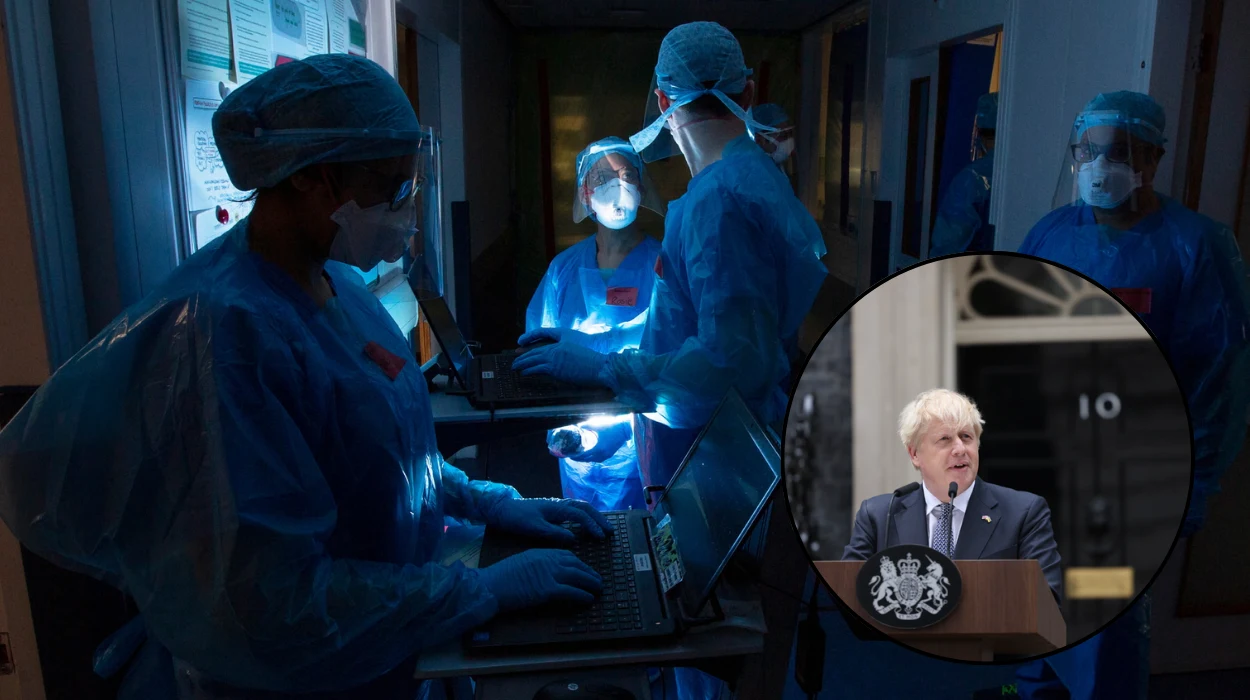
Hallett’s report details the direct consequences for those working on the front line of the pandemic response. Doctors, nurses and care sector staff were, in many cases, left without the protective equipment they needed to safely carry out their duties.
“As the pandemic worsened, many doctors, nurses and care sector staff worked without adequate PPE or sufficient healthcare equipment such as ventilators,”
Hallett said.
“This left them unable to properly protect themselves, or those in their care, from dangerous infection.”
The report acknowledges, however, that the shortfall was not solely a story of institutional failure. Hallett praised the response of the public, private businesses, and the UK’s life sciences and advanced manufacturing sectors, who she said rallied “enthusiastically” to help address the shortages as the crisis unfolded.
What Did Matt Hancock and Other Ministers Say in Their Defence?
Ministers who served in the Johnson government during the pandemic defended their handling of PPE procurement when they gave evidence to the inquiry. Matt Hancock, who was health secretary at the time, along with other ministers, argued that the VIP lane served a legitimate purpose by allowing the government to prioritise offers it judged to be credible amid an overwhelming volume of approaches from suppliers.
Theodore Agnew, who held the position of Cabinet Office minister during the period in question, gave a particularly forthright defence when he appeared before the inquiry. He rejected any suggestion that the VIP lane amounted to a deliberate scheme to benefit politically aligned individuals, telling the inquiry it was “bollocks” to suggest the VIP lane was
“some kind of plan by rightwing people trying to enrich themselves.”
The tension between ministers’ defence of the system’s intent and Hallett’s conclusions about its effects forms a central thread running through the report’s findings on procurement.
Explore More about UK:
England and Wales Heatwave Deaths Reach 2,700 Amid Climate Crisis
UK Proscribes Iran’s IRGC and Islamic Movement Over Antisemitic Attacks
What Recommendations Has the Inquiry Made?
Hallett’s report sets out 11 recommendations aimed at ensuring that the failures identified in PPE procurement are not repeated in any future health emergency. The recommendations span several areas of government policy and administration.
Among the key recommendations are calls for greater investment in British advanced manufacturing capacity, so that the country is less reliant on overseas suppliers during a crisis. The report also calls for improved management of the national pandemic stockpile, ensuring supplies are properly maintained, monitored and tested for adequacy ahead of any future emergency.
Hallett further recommended a “radical overhaul” of the supply chains and emergency procurement systems used during the pandemic, alongside measures aimed at
“improving transparency, governance and accountability in emergency procurement, so that the public can be confident that money is being spent with propriety and fairness.”
What Happens Next for the Covid Inquiry?
While this report addresses the procurement of PPE and the operation of the VIP lane, the inquiry’s work is not yet complete in relation to PPE Medpro specifically. Hallett’s findings on that company remain withheld pending the outcome of the National Crime Agency’s investigation and any resulting criminal proceedings.
More broadly, the report closes with a clear statement of intent regarding the lessons that must be learned. Hallett concluded:
“A better prepared emergency procurement system will reduce the cost of obtaining essential supplies and save lives.”
The findings are likely to reignite political debate over accountability for decisions taken during the pandemic, particularly given the continuing criminal investigation into PPE Medpro and the scale of public money identified as having been wasted. Bereaved families, who have campaigned for years for a full reckoning over the government’s pandemic response, are expected to continue pressing for further scrutiny as the inquiry’s other modules progress.