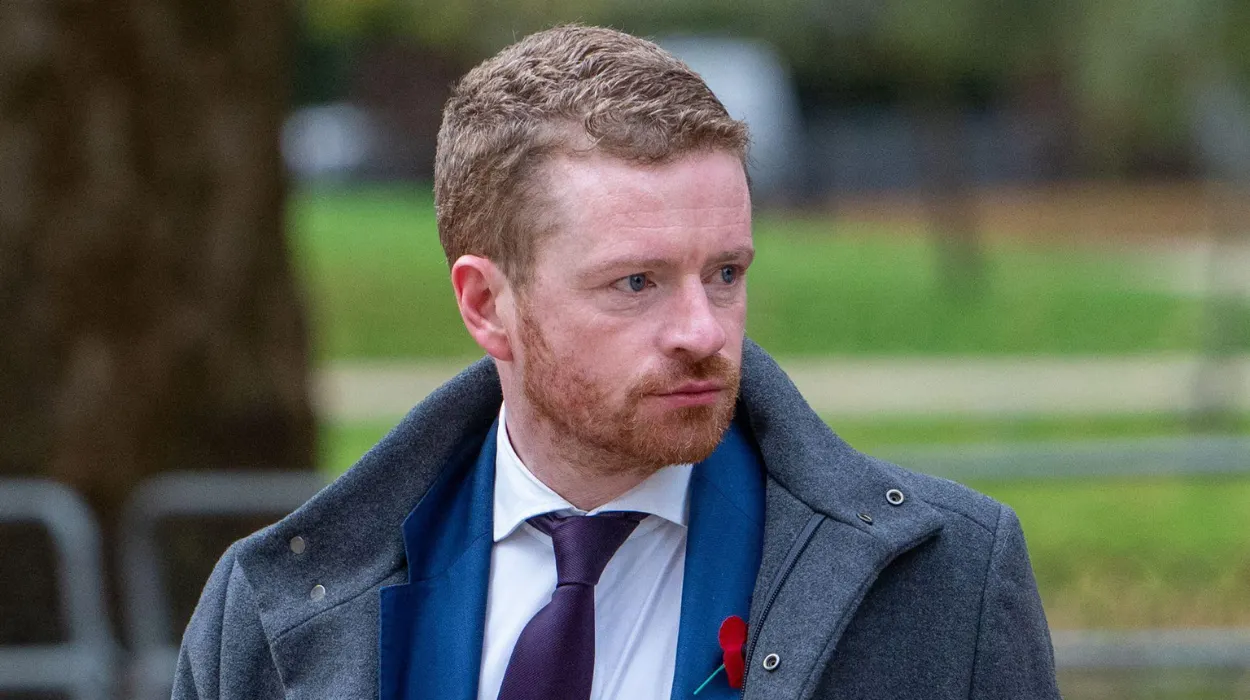
Morgan McSweeney is an Irish political strategist who reshaped the modern British Labour Party. He served as Keir Starmer’s closest adviser from 2020, ran Labour’s 2024 general election campaign, and held the position of Downing Street Chief of Staff from October 2024 to February 2026. His career defines the strategic transformation of Labour from a party led by Jeremy Corbyn into a centrist, election-winning force under Starmer.
- Who Is Morgan McSweeney?
- What Is Morgan McSweeney’s Background and Early Career?
- Early Life and Motivation for Joining Labour
- Grassroots Organizing and Local Campaigns
- Campaign Management for Individual Politicians
- How Did McSweeney Rise to Power Within Labour?
- What Role Did McSweeney Play in Keir Starmer’s 2020 Leadership Win?
- What Is Labour Together and What Was McSweeney’s Role In It?
- How Did McSweeney Shape Labour’s 2024 General Election Victory?
- What Was McSweeney’s Role as Downing Street Chief of Staff?
- What Policy Shifts Is McSweeney Credited With Driving in Labour?
- Why Did Morgan McSweeney Resign as Chief of Staff?
- What Criticism and Controversy Has McSweeney Faced?
- What Is McSweeney’s Legacy and Future Influence on Labour?
Who Is Morgan McSweeney?
Morgan James McSweeney, born 19 April 1977 in Cork, Ireland, is a political strategist who served as UK Prime Minister Keir Starmer’s Downing Street Chief of Staff from October 2024 until his resignation in February 2026.
McSweeney is Irish, not British, a detail that distinguishes him from most senior Labour figures. He grew up near Macroom in County Cork before relocating to the United Kingdom to build a career in Labour Party organizing. He is widely regarded as the principal architect of Keir Starmer’s political rise, credited with engineering both Starmer’s 2020 Labour leadership victory and the party’s landslide win in the 2024 general election. A 2024 New Statesman poll ranked him first among the most influential figures in UK left-wing politics, placing him ahead of elected MPs and cabinet ministers. Commentators have compared his behind-the-scenes influence to that of Dominic Cummings, chief strategist for Boris Johnson, and Peter Mandelson, a key architect of New Labour under Tony Blair.
What Is Morgan McSweeney’s Background and Early Career?
McSweeney joined the Labour Party in 1997, motivated by support for the Good Friday Agreement. He began as an intern receptionist in 2001 and worked in Labour’s attack and rebuttal unit at Millbank before building a career as a grassroots campaign organizer.
Early Life and Motivation for Joining Labour
McSweeney’s entry into British politics was shaped by an Irish political concern rather than a domestic British one. The Good Friday Agreement, signed in April 1998, ended three decades of conflict in Northern Ireland. McSweeney’s support for the peace process drew him toward the Labour Party, which was in government under Tony Blair at the time of the agreement’s negotiation.
Grassroots Organizing and Local Campaigns
Between 2008 and 2010, McSweeney campaigned alongside Labour figures David Evans, Jon Cruddas, and Margaret Hodge, working with the anti-racism group Hope not Hate to counter the far-right British National Party (BNP). He built his professional reputation through two specific local campaigns: leading Labour to a majority on Lambeth London Borough Council, and helping defeat the BNP in the London borough of Barking and Dagenham. These campaigns established him as a Labour organizer capable of winning contested political ground, though his precise role and effectiveness in the Barking and Dagenham result has since been questioned by some commentators.
Campaign Management for Individual Politicians
Before working for Starmer, McSweeney managed campaigns for other Labour figures. He ran Steve Reed’s council campaign in 2006 and Liz Kendall’s Labour leadership bid in 2015. Kendall’s campaign, which represented the party’s most centrist candidate in that leadership contest, finished last among four candidates but gave McSweeney direct experience in shaping a moderate, electorally focused Labour message.
How Did McSweeney Rise to Power Within Labour?
McSweeney co-founded the think tank Labour Together in 2015 and became its director in 2017, using it as an organizational base to develop the centrist strategy that would later underpin Keir Starmer’s leadership and 2024 election victory.
The Founding of Labour Together
Labour Together was established as a cross-factional Labour think tank following the party’s defeat in the 2015 general election. Under McSweeney’s direction from 2017, the organization conducted internal research and polling aimed at understanding why Labour had lost support among working-class and traditionally Labour-voting constituencies. This research became the strategic foundation for the electoral repositioning Labour undertook after 2020.
Building Influence During the Corbyn Era
McSweeney worked within Labour throughout Jeremy Corbyn’s leadership from 2015 to 2020, a period in which the party moved significantly to the left. Labour Together operated as a moderate counterweight during this period, positioning McSweeney and his allies to move quickly once Corbyn’s leadership ended following Labour’s defeat in the December 2019 general election, its worst result in terms of seats since 1935.
What Role Did McSweeney Play in Keir Starmer’s 2020 Leadership Win?
McSweeney led Keir Starmer’s successful campaign for the Labour Party leadership in 2020. Starmer won the contest on 4 April 2020 with 56.2% of the vote, and immediately appointed McSweeney as his Chief of Staff.
McSweeney’s strategy for the 2020 leadership campaign drew directly on the research conducted through Labour Together. The campaign positioned Starmer as a unifying figure capable of retaining left-wing party members’ support while signaling a departure from Corbyn-era policy positions to the wider electorate. Following the by-election defeat in Chesham and Amersham on 20 June 2021, Starmer moved McSweeney out of the formal Chief of Staff title into a “strategic role,” while McSweeney remained, in practical terms, Starmer’s most senior adviser. In September 2021, McSweeney was formally appointed Labour’s Director of Campaigns, a role in which he oversaw the selection process for prospective Labour parliamentary candidates. This process centralized control over candidate longlisting, a change that reduced the number of left-wing candidates able to stand for the party.
What Is Labour Together and What Was McSweeney’s Role In It?
Labour Together is a Labour-aligned think tank and campaign organization founded in 2015 that conducted internal party research, developed centrist electoral strategy, and served as McSweeney’s institutional base before his move into Starmer’s inner Downing Street team.
Labour Together operated separately from the formal Labour Party structure, which allowed it to conduct polling and messaging research without the constraints of official party processes. Reporting has also detailed that Labour Together paid the public relations firm APCO Worldwide to monitor journalists who published critical coverage of Starmer, including reporters at The Sunday Times, The Guardian, and Declassified UK. The organization is also reported to have worked to limit the growth of The Canary, a left-wing news website, while cultivating a closer relationship between Labour Together and The Guardian newspaper. These activities illustrate the organization’s dual function: policy development and media management in support of Labour’s centrist realignment.
How Did McSweeney Shape Labour’s 2024 General Election Victory?
McSweeney directed Labour’s campaign strategy for the 4 July 2024 general election, which delivered the party a landslide majority and ended 14 years of Conservative government, marking the culmination of the electoral strategy he began developing through Labour Together in 2017.
Campaign Strategy and Messaging
The 2024 campaign strategy centered on projecting economic competence, fiscal discipline, and a more cautious approach to immigration than Labour had presented under Corbyn. This repositioning targeted voters in marginal and traditionally Conservative-held constituencies, particularly seats that had voted for Brexit in 2016 and briefly supported the Conservative Party under Boris Johnson in the 2019 general election.
Election Outcome
Labour’s July 2024 victory returned the party to government with a substantial parliamentary majority, its first general election win since 2005. McSweeney’s strategic direction of this campaign, following his earlier work on the 2020 leadership race, cemented his reputation as the central figure behind Starmer’s political success.
What Was McSweeney’s Role as Downing Street Chief of Staff?
McSweeney was appointed Head of Political Strategy at 10 Downing Street in July 2024, then became full Chief of Staff in October 2024 after Sue Gray’s resignation from the post, a position he held until his own resignation in February 2026.
As Chief of Staff, McSweeney functioned as the senior coordinator of Downing Street operations, overseeing strategic direction, staffing decisions, and the government’s overall political messaging. He succeeded Sue Gray, a former senior civil servant whose brief tenure as Starmer’s first Chief of Staff had been marked by internal friction and press criticism. Reports during McSweeney’s tenure described him as operating a tightly controlled, factional Downing Street operation, with accusations that he briefed against colleagues including Gray and Health Secretary Wes Streeting. Starmer publicly stood by McSweeney during these controversies, stating that his office had not briefed against Streeting and affirming his continued support for his Chief of Staff.
Career Timeline at a Glance
| Year | Role or Event |
|---|---|
| 1997 | Joins the Labour Party, motivated by the Good Friday Agreement |
| 2001 | Begins as an intern receptionist, later works in Labour’s Millbank rebuttal unit |
| 2006 | Manages Steve Reed’s council campaign |
| 2008–2010 | Campaigns against the BNP with Hope not Hate |
| 2015 | Co-founds Labour Together; manages Liz Kendall’s leadership campaign |
| 2017 | Becomes Director of Labour Together |
| 2020 | Leads Keir Starmer’s successful Labour leadership campaign (56.2% of vote) |
| 2021 | Appointed Labour’s Director of Campaigns |
| 2024 | Directs Labour’s general election campaign; landslide victory on 4 July |
| Oct 2024 | Appointed Downing Street Chief of Staff, succeeding Sue Gray |
| Feb 2026 | Resigns as Chief of Staff over the Peter Mandelson appointment |
What Policy Shifts Is McSweeney Credited With Driving in Labour?
McSweeney is widely credited with steering Labour toward a “Blue Labour” position emphasizing fiscal discipline, stricter immigration policy, and a more patriotic public tone, a strategy designed to counter the electoral threat posed by the Reform UK party.
Following Labour’s losses to Reform UK in the May 2025 local elections in England, McSweeney and allied Downing Street aides pushed for policy positioning further to the right on welfare spending. Internal polling data cited during this period indicated majority public support for stricter controls on welfare spending, which informed the government’s approach to welfare reform legislation. This positioning generated significant internal opposition; more than 100 Labour MPs signed a parliamentary amendment intended to block the passage of the government’s welfare bill, representing the largest backbench rebellion faced by Starmer’s government to that point.
Why Did Morgan McSweeney Resign as Chief of Staff?
McSweeney resigned as Downing Street Chief of Staff on 8 February 2026 after taking responsibility for advising Starmer to appoint Peter Mandelson as UK ambassador to the United States, a decision that became untenable after Mandelson’s documented ties to convicted sex offender Jeffrey Epstein came to light.
The Mandelson Appointment and Its Fallout
Peter Mandelson was appointed UK ambassador to the United States in February 2025 on McSweeney’s recommendation. Mandelson was subsequently dismissed from the post in September 2025 after further information emerged about his ongoing relationship with Jeffrey Epstein following Epstein’s 2008 conviction on two felony prostitution-related charges. Documents released by the US Department of Justice in January 2026 showed Mandelson had maintained contact with Epstein after his conviction, and reporting indicated Mandelson may have shared sensitive government information with Epstein in the period following the 2008 global financial crisis. Financial records also indicated Epstein transferred a combined $75,000 in 2003 and 2004 to accounts linked to Mandelson or his husband, Reinaldo Avila da Silva.
The Resignation Statement
In his resignation statement, McSweeney stated the decision to appoint Mandelson was “wrong” and said Mandelson had “damaged our party, our country and trust in politics itself.” He said that when asked, he had advised Starmer to make the appointment, and he took full responsibility for that advice, describing his resignation as “the only honourable course.” A LabourList poll published the day before his resignation found that three-quarters of Labour Party members wanted McSweeney to resign or be removed from his post. He was succeeded on an acting basis by his two deputies, Vidhya Alakeson and Jill Cuthbertson. Starmer accepted the resignation and stated that he and the Labour Party owed McSweeney a “debt of gratitude” for turning the party around after its 2019 defeat and for his central role in the 2024 election campaign.
What Criticism and Controversy Has McSweeney Faced?
McSweeney faced sustained criticism for factional Downing Street management, for centralizing control over Labour candidate selection to exclude left-wing candidates, and for a phone theft incident in October 2025 that drew scrutiny after Parliament ordered release of his Mandelson-related communications.
Beyond the Mandelson resignation, McSweeney’s tenure attracted controversy on several fronts. His restructuring of Labour’s parliamentary candidate selection process was criticized for concentrating power over which candidates could stand for the party, a change that reduced representation of left-wing and Corbyn-aligned candidates. In October 2025, McSweeney reported that his government-issued phone had been stolen by a cyclist in Westminster. This incident gained renewed attention in March 2026, after a parliamentary order compelled the government to release communications between McSweeney and Mandelson concerning the ambassador appointment. Conservative opposition leader Kemi Badenoch questioned the timing of the phone theft in relation to the later document request, while Starmer dismissed suggestions of a “cover-up” as “far-fetched.”
Explore More about Politics:
Ed Miliband Chancellor Speculation Shakes UK Politics
Who Will Replace Keir Starmer? Front-Runners List
What Is McSweeney’s Legacy and Future Influence on Labour?
McSweeney’s legacy centers on transforming Labour from a left-wing opposition party under Jeremy Corbyn into a disciplined, centrist election-winning force under Keir Starmer, a transformation that delivered the party’s 2024 landslide but also generated lasting internal factional divisions.
McSweeney’s career illustrates the outsized influence unelected political strategists can hold over a governing party’s direction. His work through Labour Together, his direction of two successful campaigns in 2020 and 2024, and his eighteen months as Chief of Staff place him among the most consequential Labour advisers of the post-Blair era. Following his resignation in April 2026, McSweeney gave evidence to a parliamentary inquiry regarding the vetting process that preceded Mandelson’s appointment, continuing to shape public understanding of accountability failures within Starmer’s government. His post-Downing Street public engagements, including keynote speaking appearances on leadership, political strategy, and the relationship between institutions and public trust, indicate his continued relevance as a commentator on UK political strategy, even after leaving formal government office.