


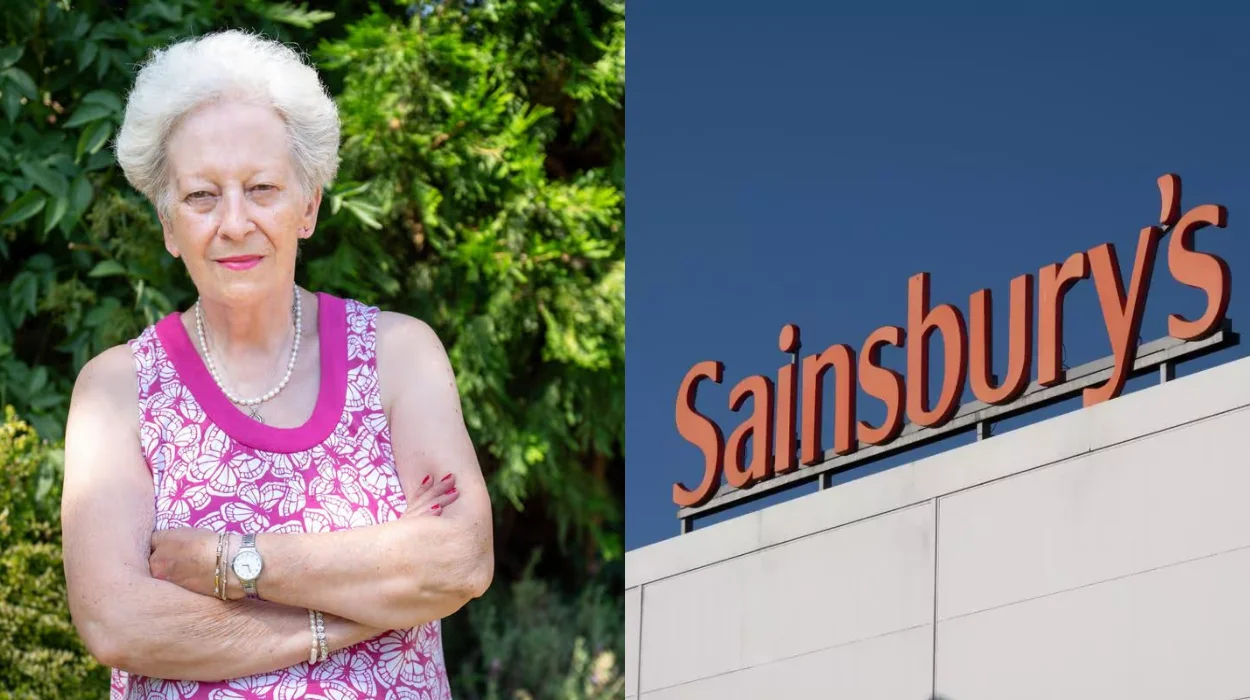
Rita Seymour’s Sainsbury’s case became a fast-moving social media story because it combined a lifetime retail ban, a pensioner’s denial, and a clear question about private-property rights in UK supermarkets. The core facts are straightforward: Sainsbury’s said the decision followed a number of incidents over time, while Seymour said she did nothing wrong and wanted her name cleared.
- What is the Rita Seymour Sainsbury’s case?
- Why did the story spread on social media?
- What do the legal rules say?
- How do store bans work?
- What happened in the reported incident?
- Why do people react so strongly?
- What does the case show about supermarkets?
- How does social media shape cases like this?
- What facts matter most?
What is the Rita Seymour Sainsbury’s case?
The Rita Seymour Sainsbury’s case is a UK retail-ban story involving a 79-year-old customer who says she was permanently excluded from Sainsbury’s and Argos stores after a dispute, while Sainsbury’s says the action followed repeated incidents and inappropriate behaviour. The case matters because it sits at the intersection of consumer experience, private property rights, customer conduct, and viral news dynamics.
Rita Seymour is identified in the reporting as a 79-year-old great-grandmother from Hook, Hampshire, and the dispute was linked to an incident at her local Sainsbury’s store in June 2026. In the published account, staff accused her of rude behaviour during an attempt to buy a Euromillions lottery ticket, and she later received written notice that her right to enter Sainsbury’s and Argos premises was permanently withdrawn. The social media attention followed because the case was simple to understand, emotionally charged, and easy to share in short-form posts and video clips.
Why did the story spread on social media?
The story spread because it paired a clear human conflict with a familiar brand, a memorable age profile, and a strong moral debate about fairness, retail power, and public sympathy. Posts and clips framed the case as either a harsh corporate ban or a justified response to conduct issues, which made it highly shareable.
Social platforms reward stories with a quick hook, identifiable characters, and a binary dispute. This case had all three: a named individual, a household supermarket chain, and a disagreement over what happened in store. The fact that the letter reportedly barred entry not only to Sainsbury’s but also to Argos and associated premises widened the sense of scale and made the story feel national rather than local. Short videos and reposts compressed the incident into a simple narrative, which accelerated engagement.
What do the legal rules say?
UK law allows a retailer to refuse access to private premises, and trespass is not automatically a criminal offence, but it can become relevant when someone enters after notice or in connection with specific offences. The legal position is rooted in property rights, not public-access rights, and that distinction explains why store bans can apply across a chain.
The Crown Prosecution Service states that trespass is not of itself a criminal offence, although it can be an element of other offences. The legislation on aggravated trespass and related land-access rules also shows that the law distinguishes between ordinary entry, trespass, and conduct that disrupts lawful activity. In practical terms, a retailer can remove someone’s invitation to enter private property, and a banning letter can turn later entry into trespass. That is why supermarket bans often become enforceable once a person receives formal notice.
How do store bans work?
Store bans work by withdrawing the permission to enter private premises, usually through a written notice that identifies the premises and states that future entry is not allowed. In retail settings, this notice matters because it gives the person clear warning that they no longer have permission to be there.forecourttrader.
Sainsbury’s was quoted as saying it takes abusive and inappropriate behaviour seriously and that the decision followed incidents over time. A ban of this kind is not a criminal conviction; it is a property-and-conduct restriction imposed by the owner or occupier of the premises. The published account says Seymour’s notice covered all Sainsbury’s and Argos stores, adjoining land, petrol stations, and car parks owned by the company. That breadth reflects how corporate premises are managed as a network rather than as isolated shops.
What happened in the reported incident?
The reported incident involved a disagreement at a local Sainsbury’s store in Hook, Hampshire, after staff accused Seymour of rude behaviour while she tried to buy a lottery ticket, and she denied wrongdoing. The next day, she reportedly received formal notification of a lifetime ban from Sainsbury’s and Argos premises.
The public reporting also says Seymour had previously been a regular customer and spent about £80 to £100 on groceries. That detail helped social media users frame the issue as a conflict between long-term customer loyalty and zero-tolerance store policy. Because the case was presented through a personal account, it invited immediate debate about tone, staff treatment, and proportionality.
Why do people react so strongly?
People react strongly because supermarket bans feel personal, even though they are legally rooted in private property rights and customer-control policies. The social reaction is amplified when the person involved is elderly, local, and presented as a long-time shopper.
This kind of story triggers three common public concerns. First, people ask whether the punishment fits the behaviour described. Second, they wonder whether supermarkets use bans too aggressively or simply protect staff and customers. Third, they question how a local dispute becomes a nationwide exclusion across a chain. Social media turns those questions into instant verdicts, which is why these stories trend quickly and polarize audiences.forecourttrader.
What does the case show about supermarkets?
The case shows that supermarkets are not public squares in law; they are private businesses with the authority to manage access, enforce conduct rules, and issue bans when needed. That authority is broad, but it is not unlimited, because it must still avoid unlawful discrimination and follow general legal standards.
Retailers rely on rules to protect staff, prevent disruption, and maintain safe shopping environments. The CPS guidance and the legislation on trespass together explain why private businesses can exclude people and why later entry after notice can create legal problems. In practical terms, a supermarket is free to decide that someone is no longer welcome, provided the decision is not based on protected discrimination. That is the legal framework behind the Sainsbury’s ban story.legislation.
Explore More about Business:
Daniel Kretinsky Royal Mail Payout Sparks Debate
Santander Introduced New Savings Account with 8% Interest
How does social media shape cases like this?
Social media turns a local retail dispute into a national conversation by simplifying the facts, amplifying emotion, and rewarding quick judgment over full context. A single clip or post can frame the person as a victim, the company as unfair, or the staff as justified, depending on the angle chosen.
The Rita Seymour story spread through short video and repost formats that favored concise, emotionally loaded summaries. That environment rewards phrases such as “banned for life” because they are easy to understand and provoke reaction. Once a story reaches that stage, users often share it without reading the full explanation or the company’s statement. The result is a high-volume debate built on a narrow slice of facts.
What facts matter most?
The most important facts are the alleged store incident, the written notice, the chain-wide scope of the ban, and the legal principle that retail premises are private property. Those facts explain why the case became both a consumer-rights discussion and a property-law example.forecourttrader.
The reporting says the ban letter covered all Sainsbury’s and Argos locations, including car parks and adjoining land. It also says Seymour denied wrongdoing and wanted her name cleared. Sainsbury’s said the action followed “a number of incidents over time,” which is the company’s stated justification.