Key Points
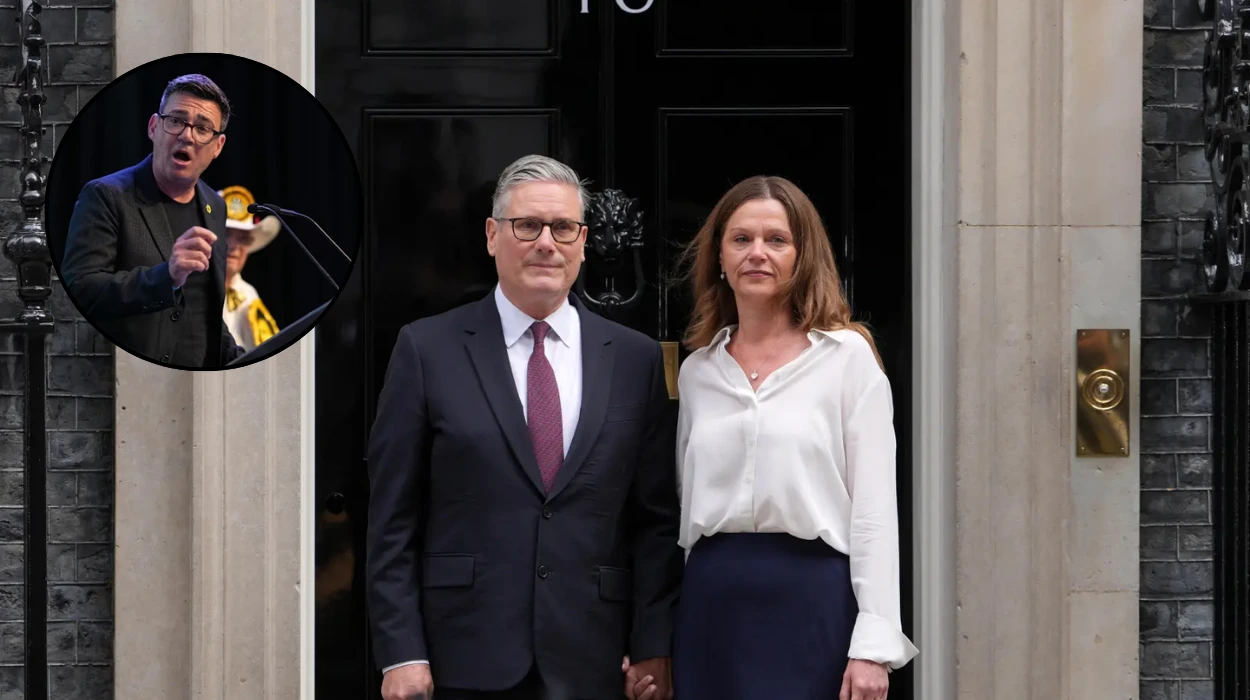
- Keir Starmer has resigned as leader of the UK’s governing Labour Party, paving the way for Britain’s seventh prime minister in a decade.
- Starmer will remain as caretaker prime minister until Labour selects a new leader; nominations open July 9.
- Former Greater Manchester mayor Andy Burnham has confirmed he will seek the Labour leadership and, by extension, the premiership.
- Former Health Secretary Wes Streeting has thrown his support behind Burnham, raising the prospect of an uncontested leadership race.
- Starmer’s approval ratings had slumped to historic lows amid criticism over economic delivery and the appointment of Peter Mandelson as ambassador to Washington.
- The resignation comes a day before the 10th anniversary of the Brexit referendum.
- Analysts warn that whoever succeeds Starmer will inherit rising energy prices, a heavy debt burden and a volatile relationship with the Trump administration.
Westminster (Britain Today News) June 22, 2026 — British Prime Minister Keir Starmer has resigned as leader of the United Kingdom’s governing Labour Party, clearing a path for the country’s seventh prime minister in a decade. As reported by NPR, Starmer confirmed he will remain in post as caretaker prime minister until his party selects a new leader, with nominations due to begin on July 9.
- Key Points
- Who Is Expected to Replace Keir Starmer?
- Why Did Starmer Decide to Stand Down?
- What Is the Significance of the Timing, on the Eve of the Brexit Anniversary?
- How Has Reform UK’s Rise Affected Labour’s Decision?
- Who Is Andy Burnham, the “King of the North”?
- When Will the New Prime Minister Take Office?
- What Happens Next in the Labour Leadership Contest?
- What Does Burnham’s Record in Manchester Suggest About His Approach?
- How Does This Resignation Fit Into the Broader Pattern of UK Political Instability?
- What Pressures Will Starmer’s Successor Inherit?
Who Is Expected to Replace Keir Starmer?
The popular former mayor of Greater Manchester, Andy Burnham, confirmed on social media that he intends to seek the Labour Party leadership. As reported by NPR, another contender, former UK Health Secretary Wes Streeting, posted a letter stating he would back Burnham’s bid. With Streeting standing aside, Burnham could now run for the Labour leadership — and ultimately the premiership — uncontested, potentially entering office in late July.
Why Did Starmer Decide to Stand Down?
The centre-left Labour Party was elected two years ago with a landslide majority in the UK Parliament. Since then, Starmer’s personal approval ratings have slumped to a historic low. According to NPR, polling shows voters believe he failed to deliver tangible change following years of austerity and budget cuts under 14 years of previous Conservative Party rule. He also faced criticism for appointing Peter Mandelson — a close friend of the late convicted sex offender Jeffrey Epstein — as British ambassador to Washington.
The next scheduled parliamentary elections are not due for another three years. However, in recent weeks, as a populist anti-immigration party climbed in the polls, fellow Labour lawmakers began calling for Starmer’s removal.
“The question my party is asking now, is whether I am best placed to lead us into the next general election,”
Starmer said in a tearful speech delivered outside 10 Downing Street on Monday.
“I have heard the answer of my parliamentary party to that question, and I accept the answer with good grace.”
Starmer defended his record during the address, pointing to increased government spending on defence and healthcare, along with a reduction in undocumented migration into the UK. As reported by NPR, he said he would offer his successor
“full and unequivocal support, knowing they will inherit a Britain that is far stronger and fairer than the one I inherited.”
What Is the Significance of the Timing, on the Eve of the Brexit Anniversary?
As Starmer addressed the nation, protesters nearby played Beethoven’s “Ode to Joy” — the anthem of the European Union. Tuesday marks the 10th anniversary of the referendum in which Britons voted to leave the EU, a decision commonly referred to as Brexit. That vote triggered a contraction in the British economy and has been linked to the country’s frequent changes in prime ministerial leadership.
As reported by NPR, John McTernan, a former political secretary to Prime Minister Tony Blair — himself a former Labour Party leader — said Britain was still recovering from the 2008 global financial crisis when it opted to leave the EU, a decision he says compounded the economic damage.
“This is a period in which Britain has done the most harm to itself, by leaving the European Union,”
McTernan said.
“If you hadn’t had a pay raise in 20 years, you might be getting angry. And that anger — which I think is righteous anger — turns itself on the government, and the governing class.”
McTernan said that anger has translated into public support for the upstart anti-immigration Reform UK party, led by Nigel Farage, who is described as an on-again, off-again ally of US President Donald Trump.
How Has Reform UK’s Rise Affected Labour’s Decision?
In May, Reform UK swept local municipal elections across England, winning votes in working-class, post-industrial areas that have traditionally supported Labour. Some polling suggests Farage could become the next prime minister.
As reported by NPR, Polly Toynbee, a Labour Party insider who writes a column for the Guardian newspaper, said:
“That has frightened all of British politics, particularly the Labour Party. A sense of emergency about that has led to them removing a man who is very decent, tries his best, but is incredibly unpopular.”
Toynbee added,
“He hasn’t done anything dreadful, hasn’t taken the country into a war. He was there because people wanted a change from the Conservatives, not because there was great enthusiasm for him.”
Who Is Andy Burnham, the “King of the North”?
Burnham served as a Labour Member of Parliament from 2001 to 2017, representing a constituency near Manchester, and served in the governments of then-Prime Ministers Tony Blair and Gordon Brown. He subsequently left Parliament and returned to Greater Manchester, where, as mayor, he is credited with bringing economic growth and regeneration to areas that had previously suffered industrial decline.
Following Reform UK’s success in the May municipal elections, Labour lawmakers began calling for Starmer’s removal, although no clear successor had initially emerged. As reported by NPR, a fellow Labour lawmaker resigned in a coordinated move, allowing Burnham to stand in a 18 June special election for the parliamentary seat of Makerfield, in suburban Manchester. Burnham won decisively.
Toynbee said of the result:
“He beat [Reform] overwhelmingly, in a place where they had just recently won all of the local council seats. So it seems that Andy Burnham is the only man who has the touch in areas like that, to take on Reform UK.”
Burnham arrived in London by train from Manchester on Monday afternoon and was sworn into Parliament, a step that makes him eligible, as a newly elected member, to put himself forward to replace Starmer.
When Will the New Prime Minister Take Office?
According to NPR’s reporting, the political risk consultancy Eurasia Group predicts Burnham will take office on 18 or 19 July.
Analysts cautioned, however, that Burnham will face many of the same difficulties that undermined Starmer’s premiership, including rising global energy prices linked to the conflict involving the United States and Israel against Iran, and ongoing uncertainty over how to manage relations with an often unpredictable Trump administration.
Toynbee said:
“I think the chances of him staying very popular for long are small. The headwinds are enormous — heavy debt, very difficult to raise more tax, our public services are threadbare. So he does face high expectations, and great difficulties.”
She added a stark assessment of what is at stake for the party:
“For Labour, Burnham will be the last throw of the dice.”
What Happens Next in the Labour Leadership Contest?
With nominations for the Labour leadership due to open on 9 July, attention in Westminster will now turn to whether any other figures within the party choose to challenge Burnham, or whether his path to Downing Street proceeds uncontested. As reported by NPR, Starmer is expected to continue functioning as caretaker prime minister throughout this period, overseeing the transition until his successor is formally confirmed.
Streeting’s decision to back Burnham rather than mount his own challenge is being read in Westminster as a significant moment in itself. As Health Secretary, Streeting had been viewed by some Labour figures as a potential standard-bearer for a more centrist continuation of Starmer’s project. His decision to step aside removes the most obvious obstacle to a swift and largely consensual transition, sparing the party a potentially bruising and prolonged contest at a moment when, according to NPR’s reporting, senior figures are anxious to project unity in the face of Reform UK’s rise.
Explore More about Politics:
Kemi Badenoch Says Labour Focused on Internal Drama as Tories Win Key By-Election
UK Borrowed £23.3bn in May as Iran War Fallout Hits Public Finances
What Does Burnham’s Record in Manchester Suggest About His Approach?
Burnham’s decade as mayor of Greater Manchester has frequently been cited, as reported by NPR, as evidence of his ability to combine a populist, regionally rooted political style with tangible policy delivery. His tenure overseeing the post-industrial conurbation has been associated with investment and development in areas that had, for decades, struggled with the decline of traditional manufacturing industries. That record is central to the argument made by his supporters that he, more than Starmer, can speak credibly to the voters in the Midlands and the North of England who have begun drifting toward Reform UK.
His resignation from Parliament in 2017 to take up the newly created Greater Manchester mayoralty was, at the time, an unusual move for a sitting MP with cabinet experience. It is a decision that has since been recast by his allies as a deliberate bet on devolved, city-region politics — one that appears, eight years on, to have positioned him as the figure now best placed to inherit the national stage.
How Does This Resignation Fit Into the Broader Pattern of UK Political Instability?
Starmer’s departure continues a pattern that has seen the country cycle through seven prime ministers in a decade, a level of turnover that is unusual among comparable Western democracies. As reported by NPR, analysts trace part of this instability back to the economic dislocation that followed the 2008 financial crisis and the subsequent decision to leave the European Union, a combination that has placed sustained strain on successive governments regardless of party.
Tuesday’s Brexit anniversary lends the timing of Starmer’s announcement a particular symbolic weight. As reported by NPR, the protesters who gathered near Downing Street as Starmer spoke, playing the European Union’s anthem, served as a reminder of how the 2016 referendum continues to shape the contours of British politics a decade later — not least through the economic pressures that John McTernan and others have linked directly to the rise of Reform UK.
What Pressures Will Starmer’s Successor Inherit?
Whoever succeeds Starmer will take office facing a similar set of constraints to those that ultimately proved politically fatal for the outgoing prime minister. As reported by NPR, analysts point to rising global energy prices, driven in part by the war involving the United States and Israel against Iran, as a pressure that is likely to persist regardless of who occupies Downing Street. They also point to the unpredictable nature of dealings with the Trump administration in Washington as a continuing source of diplomatic uncertainty for the UK government.
Toynbee’s assessment, as reported by NPR, was unambiguous on this point: the structural difficulties facing the country — a heavy debt burden, limited room to raise taxes further, and public services she described as “threadbare” — will not disappear simply because Labour has changed leader. Her description of Burnham’s elevation as “the last throw of the dice” for Labour underscores the scale of the challenge now facing the party as it seeks to fend off Reform UK ahead of elections that, under current law, are not due for another three years but which many in Westminster expect to dominate political calculations long before then.
For a Labour Party that swept to power on a landslide just two years ago, the coming leadership contest will determine not only who occupies 10 Downing Street, but whether the party can address the economic and political pressures — from the cost of living to the rise of Reform UK — that contributed to Starmer’s downfall.