Key Points
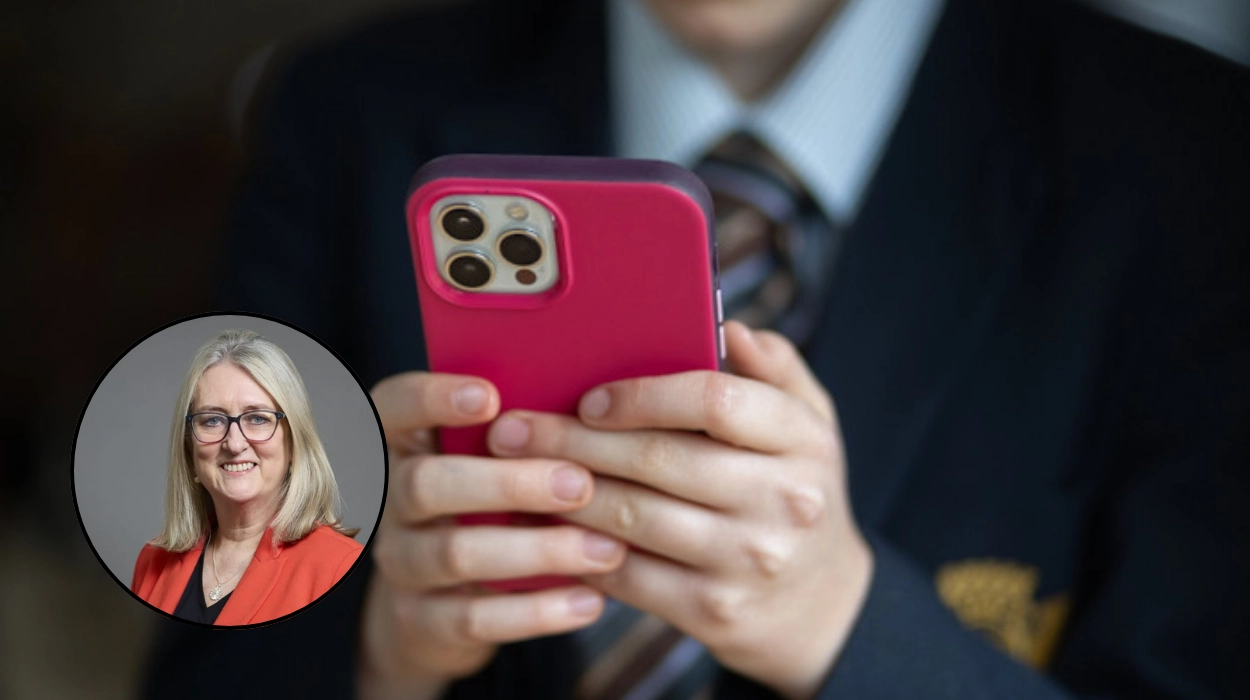
- The UK government plans to introduce a legal ban on smartphones in schools across England through an amendment to the Children’s Wellbeing and Schools Bill.
- Education minister Baroness Jacqui Smith told the House of Lords the change will create a clear legal requirement for schools.
- The Department for Education says the move gives legal force to what most schools are already doing in practice.
- The government’s approach differs from the Conservatives’ earlier push for a broader outright ban and follows existing guidance on phone-free school environments.
- Conservative shadow education secretary Laura Trott welcomed the move as a victory for headteachers, parents and pupils.
- Trott said Labour had dismissed the measure for more than a year before changing position.
- Baroness Smith said ministers had removed softer options from the initial guidance, including allowing switched-off phones to remain in pupils’ bags.
- The Liberal Democrats also welcomed the development, with schools spokesperson Caroline Voaden describing it as a win for pupils, teachers and families.
London (Britain Today News) May 20, 2026 – The UK government has announced plans to introduce a legal ban on smartphones in schools across England, with ministers saying the measure will be added to the Children’s Wellbeing and Schools Bill to give existing phone-free practices clear legal force. According to the reporting provided, education minister Baroness Jacqui Smith told the House of Lords that the amendment is intended to establish a firm legal requirement for educational institutions, while the Department for Education said the policy aligns law with what schools are already doing in practice.
What has the government announced?
The central change is that smartphones would be formally banned in English schools through legislation rather than left only to guidance. The government says the amendment will strengthen the current expectation that schools maintain phone-free environments during the school day, turning that expectation into law. This is a significant step because it moves the issue from policy advice into a statutory requirement, which would give schools more certainty about enforcement.
The Department for Education has defended the plan by arguing that the amendment simply reinforces what is already common practice in many schools. In the material provided, a spokesperson said the move would give legal force to current arrangements rather than introduce an entirely new daily routine for teachers and pupils. That framing is important because it suggests the government wants to present the policy as a formalisation of existing norms, not a dramatic overhaul.
Why is the ban being introduced?
The government appears to be acting on concerns that mobile phones can disrupt learning, classroom discipline and student behaviour. Baroness Smith’s comments indicate ministers want to create a clearer rule for schools so that enforcement is easier and expectations are less open to interpretation. By making the requirement legal, ministers are signalling that the issue should no longer depend on individual school discretion alone.
The reporting also shows that the government has adjusted its position over time. Earlier guidance had not gone as far as a full legal ban, and ministers had considered softer options before deciding to tighten the plan. The change suggests a shift towards a more prescriptive national approach, especially after political pressure from opponents and ongoing debate about how strictly schools should regulate devices.
What did Baroness Smith say?
As reported in the supplied material, Baroness Jacqui Smith said the amendment would create
“a clear legal requirement for schools”.
She also used the phrase
“legal force to what schools are already doing in practice”
to describe the government’s approach. Later, she added the phrase “not seen, not heard” while outlining the tougher stance ministers want to take on phone use in school settings.
These remarks matter because they show how the government is trying to frame the policy: firm but familiar. The language suggests ministers want schools to treat phones as something that should not interrupt teaching, while also implying the rule will be straightforward enough for staff to apply consistently. The direct quotes also show that ministers are comfortable with a firmer line on pupil device use than in earlier guidance.
How have the Conservatives reacted?
Conservative shadow education secretary Laura Trott welcomed the coming amendment and described it as
“fantastic news for headteachers, parents and pupils across the country”.
Her response is politically significant because it shows support from the opposition for a policy that had previously been a point of contention. She also said the Conservatives had pushed for the measure for more than a year, suggesting the government has only now adopted a position it once resisted.
Trott criticised Labour for dismissing the proposal as an unnecessary gimmick and said ministers had recently claimed the issue was already solved. She then added that the updated stance was
“the right step for improving behaviour and raising attainment in our classrooms”.
In political terms, her remarks attempt to claim credit for the policy while also highlighting what she presents as the government’s earlier delay.
What is changing in guidance?
One notable detail is that ministers reportedly removed more relaxed options from the original guidance. Among those options was the possibility that phones could remain in students’ bags if they were switched off. That change suggests the government has opted for stricter enforcement and fewer loopholes, which may make school policies easier to apply in practice.
Baroness Smith also indicated that ministers are open to tighter enforcement parameters. That leaves room for schools to implement robust restrictions if required, rather than relying on loosely worded guidance that might vary from one institution to another. For teachers and school leaders, the practical result is likely to be clearer expectations about where phones should be during the school day and when they may be used, if at all.
Explore More about UK:
Ebola outbreak may be spreading faster than first thought 2026
London Nova Festival exhibition recreates 7 October massacre in immersive display — May 20, 2026
What did the Liberal Democrats say?
The Liberal Democrats also welcomed the move, with schools spokesperson Caroline Voaden saying the party had helped shape the government’s direction. She described the development as
“a major win for pupils, teachers, and families”.
Her comments show that support for tighter smartphone controls is not confined to one side of the political divide.
That cross-party backing may help the amendment move more smoothly through Parliament, although the broader legislative process will still determine the final shape of the rule. Voaden’s comments also underline the growing consensus that schools need clearer boundaries on mobile phone use, particularly in classrooms where attention and behaviour are central concerns.
What happens next?
The next step is for the government to table the amendment to the Children’s Wellbeing and Schools Bill. If approved, the measure would create a national legal framework for smartphone restrictions in schools across England. The details of enforcement will matter, because schools will need practical guidance on how to apply the rule consistently and fairly.
For now, the announcement marks a political and policy shift rather than the final legal position. The legislation still needs to proceed through Parliament, and the exact wording will determine how far schools must go in restricting smartphone access. However, the direction of travel is clear: the government wants smartphone-free schools to become a legal standard rather than just an expectation.