Key Points
- 82 UK charity and humanitarian‑organisation leaders have jointly called on the government to bring greater ambition to the UK’s international development work ahead of the Global Partnerships Conference.
- The statement is signed by the UK heads of major groups including Christian Aid, Oxfam, Plan International and ActionAid.
- The Global Partnerships Conference is being co‑hosted by the UK and South Africa in London, bringing together governments, civil society, tech, AI, and private‑sector actors.
- The signatories warn that private finance can complement but must not replace official overseas development assistance, especially in humanitarian crises and extreme poverty.
- They stress the need for partnerships grounded in strong human‑rights, democratic, environmental and accountability standards.
- The letter calls for bolder UK action on reforming the international financial system, including tackling unsustainable debt, corporate tax‑avoidance, illicit financial flows and unfair trade rules.
- The NGO leaders link the UK’s recent cut in foreign‑aid spending from 0.5 per cent to 0.3 per cent of Gross National Income with a “moral catastrophe” at a time of escalating global crises.
- As reported by Romilly Greenhill, chief executive of the NGO network Bond, the sector wants the UK to turn “rhetoric into reality” by setting out long‑term plans for genuine multilateral partnerships.
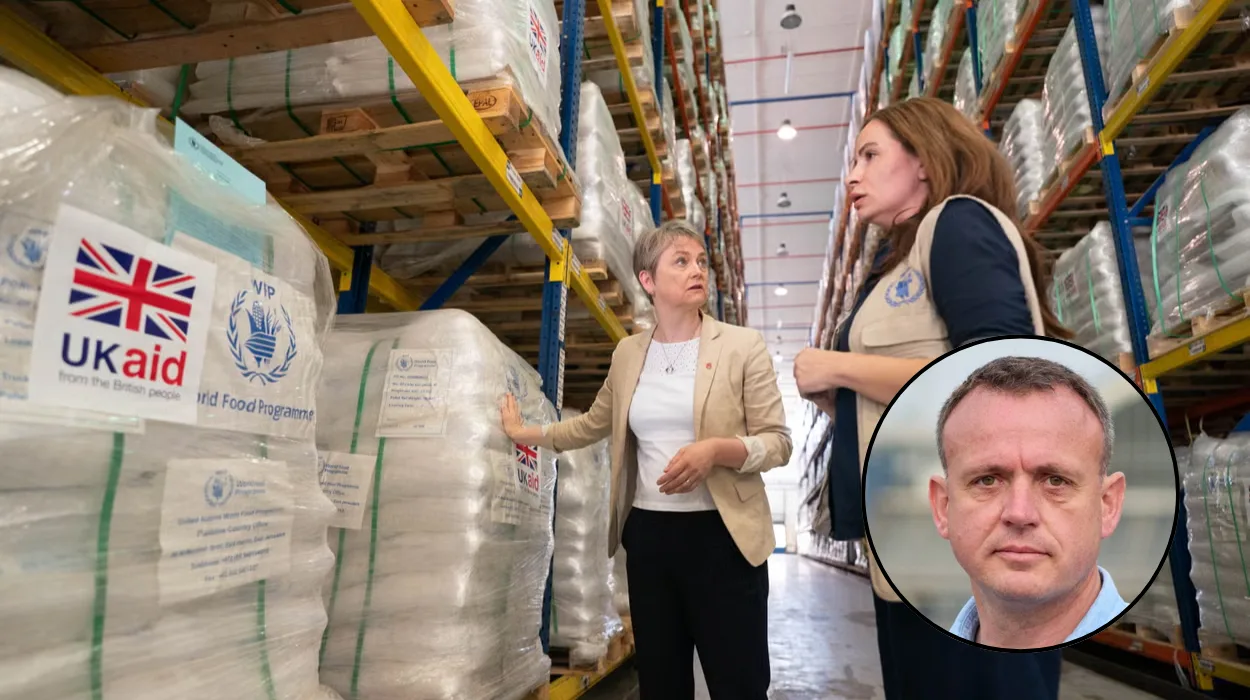
- Patrick Watt, chief executive of Christian Aid, warns that the poorest countries face a “perfect storm” of climate‑related emergencies, mounting poverty and unsustainable debt, which can only be addressed by cross‑border government action, not by private finance alone.
London (Britain Today News) May 18, 2026 – More than 80 of the UK’s leading charity and humanitarian‑organisation heads have publicly urged the government to show far greater ambition on international aid as the country prepares to co‑host the Global Partnerships Conference with South Africa this week. In a joint statement, the leaders of 82 organisations underline that, while they welcome the new forum’s focus on cross‑sector collaboration, only bold, rights‑based, and accountable public policies can meet the scale of today’s global crises. As reported by the NGO network Bond, the statement is being labelled “a call to turn rhetoric into reality” on the UK’s development agenda.
- Key Points
- What are the NGOs demanding from the UK?
- How do the charity leaders view the aid‑cuts backdrop?
- Why do the NGOs say private finance is not enough?
- What broader reforms are the charities calling for?
- How do the charities link this to the UK’s G20 role?
- What are the likely political implications in the UK?
The appeal comes less than 24 hours before the UK‑hosted Global Partnerships Conference opens in London, an event designed to bring together governments, civil‑society groups, technology and artificial‑intelligence firms, and wider private‑sector players to build new forms of development partnership. According to the conference’s official framing, published by the UK government, the two‑day summit aims to drive shared growth, tackle systemic global challenges and “build new international coalitions” around development, health, climate and digital innovation. Yet, as highlighted in the new NGO document, the meeting is taking place against a backdrop where the UK has reduced its foreign‑aid budget from 0.5 per cent to 0.3 per cent of Gross National Income, a move that critics have described as a “moral catastrophe” at a moment of intensifying humanitarian emergencies worldwide.
What are the NGOs demanding from the UK?
The 82 signatories, including the UK‑based leadership of Christian Aid, Oxfam, Plan International and ActionAid, stress in their statement that any partnerships emerging from the Global Partnerships Conference must be firmly rooted in human‑rights and democratic principles, as well as robust environmental‑protection and accountability standards. The full sector statement, published via Bond, calls for an
“inclusive international development agenda that truly cultivates equitable partnerships”,
arguing that current models still often concentrate power and decision‑making in Northern capitals and corporate headquarters rather than in the communities they are meant to serve.
As reported by the NGO network Bond, the groups are urging the UK government to ensure that the conference does not simply become a showcase for public–private partnerships that effectively sideline the role of publicly funded aid. The statement emphasises that while private finance can play a “complementary” role, it cannot act as a substitute for official overseas development assistance, particularly when responding to acute humanitarian crises and supporting people living in extreme poverty. The charities point to recent research and humanitarian reporting that foreign‑aid cuts have already delayed or reduced life‑saving responses in conflict‑affected and climate‑vulnerable regions, including parts of Africa and the Middle East.
How do the charity leaders view the aid‑cuts backdrop?
The joint statement is framed as a direct response to the UK’s continued reduction in its official development assistance (ODA). The charities highlight that the decision to cut aid from 0.5 per cent of GNI to 0.3 per cent has coincided with a surge in global humanitarian need, including protracted conflicts, climate‑related disasters and food‑security emergencies. As documented in wider reporting on UK aid policy, several development and humanitarian groups have described the deeper cuts as a “moral catastrophe”, stressing that the poorest and most vulnerable populations are paying the price while rich‑country budgets remain insulated.
Romilly Greenhill, chief executive of Bond, the UK’s umbrella network for international development NGOs, said in the statement that the sector recognises the
“conference organisers’ efforts to strengthen cross‑sector collaboration”
but wants to see concrete, long‑term plans rather than high‑level pronouncements. As quoted by Greenhill, the statement argues that the UK must now “urgently turn rhetoric into reality” by outlining how it will foster genuine partnerships and build an international system that is “fit for all”. This includes pushing for reforms that rebalance global rules on finance, debt and trade so that low‑income countries are not left shouldering the burden of crises they did little to create.
Why do the NGOs say private finance is not enough?
A central pillar of the charities’ argument is that private‑sector finance, while welcome, cannot solve the systemic problems the world is facing. The statement warns that framing private investment as a panacea risks weakening the political and fiscal commitment to public aid, including funding for climate adaptation, health systems and social‑protection schemes in low‑income countries. The signatories point out that markets are poorly equipped to tackle highly expensive, long‑term or politically sensitive challenges such as sustaining health systems during pandemics, supporting fragile states emerging from conflict, or financing climate‑resilience infrastructure that may not yield short‑term profits for investors.
Patrick Watt, chief executive of Christian Aid, reinforced this point in the NGO statement, stressing that
“extreme poverty, and its underlying causes, are too big and urgent to belong to any one institution or sector”.
As quoted by Watt, he welcomed the fact that the UK government is hosting the Global Partnerships Conference alongside South Africa, recognising that shared global challenges require shared solutions. However, he added that
“partnership is not a substitute for leadership”,
and that in the aftermath of the UK’s aid cuts,
“private finance is not a panacea”.
Watt warned that the poorest countries are facing a “perfect storm” of unsustainable debt, rising poverty and climate‑related emergencies, which can only be addressed by governments working together across borders. Without stronger public leadership and renewed international‑development financing, the charities argue, the conference risks reinforcing a model where rhetoric on partnership masks a retreat from the UK’s traditional role in global‑public‑goods provision.
What broader reforms are the charities calling for?
Beyond urging the UK to restore more credible ambition in its own aid spending, the statement also calls for the UK government to take “bolder action” on reforming the international financial system. The 82 NGO leaders argue that effective development partnerships must tackle the structural issues that keep poorer countries in cycles of debt and vulnerability. Specifically, they call for UK leadership on four broad fronts: reducing unsustainable sovereign debt burdens, curbing corporate tax‑avoidance, stemming illicit financial flows, and redesigning unfair trade rules that often disadvantage developing‑country producers.
The signatories underline that decades‑old patterns of debt distress, tax‑abuse and asymmetrical trade have helped to lock many low‑ and lower‑middle‑income countries into positions where they must prioritise servicing foreign obligations over investing in health, education and climate resilience. As the NGO statement notes, any new global‑partnership framework will be incomplete if it does not address these underlying imbalances. The groups also stress the importance of voices from the Global South in shaping these reforms, arguing that conferences hosted in London must not simply replicate Northern‑centric decision‑making but instead genuinely share power with partner governments and civil‑society organisations.
Explore More about Politics:
Clacton residents say ‘Stop the boats’ after Reform UK win 2026
Andy Burnham’s Gamble Puts Him in Pole Position to Challenge Starmer 2026
How do the charities link this to the UK’s G20 role?
Looking beyond the immediate conference, the NGO leaders explicitly tie their call to the UK’s upcoming presidency of the G20 in 2027. As written in the statement, they say that they
“hope this conference will inspire bolder action on this urgent agenda and chart a path towards a successful and ambitious UK G20 presidency next year”.
The charities argue that the UK has an opportunity to use its G20 leadership to place poverty reduction, climate justice and financial‑system reform at the heart of global‑economic discussions.
In an era of deepening inequality and escalating conflict worldwide, the statement warns that coordinated action is urgently needed to tackle interconnected crises such as climate change, food‑insecurity, forced displacement and rising inequality. The NGO leaders say the world is “increasingly volatile” and that multilateral institutions risk becoming irrelevant if they fail to adapt to the current scale of need. By pushing for a more inclusive, rights‑based and accountable model of partnership, they argue, the UK can help position itself as a credible convenor rather than a merely symbolic host.
What are the likely political implications in the UK?
Domestically, the joint statement is likely to fuel further debate over the UK’s post‑austerity stance on foreign aid. The government’s recent aid‑cuts have already drawn criticism from opposition parties, economists and former ministers, who argue that the reductions undermine the UK’s soft power and damage its relationships with partner countries. The broadly coordinated voice of 82 charities and humanitarian organisations adds weight to those concerns, giving opposition and campaign groups fresh material to argue that the UK is stepping back from its global‑responsibility role at a time when demand for solidarity is rising.
At the same time, the charities are careful not to frame their demand as a purely partisan issue. Their statement emphasises shared values – human‑rights, equity, accountability and climate‑justice – that cut across party lines. By doing so, the NGO leaders aim to pressure the UK government from a position of moral and policy‑based argument rather than partisan politics, hoping that the Global Partnerships Conference can become a platform for rebuilding trust in the UK’s international‑development commitments.