Key Points
- A private garden linked to A. A. Milne’s Winnie-the-Pooh world is opening for a rare public viewing.
- Cotchford Farm in Hartfield, Sussex, will open tomorrow to raise money for the Ashdown Forest Foundation.
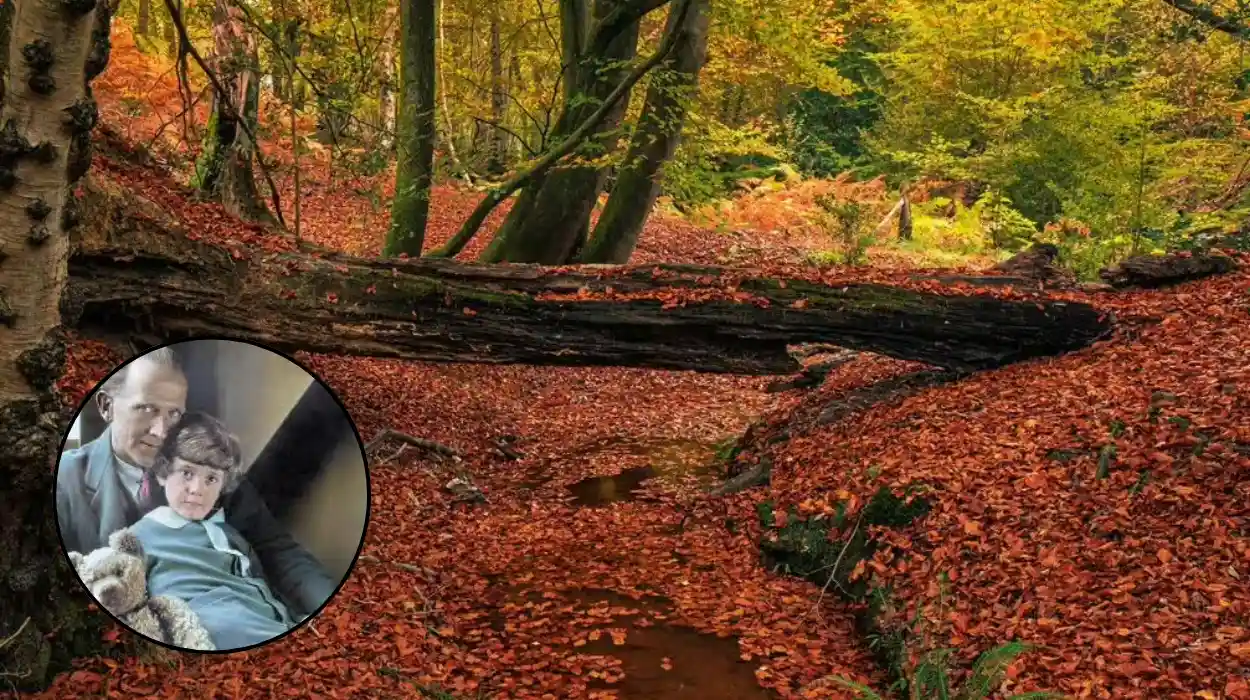
- Milne moved to Hartfield in 1925 with his wife and son Christopher, who inspired Christopher Robin.
- The nearby Ashdown Forest and Wealden countryside helped shape the settings in the Pooh books.
- The opening is being described as a very rare opportunity because the gardens are normally inaccessible to the public.
- The site still contains statues and memorabilia from the period when Milne owned Cotchford Farm.
- Organisers say the event aims to raise funds to protect wildlife, rare flora and fauna, and natural space in the forest.
- The programme includes access to the gardens, stalls, refreshments and activities.
- The event is sold out, while another opening planned for September already has a waiting list.
- Pooh Sticks bridge, one of the best-known Pooh landmarks, was originally built in 1907 and was first called Posingford Bridge.
- Other nearby Pooh-related locations include Galleon’s Lap, The Enchanted Place, the Heffalump Trap and Eeyore’s Sad and Gloomy Place.
- Hartfield Village also has a shop called Pooh Corner selling books, sweets and souvenirs tied to the literary classics.
Hartfield (Britain Today News) May 16, 2026 — Cotchford Farm and the wider Winnie-the-Pooh landscape are set to welcome visitors for a rare public opening tomorrow as organisers use the occasion to raise money for conservation work in Ashdown Forest. The event brings together literary history, local heritage and environmental funding in one of the most closely associated places with A. A. Milne’s celebrated books.
Why is Cotchford Farm opening now?
The gardens at Cotchford Farm are opening for a rare public viewing after remaining private for most of the year. The opening is tied to fundraising for the Ashdown Forest Foundation, which supports conservation work across the landscape that inspired the Pooh stories. Organisers say the event is meant to connect visitors with the real places behind the books while also encouraging support for the protection of the area.
The setting has a strong literary link because A. A. Milne moved to Hartfield in 1925 with his wife and son Christopher, who later became the inspiration for Christopher Robin. From there, Milne drew on the nearby Wealden countryside and Ashdown Forest as he developed the world that would become one of the most recognisable in children’s literature. That connection remains central to why the opening has attracted such attention.
What makes the gardens so special?
The gardens are not simply a historic property; they are part of a wider literary landscape shaped by Milne’s life and work. The site still contains statues and memorabilia from the period when Milne owned Cotchford Farm, giving visitors a direct sense of the place’s past. That physical link to the author’s world is one reason the opening is being described as highly unusual.
Robin St Clair Jones, chairman of the foundation, said the event offered a “very rare opportunity” to explore gardens not normally accessible to the public. He also pointed to the storytelling value of the location, saying visitors can walk through places connected to the books, including the Heffalump Trap and the Hundred Acre Wood, which were rooted in real surroundings. His comments place the event squarely at the intersection of literature, memory and conservation.
How does this fit Winnie-the-Pooh history?
A. A. Milne’s move to Hartfield in 1925 marked the beginning of the most important period in the creation of the Pooh stories. The surrounding landscape influenced the books’ gentle rural tone, memorable landmarks and sense of adventure. The setting helped Milne turn ordinary woodland features into places that readers now know across the world.
One of the best-known attractions linked to the books is Pooh Sticks bridge, where the game was first invented by Milne and his son and later featured in the stories. The game was first mentioned in the 1928 novel The House at Pooh Corner, where Pooh drops a pine cone into the stream and discovers the simple contest. The bridge itself dates back to 1907 and was originally called Posingford Bridge.
Explore More about UK:
Met police gearing up for far‑right and pro‑Palestine protests in London 2026
Saudi minister meets UK Trade adviser to discuss digital economy, AI ties 2026
What will visitors see?
The weekend event is designed to offer more than just a garden tour. Visitors will have access to the grounds, stalls, refreshments and activities, creating a family-friendly day out built around the area’s literary and environmental appeal. The combination of heritage, entertainment and fundraising is intended to make the visit both memorable and useful for the charity involved.
The wider Pooh trail remains a major draw for fans and tourists. Other popular destinations in the area include Galleon’s Lap, The Enchanted Place, the Heffalump Trap and Eeyore’s Sad and Gloomy Place. Together, these sites continue to turn the local countryside into a living map of Milne’s imagination.
Why is funding needed?
The event is also a practical effort to support conservation work. Robin St Clair Jones said funds are urgently needed
“to protect the wildlife, to protect the rare flora and fauna and to manage 10 square miles of natural space where you can wander freely.”
That statement underlines that the opening is not just a cultural attraction but also a fundraising drive for environmental protection.
The foundation’s work matters because Ashdown Forest is not only a literary landmark but also a living habitat. Protecting rare plants and animals requires ongoing management, and the event aims to help meet that cost. Organisers are hoping that the emotional pull of the Pooh connection will inspire people to contribute to a much broader environmental cause.
What did organisers say?
St Clair Jones said the charity was unlikely to stage something similar again soon. He credited the generosity of the owners of Cotchford Farm for making these openings possible, suggesting the event is exceptional even by local standards. That sense of rarity has added to the interest in the public viewing.
He also stressed the cultural importance of the site, saying the books’ real-world settings give visitors a chance to experience the storytelling in a tangible way. In his words, people can wander around places where Milne wrote the books and see locations that were transformed into the Hundred Acre Wood. The message is clear: the event is as much about preserving memory as it is about raising money.
Why are tickets in demand?
Demand for the opening has already outstripped supply. The weekend event is sold out, while a second opening planned for September has a waiting list. That response shows how strong public interest remains in both Winnie-the-Pooh and the landscapes that inspired the stories.
The popularity also reflects the continuing commercial and cultural value of the Pooh name. Hartfield Village’s Pooh Corner shop, which sells books, sweets and souvenirs, shows how the literary legacy still supports local tourism. For visitors, the appeal is not only nostalgia but also the chance to experience a place directly tied to one of Britain’s best-loved children’s authors.
What does this mean locally?
For Hartfield and the surrounding Ashdown Forest area, the opening offers both a boost and a reminder of responsibility. It can draw visitors, attention and donations, but it also reinforces the need to maintain the setting that made the stories possible in the first place. Local heritage and environmental protection are closely linked here.
The event highlights how a literary legacy can support conservation when handled carefully. By opening Cotchford Farm to the public, organisers are turning affection for Winnie-the-Pooh into a practical funding source for the forest. That approach gives the occasion significance beyond a single weekend.
The news story, in full, is about a rare moment when fiction, place and preservation meet. Cotchford Farm is opening not only as a tribute to A. A. Milne’s world, but also as a way to protect the landscape that helped create it.