Key Points
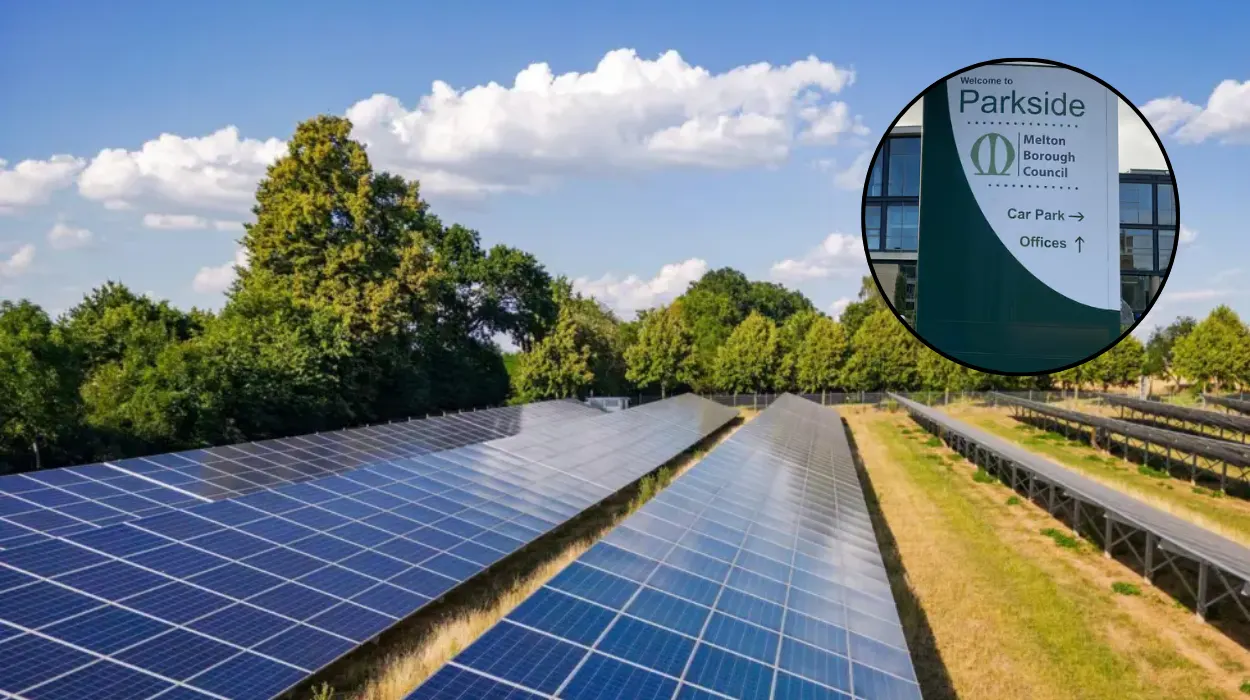
- A decision on plans for a major solar farm near Freeby in Leicestershire has been deferred by Melton Borough Council’s planning committee.
- Downing Renewable Developments wants to build a solar complex across 81 acres, or 200.2 hectares, on land east of Waltham Road.
- The applicant says the scheme could generate enough renewable electricity to power 10,000 homes.
- Councillors said they needed more information before making a final decision.
- The application is expected to return to the committee at a later date.
- Tony Gannon, speaking for Downing Renewable Developments, said the project would help address the “increasing threat” to energy security.
- He also said there was a “clear and urgent” need for solar schemes.
- The Local Democracy Reporting Service reported that two tenant farmers would lose land as a source of income if the solar farm goes ahead.
- The applicant said it would make a £200,000 capital contribution to Freeby Parish Council to help manage disruption caused by construction.
Leicestershire (Britain Today News) May 16, 2026 – A decision on plans for a large solar farm near Freeby has been put on hold after councillors said they needed more information before deciding whether to approve the scheme.
Why was the solar farm decision deferred?
Melton Borough Council’s planning committee discussed the application on Thursday, but members were not satisfied that they had enough detail to reach a verdict. The proposal, brought forward by Downing Renewable Developments, covers land east of Waltham Road near Freeby and would extend across 81 acres, or 200.2 hectares. The committee’s decision to defer means the application will come back for consideration at a later date.
The project is framed by the developer as a major renewable energy scheme with the capacity to power 10,000 homes. That figure is central to the case being made by the applicant, which says the development would contribute to wider efforts to expand clean energy generation.
The deferral also reflects the scale and local sensitivity of the proposal. Large solar developments often require councillors to weigh energy benefits against issues such as land use, visual impact, disruption during construction and effects on local residents and businesses. In this case, the committee opted to pause rather than decide immediately, indicating that the details still need to be tested further.
What did the developer say?
Tony Gannon, speaking on behalf of Downing Renewable Developments, told councillors that the scheme would help counter the “increasing threat” to energy security nationally. He said there was a “clear and urgent” need for solar schemes, presenting the project as part of a broader push to strengthen the UK’s energy resilience.
His remarks underline the developer’s main argument: that solar power is not only a climate issue but also an energy security issue. In that framing, new solar infrastructure helps reduce dependence on more volatile energy sources and supports the national transition to low-carbon power. The applicant’s position is that the Freeby site is suitable because it can contribute meaningful generation capacity at scale.
The company also said the project would offer financial support to the local area. It proposed a £200,000 capital contribution to Freeby Parish Council to help manage disruption linked to construction. That offer appears designed to show that the developer recognises local impacts and is willing to provide some mitigation.
What are the local concerns?
The Local Democracy Reporting Service reported that two tenant farmers would lose land as a source of income if the solar farm is built. That point is likely to remain important when the application returns to committee, because it introduces a direct economic impact on people tied to the land.
Loss of farmland can be one of the most contested issues in solar farm planning. Supporters of such schemes argue that renewable energy is necessary and that agricultural land can sometimes be used in ways that still allow for dual benefits over time. Critics, however, often raise concerns about food production, rural character and the long-term effect on farming businesses.
In this case, the fact that tenant farmers could lose income may carry considerable weight with both councillors and the wider community. Even where the environmental case is strong, local decision-makers frequently want to know how individual livelihoods will be affected. That is likely one reason the committee wanted more information before making a final judgement.
How does the scheme fit wider energy policy?
The proposal sits within a national debate about how quickly the UK should expand renewable energy infrastructure. Solar power is a key part of that mix, and developers often argue that large sites are needed to meet demand at scale. Downing Renewable Developments’ claim that the scheme could power 10,000 homes is intended to show that the project would make a substantial contribution.
At the same time, planning committees are expected to judge each application on its own merits. That means assessing local landscape impact, traffic during construction, access arrangements, drainage, ecological concerns and the views of nearby residents. Even when a project aligns with national priorities, councillors still have to balance those priorities against local evidence.
The comments from Tony Gannon suggest the developer wants the committee to see the scheme as part of a strategic response to energy security concerns. But the committee’s deferral shows that political support for renewables does not automatically translate into planning approval. Local authorities often ask for more technical detail before giving a final decision on projects of this size.
Explore More about UK:
Private Winnie-the-Pooh Gardens Set for Rare Public Opening 2026
Saudi minister meets UK Trade adviser to discuss digital economy, AI ties 2026
What happens next?
The application is expected to return before the committee at a later date. Until then, the council will likely seek further information so that members can reconsider the proposal with a fuller picture of the impacts and benefits. That next meeting will be important because it could determine whether the scheme moves forward, is refused or is further delayed.
For the developer, the next stage will probably involve addressing the concerns that led to the deferral. That could include additional detail on construction impacts, mitigation measures, land use considerations and the reasoning behind the site selection. For councillors, the key question will be whether the benefits of the scheme outweigh the local costs.
The case is also likely to draw attention from residents in and around Freeby, especially those directly affected by the proposal. Planning decisions on solar farms often become a test of how local communities respond to the growing push for renewable energy. Here, the issue is not simply whether solar is desirable in principle, but whether this particular site is the right place for such a development.
Why does this matter locally?
This decision matters because it could shape the future use of a substantial area of land near Freeby. An 81-acre solar complex is a significant development in any rural setting, and its impact would be felt not only during construction but potentially for years afterwards. The committee’s request for more information suggests that councillors recognise the decision’s long-term importance.
It also matters because the debate captures a familiar tension in planning: national needs versus local disruption. On one side is the argument that the UK needs more renewable electricity and greater energy resilience. On the other is the concern that such developments can alter the character of the countryside and affect those who depend on the land for their livelihoods.
That balance will now be revisited when the application returns to the committee. Until then, the project remains unresolved, with both supporters and opponents likely to continue pressing their case. The eventual decision could prove significant not just for Freeby, but for wider discussions about how rural England accommodates the expansion of solar power.