Key Points
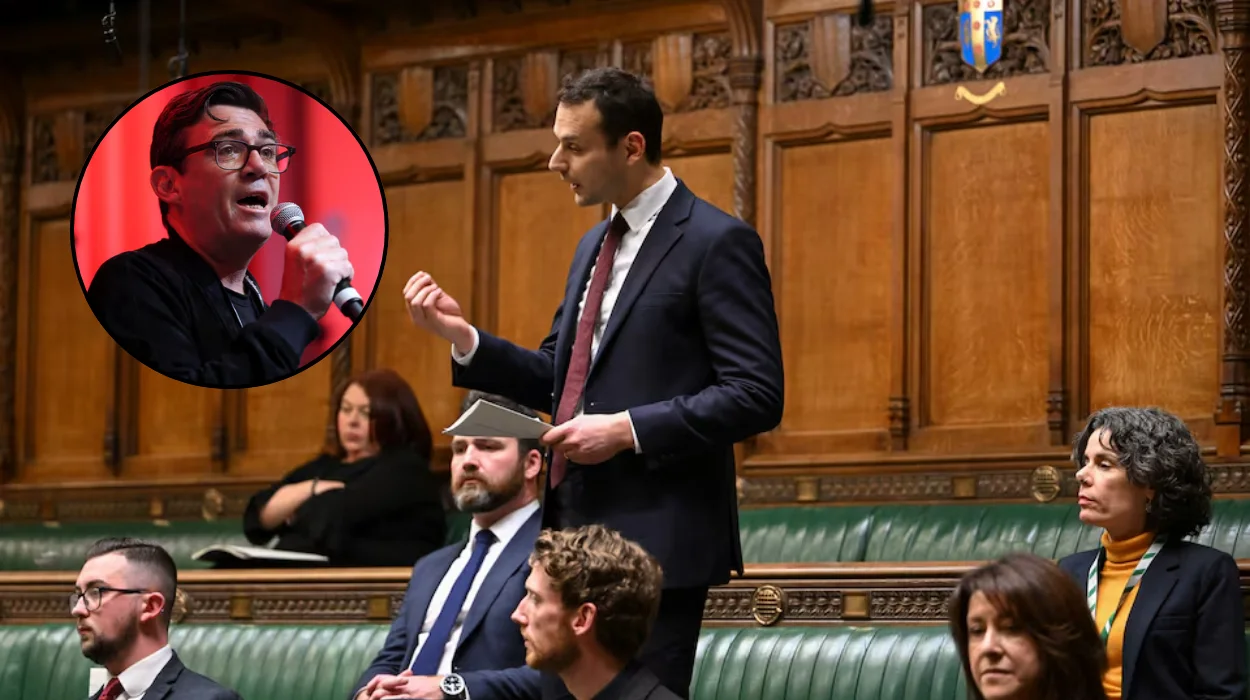
- Labour MP Josh Simons has announced he will resign his Makerfield seat in Parliament, a move widely seen as creating an opening for Greater Manchester Mayor Andy Burnham to re‑enter the House of Commons.
- In a statement on X, Simons said he is “standing aside” so Burnham can “return to his home, fight to re‑enter Parliament, and if elected, drive the change our country is crying out for.”
- Simons stressed that he cannot directly hand the seat to Burnham and that a by‑election would be required, in which all parties, including Nigel Farage’s Reform UK, would be entitled to contest.
- Simons won Makerfield at the 2024 general election with a majority of 5,399 over a Reform UK candidate, but Reform’s popularity has since risen while Labour’s support has dipped, raising the risk of a tight contest.
- On the same day, Labour’s Wes Streeting announced his resignation as health minister and publicly called for a leadership contest to remove Prime Minister Keir Starmer, adding to speculation that Simons’ move is part of a broader internal challenge to Starmer’s authority.
Greater Manchester (Britain Today News) May 14, 2026 – Labour MP Josh Simons on Thursday announced he will resign his seat in the House of Commons, paving the way for Greater Manchester Mayor Andy Burnham to seek a return to Parliament and potentially mount a leadership challenge to Prime Minister Keir Starmer.
- Key Points
- Why is Josh Simons resigning his seat?
- What are the implications for Andy Burnham?
- How does this connect to the wider Labour leadership challenge?
- What does the Makerfield seat tell us about the political mood?
- What are the risks for Labour from this move?
- What might happen next in Wigan and beyond?
- How will voters in Makerfield react?
- What does this moment mean for Labour’s future?
Simons, who has represented the Makerfield constituency since winning it at the 2024 general election, disclosed his intentions in a statement posted on X. In it, he framed the decision as a sacrifice for the wider national interest.
“Today, I am putting the people I represent and the country I love first and will be resigning as MP for Makerfield,”
he wrote.
“I am standing aside so that Andy Burnham can return to his home, fight to re‑enter Parliament, and if elected, drive the change our country is crying out for.”
Why is Josh Simons resigning his seat?
Simons’ decision is not a straightforward party manoeuvre in which one legislator passes a constituency to another; he cannot simply transfer the Makerfield seat to Burnham. Instead, his resignation would trigger a by‑election in the constituency, which any political party may contest.
Under the existing rules of the House of Commons, when a sitting MP resigns, the seat is declared vacant and a writ is moved for a new election. That means Reform UK, the Conservatives, Liberal Democrats and any other registered party would be free to field candidates in Makerfield.
Simons’ 2024 general‑election victory was, however, far from a walkover. He secured the seat with a majority of 5,399 over a candidate from Nigel Farage’s Reform UK, which had already begun to consolidate support in parts of northern England. Since then, Reform’s national polling has improved and Labour’s has slipped, raising the prospect that the next Makerfield contest could be closely fought.
What are the implications for Andy Burnham?
Andy Burnham, the directly elected Mayor of Greater Manchester, has been seen by many commentators as a potential alternative to Starmer in the Labour leadership. His regional base in Greater Manchester and his high profile on issues such as devolution and public transport have long marked him out as a figure with national ambitions.
By stepping down, Simons explicitly tied his resignation to Burnham’s possible return to Westminster.
“I am standing aside so that Andy Burnham can return to his home, fight to re‑enter Parliament, and if elected, drive the change our country is crying out for,”
he said. That wording suggests Simons views Burnham as a figure capable of re‑energising Labour’s project and, implicitly, of challenging Starmer’s hold on the leadership.
Burnham has not yet publicly confirmed whether he intends to contest the Makerfield seat, should the by‑election be called. However, the fact that Simons has framed his own departure around Burnham’s return is likely to intensify speculation about his political trajectory.
Explore more about Politics:
UK Must Drop ‘Red Lines’ for Real EU Reset, Brussels Warns 2026
Reform Party leader Nigel Farage investigated over failure to declare £5m gift 2026
How does this connect to the wider Labour leadership challenge?
The timing of Simons’ announcement is significant because it comes on the same day that Labour’s Wes Streeting announced he was resigning as health minister and calling for a leadership contest to oust Prime Minister Keir Starmer. Streeting’s move, reported by several national outlets, has been interpreted as the most direct attempt yet within the party to force a change at the top.
In that context, Simons’ resignation can be read as part of a broader effort by Labour figures to open space for an alternative leadership narrative. While Simons did not mention Streeting in his statement, the two resignations on the same day cannot be dismissed as coincidence in a tightly watched political environment.
Streeting’s departure from the government risks exposing fissures between Starmer’s allies and those who believe Labour needs a more combative or ideologically distinct direction. Simons’ gesture toward Burnham adds a regional and potentially populist dimension to that internal challenge, given Burnham’s base in Greater Manchester and his reputation for emphasising local empowerment.
What does the Makerfield seat tell us about the political mood?
Simons’ 2024 result in Makerfield offers a microcosm of the shifting dynamics in northern England. His 5,399‑vote majority over a Reform UK candidate was substantial but not overwhelming, particularly in a seat where Labour has traditionally been strong. The fact that Reform was able to come within that margin suggests that the party was already gaining traction in communities that had long backed Labour.
Since the 2024 election, national polling has shown Reform’s support rising, fed by dissatisfaction with the cost of living, immigration policy and the perceived technocratic tone of Starmer’s leadership. Labour’s own polling has softened, especially in parts of the Midlands and the north, where economic anxiety and concerns about public services remain acute.
Against that backdrop, a Makerfield by‑election would be more than a local contest. It would be a test of whether Labour can hold on in a marginal seat where Reform has already proven it can mobilise voters. A narrow victory or, worse, a loss for Labour would be widely interpreted as a sign that the party’s grip on its traditional strongholds is weakening.
What are the risks for Labour from this move?
Labour faces a series of risks if Simons’ strategy plays out over the coming months. First, there is the immediate electoral risk: calling a by‑election in a seat where Reform already came within a few thousand votes is inherently dangerous. Even if Burnham were to win, the margin could shrink, which would feed narratives about Labour’s vulnerability.
Second, there is the risk of internal division. Simons’ move is effectively an endorsement of Burnham as a potential alternative to Starmer, and Service’s resignation as health minister is an open call for a leadership challenge. Together, they amount to a coordinated, if still embryonic, effort to weaken Starmer’s position.
If Starmer is seen to cling to power despite growing discontent, it could deepen factionalism within the party. On the other hand, if he were to respond by stepping aside or calling an early leadership contest, it would represent a major upheaval at a time when the government is grappling with economic and social challenges.
Third, there is the reputational risk. By encouraging a sitting mayor to re‑enter Westminster via a by‑election, Labour risks appearing to manipulate the system for internal political ends. Critics may argue that such a move undermines the independence of local government and treats constituencies as pawns in a national leadership game.
What might happen next in Wigan and beyond?
In the short term, the immediate focus will be on the mechanics of the by‑election. Once Simons formally submits his resignation to the Speaker, the House will set a timetable for the poll. The Labour Party would then need to decide whether Burnham is the candidate it wants to put forward, or whether it prefers a local figure with deeper roots in the constituency.
If Burnham does stand, the contest would almost certainly become a national story. The presence of a high‑profile mayoral figure in the north, running against a Reform‑UK‑backed candidate, would draw attention from every major broadcaster and news outlet. The outcome would be parsed not just for its local implications, but for what it says about Labour’s standing in its traditional heartlands.
Beyond Makerfield, the ripples of Simons’ and Streeting’s resignations may prompt other disaffected Labour figures to reconsider their loyalty to Starmer. The next few weeks could see a tightening of alliances around Burnham or a rival challenger, or alternatively a consolidation of support behind the current leader as MPs seek to avoid a public leadership crisis.
How will voters in Makerfield react?
For the residents of Makerfield, the political drama in Westminster may feel distant compared with the day‑to‑day realities of housing, jobs, healthcare and transport. Yet the resignation of their MP and the prospect of a high‑profile mayoral figure standing for the seat will inevitably shift the political conversation in the area.
At the 2024 election, many voters chose Labour over Reform UK on the basis of local concerns rather than national leadership questions. In the event of a by‑election, campaigners for all parties would be likely to frame the vote as a referendum on Starmer’s government, Burnham’s mayoral record and Reform’s broader agenda.
How voters respond will depend on which issues dominate the campaign. If the focus is on cost‑of‑living pressures, public‑service cuts and devolution, Burnham may be well positioned to appeal. If the debate turns heavily on immigration, crime and national identity, Reform UK could repeat its strong showing from 2024.
What does this moment mean for Labour’s future?
In the broader arc of Labour’s history, the resignation of an MP to make way for a regionally powerful mayoral figure is a rare but telling signal. It suggests that some members of the party are looking beyond Westminster‑centric politics and toward a more federalised, city‑driven model of governance.
At the same time, the move highlights the ongoing tensions within Labour between those who favour a cautious, centrist course under Starmer and those who seek a more transformative, locally rooted agenda under figures like Burnham.
Whether Simons’ gamble pays off will depend on several factors: whether Burnham enters the race, whether he can win Makerfield, and whether a broader leadership challenge to Starmer can coalesce around him. For the moment, the resignation keeps all those questions open, placing the spotlight firmly on Wigan, Greater Manchester – and the future of the Labour Party.