Key Points
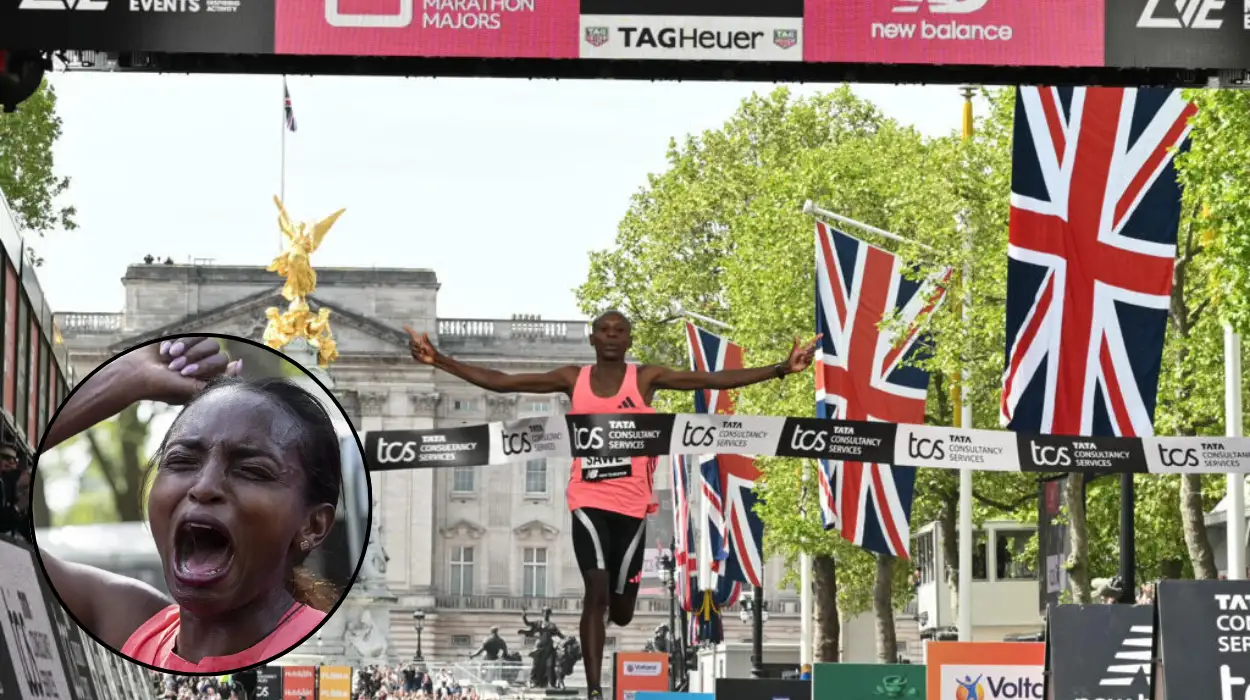
- Tigst Assefa broke the women’s marathon world record at the 2025 London Marathon, winning in 2hr 15min 41sec.
- The Ethiopian runner beat her previous record by nine seconds, improving on the mark she set at the same course last year.
- Assefa pulled away in the closing stages after a three-way battle with Kenya’s Hellen Obiri and Joyciline Jepkosgei.
- Hellen Obiri finished second in a personal best of 2:15:53, while Jepkosgei came third.
- Assefa said she was “very happy” to break the record and win in London for a second time.
- She credited hard training and a fast opening five kilometres for her success.
- Assefa said the 2028 Los Angeles Olympics are in her sights, but plans are still to be decided.
How did Tigst Assefa win the race?
London (Britain Today News) April 28, 2026 – Tigst Assefa’s latest triumph at the London Marathon underlined her status as one of the finest distance runners of her generation, as she defended her crown and set a new women’s world record on the same course where she had already made history a year earlier.
The Ethiopian star crossed the line in 2hr 15min 41sec after a gripping contest that remained competitive deep into the race, with Kenyan runners Hellen Obiri and Joyciline Jepkosgei keeping the pressure on until the final stages. Her victory was not simply a repeat title defence; it was a performance that shaved nine seconds off the previous record she established at last year’s event.
The race unfolded with a strong pace from the start, and the opening kilometres proved decisive in shaping the final outcome. Assefa later explained that once the early speed settled in, she realised a record was possible because she still felt strong after the first five kilometres. That controlled aggression allowed her to respond when the race intensified and ultimately separate herself from the Kenyan pair.
What happened in the battle behind her?
The women’s race became a three-way duel as Assefa, Obiri and Jepkosgei moved together for much of the contest. Obiri, a two-time former world 5,000m champion and Paris Olympics bronze medallist, produced an excellent run of her own and finished second in 2:15:53, which was a personal best. Jepkosgei followed in third after staying in contention through the closing stages.
That finishing order reflected both the quality of the field and the sustained pace imposed by the front-runners. The margins were slim, but Assefa’s final push proved enough to turn a closely fought championship race into another world-record performance. For Obiri, the personal best added further weight to the significance of the contest, even in defeat.
What did Assefa say after winning?
As reported in London, Assefa told reporters after the race that she was delighted to win in the British capital for a second time and equally pleased to have broken the world record again.
“I’m very happy to have broken the record and to have won in London for a second time. It means a lot to me,”
She also rejected the idea that there was any mystery behind the achievement, stressing that the result came from preparation and commitment rather than chance.
“There’s no secret to my success. I’ve trained hard and because of all the hard work I’ve put in, I’ve achieved this level of success,”
she said. Her comments framed the win as the product of a long training cycle and a race plan executed with precision.
Why was the early pace important?
The opening five kilometres played a major role in the record attempt because the pace was high from the outset, yet Assefa still felt comfortable enough to stay composed. That combination of speed and control is often what separates world-record performances from ordinary wins, because it allows a runner to stay efficient while the field begins to stretch.
Assefa’s ability to sense the race developing in her favour before the halfway point gave her the confidence to continue pressing. In endurance racing, that kind of judgement is often decisive: athletes must balance ambition with restraint, and Assefa appeared to get that balance exactly right. Her own assessment suggested she knew relatively early that the record was within reach.
What comes next for Assefa?
Assefa has already turned part of her attention towards the 2028 Los Angeles Olympics, although she said the long-term plan remains undecided. That cautious approach reflects the reality of elite marathon preparation, where major championship targets are often mapped out years ahead but can shift depending on form, fitness and race schedules.
For now, the world-record performance in London strengthens her position heading into the next phase of her career. Winning a major marathon and breaking a world record in the same race gives her both momentum and credibility as one of the standout names in global distance running. It also adds another landmark to a career already defined by rapid progress and major championship success.
Why does this matter?
This result matters because world records in the marathon are exceptionally hard to improve, and even small gains can take a runner into rare territory. Assefa’s nine-second improvement may appear modest on paper, but in elite marathon racing it represents a significant breakthrough.
It also underlines the continuing strength of women’s marathon running, where the contest at the top is increasingly shaped by deep fields and narrow margins. The fact that Obiri also posted a personal best while finishing second shows how competitive the race was from start to finish. In that sense, Assefa’s win was both an individual milestone and part of a wider pattern of progress in the event.
How was the record set?
The race was decided by sustained speed, disciplined pacing and a strong finish in the closing stages. Assefa held her form better than her rivals when the race began to bite, which allowed her to move clear and secure the record.
Her finishing time of 2:15:41 is now the benchmark from that London course and adds to her growing list of major achievements. The combination of title defence and world-record improvement made the victory especially significant, because it showed that she could not only win under pressure but also raise the standard in the process.