Key Points
- The International Olympic Committee (IOC) has reintroduced gender testing via one-time SRY gene screening using saliva, cheek swab, or blood sample to determine eligibility for female categories.
- From the 2028 Los Angeles Games, Olympic women’s sports will be limited to biological females, excluding transgender women and athletes with differences in sexual development (DSD).
- This marks a major policy shift, abandoning the 2021 framework that allowed individual sports federations to set their own rules.
- IOC President Kirsty Coventry stated the policy is science-based, led by medical experts, ensuring fairness, equality, and safety in competition.
- Coventry emphasised: “At the Olympic Games even the smallest margins can be the difference between victory and defeat. So it is absolutely clear that it would not be fair for biological males to compete in the female category. In addition, in some sports it would simply not be safe”.
- The policy aligns with US President Donald Trump’s executive order banning transgender athletes from women’s sports, avoiding potential conflict ahead of the LA Games.
- World Athletics welcomed the move, with a spokesperson saying: “We have led the way in protecting women’s sport over the last decade… This means that gender cannot trump biology. A consistent approach across all sport has to be a good thing”.
- Gender testing was previously used from 1968 to 1996 Olympics but scrapped due to scientific criticism.
- Potential opposition targets DSD athletes; the British Journal of Sports Medicine noted “no scientific data of acceptable quality regarding sport performance advantage of people with DSDs possessing an SRY gene”.
- The policy follows the 2024 Paris Olympics boxing gender row involving Imane Khelif (Algeria) and Lin Yu-ting (Taiwan), who won gold after IOC overruled IBA exclusion.
- Caster Semenya, South African two-time Olympic 800m champion with XY chromosomes, exemplifies DSD cases.
- Lin Yu-ting has been cleared by World Boxing for female events leading to 2028.
London (Britain Today News) March 26, 2026 – The International Olympic Committee (IOC), In a landmark decision, the IOC announced the reintroduction of gender testing to restrict women’s Olympic events to biological females starting from the 2028 Los Angeles Games, effectively banning transgender women from competing.
- Key Points
- Why Did the IOC Reverse Its 2021 Policy?
- What Does IOC President Kirsty Coventry Say About Fairness and Safety?
- How Will Gender Testing Work in Practice?
- What Is the Link to Donald Trump’s Executive Order?
- How Has World Athletics Responded to the IOC Ban?
- Who Are the DSD Athletes Affected and Is There Scientific Debate?
- What Role Did the 2024 Paris Boxing Controversy Play?
- Will There Be Legal or Ethical Challenges Ahead?
The policy mandates a one-time SRY gene screening—conducted via saliva sample, cheek swab, or blood test—to verify eligibility for any female category event at the Olympics or other IOC competitions, including individual and team sports. As per the IOC’s official statement,
“Eligibility for any female category event at the Olympic Games or any other IOC event, including individual and team sports, is now limited to biological females, determined on the basis of a one-time SRY gene screening”.
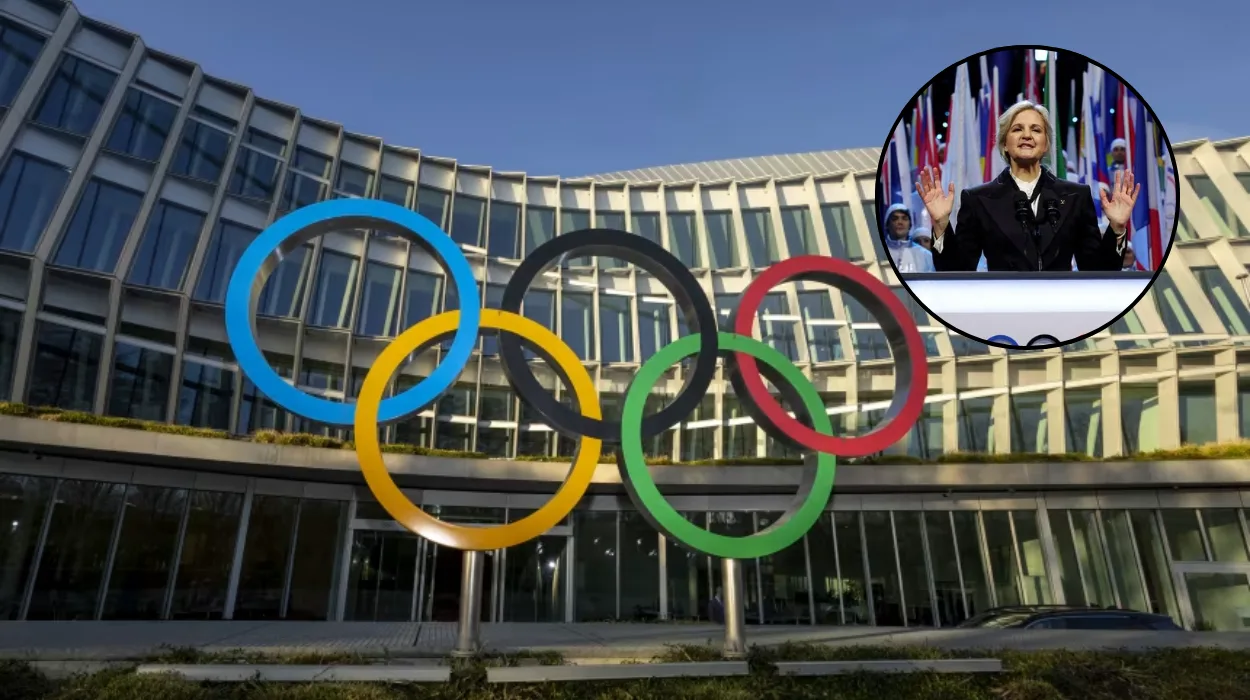
IOC President Kirsty Coventry, the first female to lead the organisation, spearheaded the initiative.
“The policy we have announced is based on science and has been led by medical experts,”
Coventry said during the announcement. In a subsequent press conference, she elaborated:
“I do feel that this policy is a policy that is supporting equality and fairness and the protection of the safety on the field of play”.
Why Did the IOC Reverse Its 2021 Policy?
The IOC’s move scraps the 2021 framework, which devolved eligibility decisions to individual sports federations, leading to inconsistent rules across disciplines. Some federations, like those in swimming, athletics, cycling, and rowing, had already imposed bans on transgender women, while others permitted participation if testosterone levels were suppressed via medication.
As reported by staff writers at The New York Times, this shift followed extensive board discussions and speculation under Coventry’s leadership since her election last year. Previously, under the 2021 rules, only a handful of openly transgender athletes had competed, but controversies mounted.
Coventry had signalled change earlier; in December 2025, she told Reuters that a decision on gender eligibility would come early 2026 after forming a working group to protect the female category.
What Does IOC President Kirsty Coventry Say About Fairness and Safety?
Coventry has consistently prioritised science and athlete welfare.
“At the Olympic Games even the smallest margins can be the difference between victory and defeat. So it is absolutely clear that it would not be fair for biological males to compete in the female category. In addition, in some sports it would simply not be safe,”
she stated firmly.
In a video released with the policy, Coventry, a two-time Olympic swimming champion, asserted the guidelines were “founded on science” and in “the best interests of athletes”. As covered by USA Today, she emphasised equality:
“This policy is supporting equality and fairness”.
Her stance echoes earlier comments to The Guardian in June 2025, where she vowed a “scientific approach” to safeguard women’s categories amid “overwhelming support” from IOC members.
How Will Gender Testing Work in Practice?
Testing involves a straightforward one-time procedure: saliva, cheek swab, or blood sample to detect the SRY gene, a marker on the Y chromosome indicating male biology. The policy applies universally across all Olympic sports from 2028 and is not retroactive, as Coventry confirmed:
“We will not be making any retrospective changes”.
Historical precedent exists; gender testing debuted at the 1968 Mexico City Olympics and continued until the 1996 Atlanta Games, when it was abandoned amid scientific backlash over inaccuracies and ethics. The new iteration claims to address those flaws through advanced genetics.
What Is the Link to Donald Trump’s Executive Order?
The timing averts friction with US President Donald Trump, who upon inauguration issued an executive order banning transgender athletes from women’s sports. As Politico reported, the order directs fraud probes into transgender women seeking US visas for women’s events, including the LA Olympics.
White House officials hailed the IOC alignment, noting US intent to leverage authority for
“safe sports for women on U.S. soil”.
CNN described it as the policy
“aligning with… Trump’s executive order”
ahead of the American-hosted Games.
How Has World Athletics Responded to the IOC Ban?
World Athletics, a pioneer in protections, praised the uniformity.
“We have led the way in protecting women’s sport over the last decade,”
a spokesperson told reporters.
“Attracting and retaining more girls and women into sport requires a fair and level playing field where there is no biological glass ceiling. This means that gender cannot trump biology. A consistent approach across all sport has to be a good thing”.
The body banned transgender women from elite female events post-male puberty in 2023, as ESPN covered, citing the
“overarching need to protect the female category”.
Who Are the DSD Athletes Affected and Is There Scientific Debate?
The policy impacts those with differences in sexual development (DSD), where hormones, genes, and organs mix male and female traits. Caster Semenya, the South African two-time Olympic 800m champion with XY chromosomes, is the most prominent example.
Opposition looms; this month’s British Journal of Sports Medicine article stated:
“no scientific data of acceptable quality regarding sport performance advantage of people with DSDs possessing an SRY gene. Evidence regarding their athletic performance is extremely limited and problematic”.
A PMC study criticised similar World Athletics rules as “negative, disproportionate and unjust” for DSD females.
What Role Did the 2024 Paris Boxing Controversy Play?
The policy responds to the women’s boxing uproar at Paris 2024, where Algerian Imane Khelif and Taiwan’s Lin Yu-ting won gold despite failing International Boxing Association (IBA) eligibility tests in 2023. The IOC deemed the IBA decision “sudden and arbitrary,” allowing their participation.
Lin has since gained clearance from World Boxing—the 2028 overseer—for female events. The episode amplified calls for standardised verification.
Will There Be Legal or Ethical Challenges Ahead?
Critics anticipate pushback, particularly on DSD inclusions, with human rights groups potentially arguing discrimination. Coventry stressed universal sports access as a “human right” at recreational levels but prioritised elite fairness.
The IOC insists no past results change, focusing forward. As Yahoo Sports noted, the ban starts 2028 and binds all future events.