Key Points
- The Spanish prime minister, Pedro Sánchez, has denied that his country’s authorities assisted in the mass crossing of migrants to Ceuta, Spain. Moroccan authorities were not responsible for orchestrating the mass crossing of migrants to Ceuta, Spain, according to Spanish Prime Minister Pedro Sánchez.
- No one, not even Morocco’s diplomatic service or the European Commission, has been able to offer proof of Morocco’s intent and actions in the incident, Sánchez told the Spanish parliament.
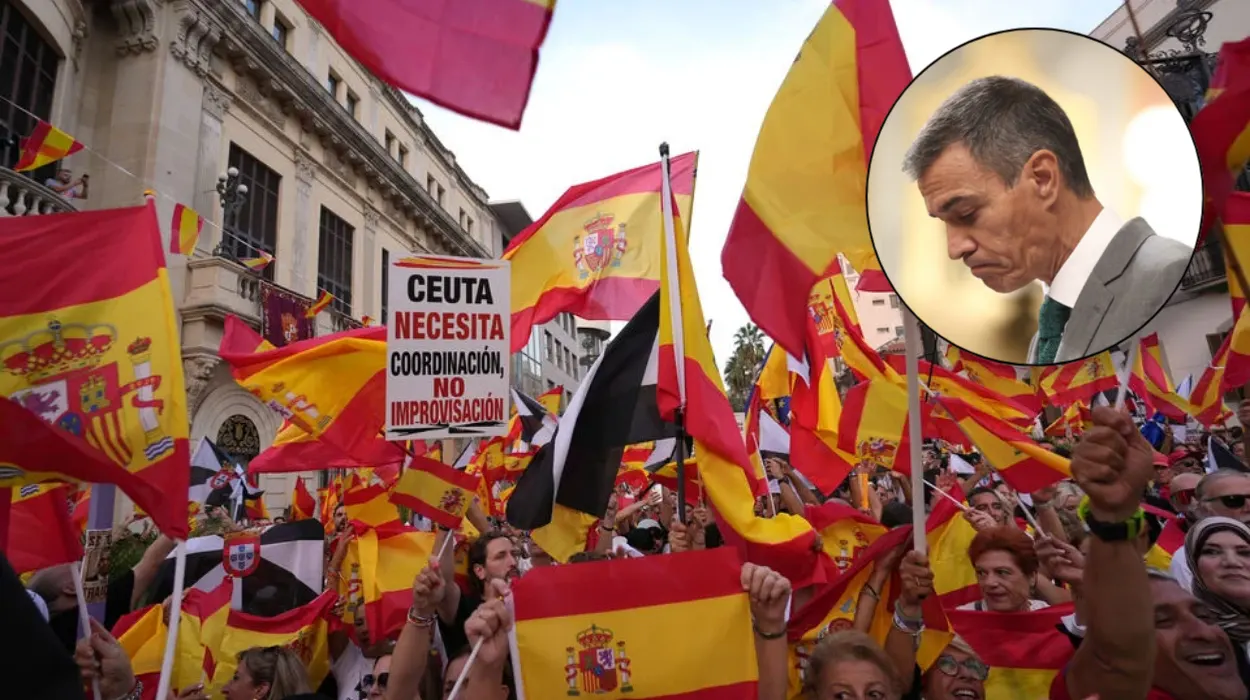
- A day before Sánchez’s parliamentary speech, tens of thousands of Spaniards took to the streets against the crisis and for his resignation in many cities across the country.
- In late July, some 72,000 migrants swam and scrambled and charged into Ceuta, a place that had a population of only 84,000.
- There are still around 5,000 migrants, including 1,200 children, in Ceuta, weeks after the first crossing, national government statistics show.
- According to Sánchez, 141 people drowned trying to reach Ceuta, but officials do not explain how this number was arrived at.
- Sánchez admitted Morocco’s Gendarmerie opened up the border for 10 hours on 30 July, the day on which the maximum number of arrivals took place.
- Spain has called back the ambassador of Morocco to its Madrid capital over two Moroccan ministers’ remarks regarding sovereignty of Ceuta and Melilla. Spain has recalled Morocco’s ambassador from Madrid due to two Moroccan ministers’ comments on the issue of Ceuta and Melilla sovereignty.
- The Spanish government has promised to publish official reports on the breach of the border, but hasn’t provided a timeframe for that.
Ceuta (Britain Today News) September 03, 2026 — Spain’s Prime Minister has rejected suggestions that Moroccan authorities helped orchestrate the deadly mass crossing of migrants from Morocco into the Spanish exclave of Ceuta, as pressure grows over his handling of the crisis. Addressing parliament in Madrid, Pedro Sánchez insisted there was no proof of Moroccan state involvement in the incident, even as he acknowledged that Moroccan border guards had, for a period, allowed people to cross unimpeded.
- Key Points
- What Did Pedro Sánchez Say About Morocco’s Role in the Ceuta Crisis?
- What Sparked the Mass Crossing Into Ceuta?
- How Many Migrants Crossed the Border, and How Many Remain?
- How Many People Died Attempting to Reach Ceuta?
- What Do Reports Say About Moroccan Security Forces’ Conduct?
- Why Are Thousands of Spaniards Protesting Against the Government?
- What Diplomatic Tensions Have Emerged Between Spain and Morocco?
- Why Do Ceuta and Melilla Matter to Spain and the European Union?
- What Reports Has the Spanish Government Promised to Release?
- What Happens Next for Ceuta and Spanish-Moroccan Relations?
What Did Pedro Sánchez Say About Morocco’s Role in the Ceuta Crisis?
Speaking before lawmakers, Sánchez was unequivocal in dismissing claims that Rabat had a hand in engineering the crisis.
“I can assure you that no institution — neither the diplomatic service, nor the European Commission, nor any international body — has provided the Spanish government with solid evidence that Morocco planned or carried out the incident. None.”
Sánchez told the parliament in Madrid.
The Prime Minister’s comments came amid mounting speculation, much of it fuelled by leaked security assessments and opposition criticism, that Moroccan authorities had deliberately eased border controls to pressure Madrid over unrelated diplomatic disputes. Sánchez’s remarks were intended to draw a firm line under that narrative, even as he conceded that Moroccan officers had, for several hours, failed to prevent crossings.
What Sparked the Mass Crossing Into Ceuta?
According to the Spanish government, the extraordinary scenes at the border were fuelled by an online social media campaign that encouraged migrants, many of them young Moroccans, to attempt the crossing en masse. The exact origins of the campaign remain unclear, and the government has not identified who was behind it.
What is clear is the scale of the response it triggered. In late July, an estimated 72,000 migrants swam, scrambled over fences and charged into Ceuta, a Spanish exclave on the North African coast that is home to just 84,000 residents. The sheer number of arrivals in such a short period overwhelmed local authorities, emergency services and reception facilities, and thrust the tiny territory into the international spotlight.
How Many Migrants Crossed the Border, and How Many Remain?
Most of the migrants who entered Ceuta in late July either returned to Morocco voluntarily or were escorted back across the border within days of the initial surge. However, according to figures provided by the national government, around 5,000 migrants remain in the city several weeks on, among them 1,200 children.
Notably, there is a discrepancy between national and local figures. Ceuta’s local government has cited a higher number of migrants still present in the territory than the figure supplied by Madrid, though neither administration has published a fully reconciled breakdown of arrivals, departures and current residents.
How Many People Died Attempting to Reach Ceuta?
Sánchez told parliament that 141 people died while attempting to reach Ceuta during the crisis. This figure represents one of the highest death tolls recorded in a single migration event at Spain’s African borders in recent memory.
However, questions remain over the transparency of that figure. Neither Sánchez’s office nor Spain’s interior ministry has explained the methodology used to arrive at the total of 141 deaths, leaving campaigners, journalists and opposition politicians to question how comprehensive the count actually is, and whether it captures all those who lost their lives at sea or along the coastline.
What Do Reports Say About Moroccan Security Forces’ Conduct?
Reports circulating in Spain this week highlighted the alleged permissiveness of Moroccan security forces during the mass crossing, prompting fresh scrutiny of Rabat’s role in the crisis. Spanish officials, however, denied that any official document had directly apportioned blame to the Moroccan government.
Despite those denials, Sánchez himself went further than previous government statements on Thursday, telling parliament that for a 10-hour window on 30 July, when the number of arrivals peaked, Morocco’s Gendarmerie police “allowed the border to be crossed” in Ceuta. This acknowledgement marked one of the clearest admissions yet from the Spanish government that Moroccan border enforcement had, at least temporarily, broken down or been deliberately relaxed, even as Sánchez maintained there was no evidence of a coordinated plan by the Moroccan state.
Why Are Thousands of Spaniards Protesting Against the Government?
Public anger over the crisis has been building steadily. A day before Sánchez addressed parliament, tens of thousands of Spaniards took to the streets in cities across the country to protest against the ongoing humanitarian situation in Ceuta. Demonstrators demanded concrete solutions to the crisis and, in many cases, called explicitly for Sánchez’s resignation.
The scale of the protests underlines the extent to which the crisis has become a domestic political flashpoint, with critics accusing the government of being slow to respond, opaque about its handling of the situation, and unable to adequately explain the death toll or the current status of the thousands of migrants still in Ceuta.
What Diplomatic Tensions Have Emerged Between Spain and Morocco?
Throughout the crisis, the Spanish government has largely avoided directly criticising Morocco, choosing instead to frame the mass crossing as the result of an online campaign rather than a deliberate act by Rabat. However, that restraint did not extend to comments made by two Moroccan ministers who publicly questioned the sovereignty of Ceuta and Melilla, Spain’s other North African territory.
Sánchez condemned those remarks outright, and confirmed that his government had summoned Morocco’s ambassador in Madrid over the comments.
“My government has summoned Morocco’s ambassador in Madrid over the comments.”
Sánchez said, signalling that while Madrid was reluctant to blame Rabat for the border crisis itself, it would not tolerate challenges to Spanish sovereignty over the two territories.
Why Do Ceuta and Melilla Matter to Spain and the European Union?
Ceuta and Melilla hold particular strategic and symbolic significance, not just for Spain but for the wider European Union. The two exclaves represent the EU’s only land borders with Africa, making them a critical, and often contentious, frontier in Europe’s approach to migration.
Their unique geographic position means that any instability at these borders has ramifications far beyond Spanish domestic politics, drawing in EU institutions, shaping bilateral relations between Madrid and Rabat, and repeatedly placing the two territories at the centre of debates over European migration policy and North African diplomacy.
Explore More about the World:
Galliano Won’t Be Recognised at the 2027 Met
Germany’s Trident Funding Talks: Can Money Fix Berlin’s Nuclear Dilemma?
What Reports Has the Spanish Government Promised to Release?
In an effort to address mounting public and political pressure, Sánchez told parliament that his government would release key reports relating to the border breach, which is being described as the deadliest incident of its kind in living memory.
However, the government has so far offered little clarity on the practical details of that pledge. No date has been given for when the reports will be made public, and officials have not specified what information they will contain, leaving open questions about the level of detail the public and opposition parties can expect once the documents are eventually released.
What Happens Next for Ceuta and Spanish-Moroccan Relations?
With protests continuing to place pressure on the government, unanswered questions over the death toll, and diplomatic tensions simmering following the summoning of Morocco’s ambassador, the situation in Ceuta remains far from resolved. Around 5,000 migrants, including 1,200 children, are still in the city, and the promised government reports have yet to materialise.
For now, Sánchez appears intent on walking a careful line: acknowledging lapses by Moroccan border forces during the crisis, while stopping short of accusing Rabat of orchestrating the crossing outright. How that balance holds, both domestically and diplomatically, is likely to shape the next phase of the crisis, as scrutiny over the government’s handling of events in Ceuta shows no sign of easing.