Key Points
- The British Horseracing Authority (BHA) has rescheduled three of four Wednesday race meetings originally postponed due to an intense heatwave forecast across much of the United Kingdom.
- Fixtures at Worcester, Salisbury, Kempton and Ffos Las were initially called off on Monday morning in the interests of safety for horses and human participants.
- The Ffos Las card has been rearranged for Monday 29 June, with Kempton’s meeting now set to take place on the same Monday evening.
- Salisbury’s raceday has been rescheduled for Tuesday 30 June, while Worcester’s fixture currently has no new date confirmed.
- The BHA has also brought forward fixtures at Newmarket and Nottingham on Thursday so that racing concludes before the hottest part of the day.
- The two–mile Dereham Handicap, originally scheduled for Newmarket’s Thursday card, has been moved to be run at Newmarket on Friday instead.
- Under the BHA’s hot weather policy, any racecourse located in a red warning zone must abandon its fixture, and horses must not travel from or through areas under red warnings.
- Carlisle’s Wednesday meeting in Cumbria, featuring the historic Carlisle Bell and Cumberland Plate, remains scheduled to go ahead under ongoing monitoring of conditions.
- Trainer Alex Hales, who was due to run two horses at Worcester on Wednesday, has publicly backed the decision to cancel the meeting on welfare grounds.
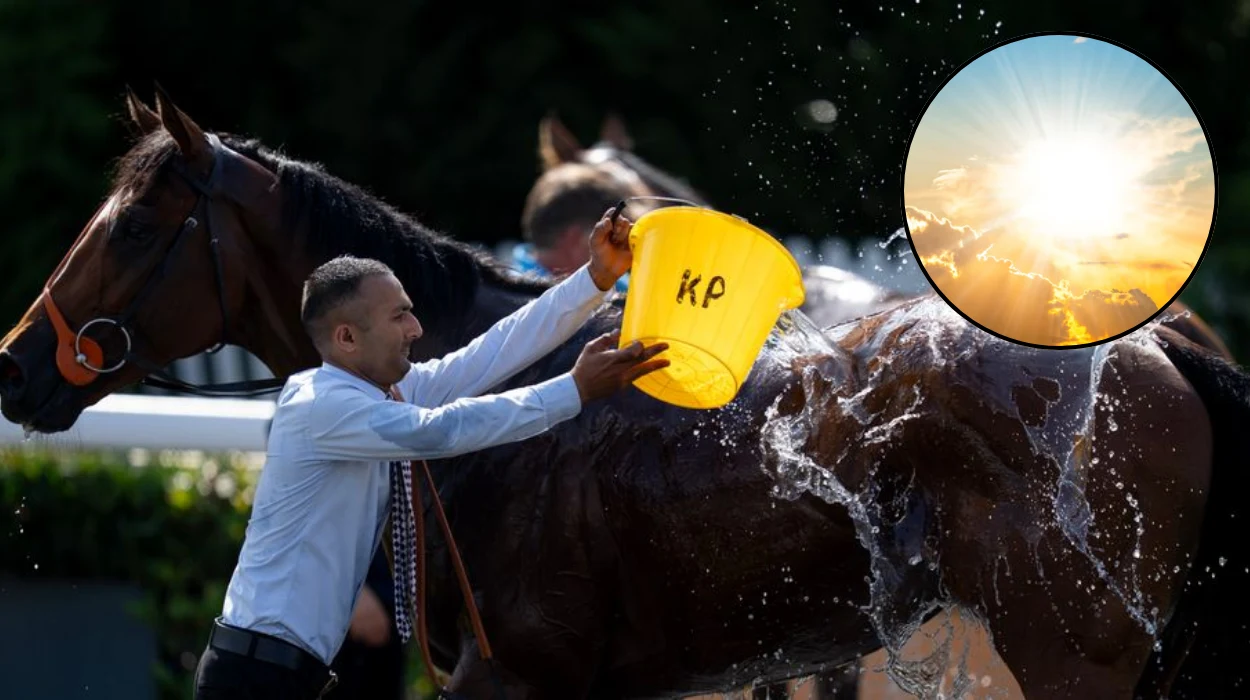
- Hales underlined that trainers are working horses earlier, using lorries with fans, ensuring hydration and electrolytes, and ready to cool horses rapidly with hosepipes if they show signs of overheating.
- He praised the BHA and the wider racing industry for what he described as a sensible, welfare–first approach to racing in extreme heat.
London (Britain Today News) – June 22, 2026 – British racing authorities have moved swiftly to reshape this week’s programme, rescheduling fixtures and advancing race times as the United Kingdom braces for an intense heatwave, with equine and human welfare placed at the heart of decision–making.
- Key Points
- Why has British racing reshuffled meetings for the heatwave?
- What changes has the BHA made to specific fixtures?
- How does the BHA’s hot weather policy operate?
- How are Newmarket and Nottingham fixtures being adjusted?
- Why is Carlisle’s meeting still going ahead?
- What has trainer Alex Hales said about the decisions?
- How are trainers managing horses in extreme heat?
- Why is the BHA’s approach being described as sensible?
- What does this mean for participants and fans?
- How does this reflect wider concerns about heat and racing?
Why has British racing reshuffled meetings for the heatwave?
Racing administrators have reacted to warnings of exceptionally high temperatures across parts of Britain this week by postponing and reshaping fixtures in line with the British Horseracing Authority’s hot weather policy. The BHA confirmed that Monday morning inspections led to the immediate calling off of Wednesday’s meetings at Worcester, Salisbury, Kempton and Ffos Las, explicitly citing the safety of horses and participants as the decisive factor in abandoning the original schedule.
Officials then moved quickly to ensure that as many fixtures as possible could still be staged at safer times and on safer days while preserving the integrity of the racing programme. Later on Monday, they announced that Ffos Las would be re–run on Monday 29 June and that Kempton’s card would be staged on the Monday evening, with Salisbury rescheduled for Tuesday 30 June, although Worcester’s fixture remains without a replacement date at this stage.
What changes has the BHA made to specific fixtures?
The reshaping of the midweek schedule reflects a fixture–by–fixture assessment of risk under the BHA’s hot weather rules. In practical terms, the governing body has opted to move three of the four abandoned fixtures to later in the same week, shifting them away from the most dangerous heat window predicted for Wednesday.
The Ffos Las meeting, originally set for the midweek slot, will now take place on Monday 29 June, providing a new date while allowing time for conditions to stabilise. Kempton’s card has been repositioned to the same Monday evening, which should allow racing to be staged in cooler temperatures as the day begins to tail off. Salisbury has been moved to Tuesday 30 June, ensuring that its fixture is retained within the racing calendar but away from the peak of the heatwave.
Worcester stands as the outlier: its Wednesday meeting has been abandoned without a new date being confirmed, underlining that the BHA is prepared to accept outright cancellations where appropriate rather than forcing fixtures into the schedule at any cost. This outcome reflects the balance between sporting continuity and the overriding welfare considerations at the core of the BHA’s policy.
How does the BHA’s hot weather policy operate?
The BHA’s hot weather policy is designed to provide clear, objective triggers for abandoning or adapting fixtures when conditions become hazardous. The policy states that, where racecourses fall within a red warning zone for heat, the associated fixture must be abandoned. This approach removes discretionary ambiguity and aligns racing decisions with broader meteorological and public–safety guidance.
In addition to racecourse–specific warnings, the policy explicitly bans horses from being transported from or through regions under red heat warnings. This clause recognises that the journey to a racecourse can be as stressful and risky as the race itself, particularly when horses are travelling long distances in confined horseboxes or lorries. By restricting movement through these zones, the BHA aims to reduce the risk of heat stress and dehydration before horses even arrive on course.
The policy’s implementation this week demonstrates how it functions in practice. With large parts of the United Kingdom predicted to experience extreme temperatures, the BHA has judged that Wednesday’s original programme, particularly in the affected areas, cannot safely proceed in its initial form, leading to the wave of postponements and rescheduling.
How are Newmarket and Nottingham fixtures being adjusted?
Alongside the abandonment and rescheduling of Wednesday’s meetings, the BHA has also introduced time–based modifications for later in the week. Fixtures at Newmarket and Nottingham on Thursday have been brought forward, with start times adjusted so that all racing is completed before the hottest part of the day.
By shifting race times earlier, the BHA aims to reduce heat exposure for horses, jockeys, stable staff and racegoers. This mirrors similar approaches taken in other hot–weather jurisdictions, where morning cards or early–afternoon finishes are used to minimise risk. The decision also reflects a nuanced use of the hot weather policy: rather than abandoning all fixtures in regions facing high temperatures, officials are differentiating between manageable conditions and those considered unacceptably dangerous.
As part of this recalibration, the two–mile Dereham Handicap, originally scheduled as part of Newmarket’s Thursday programme, has been reassigned to Friday at the same course. This switch allows Thursday’s card to be trimmed and completed more rapidly, reducing the time participants spend trackside during the hottest window.
Why is Carlisle’s meeting still going ahead?
Despite the widespread adjustments, the BHA has confirmed that Carlisle’s meeting in Cumbria is still scheduled to take place on Wednesday. This card is particularly notable as it features two historic events: the Carlisle Bell and the Cumberland Plate, both long–standing fixtures in the British racing calendar.
The decision to proceed at Carlisle suggests that, based on current forecasts and monitoring, conditions in that region do not meet the threshold for abandonment under the hot weather policy. It also illustrates the regional variation in the heatwave’s impact, with some areas facing far more severe temperatures than others. However, the continuation of the Carlisle card is contingent on ongoing assessment, and the BHA has signalled that all fixtures remain under review should conditions deteriorate.
For participants, the confirmation offers some continuity and underscores that not all racing is suspended; rather, the sport is being selectively managed in line with localised risk. The Carlisle Bell and Cumberland Plate thus remain on the programme, maintaining a sense of tradition even amid an unusual weather–driven reshaping of the week’s schedule.
What has trainer Alex Hales said about the decisions?
Trainer Alex Hales, who had been due to run two horses at Worcester on Wednesday, has voiced firm support for the decision to call off the meeting. Speaking about the cancellations and broader heat–management measures, Hales emphasised that animal welfare must always take precedence over racing schedules and short–term sporting considerations.
Hales explained that, in his own yard, staff are adjusting their routines to mitigate the heat’s impact on horses. They are working their string earlier in the day, ensuring the main pieces of exercise are completed before the sun is fully up and temperatures climb. He highlighted the use of modern horseboxes and lorries equipped with fans to keep temperatures down during transport, underlining that practical steps can significantly reduce risk when conditions are marginal.
“We just have to be sensible. We try to work the horses earlier and get the main bits of work done before the sun really comes up and, with travelling, the lorries have fans in them now to keep the temperatures down,”
he said. He added that if forecasts prove accurate and temperatures rise to the predicted highs, maintaining hydration and electrolyte levels becomes critical, remarking that
“keeping the horses hydrated with plenty of electrolytes as well is very important.”
How are trainers managing horses in extreme heat?
Hales offered further insight into day–to–day management techniques being used by trainers to protect horses from heat stress. He noted that yards are “constantly monitoring the horses” for early signs of overheating, such as increased respiratory rate, lethargy or distress. Should any horse begin to show such signs, staff are ready to intervene immediately.
“We are constantly monitoring the horses and if they are showing signs of getting too hot we would pull them out and get them under the hosepipe and cool them off that way,”
he said. Rapid cooling with water, combined with shade and rest, is a recognised method for helping horses recover from heat exposure and preventing more serious complications such as heatstroke.
These measures complement the structural changes imposed by the BHA, forming a two–tiered response to the heatwave. On the one hand, the governing body is reshaping the fixture list to avoid the worst conditions; on the other, trainers are adapting their own training and transport regimes to further reduce risk. Together, these steps reflect an industry–wide recognition that climate and weather extremes require proactive management.
Explore More about Sports:
Hrgovic Claims Itauma Was “Handed Everything” in Brutal Assessment
Malverns Classic Cycling Festival Returns This August
Why is the BHA’s approach being described as sensible?
Reflecting on the week’s decisions, Hales expressed confidence in the BHA’s handling of the situation.
“But I think the BHA have been very sensible and the whole industry is sensible with it,”
he said, signalling that there is substantial support within the training ranks for the policy–driven approach.
From his perspective, the willingness to cancel or reschedule fixtures, even at short notice, demonstrates that animal welfare is being treated as an overriding priority rather than an afterthought. The combination of clear rules, such as the red warning–zone abandonment requirement, and flexible, targeted interventions, such as bringing forward race times, suggests a framework capable of responding to both immediate crises and longer–term climatic shifts.
Hales’ remarks also highlight the collaborative nature of the response. While the BHA sets policy and makes formal decisions about fixtures, trainers, jockeys and racecourses all contribute on the ground by implementing best practice for horse care, hydration and cooling. The comments thus serve both as an endorsement of the governing body’s actions and as a reminder that successful heat–management strategies depend on collective effort.
What does this mean for participants and fans?
For owners, trainers and jockeys, the week’s upheaval means a rapid reshaping of logistics. Horses entered at Ffos Las, Kempton and Salisbury must now be prepared for new dates and times, while those originally declared for Worcester face a more uncertain outlook without a replacement fixture on the immediate horizon. Plans for transport, staffing and race–day routines must all be recalibrated to align with the revised schedule.
Fans and racegoers, meanwhile, are being asked to adapt to new timings, particularly at Newmarket and Nottingham where fixtures are being brought forward to earlier in the day. Those intending to attend Carlisle will be watching forecasts closely, mindful that any escalation in heat warnings could still affect the historic midweek card. Nonetheless, the BHA’s swift communication of changes offers clarity ahead of time, minimising confusion even as the programme shifts.
Ultimately, the message from officials and trainers alike is that short–term disruption is preferable to risking the welfare of horses and people. The reshaped week of racing provides a live example of how a modern racing authority can apply structured policy to an emerging weather threat, striking a balance between safeguarding welfare and maintaining as much of the sporting calendar as prudently possible.
How does this reflect wider concerns about heat and racing?
The current heatwave and the BHA’s response form part of a broader conversation about how racing, and sport more generally, can adapt to more frequent and intense episodes of extreme weather. By codifying its hot weather policy and putting it into practice, the BHA is acknowledging that heat is not an occasional inconvenience but a material risk that must be systematically managed.
This week’s measures, from abandoning fixtures in red warning zones to banning horse transport through those areas and adjusting race times, may serve as a template for future events. Trainers like Hales, who are already re–timing work and enhancing transport conditions, are likely to embed such practices as standard operating procedures in hot spells. In turn, racecourses may invest further in cooling infrastructure, shade and other mitigations, recognising that such measures will be increasingly called upon.
While the immediate focus is on this week’s racing, the longer–term implication is that British racing is moving towards a more climate–aware model of operations. The emphasis on “being sensible”, to use Hales’ phrase, suggests a culture shift in which welfare–driven adaptations are regarded not as exceptional but as an integral part of how the sport conducts itself in a changing environment.