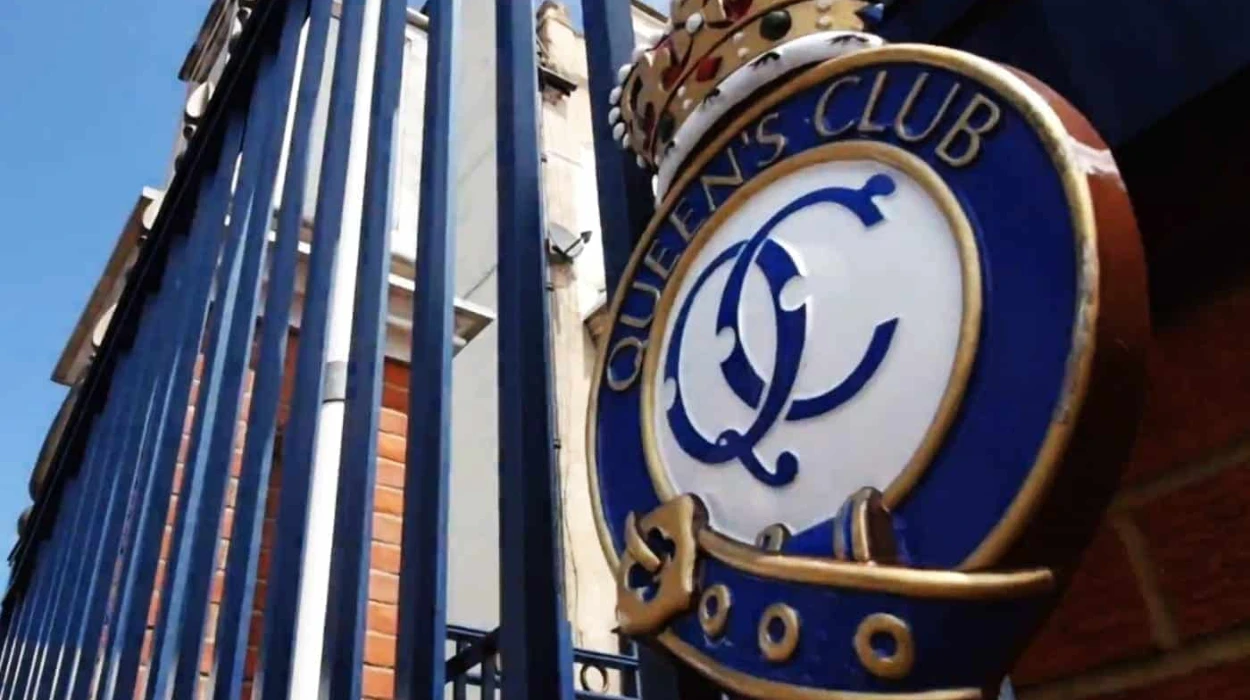
Queens tennis refers to the annual grass-court tournament at The Queen’s Club in London, officially branded as the HSBC Championships. It provides live scores, updated draws, daily fixtures, and match highlights for fans following the grass-court season.
What is Queens tennis?
Queens tennis is a major pre-Wimbledon grass-court event held at The Queen’s Club in West Kensington, London, and run by the Lawn Tennis Association. It is part of the professional ATP and WTA calendar and serves as a key benchmark for grass-court form.
The Queen’s Club itself is a private sporting club in Barons Court, West Kensington, London, and it has hosted the annual lawn tennis tournament for generations. The tournament is now known as the HSBC Championships for sponsorship reasons, while The Queen’s Club remains the host venue.
The event matters because grass-court tennis plays differently from clay and hard courts. The surface is faster, the ball stays lower, and serve placement, return quality, and first-strike tennis carry extra weight. Those traits make Queen’s a useful form guide for Wimbledon.
Why do fans follow Queen’s scores?
Fans follow Queen’s scores because the event sits at the center of the grass-court calendar, brings elite players to London, and often signals who is sharpest before Wimbledon. Live scoring also shows match momentum, set patterns, and upset potential in real time.
Live scores matter most in a tournament with short turnarounds and daily scheduling pressure. A player can win early in the week, recover quickly, and return again within 24 hours, so fans and media track results closely to monitor fatigue, form, and draw movement.
Queen’s also attracts strong attention from British tennis audiences because the tournament is in London and regularly features leading British players, top ATP names, and, in recent years, women’s events at WTA level. The LTA’s match centre presents scores, results, draws, and the daily order of play in one place.
How do live scores work?
Live scores at Queen’s update point by point during each match, showing games, sets, tiebreaks, and final results in a structured match centre. The official tournament pages also link to video highlights, results, and news updates.
A live scoring system tracks the basic units of tennis: points, games, sets, and match completion. For example, a scoreline of 6-4, 3-6, 7-6 indicates three sets, with the final set decided by a tiebreak. That format gives readers a compact record of how competitive a match was.
Official sources usually combine live scores with match summaries and highlight clips. The LTA page for Queen’s labels the section as the home for scores, results, draws, and the daily order of play, which makes it the main reference point for match-day coverage.
What draws are available?
The Queen’s draw shows the tournament bracket, including who plays whom, which round each player reaches, and how winners progress toward the final. The draw is the clearest way to read the event structure for singles and doubles.
A draw usually includes seeded players, unseeded players, qualifiers, and byes when the field size requires them. At the WTA 500 event at Queen’s in 2026, the singles draw was listed at 28 players and the doubles draw at 16 teams.
Draws are important because they reveal the path to the title. A top seed can face a dangerous unseeded opponent early, while lower-ranked players can reach later rounds if they exploit favorable matchups. Draw movement after each result is one of the main reasons fans return to the match centre throughout the week.
Explore More about Sports:
England v New Zealand Head to Head Stats and Records Updated
David Sullivan Profile, Business Empire & Career Highlights
How are fixtures scheduled?
Queen’s fixtures are scheduled as daily order-of-play lists that show which matches run on each court and in what sequence. The official match centre and tournament pages publish the schedule alongside results, so fans can track upcoming play and completed matches together.
The 2026 HSBC Championships ran between 6 and 21 June 2026 across the combined event window listed by the LTA and the host venue. That schedule reflects a two-week grass-court tournament structure at The Queen’s Club.
Fixture scheduling is shaped by court availability, match length, broadcast needs, and player recovery. Early rounds often contain multiple singles and doubles matches across the day, while later rounds narrow the field and create more focus on headline matches.
What highlights matter most?
Highlights at Queen’s focus on decisive moments such as big serves, break points, tiebreaks, upsets, and comeback wins. The official tournament coverage uses results updates and video clips to capture the most important match moments for fans who missed the live action.
Highlights are especially useful because grass-court matches often turn on short runs of points rather than long baseline exchanges. A single service break can decide a set, and a tight tiebreak can determine the entire match, so highlight packages help explain the scoreline quickly.
Recent Queen’s coverage has included comeback wins, seeded upsets, and doubles drama, which shows the event’s relevance beyond only title matches. The official channels have also highlighted major moments such as Serena Williams’ comeback doubles victory with Victoria Mboko and Emma Raducanu’s grass-court start.
What makes Queen’s historic?
Queen’s is historic because it has been played since 1889 and remains one of the most established grass-court events in tennis. It also carries prestige through its connection to Wimbledon and its record of champion players from several eras.
The tournament’s long history matters in tennis because continuity is rare in modern sports. Queen’s has adapted through sponsorship changes, changes in tour structure, and the expansion of women’s tennis at the venue, while keeping its identity as a London grass-court benchmark.
The host venue adds to the heritage. The Queen’s Club is known not only for tennis but also for its wider sporting history, and it remains a central home for elite grass-court competition in Britain.
Which players define Queens?
Queen’s has featured many of tennis’s biggest names, including John McEnroe, Lleyton Hewitt, Rafael Nadal, Andy Murray, Carlos Alcaraz, and Tatjana Maria among recent champions and headline players. These names show the event’s strong status on the calendar.
The tournament also supports British tennis visibility. The LTA has highlighted players such as Emma Raducanu and Katie Boulter in recent Queens coverage, showing how the event functions as a national showcase before Wimbledon.
The player list changes every year, but the competitive pattern stays stable. Queen’s attracts top-ranked players who want grass-court matches before Wimbledon, so the field typically combines established champions, rising talents, and local favorites.
How does the format work?
Queens tennis uses a professional tournament format with singles and doubles events, seeded players, direct entries, and rounds that progress from the opening draw to the final. The structure follows standard ATP and WTA competition rules on grass.
On the women’s side, the WTA overview for the 2026 HSBC Championships lists a 28-player singles draw and a 16-team doubles draw. That size is standard for a compact elite event and makes each round highly consequential.
On the men’s side, the host venue describes the tournament as an annual two-week event on the ATP and WTA tours, which makes it a combined grass-court showcase. That mixed-profile structure strengthens the event’s appeal for live scoring, fixtures, and highlight coverage.
How do fans use coverage?
Fans use Queen’s coverage to follow a match from the first serve to the final result, compare the draw after each round, and check the next day’s fixtures. The match centre and official updates make the event easy to track across devices and platforms.
A typical workflow is simple. A fan checks the draw to see the player path, watches the live score for in-match changes, and then uses highlights to review turning points after the final result is posted. That pattern supports both casual viewers and tennis followers who track rankings and form.
Why does it matter now?
Queen’s matters now because it remains one of the most important grass-court tournaments in Britain and a direct lead-in to Wimbledon. Its live scores, draws, fixtures, and highlights keep the event relevant throughout the summer tennis season.
The 2026 tournament window and official match centre show that Queen’s continues to operate as a major professional event with consistent fan demand. The addition of women’s top-level competition at the venue has also broadened the event’s reach and search interest.