Key Points
- Members of the House of Lords will debate the general principles of the Railways Bill at second reading on Tuesday 7 July.
- The bill will implement the government’s plan to nationalise the rail network through the creation of Great British Railways (GBR), a new publicly owned body.
- The legislation will also hand new powers to the Passengers’ Council and place a legal duty on the government to publish a long-term rail strategy and set freight targets.
- Lord Hendy of Richmond Hill, Minister for Rail and former chair of Network Rail, will open the debate and respond on behalf of the government.
- Ten peers spanning Labour, Conservative, Liberal Democrat, Green and Crossbench benches are expected to contribute, several with direct backgrounds in running Britain’s railways.
- Second reading is the stage at which the Lords debates a bill’s underlying principles rather than its detailed wording, with line-by-line scrutiny to follow later.
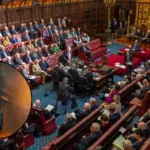
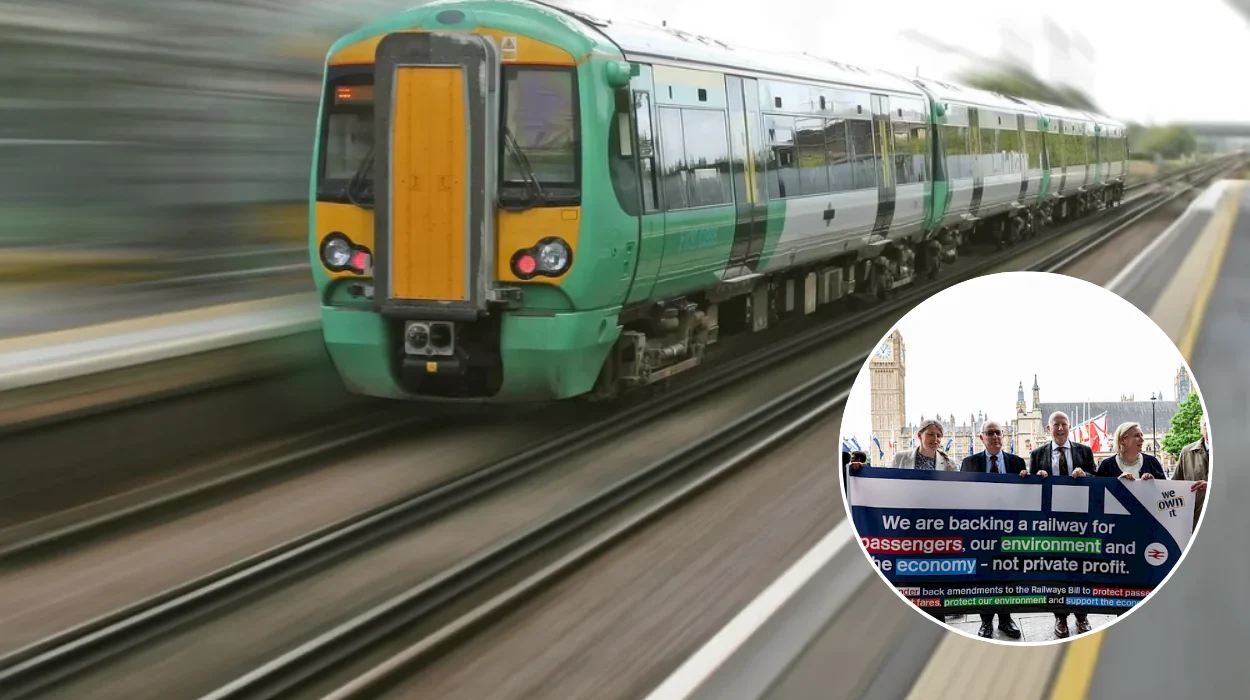
Westminster (Britain Today News) July 03, 2026 — Parliament’s second chamber will turn its attention to one of the government’s flagship transport reforms next week, when the House of Lords holds the second reading of the Railways Bill on Tuesday 7 July. The debate marks a significant step in the passage of legislation that will formally establish Great British Railways, the publicly owned body ministers say will bring the running of the rail network under a single organisation for the first time in decades.
- Key Points
- What is the Railways Bill and what will it do?
- What powers will Great British Railways have?
- When and how will the Lords debate the bill?
- What backgrounds and interests do the contributing peers bring to the debate?
- What issues are likely to come up during the debate?
- What would the Railways Bill mean for passengers and the freight industry?
- What is Great British Railways and why does its creation matter?
What is the Railways Bill and what will it do?
The Railways Bill is the legislative vehicle for the government’s plan to nationalise the rail network. At its core, the bill creates Great British Railways, a new public body intended to take responsibility for the management and operation of the railway. Beyond the headline nationalisation measure, the bill also confers additional powers on the Passengers’ Council, the body tasked with representing the interests of rail users, and places a statutory requirement on the government to publish a long-term strategy for the railway alongside specific targets for rail freight.
Why is the government pursuing rail nationalisation?
Ministers have framed the creation of Great British Railways as a response to years of fragmentation in the rail industry, which since privatisation in the 1990s has operated through a patchwork of private train operating companies, a separate infrastructure owner and multiple regulatory bodies. The government’s stated aim in bringing operations under one publicly owned organisation is to simplify accountability for the railway and to align infrastructure and train operations more closely, though the precise detail of how that alignment will work in practice is among the issues peers are expected to probe during the debate.
What powers will Great British Railways have?
Under the bill, Great British Railways would take on responsibility for the management and operation of the railway network, consolidating functions that have historically sat with Network Rail, the Department for Transport and individual train operators. The legislation also strengthens the position of the Passengers’ Council, giving it an enhanced role in scrutinising services on behalf of passengers, while the requirement to publish a long-term strategy is designed to give the industry, investors and passengers greater clarity on the government’s direction for the network over the coming years. The accompanying duty to set rail freight targets reflects concern, raised repeatedly in transport policy circles, that passenger priorities have historically overshadowed freight in rail planning.
When and how will the Lords debate the bill?
The second reading will take place in the House of Lords chamber on Tuesday 7 July. Second reading is the stage in a bill’s passage through Parliament at which members debate its general principles, rather than examining its individual clauses in detail. Peers use the opportunity to raise concerns, flag areas where they believe amendments will be needed later, and set out their overall support for or opposition to the legislation. Detailed, line-by-line scrutiny typically follows at committee stage, once the bill has cleared second reading.
Who will open the debate for the government?
Lord Hendy of Richmond Hill will move the bill and respond to the debate on behalf of the government. He serves as Minister for Rail at the Department for Transport and previously chaired Network Rail, giving him direct experience of the infrastructure body whose functions the bill will help reshape.
Which peers are expected to speak in the debate?
Ten further members of the House of Lords are listed as expected contributors, drawn from across the politics spectrum. They are:
- Lord Berkeley (Labour), vice president of the rail companies alliance ALLRAIL and former chair of the Rail Freight Group
- Lord Bradshaw (Liberal Democrats), former director of operations for British Rail
- Lord Faulkner of Worcester (Labour), chair of the Great Western Rail advisory board
- Lord Grayling (Conservative), former Transport Secretary, during whose tenure the government commissioned the Oakervee Review of HS2 and the Williams-Shapps Rail Review
- Baroness Grey-Thompson (Crossbench), former board member of Transport for London
- Baroness Jones of Moulsecoomb (Green), former green transport adviser to the Mayor of London
- Lord McLoughlin (Conservative), executive director of the XRAIL Group and former chair of Transport for the North
- Lord Moylan (Conservative), former deputy chair of Transport for London
- Lord Parkinson of Whitley Bay (Conservative), chair of the Heritage Railway Association
- Baroness Pidgeon (Liberal Democrats), former chair of the London Assembly Transport Committee
What backgrounds and interests do the contributing peers bring to the debate?
The list of expected speakers brings together peers with hands-on experience across almost every part of the rail sector. Lord Berkeley and Lord Bradshaw both have long-standing links to freight and operational sides of the industry, through ALLRAIL, the Rail Freight Group and British Rail respectively. Lord Faulkner of Worcester’s role advising Great Western Rail gives him a regional operator’s perspective, while Lord Parkinson of Whitley Bay’s chairmanship of the Heritage Railway Association brings a heritage and tourism angle that is less commonly represented in mainstream rail policy debates.
Two former Conservative transport secretaries and department figures — Lord Grayling and Lord McLoughlin — are also listed to speak, alongside Lord Moylan, a former deputy chair of Transport for London. Their contributions are likely to draw on their time overseeing national transport policy, including, in Lord Grayling’s case, the reviews into HS2 and the wider rail sector he commissioned while in office.
The debate also features prominent voices from outside the Conservative and Labour benches. Baroness Grey-Thompson, a former Transport for London board member, and Baroness Pidgeon, who previously chaired the London Assembly’s Transport Committee, both bring a London-focused, passenger-facing perspective, while Baroness Jones of Moulsecoomb’s background advising the Mayor of London on green transport is likely to bring an environmental dimension to the discussion of the bill’s freight and long-term strategy provisions.
Explore More about Politics:
Steel Industry Nationalisation Bill Reaches Lords Report Stage
From Silicon Valley to Whitehall: How Palantir Gained Ground in the British State
What issues are likely to come up during the debate?
While the substance of individual contributions cannot be confirmed ahead of the debate itself, the range of backgrounds among the listed speakers points to several themes that are likely to feature. Given Lord Berkeley’s and Lord Bradshaw’s freight and operational backgrounds, the bill’s freight target requirements are likely to draw close attention, as will the practical mechanics of folding Network Rail’s infrastructure functions and train operations into a single body under Great British Railways. Peers with a London transport background may focus on how the new arrangements will interact with devolved transport bodies such as Transport for London, while Lord Parkinson of Whitley Bay’s heritage rail interests could bring scrutiny of how the reforms affect smaller, non-mainline operators.
Given that the bill in its current form still needs to complete later stages of scrutiny, some contributors are also expected to flag specific areas where they believe amendments will be required, in keeping with the normal pattern of second reading debates on major pieces of legislation.
What happens after the second reading?
Should the bill clear second reading, as government bills with a working majority typically do, it will proceed to a later stage in the House of Lords for detailed, clause-by-clause examination, where specific amendments proposed by peers during the debate are likely to be considered in full. The Railways Bill has already progressed through stages in the House of Commons before reaching the Lords, and any amendments made during its passage through the upper chamber would need to be considered by MPs before the legislation can receive royal assent and become law.
What would the Railways Bill mean for passengers and the freight industry?
For passengers, the bill’s expansion of the Passengers’ Council’s powers is intended to give rail users a stronger voice in how services are run under the new Great British Railways structure. For the freight sector, the statutory requirement for the government to set targets is aimed at ensuring that freight movement — long a secondary consideration behind passenger services in rail planning — receives dedicated attention within the long-term strategy that ministers will be required to publish once the bill becomes law. The scale of that long-term strategy, and how specific its targets will be, is expected to remain a live question as the bill progresses through Parliament.
What is Great British Railways and why does its creation matter?
Great British Railways sits at the centre of the bill and represents the practical vehicle through which nationalisation will be delivered. Rather than the rail network being co-ordinated across a mix of private operators and separate infrastructure ownership, the new body is designed to bring day-to-day management and operation of the network together under one publicly owned organisation. Its creation has been years in the making, following earlier reviews of the rail sector’s structure, and its establishment through this bill is widely regarded as the most significant structural change to Britain’s railways since privatisation.