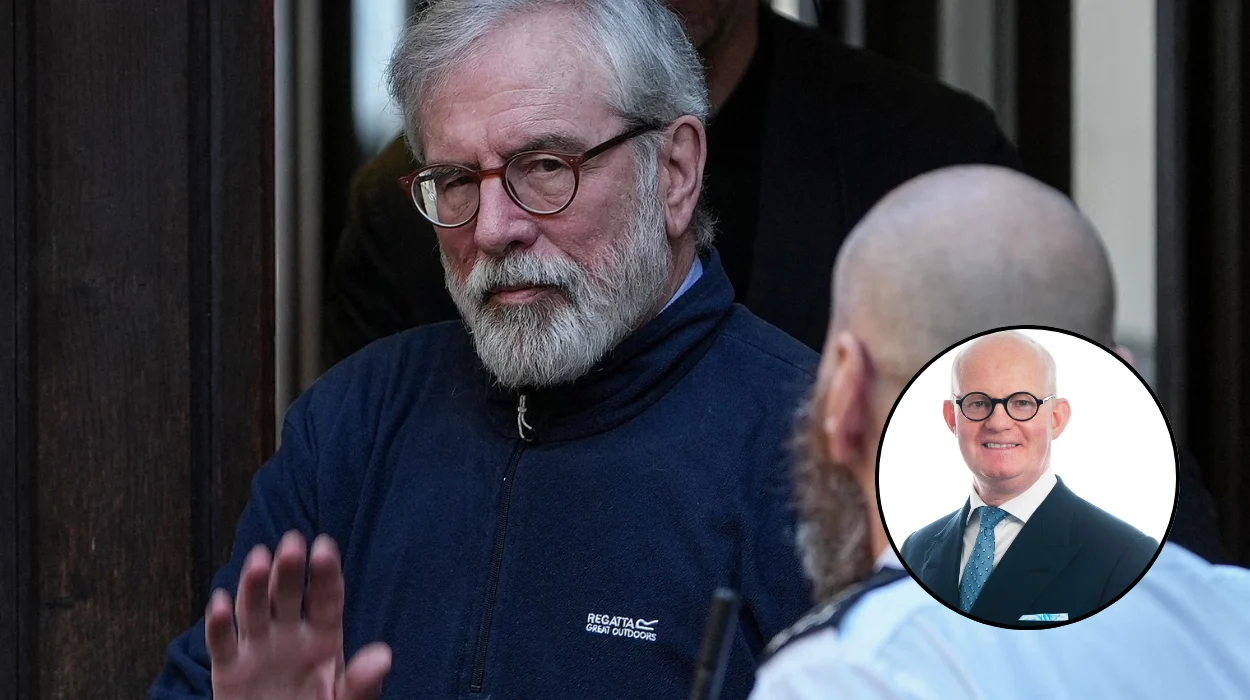
Key Points
- Gerry Adams, former Sinn Féin leader, testified in London’s High Court that he was stunned by the 1996 Docklands bombing and denied any prior knowledge of the attack.
- Adams, aged 77, faces a civil lawsuit for symbolic £1 damages from men injured in the Docklands bombing, 1996 Manchester bombing, and 1973 Old Bailey bombing.
- He rejected accusations of being a member of the IRA’s army council or at its “nerve centre,” calling British government claims inaccurate.
- Max Hill KC, representing the claimants, suggested Adams backed the Docklands bombing to advance Sinn Féin’s political strategy amid ceasefire frustrations.
- Adams countered that the bombing ended a 17-month IRA ceasefire and undermined 30 years of peace efforts he supported.
- Adams quoted Jonathan Swift on falsehoods and expressed regret for the bombings’ victims but noted claimants’ “vested interest.”
- His counsel, Edward Craven KC, argued the evidence against Adams is “bordering on nonexistent” with no direct implication in 6,000 pages of documents.
- The trial involves limited evidence on who authorised the bombings, focusing on high-level intelligence assertions without corroboration.
- Adams concluded his evidence on Wednesday, with closing submissions beginning.
London (Britain Today News) March 18, 2026 – Gerry Adams, the former Sinn Féin leader, told the High Court he was stunned by the 1996 Docklands bombing as he firmly denied any role in the IRA’s operations or prior knowledge of the attack that shattered a fragile ceasefire.
- Key Points
- Was Gerry Adams at the IRA’s Nerve Centre?
- Did Gerry Adams Have Prior Knowledge of the Docklands Bombing?
- What Evidence Links Adams to the Three Bombings?
- How Weak Is the Case Against Gerry Adams?
- Why Does This Trial Matter for the Peace Process?
- Who Are the Claimants and What Do They Want?
- What Happens Next in the High Court Trial?
The 77-year-old politician, now facing a civil claim for symbolic damages from victims of three historic bombings, rejected suggestions he sat on the IRA’s army council. As reported by The Guardian’s reporters covering the trial, Adams described the explosion in London’s east end commercial district as a devastating blow to peace efforts he had championed for decades.
Was Gerry Adams at the IRA’s Nerve Centre?
Max Hill KC, acting for the three men injured in the Docklands bombing, the 1996 Manchester bombing, and the 1973 Old Bailey bombing, put it directly to Adams on the second day of his witness stand testimony.
“You shared the frustrations you described others holding and the need, in light of those frustrations, to perpetuate the armed struggle to bring the British government to the table,”
Hill stated, according to The Guardian coverage.
Adams replied unequivocally:
“Those explosions brought an end to the IRA ceasefire and potentially the end to the peace strategy which I and others had worked on for 30 years.”
He emphasised his shock at the events. Hill pressed further:
“Did you know in advance about the February ‘96 explosion?”
Adams shot back: “No, of course not.”
Hill then quoted an internal British government note from 1993:
“‘The home secretary has concluded that Adams is at the nerve centre of the PIRA [Provisional IRA]’. My question is, is that accurate?”
Adams dismissed it outright:
“That is not true. The British government had to come to terms that there was a possibility of peace and a political process. They dodged their responsibility by demonising those of us who were trying to reach out and to find ways of getting out of the chaos towards a democratic conclusion.”
This exchange, detailed in real-time trial reports by The Guardian, underscores the core accusation: that Adams held a commanding position in the Provisional IRA during the Troubles.
Did Gerry Adams Have Prior Knowledge of the Docklands Bombing?
The Docklands bombing on 9 February 1996 ended a 17-month IRA ceasefire, killing two people and injuring over 100 while causing £150 million in damage to London’s Canary Wharf area. As per The Guardian’s archival link to its 1996 coverage, the attack marked a violent return to conflict amid stalled peace talks.
Adams has consistently denied IRA membership throughout his career. When Hill asked why he did not admit his “history in the IRA,” Adams reiterated his long-standing position and invoked Jonathan Swift:
“Falsehood flies, the truth comes limping after it.”
He added a poignant note on the human cost:
“The bombings in this case, the killing of three people and the wounding of others, I regret very much, but the folks giving this information have a vested interest.”
No other media outlets have provided fresh quotes from this specific testimony as of March 18, 2026, but The Guardian remains the primary source, attributing all direct statements to courtroom proceedings observed by their journalists.
What Evidence Links Adams to the Three Bombings?
The civil trial accuses Adams of IRA membership, army council involvement, and culpability for the 1996 Docklands bombing in east London; the 1996 Manchester bombing on 15 June, which injured over 200 people in the city’s Arndale shopping centre; and the 1973 Old Bailey bombing on 8 March, which targeted London’s central criminal court.
Claimants seek vindicatory damages of just £1 each, symbolising accountability rather than financial gain. Intelligence evidence from claimants’ witnesses relies on
“high-level assertions, unsupported by detail, uncorroborated by documents,”
as argued by Adams’s counsel.
How Weak Is the Case Against Gerry Adams?
Edward Craven KC, Adams’s lead counsel, began closing submissions to Mr Justice Swift after Adams wrapped up his evidence on Wednesday.
“You have actually had very little evidence of how, why and by whom these bombings were authorised,”
Craven told the judge, per The Guardian.
“That is the central question in this trial. When you actually focus on that, the evidence is extremely limited and we say bordering on nonexistent.”
Craven highlighted the 6,000-page document bundle:
“There is not a single page in the 6,000-page bundle that implicates Mr Adams in any of the bombings.”
He characterised the intelligence testimony as vague and unproven, leaving the defence’s position robust.
This argument aligns with Adams’s testimony, framing the lawsuit as reliant on historical demonisation rather than concrete proof.
Why Does This Trial Matter for the Peace Process?
Adams’s testimony revives scrutiny of the Northern Ireland peace process, where his Sinn Féin leadership helped broker the 1998 Good Friday Agreement. The Docklands bombing derailed talks, prolonging violence until the IRA’s full disarmament in 2005. Adams portrayed the attack as antithetical to his 30-year strategy, potentially swaying the judge on his intent.
Broader context from The Guardian’s ongoing coverage notes Adams’s denials have persisted despite decades of speculation. No criminal charges ever stuck, and this civil suit tests symbolic justice for Troubles victims.
Who Are the Claimants and What Do They Want?
The three injured men—unnamed in public reports for privacy—survived the specified bombings. Their case, launched under the Northern Ireland Troubles (Legacy and Reconciliation) framework, demands acknowledgment of IRA leadership culpability. Max Hill KC represents them, focusing on Adams’s alleged strategic role.
As The Guardian reports, the £1 claim emphasises vindication over compensation, highlighting unresolved grievances from over 3,500 Troubles deaths.
What Happens Next in the High Court Trial?
With Adams’s evidence concluded, closing submissions continue before Mr Justice Swift. A ruling could affirm or reject the army council claims, impacting historical narratives. The Guardian’s live updates confirm no further testimony from Adams is scheduled.
In summary, Gerry Adams’s High Court appearance reinforces his lifelong denials amid sparse evidential links. Trial watchers await the judge’s verdict on these pivotal 1990s events.