Key Points
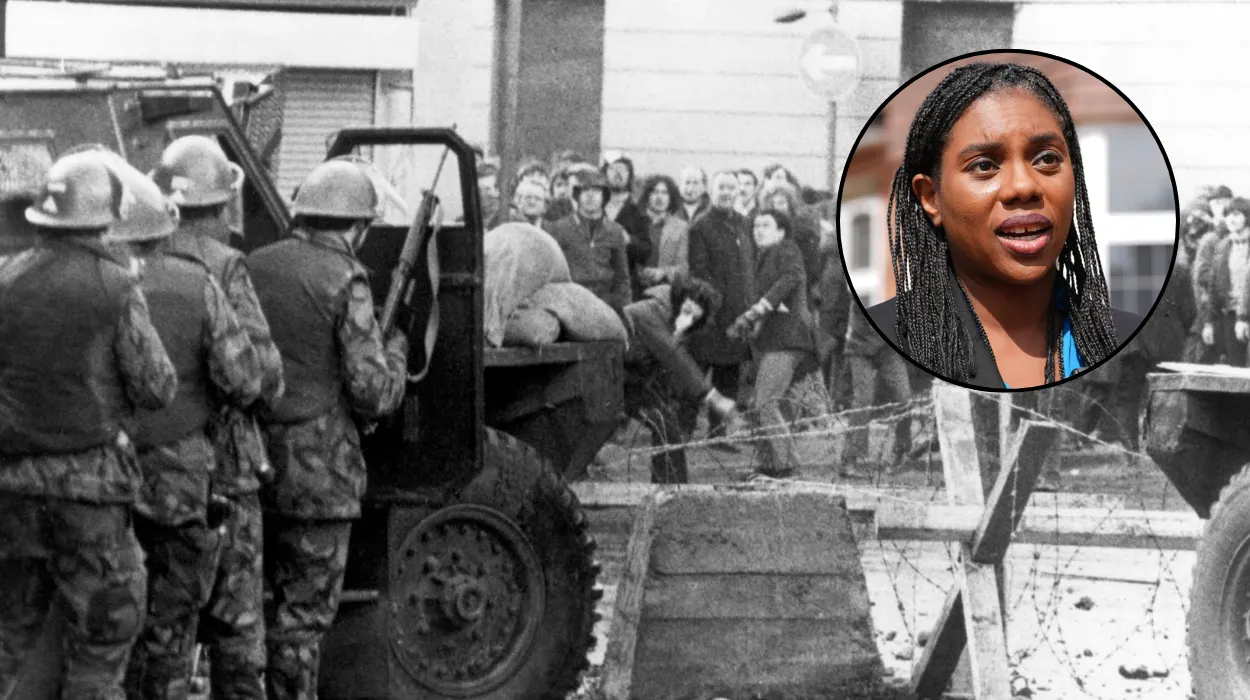
- Kemi Badenoch has apologised after footage from Bloody Sunday was used in Conservative Party social media posts defending UK veterans and criticising Labour’s Troubles legacy proposals.
- Badenoch said she did not sign off on the video and said it had been put out by “very young people” who did not recognise the archive footage.
- The video was posted to her social media channels on Tuesday, then removed after the party realised the footage was from Bloody Sunday.
- The post argued that Labour’s proposed changes would “drag” elderly Troubles veterans back to court.
- Colum Eastwood, the SDLP MP for Foyle, said he was “shocked” and described the use of Bloody Sunday footage as “disgusting” and “disgraceful”.
- Bloody Sunday took place on 30 January 1972 in Derry, when British soldiers opened fire on unarmed civil rights demonstrators, killing 13 people on the day and leading to a 14th death later.
- The controversy comes amid debate over Labour’s Northern Ireland Troubles bill, which aims to replace the previous Conservative-era legacy law.
How did the row begin?
London (Britain Today News) May 2, 2026 – Conservative Party leader Kemi Badenoch apologised after a social media video defending British veterans was criticised for using footage from Bloody Sunday, one of the most sensitive and traumatic episodes of the Troubles in Northern Ireland.
As reported by the journalists covering the story, the video was originally posted on Badenoch’s social media channels on Tuesday and was intended to attack Labour’s proposed changes to legacy legislation, but it drew immediate backlash after viewers and politicians identified archive clips from the 1972 killings in Derry.
The Conservative leader said she had not personally approved the video and insisted the material had been used by younger party staff who did not realise what it showed.
What did Badenoch say?
Badenoch said:
She added that the clip was meant to support the party’s argument that Labour was “hounding” elderly veterans over events that happened decades ago, often under the direction of political leaders who are no longer alive.
In her remarks, she also said the video was created by “very young people” who did not recognise the footage as Bloody Sunday and that it was removed as soon as the party understood what had been published.
Her apology was made while she was visiting a hairdresser in south-east London, according to the reporting.
Why is Bloody Sunday so sensitive?
Bloody Sunday, which took place on 30 January 1972, is widely regarded as one of the darkest and most significant moments of the Troubles.
British soldiers from the Parachute Regiment shot 26 people during an anti-internment march in the Bogside area of Derry, killing 13 on the day, while John Johnston, 59, died later from his injuries, bringing the total dead to 14.
The incident became a major flashpoint in Northern Ireland, fuelled anger over the conduct of the Army, and had long-lasting political consequences.
A first inquiry, led by Lord Widgery, exonerated the soldiers, but a later inquiry, the Saville Inquiry, concluded decades of campaigning by victims’ families and led to former prime minister David Cameron apologising in 2010 on behalf of the government and the country.
Why did the video provoke anger?
The video was criticised because it placed archive footage from Bloody Sunday alongside messaging that praised British soldiers and attacked Labour’s approach to Troubles legacy issues.
Colum Eastwood, the SDLP MP for Foyle, said he was “shocked” to see the Conservative leader
“trumpeting the service of British soldiers in Northern Ireland using footage from Bloody Sunday”.
In another comment cited in the coverage, Eastwood said the material was “disgusting” and “disgraceful”, and argued that Badenoch should apologise directly to survivors and families affected by the killings.
The backlash reflected the continuing sensitivity around how political parties discuss the Troubles, veterans, and accountability for historic crimes.
What is Labour’s bill about?
Labour’s Northern Ireland Troubles bill is designed to replace legislation introduced by the previous Conservative government.
That earlier law included a clause that could have allowed veterans to avoid prosecution for Troubles-era offences if they gave information about unresolved cases, but it was strongly opposed by victims’ groups and political parties in Northern Ireland.
The legislation was later ruled unlawful after a case in Belfast’s High Court in 2024, and Labour now wants to lift the ban on future inquests and civil actions that had been stopped under the previous system.
Badenoch’s video argued that Labour’s approach would drag elderly veterans back into court and expose them to renewed legal battles late in life.
What does this mean politically?
The episode places Badenoch in a difficult position because it touches both on support for veterans and on one of the most painful events in modern Northern Irish history.
Her apology may help limit the immediate damage, but the criticism shows how quickly the legacy debate can turn into a wider political and moral dispute.
For the Conservatives, the issue is especially awkward because they are trying to argue for a strong defence of veterans while avoiding any suggestion that they are insensitive to the victims of Bloody Sunday.
For Labour, the controversy gives further attention to its legacy bill, which is already controversial because it seeks to reshape how unresolved Troubles cases are handled.
How was the video handled?
According to the reporting, the video was taken down once the party understood that the clip had included Bloody Sunday footage.
A Conservative spokesman said the party apologised for the inclusion of material that should not have been used and would not be used again.
The party also said the video had been removed promptly after the problem was identified.
That response suggests the Conservatives wanted to contain the fallout quickly, but the issue has already drawn attention from Northern Irish politicians and national media.
What happens next?
The immediate political question is whether Badenoch’s apology will calm the criticism or whether opponents will continue to press her to answer for the video more fully.
The controversy is also likely to keep the spotlight on Labour’s legacy legislation and the wider unresolved debate over justice, accountability and veterans’ rights in Northern Ireland.
Because Bloody Sunday remains a defining event in the history of the Troubles, any political use of related imagery is likely to remain highly contentious.