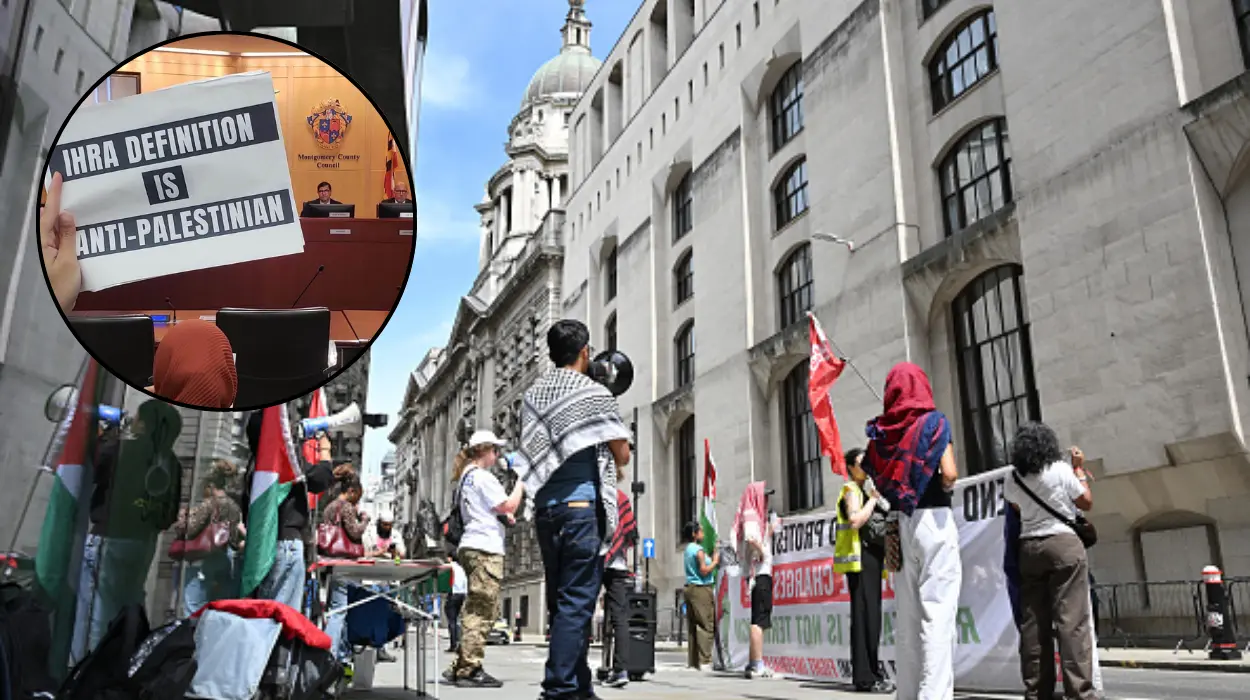
Key Points
- The European Legal Support Centre (ELSC) has launched a legal challenge against the Department for Culture, Media and Sport (DCMS) over its use of the IHRA definition of antisemitism.
- The claim, filed on Thursday, is brought on behalf of Bea Foster, a Christian preacher and long-standing Palestine campaigner.
- Foster resigned as a trustee of Burnley Bridges, an interfaith anti-racism charity, after facing pressure linked to her personal social media posts on Palestine.
- The Palestine Solidarity Campaign (PSC) is backing the case, arguing it could set a precedent on how the IHRA definition is applied.
- The claim argues the IHRA definition is not legally binding and that its use breached Foster’s rights under the Human Rights Act.
- Scrutiny of Burnley Bridges began in February 2025 after media reports linked Foster’s posts to allegations of antisemitism.
- The charity’s King’s Award for Voluntary Service was reportedly at risk unless Foster stepped down and stayed away from the organisation for three years.
- The case seeks a court declaration that the government acted unlawfully, along with damages and reversal of the decision.
London (Britain Today News) July 09, 2026 – Pro-Palestine campaigners have launched a legal challenge against the British government, seeking to stop ministers from using a contested definition of antisemitism to penalise support for Palestinian rights. The claim, filed on Thursday against the Department for Culture, Media and Sport, centres on the government’s role in the resignation of a charity trustee after she publicly criticised Israel’s treatment of Palestinians.
- Key Points
- What is the legal challenge against the UK government?
- Who has filed the case and on whose behalf?
- What happened to Bea Foster at Burnley Bridges?
- How did the IHRA definition factor into her resignation?
- What does the legal claim actually argue?
- Why is the IHRA definition considered controversial?
- What has Bea Foster said about the case?
- What has the European Legal Support Centre said about the wider context?
- What has the Palestine Solidarity Campaign said?
- What could the outcome mean for charities and campaigners?
- What happens next in the case?
What is the legal challenge against the UK government?
The claim has been filed by the European Legal Support Centre (ELSC) against the Department for Culture, Media and Sport. It focuses on the government’s use of the International Holocaust Remembrance Alliance’s (IHRA) working definition of antisemitism when assessing social media posts made by a charity trustee in a personal capacity. The ELSC argues that although the UK government has adopted the IHRA definition, it carries no legal force, and that applying it in this instance was unlawful. The case is being closely watched by campaign groups, who say it could have wide implications for how the definition is used across public bodies, universities and charities in future.
Who has filed the case and on whose behalf?
The claim has been brought on behalf of Bea Foster, a Christian preacher and long-time campaigner for Palestinian rights. Foster helped establish Burnley Bridges, an interfaith anti-racism charity, and served as one of its trustees before her resignation. The case is being run by the European Legal Support Centre, with the Palestine Solidarity Campaign (PSC) — described as Britain’s largest pro-Palestine advocacy group — supporting the action. Both organisations say the case goes beyond one individual’s circumstances and touches on the broader question of how far campaigners can go in criticising Israeli government policy without facing professional or reputational consequences.
What happened to Bea Foster at Burnley Bridges?
According to the ELSC, scrutiny of Burnley Bridges began in February 2025 after media reports accused the charity of antisemitism on the basis of posts shared by Foster in a personal capacity condemning Israeli policy towards Palestinians. The Palestine Solidarity Campaign says the government subsequently indicated it would revoke the charity’s King’s Award for Voluntary Service — a significant honour for voluntary organisations — unless Foster resigned as a trustee and had no involvement with Burnley Bridges for three years. Foster maintains that she stepped down purely to protect the charity and its work, not because she accepted any wrongdoing on her part.
How did the IHRA definition factor into her resignation?
Central to the case is the claim that the Department for Culture, Media and Sport applied the IHRA working definition of antisemitism when it assessed Foster’s personal social media posts. The ELSC argues that using the definition in this way — to judge an individual’s private commentary on Israeli government policy and to threaten a charity’s official recognition as a result — went beyond its intended purpose and was not something the department had lawful authority to do, given the definition’s non-binding status.
What does the legal claim actually argue?
The claim asks the court to declare that the government’s actions were unlawful. It argues that the decision violated Foster’s rights to freedom of expression and freedom of association, as well as her right to protection from discrimination, all of which are protected under the Human Rights Act. Alongside the declaration of unlawfulness, the claim seeks to have the original decision overturned and is asking for damages to be awarded. If successful, the ruling would not only affect Foster’s individual case but could also constrain how the department, and potentially other public bodies, apply the IHRA definition in future assessments of individuals or organisations.
Why is the IHRA definition considered controversial?
The IHRA working definition of antisemitism has been a source of debate in Britain and internationally since it was formally adopted by the UK government. Supporters regard it as a useful tool for identifying and tackling antisemitism, including cases where hostility towards Jewish people is expressed through language or rhetoric directed at Israel. Critics, however, including a number of legal experts, human rights organisations and academics, argue that the definition blurs the line between antisemitism and legitimate criticism of Israeli government policy. They contend that this ambiguity has created what they describe as a chilling effect, discouraging individuals and organisations from speaking out on Palestinian rights for fear of being labelled antisemitic.
What has Bea Foster said about the case?
Foster has been direct about her motivation for bringing the claim.
“I am taking this case to fight for my right to return to the charity I helped found and to continue speaking out for justice for the Palestinian people,”
she said in a statement released on Thursday. She added that a ruling in her favour would show that the IHRA definition is not fit for the purpose for which it has been applied, arguing that rather than genuinely combating antisemitism, it is instead being used to silence people who speak out in support of Palestinians. Foster has consistently rejected the allegations of antisemitism made against her, stating in her original resignation letter that she stepped down solely to safeguard Burnley Bridges and its charitable status.
What has the European Legal Support Centre said about the wider context?
Anna Ost, senior legal officer at the ELSC, said the case needed to be understood against a backdrop of growing efforts to restrict advocacy for Palestinian rights. She said that rather than addressing discrimination in a straightforward way, the application of the IHRA definition had increasingly conflated criticism of the State of Israel with antisemitism, leading, in her words, to the investigation, punishment and suppression of legitimate political expression. Ost’s comments frame the Foster case as part of a pattern the ELSC says it has observed across multiple sectors, including charities, universities and public institutions, where the definition has been invoked in disputes over pro-Palestinian speech.
Explore More about UK:
Prince Harry’s UK Visit Sparks Reaction as Kate Middleton Sends Clear Message
Last-Minute Tickets Still Available for Lily Allen’s Final O2 Show
What has the Palestine Solidarity Campaign said?
Ryvka Barnard, deputy director of the Palestine Solidarity Campaign, described the government’s treatment of Foster as discriminatory. She said the case illustrated how the IHRA definition was being used to target people who campaign for Palestinian rights, rather than to address genuine instances of antisemitism. Barnard said that if Foster wins the case, it could establish an important precedent demonstrating that the IHRA definition is not fit for the purpose for which it has been used and should not be applied in the same way again. The PSC has framed the case as a test of how far the definition can be stretched by public bodies before it falls foul of legal protections for free expression.
What could the outcome mean for charities and campaigners?
Should the claim succeed, campaigners believe it could restrict how government departments and other public bodies use the IHRA definition when making decisions about charities, trustees or individuals linked to public honours and funding. A ruling against the department could also embolden other individuals or organisations who feel they have faced similar pressure over their stance on Israeli policy to bring their own challenges. Conversely, a ruling in the government’s favour would likely reinforce the current approach taken by departments when the definition is invoked in similar disputes. Either outcome is expected to be closely scrutinised by charity regulators, human rights groups and organisations on both sides of the debate over the IHRA definition’s proper scope.
What happens next in the case?
The claim has now been formally filed against the Department for Culture, Media and Sport, with the ELSC and PSC indicating they intend to pursue the matter through the courts. No date has yet been confirmed for a hearing. In the meantime, Foster remains barred from involvement with Burnley Bridges under the terms that accompanied her resignation, and the charity retains its King’s Award for Voluntary Service. Both the ELSC and PSC have signalled they view the case as a significant test of the legal limits on how the IHRA definition can be applied by UK public bodies.