Key Points
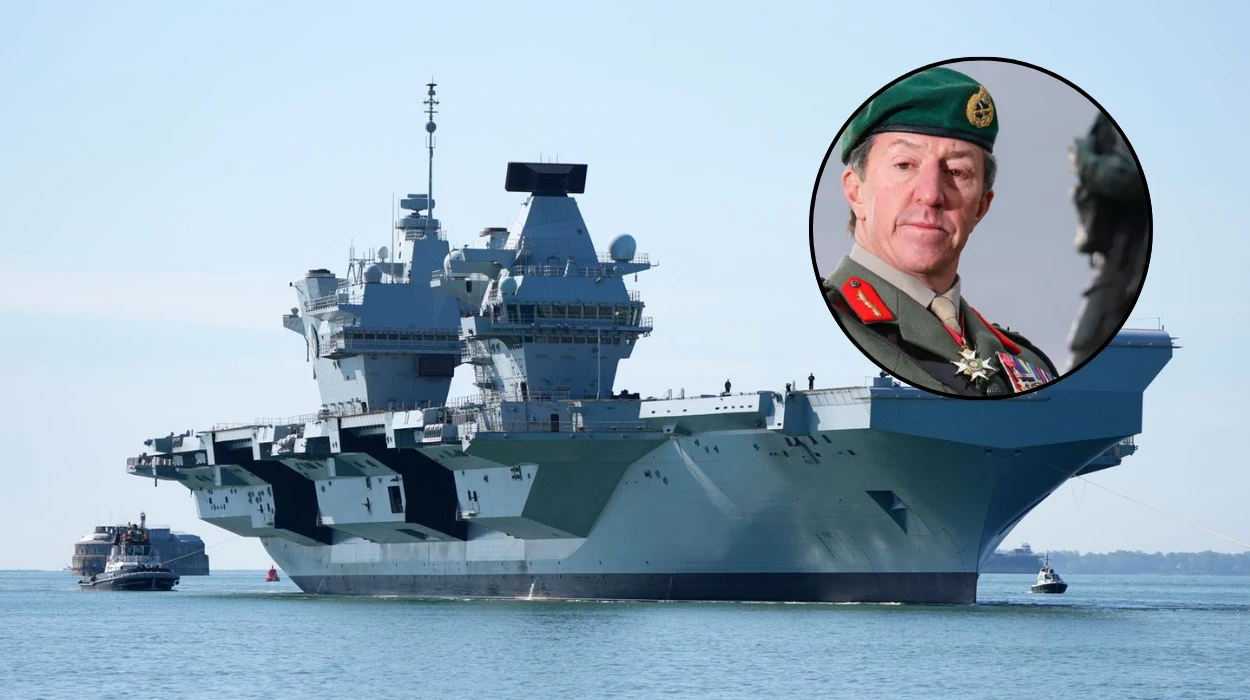
- First Sea Lord General Sir Gwyn Jenkins said the UK must take more risk to stay ahead of its enemies and warned that preserving the status quo is “simply not good enough”.
- He said Britain is at an “inflection point” and argued that the war in Ukraine, along with wider geopolitical tensions in the Middle East, has made the need for change unmistakable.
- Sir Gwyn said the blockade of the Strait of Hormuz during the Iran conflict exposed the vulnerability of traditional naval platforms and showed why sea power remains vital for trade, navigation and economic security.
- He set out a plan for a “hybrid” Royal Navy made up of crewed ships, drones and other advanced technology, while calling for more simulation-based training.
- He said the Navy must reduce cost per unit, remove unnecessary barriers and accept occasional failure in order to move faster from trials to deployment.
- The First Sea Lord said the Royal Navy’s first navy-wide wargame testing the hybrid approach showed missile capacity could increase threefold to the level needed to win in the North Atlantic.
- He also warned that Russian incursions into British waters had risen by almost a third in the last two years and said the Royal Navy was needed “dozens of times” in 2025 to support homeland defence.
- Former security minister Tom Tugendhat argued that the pensions triple lock and current welfare bill could not be sustained if Britain wanted to rearm effectively.
- At Prime Minister’s Questions, Sir Keir Starmer defended Labour’s defence record and said his Government had increased defence spending to the highest level since the Cold War, while Kemi Badenoch accused the Government of spending too much on welfare to defend the country.
Why is the Navy chief urging Britain to take more risk?
London (Britain Today News) April 30, 2026 – Britain must take more risk to stay ahead of its enemies, the head of the Royal Navy has warned, as the service faces what he described as an inflection point in a more dangerous global security environment.
- Key Points
- Why is the Navy chief urging Britain to take more risk?
- What did Sir Gwyn Jenkins say about the threat environment?
- What is the Royal Navy’s hybrid force plan?
- Why did he mention cost and risk?
- What evidence did the Navy chief give?
- How serious is the Russian naval threat?
- What did Tom Tugendhat and the PM say?
- What does this mean for defence policy?
As reported by General Sir Gwyn Jenkins, the First Sea Lord and Chief of the Naval Staff, in his RUSI lecture, maintaining the current approach is no longer enough. He said the Navy could not simply preserve what already exists and expect it to remain effective against fast-changing threats.
His warning comes at a time when the UK is trying to modernise its armed forces while dealing with pressure over spending, capability gaps and the pace of defence reform. The message from the Navy chief was not only about new equipment, but also about changing the mindset of defence planning itself.
What did Sir Gwyn Jenkins say about the threat environment?
Sir Gwyn said the need for change had become clearer over the last decade, but he argued that Russia’s full-scale invasion of Ukraine in 2022 made the situation impossible to ignore. He also pointed to developments in the Middle East over the past four years as further evidence that the security picture had worsened.
He said the recent conflict involving the Strait of Hormuz showed that sea power remains central to protecting trade routes, upholding freedom of navigation and defending the British economy from global shocks. In his view, the episode exposed the weakness of relying too heavily on traditional naval platforms in a period of more sophisticated and varied threats.
The First Sea Lord’s language was notably stark. He told the audience that
“standing still is not an option”
and that
“just maintaining the capable status quo is simply not good enough.”
What is the Royal Navy’s hybrid force plan?
Sir Gwyn said the Navy’s future would depend on a “hybrid” force combining crewed ships with drones and other cutting-edge technology. He argued that this model would increase both survivability and lethality without simply replacing existing capabilities.
He said the service must invest in training that prepares personnel for
“complex, high-threat battle scenarios”,
much of which can only be done through simulation. That emphasis suggests a shift in how the Navy prepares for war, with more attention on fast learning, digital rehearsal and operational realism.
He also said the Navy had to stop relying on ever-larger and ever-more expensive platforms. Instead, the focus should be on achieving scale, reducing unit costs and fielding systems that can be delivered and adapted more quickly.
Why did he mention cost and risk?
The First Sea Lord said there is “no scenario” in which the Navy will have unlimited resources, so affordability must be built into future plans. He argued that the service needs to cut the time between testing new systems and putting them to sea or alongside commanders.
That, he said, will require more risk-taking, fewer unnecessary regulations and fewer barriers that slow innovation. He also said the Navy must accept that failure will happen sometimes if it is to succeed more often in the long run.
The broader message was that defence reform cannot be limited to procurement alone. In Sir Gwyn’s view, the Royal Navy must be willing to change how it trains, how it experiments and how it introduces new technology if it wants to remain ahead of hostile powers.
What evidence did the Navy chief give?
Sir Gwyn said the first Navy-wide wargame designed to test the hybrid model took place last month at Southwick Park. He said the exercise produced “clear evidence” of significantly enhanced capability.
According to his remarks, missile capacity increased threefold to a level he said would be necessary to win a contest in the North Atlantic. That claim was presented as proof that a mixed force of crewed platforms and advanced technology could outperform current assumptions.
The comments add to the wider debate over how quickly the UK and its allies can adapt to modern naval warfare. They also underscore the growing role of simulations and wargaming in shaping real-world defence planning.
How serious is the Russian naval threat?
Sir Gwyn said Russian incursions into British waters have increased by almost a third over the last two years. He added that in 2025 alone the Royal Navy was required to respond dozens of times in support of homeland defence against Russian naval surface vessels.
His warning comes shortly after the Defence Secretary said the UK and its allies tracked a Russian attack submarine and two spy submarines near critical undersea cables in the North Atlantic for a month before they withdrew. That episode heightened concern about the security of undersea infrastructure, which is increasingly seen as a strategic vulnerability.
Sir Gwyn said the Navy must be ready every day of every month of every year. The implication is that the service cannot afford gaps in readiness as maritime competition intensifies.
What did Tom Tugendhat and the PM say?
Former security minister Tom Tugendhat used a separate event to argue that Britain’s current welfare settlement is incompatible with the scale of rearmament he believes is required. He said the pensions triple lock and the health-related benefits bill could not continue unchanged if the UK wants to defend itself properly.
He warned that if cables were cut or energy supplies severed, Britain would struggle to pay for anything at all. Tugendhat also argued that the UK has too few ships, soldiers and aircraft, along with insufficient factory orders and weapons stocks.
At Prime Minister’s Questions, Sir Keir Starmer defended his Government’s defence record and said it had raised defence spending to its highest level since the Cold War. Conservative leader Kemi Badenoch accused the Government of spending so much on welfare that it could not afford to defend the country, while Starmer said the Conservatives had left defence spending lower and the armed forces hollowed out.
What does this mean for defence policy?
The speech signals that the Royal Navy wants faster change, broader experimentation and a more flexible force structure. It also shows that senior military figures are pressing for a defence culture that rewards speed and innovation rather than caution and delay.
The political debate around spending suggests that the question is not only what the UK should buy, but what trade-offs it is prepared to make to fund rearmament. That tension is likely to remain central as ministers face pressure to publish a long-delayed defence investment plan.
For now, Sir Gwyn’s message is clear: the Navy believes the security environment is deteriorating, the pressure on Britain’s maritime defences is real, and the UK must move faster if it wants to stay ahead.