Key Points
- Abdullah Albadri, a 34-year-old Kuwaiti national, is on trial at the Old Bailey.
- He denies charges of preparing terrorist acts and possessing bladed articles.
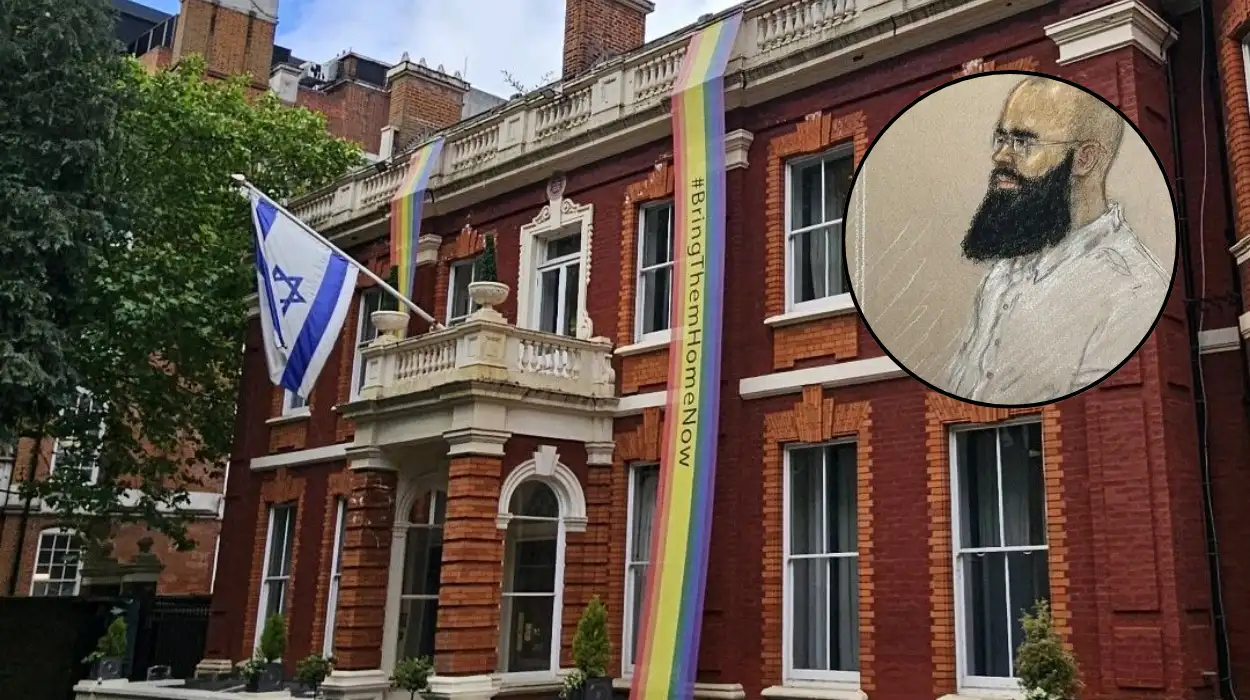
- He was arrested outside the Israeli embassy in London carrying two knives.
- Albadri crossed the English Channel twice in small boats, in 2021 and April 2025.
- He described the crossings as life-threatening and chaotic.
- He claims to belong to the stateless Bedoon community in Kuwait.
- He told the court he was imprisoned for five years due to activism.
- After release, he travelled to Europe and later attempted to settle in the UK.
- He previously lived and worked in France but was denied citizenship.
- His defence argues the knives were not intended for terrorism.
- The trial has been adjourned and will continue.
What happened outside the Israeli embassy in London?
London (Britain Today News) April 21, 2026 – A Kuwaiti man accused of attempting to break into the Israeli embassy in London while carrying two knives has told a court he risked his life crossing the English Channel in overcrowded small boats, as proceedings continue at the Old Bailey.
- Key Points
- What happened outside the Israeli embassy in London?
- What did Abdullah Albadri tell the court about his background?
- Why was he imprisoned in Kuwait?
- How did he first reach the United Kingdom?
- What happened after his arrival in Britain?
- Why did he settle in France and what did he do there?
- What were the circumstances of his second Channel crossing?
- What happened after he returned to the UK?
- What is his defence regarding the embassy incident?
- What charges is he facing?
- How has the court responded so far?
- What broader issues does this case highlight?
Abdullah Albadri, 34, denies charges of preparing terrorist acts and two counts of possession of a bladed article. The court heard that he was arrested outside the embassy, prompting serious concerns from authorities about his intentions.
What did Abdullah Albadri tell the court about his background?
Abdullah Albadri told jurors that he was born into the Bedoon community, a stateless group living between Iraq and Kuwait, who often lack access to citizenship and basic rights.
He stated:
“I was born without any human rights or passport in Kuwait.”
He explained that his father, a police officer, supported his education until he turned 18, but he later faced barriers to further study due to his legal status.
Albadri said these limitations pushed him towards activism, particularly advocating for the rights of stateless individuals.
Why was he imprisoned in Kuwait?
Albadri told the court he was arrested for distributing flyers linked to his activism. He described the arrest as violent and said he endured harsh conditions during his imprisonment.
He said:
“I was brutally arrested… I slept on the floor. There were a lot of beatings.”
He told jurors he spent five years in prison before being released.
Following his release, he decided to leave Kuwait, saying he was motivated by the prospect of “prosperity”, “freedom” and “human rights” he had seen portrayed in the United Kingdom.
How did he first reach the United Kingdom?
The court heard that Albadri first travelled to the UK in August 2021, crossing the Channel in a small boat carrying 83 people.
Describing the journey, he said:
“You put your life on the line. Everybody is scared, shouting, fighting.”
He added that there were not enough life jackets available, stating:
“The life jackets is just for a few people, my life jacket I gave to a child.”
His account highlighted the dangerous and unpredictable nature of such crossings.
What happened after his arrival in Britain?
After arriving in Dover, Kent, Albadri attempted to travel within the UK. He told the court he tried to hitchhike from London to Manchester.
However, he fell asleep in the back of a lorry and later woke up to find himself back in France, having crossed the border unintentionally.
Why did he settle in France and what did he do there?
Albadri told jurors that he was granted residency in France, where he began rebuilding his life.
He said he lived in Lyon, learned French, and worked as a driver. He also stated that he paid taxes during his time there. Despite these efforts, he said he was refused French citizenship.
He told the court that this refusal contributed to his decision to attempt another journey to the United Kingdom.
What were the circumstances of his second Channel crossing?
The court heard that Albadri made a second attempt to reach the UK in April 2025. He said he paid £1,200 to smugglers to secure passage on a small boat carrying 63 people.
He described the process as controlled and intimidating, stating that one of the smugglers was armed with a pistol. Migrants were reportedly lined up before boarding the vessel.
His testimony pointed to the organised and dangerous nature of smuggling operations facilitating such journeys.
What happened after he returned to the UK?
Upon arriving in the UK, Albadri said he was placed in temporary accommodation at an asylum seekers’ hotel in Basingstoke.
However, he told the court he was later informed that he could not remain there. He described feeling “alone and lost” after leaving the accommodation.
He travelled to London, where he said he slept outside a Home Office building and later in a park. He also sought help from a migrant charity and a mosque while attempting to find work.
What is his defence regarding the embassy incident?
Albadri’s defence team has indicated that he did not intend to carry out a terrorist act.
Jurors were told that the knives he was carrying were “for a good reason” unrelated to any alleged plan involving the Israeli embassy. The full explanation behind this claim is expected to be presented as the trial continues.
What charges is he facing?
Albadri faces the following charges:
- Preparation of terrorist acts.
- Two counts of possession of a bladed article.
He has pleaded not guilty to all charges.
How has the court responded so far?
The Old Bailey has heard detailed testimony from Albadri outlining his personal history, migration journey, and circumstances leading up to his arrest.
The trial has been adjourned and is scheduled to continue, with further examination of evidence and arguments from both prosecution and defence expected.
What broader issues does this case highlight?
This case brings attention to several wider issues, including the risks associated with small boat crossings across the English Channel and the role of organised smuggling networks.
It also raises questions around statelessness, asylum processes, and the challenges faced by individuals seeking refuge in Europe.
At the same time, the case underscores the importance of assessing intent in situations involving weapons and sensitive locations, particularly in the context of national security.