Key Points
- British Ambassador to the US, Sir Christian Turner, warns that the Iranian regime’s ability to “take pressure and absorb pain” is often underestimated.
- Comments made ahead of potential US-Iran talks in Islamabad, Pakistan, as a ceasefire deadline approaches amid doubts over discussions.
- Ongoing standoff in the Strait of Hormuz has effectively closed the vital shipping route, crippling international trade and causing a global economic shock with soaring energy prices.
- Sir Christian Turner, who speaks Farsi and has negotiated with Iranians, spoke at an Atlantic Council think tank event in Washington DC.
- He highlighted his experience living in Islamabad and knowing key figures on all sides.
- Impressed by achievements in previous US-Iran talks, which collapsed over Tehran’s nuclear ambitions.
- Key negotiation challenges: building trust, which takes time, and Iran’s cultural mentality of “martyrdom” or “victimhood”.
- Iranian regime faces fragmented leadership and heavy pressure but shows high resilience.
- The US administration’s resolve and willingness to act should not be underestimated, per Sir Turner.
- Broader context includes fragile truce ticking down, with implications for global energy markets and international shipping.
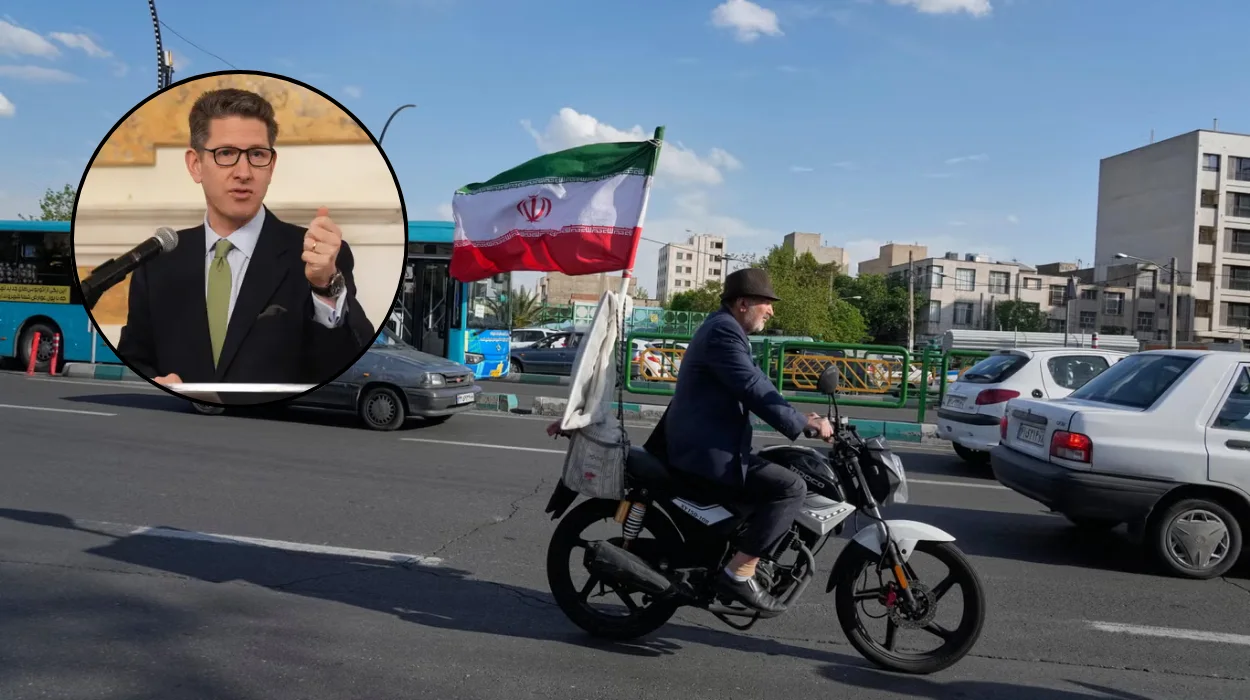
United Kingdom (Britain Today News) April, 21 2026 – In a stark assessment of Iran’s resilience amid escalating tensions, British Ambassador to the United States Sir Christian Turner has cautioned that the Iranian regime’s capacity to withstand pressure is frequently underestimated. Speaking at a high-profile Atlantic Council think tank event in Washington DC, the diplomat, who speaks Farsi and boasts extensive experience negotiating with Tehran, highlighted the regime’s ability to “take pressure and absorb pain” as talks between the US and Iran loomed in Islamabad, Pakistan.
- Key Points
- What Sparked Sir Christian Turner’s Comments on Iran’s Resilience?
- Why Is the Strait of Hormuz Standoff Crippling Global Trade?
- What Challenges Do Negotiators Face with Iran?
- How Does Iran’s Leadership Fragmentation Play Into This?
- How Resilient Is the Iranian Regime Under Pressure?
- What Does Sir Christian Say About the US Resolve?
- Who Is Sir Christian Turner and Why Does His Voice Matter?
- What Are the Risks If Islamabad Talks Fail?
- How Has the World Reacted to the Strait Crisis?
- What Lessons from Past US-Iran Talks Apply Here?
- Broader Implications for UK-US Special Relationship
The remarks come as a fragile ceasefire deadline edges closer, with the standoff in the Strait of Hormuz showing no signs of abating. This vital chokepoint for global oil shipments remains effectively closed, inflicting severe disruptions on international shipping lanes and triggering a sharp surge in energy prices worldwide.
What Sparked Sir Christian Turner’s Comments on Iran’s Resilience?
Sir Christian Turner’s intervention underscores the complexities of engaging with Tehran. As reported by political correspondent James Rothwell of The Telegraph, Sir Christian stated:
“Having negotiated with the Iranians and lived in Islamabad, these are on all sides, people that I know well.”
His firsthand insights stem from years of diplomatic service, including direct dealings with Iranian officials.
The ambassador expressed admiration for past diplomatic efforts, noting significant progress in prior US-Iran discussions. According to the same Telegraph coverage by Rothwell, Sir Christian said he had been
“impressed at the amount achieved at previous talks held between the US and Iran, but which ultimately collapsed over Tehran’s nuclear ambitions.”
This history of breakdown looms large over the prospective Islamabad summit, where hopes for de-escalation hang in the balance.
Why Is the Strait of Hormuz Standoff Crippling Global Trade?
The Strait of Hormuz, a narrow waterway linking the Persian Gulf to the Gulf of Oman, handles around 20% of the world’s oil trade. Its effective closure during the current conflict has paralysed shipping, as detailed in multiple outlets. Diplomatic editor Henry Zeffman of The Times reported that the blockade
“continues to cripple international shipping,”
leading to widespread supply chain disruptions.
Energy markets have reacted swiftly, with Brent crude prices spiking amid fears of prolonged shortages. As per analysis from Financial Times energy correspondent Mure Dickie, the global economic shock has rippled through industries, from aviation to manufacturing, exacerbating inflationary pressures in Europe and beyond.
The ceasefire’s fragility adds urgency; with the clock ticking down, any failure in Islamabad could prolong the crisis, experts warn.
What Challenges Do Negotiators Face with Iran?
Trust emerges as a primary hurdle in US-Iran parleys. Sir Christian Turner pinpointed this directly during the Atlantic Council event. As quoted by BBC News diplomatic affairs reporter Lyse Doucet, he said:
“there was the issue of trust, which took time to build.”
Compounding this is what the ambassador described as a deep-seated Iranian cultural mentality. In Rothwell’s Telegraph piece, Sir Turner elaborated:
“the other he identified was the mentality of ‘martyrdom’ or ‘victimhood’ rooted in Iranian culture.”
These factors, combined with Tehran’s fragmented leadership, test Western resolve. Yet, Sir Christian balanced his critique by affirming US determination.
How Does Iran’s Leadership Fragmentation Play Into This?
Iran’s political landscape features competing power centres, from Supreme Leader Ayatollah Ali Khamenei to the Revolutionary Guard Corps. Sir Turner addressed this head-on, noting the regime operates
“under a lot of pressure, fragmented leadership.”
This internal dynamic, per Reuters Iran correspondent Parisa Hafezi, enables Tehran to endure sanctions and military posturing longer than anticipated, a point echoed in Sir Christian’s assessment.
How Resilient Is the Iranian Regime Under Pressure?
Central to Sir Turner’s message is Iran’s underestimated endurance. He warned:
“The Iranian regime, which is under a lot of pressure, fragmented leadership, its ability to take pressure and absorb pain is often much higher than we predict or anticipate, and I think that’s a very important judgment as we move into the next round of these vital discussions.”
This observation, drawn from his Farsi fluency and negotiation history, carries weight. As covered by The Guardian‘s diplomatic editor Patrick Wintour, it serves as a reality check for policymakers eyeing escalation.
The ambassador’s experience in Islamabad further informs his view, having engaged figures central to regional dynamics.
What Does Sir Christian Say About the US Resolve?
Balance defines Sir Turner’s diplomacy. Just as he lauds Iranian stamina, he cautions against underestimating Washington. In the Telegraph report by Rothwell, he added:
“But just as I can observe that of the Iranians, those who underestimate this (US) administration’s willingness and resolve to see action through I think also might feel they’re mistaken, so let’s see how that plays out.”
This nod to US steely determination aligns with recent White House rhetoric on enforcing red lines in the Gulf.
Who Is Sir Christian Turner and Why Does His Voice Matter?
Appointed UK Ambassador to Washington in 2024, Sir Christian Turner previously served as a key figure in Middle East policy. His Farsi skills and Islamabad tenure equip him uniquely for commentary on Iran-Pakistan-US triangles. Sky News foreign affairs editor Sam Kiley noted his
“extensive experience of negotiating with Tehran,”
positioning him as a credible voice amid the Hormuz crisis.
What Are the Risks If Islamabad Talks Fail?
Prospects for the Pakistani capital’s talks remain uncertain. With the truce deadline approaching, failure could invite further naval confrontations. Al Jazeera correspondent James Bays reported that
“the discussions remained in doubt amid the ongoing stand-off,”
citing Iranian intransigence and US demands on nuclear compliance.
Economically, prolonged Hormuz closure threatens recessionary spirals. The International Energy Agency has warned of supply shortfalls, per Bloomberg energy desk led by Javier Blas.
Geopolitically, escalation risks drawing in allies like Saudi Arabia and Israel, broadening the conflict.
How Has the World Reacted to the Strait Crisis?
Global leaders urge restraint. UK Foreign Secretary David Lammy echoed Sir Turner’s call for realism in a statement to Parliament, as per The Independent‘s political editor John Rentoul. European allies, via EU foreign policy chief Kaja Kallas, push for dialogue.
In Pakistan, Prime Minister Shehbaz Sharif hosts the talks cautiously, balancing ties with Tehran and Washington, according to Dawn Islamabad bureau chief Abbas Nasir.
Markets remain jittery; London’s FTSE dipped on Hormuz news, while Asian exchanges opened lower.
What Lessons from Past US-Iran Talks Apply Here?
Previous rounds, like the 2015 JCPOA nuclear deal, showed promise before collapse. Sir Turner’s praise for interim gains highlights this. CNN senior international correspondent Nic Robertson recalled how trust-building yielded inspections, only for US withdrawal in 2018 to unravel progress.
Today’s dynamics mirror that: nuclear shadows persist, with IAEA reports flagging Iranian enrichment advances.
Broader Implications for UK-US Special Relationship
Sir Turner’s candour reinforces transatlantic alignment on Iran. Post-Brexit, London’s voice in Washington amplifies via such platforms. Politico Europe UK editor Jack Schofield observed that his remarks signal unified pressure tactics.
As energy shocks hit British households, with petrol prices climbing, domestic stakes rise.
In sum, Sir Christian Turner’s analysis paints a nuanced picture: Iran’s pain threshold exceeds expectations, yet US resolve matches it. With Islamabad’s outcome pivotal, the world watches a high-stakes diplomatic dance unfold against the Hormuz backdrop. Neutral observers await whether resilience yields to reason or entrenches deadlock.