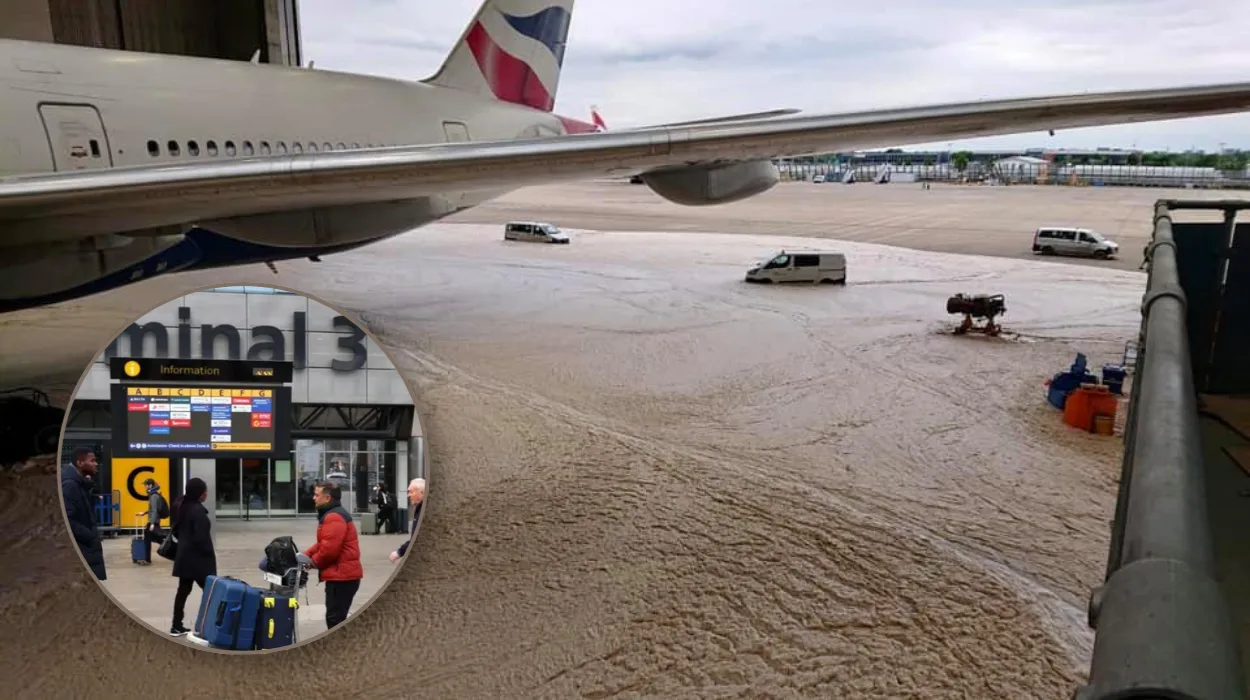
Key Points
- The roads to Heathrow Airport are now open after being flooded due to a burst water main.
- The flooding affected Inner Ring Road West, which cut off access to the central terminal area (CTA), including Terminal 2 and 3.
- Road closures started a few minutes before 06:00 BST, leading to considerable disruption to passengers arriving by road.
- The airport at Heathrow has reassured travellers it is operating normally and has apologised for the disruption.
- High traffic volumes on nearby roads continue to be a factor, and traffic is still being encouraged to use public transport.
- There was no flooding reported within either terminal and flights were not affected.
- Passenger George Smyrniadis, 79, was unable to board a flight to Frankfurt because he was caught in the chaos.
- Heathrow’s busiest day of the year, on 19 July, when 267,000 passengers passed through, coincided with the disruption.
- Heathrow Airport repaired the pipes, which are owned and maintained by Heathrow Airport.
- The accident came on the heels of other isolated disturbances to rail traffic due to the tunnel closure caused by a water leak.
Heathrow (Britain Today News) August 15, 2026 – All roads to Heathrow Airport have reopened after earlier disruption caused by flooding from a burst water main on a ring road, with the airport confirming that operations are now back to normal following hours of chaos for passengers arriving by car and taxi.
- Key Points
- What Caused The Flooding At Heathrow Airport?
- Which Roads And Terminals Were Affected By The Closures?
- Has Heathrow Airport Confirmed That Roads Have Reopened?
- Did The Flooding Disrupt Any Flights At Heathrow?
- Why Are Passengers Still Being Advised To Use Public Transport?
- How Did The Disruption Affect Passengers Trying To Reach Their Flights?
- Why Did The Timing Of The Flooding Make Things Worse For Heathrow?
- Who Is Responsible For The Affected Water Pipes?
- Has Heathrow Faced Other Recent Disruption To Access And Transport?
- What Has Heathrow Airport Said About The Overall Response?
- What Should Passengers Expect At Heathrow In The Coming Days?
What Caused The Flooding At Heathrow Airport?
The disruption stemmed from a burst water main along Inner Ring Road West, one of the key access routes into the airport’s central terminal area. The flooding prevented vehicles from reaching the CTA, which includes Terminals 2 and 3, along with a number of other buildings and the surrounding road network. Road closures were put in place just before 06:00 BST as engineers moved to assess and contain the flooding before repair work could begin.
Which Roads And Terminals Were Affected By The Closures?
The closures centred on Inner Ring Road West, the route that funnels traffic into the heart of the airport. Because this road serves as one of the main arteries into the central terminal area, its closure had a knock-on effect across the wider road network, cutting off convenient access to Terminals 2 and 3 for passengers travelling by car, taxi, or private hire vehicle. Other buildings within the CTA were also temporarily affected by the restricted access.
Has Heathrow Airport Confirmed That Roads Have Reopened?
Yes. Heathrow Airport has confirmed that all roads are now open and that the airport is operating as normal. An airport spokesperson said:
“Following earlier road flooding impacting access to Terminals 2 and 3, all roads have now reopened, and the airport continues to operate as normal.”
The spokesperson added:
“We apologise for any inconvenience caused, and we thank passengers for following the advisories we had put in place while our teams worked to resolve the situation as quickly as possible.”
Did The Flooding Disrupt Any Flights At Heathrow?
According to the information provided by the airport, flights themselves were not disrupted by the flooding. It is understood that there was no flooding within either terminal building, meaning the disruption was largely confined to road access rather than the airport’s operational areas. However, passengers who were unable to reach the terminals on time were still affected, even though flight schedules continued largely as planned.
Why Are Passengers Still Being Advised To Use Public Transport?
Despite the roads reopening, Heathrow Airport is continuing to advise passengers to use public transport where possible. This is because of heavy congestion that has built up on the surrounding roads as a result of the earlier closures. With traffic still working through the backlog caused by the diversions, the airport’s guidance is aimed at reducing further pressure on the road network and helping passengers reach their flights with fewer delays.
How Did The Disruption Affect Passengers Trying To Reach Their Flights?
For some travellers, the timing of the flooding proved costly. The road closures, which began just before 06:00 BST, meant that journeys which would normally take a matter of minutes stretched into hours during one of the busiest periods of the summer travel season. Passengers already working to tight connection times found themselves caught in unexpected delays before they had even reached security.
Who Is George Smyrniadis And What Happened To Him?
Among those affected was George Smyrniadis, 79, who missed his flight to Frankfurt, where he had been due to attend a school reunion on Saturday afternoon. Speaking to BBC’s Your Voice, he described the personal impact of missing the trip:
“I was upset. It’s the first reunion I’ve missed since 1987.”
He continued:
“I was so downhearted I just wanted to get home. The whole airport seemed completely chaotic, but I got the impression the airlines just carried on as though nothing was wrong – and if you missed your flight, you just missed it.”
Smyrniadis explained that his journey from Portsmouth had been running smoothly until he left the M4, at which point he became stuck in traffic for around 90 minutes while covering a stretch of road that would usually take him about 10 minutes to drive. He said:
“By the time I got to security it was too late – it was already 09:30 BST so they wouldn’t let me go through any further.”
Why Did The Timing Of The Flooding Make Things Worse For Heathrow?
The flooding struck during what Heathrow has described as one of its busiest periods of the year, as families across the country began travelling for the school summer holidays. Heathrow said 19 July was its busiest day of the year so far, with 267,000 passengers passing through the airport on that date alone. That scale of passenger traffic meant that even a temporary loss of road access to a major part of the terminal complex had the potential to affect a large number of travellers converging on the airport at the same time.
Who Is Responsible For The Affected Water Pipes?
The pipes at the centre of the disruption are owned by Heathrow Airport itself, which has also been responsible for overseeing the repair works. As the operator and owner of the infrastructure, Heathrow’s own engineering and operations teams led the response to the burst main, working to close off the affected road, manage the flooding, and restore full access as quickly as possible.
Has Heathrow Faced Other Recent Disruption To Access And Transport?
This is not the only access-related disruption Heathrow has faced recently. The airport was also affected in the recent past by disruption to railway services, after a separate water leak led to the closure of a tunnel. Taken together, the two incidents highlight how vulnerable transport links into one of the world’s busiest airports can be to underlying infrastructure issues, whether on the roads or the railway lines that feed into it.
Explore More about the UK:
Skegness Sand Art to Promote Tour of Britain
Changes To Two Trentbarton Bus Routes In Nottinghamshire And Derbyshire
What Has Heathrow Airport Said About The Overall Response?
Heathrow’s statement emphasised both the resolution of the issue and an acknowledgement of the disruption caused to passengers. The spokesperson’s apology, combined with thanks to passengers for following advisories issued during the closures, reflected an attempt by the airport to balance operational reassurance with recognition of the inconvenience faced by those trying to reach their flights during the closure period.
For passengers like George Smyrniadis, however, the reassurance that roads have reopened and operations have returned to normal came too late to prevent a missed connection and a missed personal milestone. His account illustrates how road-based disruption, even when it does not directly affect flight schedules, can still have a significant knock-on effect for individual travellers navigating tight timeframes to reach security and their gate.
What Should Passengers Expect At Heathrow In The Coming Days?
With roads now reopened and the airport confirming normal operations, the immediate crisis appears to have passed. However, the continued advice to use public transport suggests that residual congestion may persist for some time as traffic patterns return to normal following the closures. Passengers travelling to Heathrow in the days ahead, particularly during the ongoing school summer holiday period, are likely to continue facing higher-than-usual passenger volumes, meaning that allowing extra time for the journey to the airport remains a sensible precaution regardless of the resolved flooding issue.