Key Points
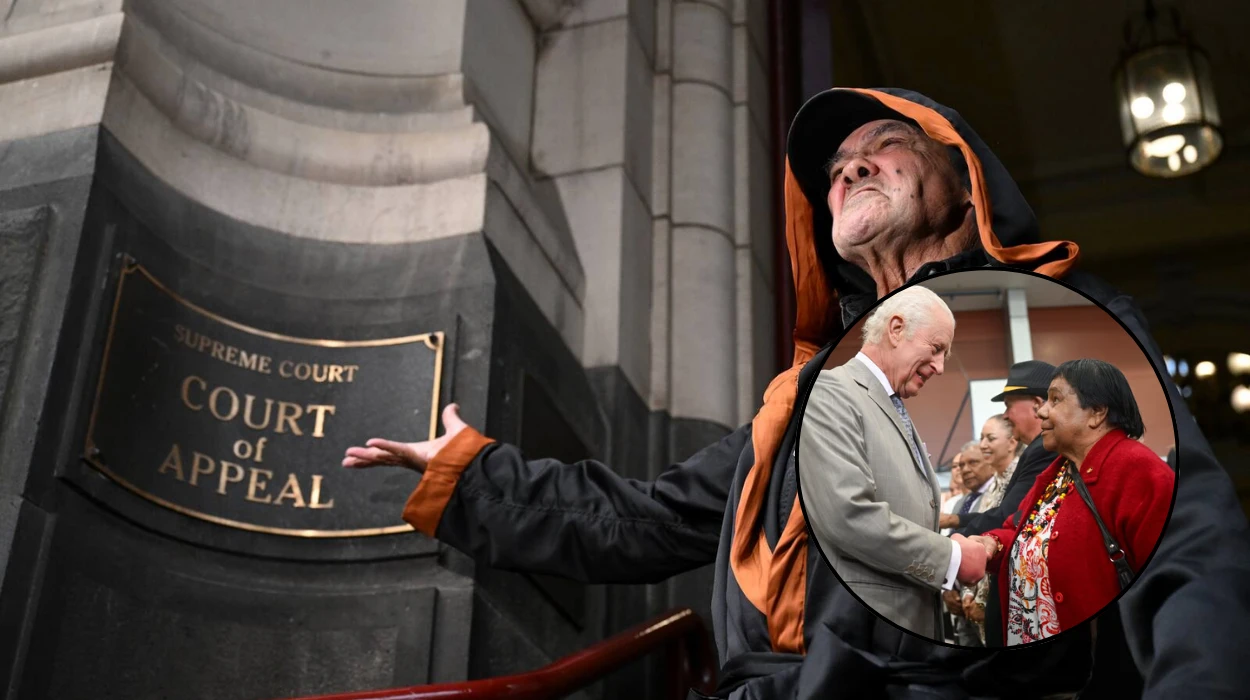
- Krauatungalung Elder Djuran Bunjileenee Uncle Robbie Thorpe has taken a genocide case against King Charles III, as the UK Crown’s representative, to the Victorian Court of Appeal.
- The case is one of several legal actions brought by Uncle Robbie, including a separate trespassing charge against Victorian Governor Margaret Gardner.
- In February 2025, Supreme Court Justice Melinda Richards dismissed an earlier judicial review application, ruling that Victorian common law could not cover genocide.
- Uncle Robbie argues that the Australian Attorney-General’s power to veto genocide prosecutions breaches international law and the Racial Discrimination Act.
- The Victorian Court of Appeal reserved its decision on 12 June 2026, and Uncle Robbie is still awaiting the outcome.
- The trespassing case against Governor Gardner, centred on Government House in Melbourne’s Botanical Gardens, returns to court on 20 August 2026, with a hearing set for October.
- Senator Lidia Thorpe has written to 21 United Nations member states asking for intervention to stop what she describes as ongoing genocide.
- Uncle Robbie says he intends to take the matter to international courts should Australian avenues be exhausted, potentially seeking an international war crimes trial.
Melbourne (Britain Today News) July 28, 2026 – A Krauatungalung Elder has appealed to the Victorian Supreme Court in Australia in a long-running genocide case against King Charles III, in his capacity as the UK Crown’s representative in Australia. Djuran Bunjileenee Uncle Robbie Thorpe filed the appeal in June 2026, continuing a legal campaign that has spanned several years and multiple courts, and which he says will not stop until Australia is held to account for the historical and ongoing treatment of Aboriginal and Torres Strait Islander peoples.
- Key Points
- Who Is Uncle Robbie Thorpe and What Is He Fighting For?
- Why Has Uncle Robbie Thorpe Charged Governor Margaret Gardner With Trespassing?
- Why Did Australia’s Legal System Block the Genocide Case?
- What Happened When the Case Reached the Supreme Court?
- What Legal Arguments Has Uncle Robbie Thorpe Made in His Appeal?
- How Did the Victorian Attorney-General’s Office Respond in Court?
- What Is the Latest on the Trespassing Case Against Governor Gardner?
- Could the Genocide Case Eventually Go to International Courts?
- Is There International Interest in the Case?
- What Happens Next in the Case?
Who Is Uncle Robbie Thorpe and What Is He Fighting For?
Uncle Robbie Thorpe is a Krauatungalung Elder who has spent years pursuing legal recognition of genocide committed against First Nations peoples in Australia. He has lodged a series of court cases, the most prominent of which accuses King Charles III of genocide as the Crown’s representative in Australia. Speaking outside the Victorian Magistrates’ Court, dressed in trousers and a North Face jacket, Uncle Robbie greeted this reporter warmly before turning to the seriousness of the cases ahead of him.
Alongside the genocide case, Uncle Robbie has also brought a trespassing case against Margaret Gardner, the Governor of Victoria, arguing that Government House sits on land that was never ceded by its traditional custodians.
Why Has Uncle Robbie Thorpe Charged Governor Margaret Gardner With Trespassing?
Uncle Robbie was waiting outside court for the Victorian Governor-General, who represents King Charles III in the state, to attend on a charge of trespassing. Margaret Gardner did not scale the fence of Government House; rather, she moved in after being formally appointed to the role. However, Uncle Robbie contends that the land on which Government House stands was never legally handed over.
“We’ve charged her with trespass and attempting to evict her from what they call Government House, which is in the Botanical Gardens,”
Uncle Robbie said.
He went further, explaining the historical basis for the claim:
“There’s a whole story around that: the Botanical Gardens was actually a former Aboriginal reserve – land for Aboriginal people. We want to get to the bottom of how that changed out of our hands and how it’s now a Government House. People should look at a thing called the Lettsam Raid of 1842 and you can see what’s happened.”
Is Australia Still Legally a British Colony?
Although Australia has its own Parliament, Constitution and Prime Minister, the nation began as a collection of separate colonies before they were federated in 1901. Since Federation, Australia has largely been presented publicly as an independent nation. Yet Governors-General, who represent the UK Crown, retain formal power to dissolve state and federal parliaments and to dismiss elected leaders.
No Treaty has ever been signed between the Australian government and Aboriginal and Torres Strait Islander peoples, despite a formal apology delivered by then Prime Minister Kevin Rudd in 2008. Throughout the colonial period and after Federation, Aboriginal and Torres Strait Islander peoples were subjected to massacres, the forced removal of children, and severe restrictions on their rights. It was not until a national referendum in 1967 that Aboriginal people were counted as citizens; prior to that point, they were officially classified alongside fauna under law. Uncle Robbie and other advocates argue that the harm inflicted during this period has never ceased.
In 2023, Uncle Robbie launched a private prosecution against King Charles III over these historical and ongoing harms.
Why Did Australia’s Legal System Block the Genocide Case?
The Magistrates’ Court of Victoria ruled that it did not have the power to prosecute the case. Under Australian law, the Attorney-General holds veto power over any private prosecution relating to genocide, crimes against humanity or war crimes, meaning such cases cannot proceed without government consent.
In February 2024, Gunnai Gunditjmarra and Djab Wurrung woman Senator Lidia Thorpe tabled amendments to the federal Criminal Code Bill seeking to repeal the Attorney-General’s veto power over such prosecutions. However, the amendment’s second reading was negatived in 2025, meaning the veto power remains in place.
What Happened When the Case Reached the Supreme Court?
The Magistrates’ Court told the Supreme Court of Victoria during an appeal in July 2024 that it lacked the necessary jurisdiction to hear the genocide case. Uncle Robbie argued before the courts that Australia has never fully implemented the 1948 Convention on the Prevention and Punishment of the Crime of Genocide into domestic law.
In February 2025, Supreme Court Justice Melinda Richards dismissed the judicial review application brought in relation to the case. Justice Richards found that Victorian common law does not extend to cover genocide, and that First Peoples’ sovereign law could not be applied within the framework of the Magistrates’ Court. While genocide is formally recognised as an offence under the Commonwealth of Australia’s Criminal Code, the requirement for Attorney-General consent continued to apply as a barrier to prosecution.
What Legal Arguments Has Uncle Robbie Thorpe Made in His Appeal?
Following the dismissal, Uncle Robbie lodged an appeal. Central to his argument is the claim that requiring Attorney-General consent for a genocide prosecution is inconsistent with international law and with Australia’s Racial Discrimination Act. He argues that section 10 of that Act, which guarantees “rights to equality before the law,” should be interpreted in a way that removes the need for such consent.
Uncle Robbie also told the court that Australian sovereignty itself was never legitimately established, as British settlement occurred without treaty or consent from First Nations peoples.
“Captain Cook never got consent. If you never got consent, this is an illegal occupation, and your courts and your laws are invalid,”
Uncle Robbie said.
How Did the Victorian Attorney-General’s Office Respond in Court?
Counsel for the Respondent, representing the Victorian Attorney-General, Liam Brown SC, argued that much of the substance of Uncle Robbie’s appeal concerned procedural matters rather than the underlying merits of the genocide claim. Brown further submitted that the Crown could not apply international law within Australian courts unless that law had first been incorporated into domestic common law or legislation.
Uncle Robbie said he was not surprised by the response.
“We know Australia’s unable, unwilling, and reluctant to deal with these issues. We’re talking about the most heinous of all known crimes, genocide, premeditated. Everyone knows it was an unprovoked attack on Aboriginal people. What did we do to the British to deserve that? And on that basis, it doesn’t give you authority. It doesn’t give you a right to operate. You can’t occupy our land,”
he said.
As part of his appeal, Uncle Robbie also sought to add several additional parties to the case, including the Commonwealth Attorney-General, the United Nations Secretary-General and the UK Prime Minister. He requested that evidence be drawn from the Closing the Gap project and the Yoorook Justice Commission, along with historical records, as supporting proof of ongoing harm and genocide against First Nations peoples.
What Did the Victorian Court of Appeal Decide?
On 12 June 2026, the Victorian Court of Appeal reserved its decision on Uncle Robbie’s genocide case appeal. As it stands, Uncle Robbie is still waiting to learn the outcome of that hearing, with no confirmed date yet given for a ruling.
Explore More about UK:
Big Ben protester spared jail after 17-hour climb
Kylie Jenner Meta Glasses Poster Sparks Privacy Row
What Is the Latest on the Trespassing Case Against Governor Gardner?
Attention has also turned back to the trespassing case against Governor Margaret Gardner, who did not personally appear in court for the matter. In her place, Executive Director for the Office of General Counsel Victoria and General Counsel Miriam Holmes attended on her behalf.
During proceedings, the presiding Magistrate asked the legal representatives to step outside and discuss scheduling. After roughly an hour of discussion in the courtroom lobby, the parties returned to address a different Magistrate. It was subsequently decided that Uncle Robbie will return to court on 20 August 2026, to determine whether Governor Gardner will attend in person, with a full hearing scheduled for October 2026. This timeline gives Uncle Robbie additional time to gather supporting evidence from Elders and the wider community ahead of the hearing.
Could the Genocide Case Eventually Go to International Courts?
Asked about his next steps should the Australian appeal process be exhausted, Uncle Robbie was clear about his intentions to look beyond domestic courts.
“It just can’t be internal courts. We know they’re totally biased. So we’re not going to get any justice from that. So that’s why we need to take it to the international court, for whatever that’s worth, and test that out,”
he said.
Senator Lidia Thorpe has already taken steps in this direction, writing to 21 United Nations member states on 24 June 2025 to request international assistance in stopping and preventing what she describes as ongoing genocide against First Nations peoples in Australia.
Is There International Interest in the Case?
Uncle Robbie said that First Nations communities in Canada are watching developments in Australia closely.
“They’ll be keeping an eye on what we’re doing here. I think Australia’s very vulnerable in terms of moral, ethical, or legality here,”
he said.
Asked what a ruling in his favour would mean, Uncle Robbie was direct about the scale of what he is pursuing:
“That would be an international war crimes trial.”
What Happens Next in the Case?
With the Court of Appeal’s decision reserved and the trespassing case against Governor Gardner set to resume in August, the coming months are expected to be pivotal for Uncle Robbie’s long campaign. Whether or not the Victorian courts ultimately side with him, his stated intention to escalate the matter internationally suggests the legal and political battle over historical and ongoing treatment of Aboriginal and Torres Strait Islander peoples in Australia is unlikely to conclude soon. For now, both cases remain before the Victorian courts, with outcomes still awaited.